How Does a Transformer Work? A Practical Guide Every Power Equipment Buyer Should Read

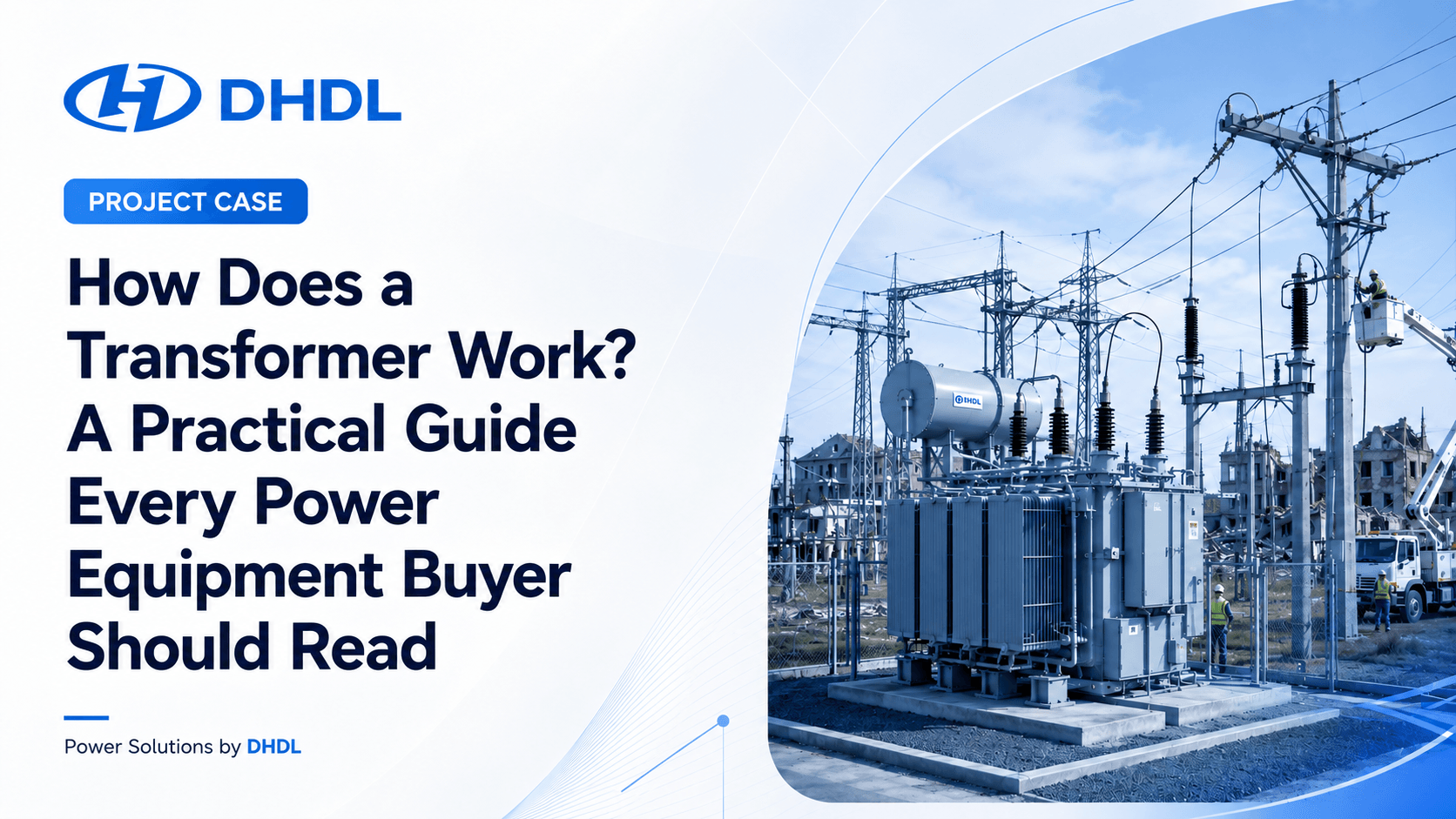
Whether electricity is transmitted across a national grid or distributed inside a factory, data center, hospital, or renewable energy project, transformers play a critical role in ensuring safe and efficient power delivery.
Although transformers are widely used, many buyers still believe they simply “increase or decrease voltage.” In reality, transformer performance depends on electromagnetic induction, winding design, insulation, cooling methods, and operating conditions. Understanding these fundamentals can help engineers, EPC contractors, and procurement teams choose the right transformer and avoid costly specification errors.
1. What Is a Transformer?
A transformer is a static electrical device that transfers alternating current (AC) electrical energy from one circuit to another through electromagnetic induction. It changes voltage levels while maintaining the same operating frequency.
Transformers are commonly used in:
- Utility substations
- Industrial plants
- Commercial buildings
- Renewable energy projects
- Data centers
- Mining operations
- Rail transportation
- Wind and solar power systems
Without transformers, long-distance power transmission would be highly inefficient because low-voltage electricity requires much higher current, resulting in significant power losses.
2. The Basic Working Principle
A transformer works according to Faraday’s Law of Electromagnetic Induction.
When alternating current flows through the primary winding, it creates a continuously changing magnetic field inside the laminated steel core.
This changing magnetic flux links the secondary winding and induces a voltage.
Because the magnetic field changes continuously, electrical energy is transferred without a direct electrical connection between the two windings.
The output voltage depends primarily on the turns ratio between the primary and secondary windings.
- More secondary turns = Higher output voltage (Step-Up Transformer)
- Fewer secondary turns = Lower output voltage (Step-Down Transformer)
Although voltage changes, frequency remains the same.
This simple principle has been used in power systems for more than a century and remains the foundation of modern electrical transmission.
3. Why Transformers Only Work with AC
One of the most misunderstood topics is why transformers require alternating current.
Alternating current continuously changes direction, producing a varying magnetic field inside the transformer core.
Direct current (DC), however, becomes constant after energization. Without a changing magnetic field, the secondary winding cannot continuously generate voltage.
Applying DC to a conventional AC transformer can quickly cause excessive current, overheating, insulation failure, and permanent damage.
This is why standard power transformers are designed specifically for AC systems operating at frequencies such as 50Hz or 60Hz.
4. Main Components of a Transformer
Although transformer designs vary, most units contain the following key components:
Magnetic Core
The laminated steel core provides a low-resistance path for magnetic flux and helps improve efficiency while reducing eddy current losses.
Primary Winding
Receives electrical energy from the incoming power supply.
Secondary Winding
Supplies electrical energy to the connected load after voltage transformation.
Insulation System
High-quality insulation prevents electrical breakdown between windings and ensures long-term reliability.
Cooling System
Depending on transformer type, cooling may use natural air, forced air, insulating oil, radiators, cooling fans, or other methods.
5. Step-Up vs Step-Down Transformers
A step-up transformer increases voltage and reduces current.
Typical applications include:
- Power plants
- Wind farms
- Solar power stations
- Generator step-up substations
Higher transmission voltage reduces line losses over long distances.
A step-down transformer decreases voltage for safe distribution.
Typical applications include:
- Industrial factories
- Commercial buildings
- Residential power systems
- Data centers
- Manufacturing facilities
For example, electricity generated by a wind turbine may be increased to 33kV or 38.5kV before entering the collection network, then reduced again before supplying end users.
6. Dry-Type vs Oil-Immersed Transformers
The working principle is identical, but the insulation and cooling methods differ.
Dry-Type Transformers
Dry-type transformers use solid insulation materials such as cast resin instead of insulating oil.
Advantages include:
- No oil leakage
- Reduced fire risk
- Low maintenance
- Suitable for indoor installation
- Ideal for hospitals, airports, metro stations, schools, commercial buildings, and data centers
Oil-Immersed Transformers
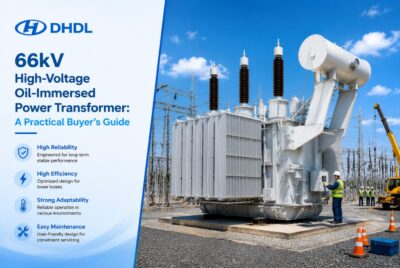
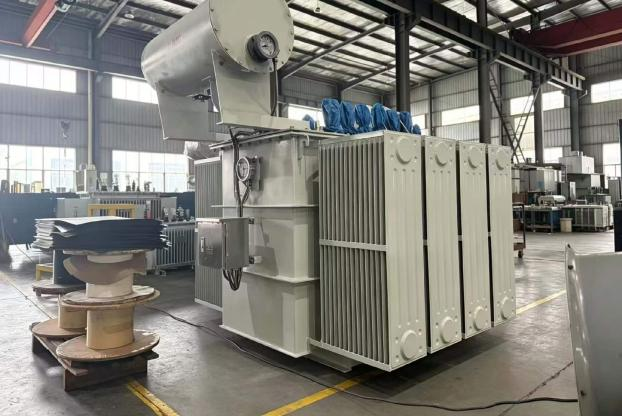
Oil-immersed transformers use insulating oil for both electrical insulation and heat dissipation.
Advantages include:
- Excellent cooling performance
- Higher power capacity
- Lower initial equipment cost
- Suitable for outdoor substations and utility networks
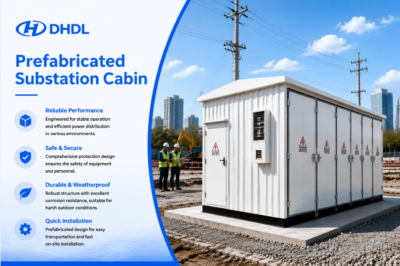
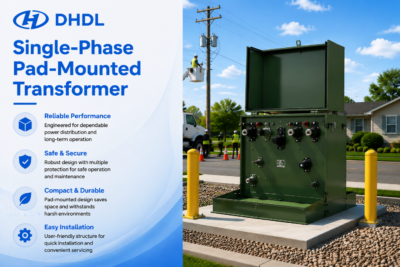
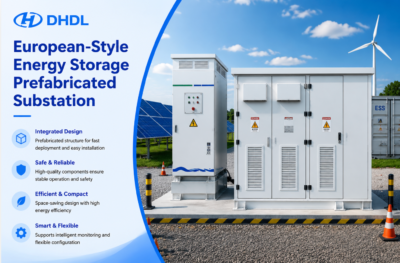
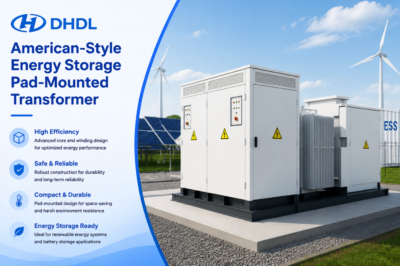
DHDL manufactures both dry-type and oil-immersed transformers, covering distribution transformers, power transformers, ultra-high-voltage transformers, compact substations, and customized solutions for industrial and renewable energy applications.
7. Hidden Facts Buyers Often Overlook
Capacity Is Not the Only Selection Factor
Many buyers request only the transformer capacity.
However, a complete quotation also requires:
- Primary voltage
- Secondary voltage
- Frequency
- Vector group
- Short-circuit impedance
- Cooling method
- Installation environment
- Applicable standards
- Altitude
- Ambient temperature
Without these details, quotations may not accurately reflect project requirements.
Lower Purchase Price Does Not Mean Lower Lifetime Cost
A transformer operates continuously for many years.
Even small differences in:
- No-load loss
- Load loss
- Cooling efficiency
- Maintenance requirements
can significantly affect the total operating cost over its service life.
Installation Environment Matters
A transformer designed for an indoor factory may not perform well in a coastal wind farm or desert environment.
High humidity, dust, salt spray, vibration, and high altitude all influence transformer design, insulation coordination, enclosure protection, and cooling performance.
8. Why Factory Testing Is Important
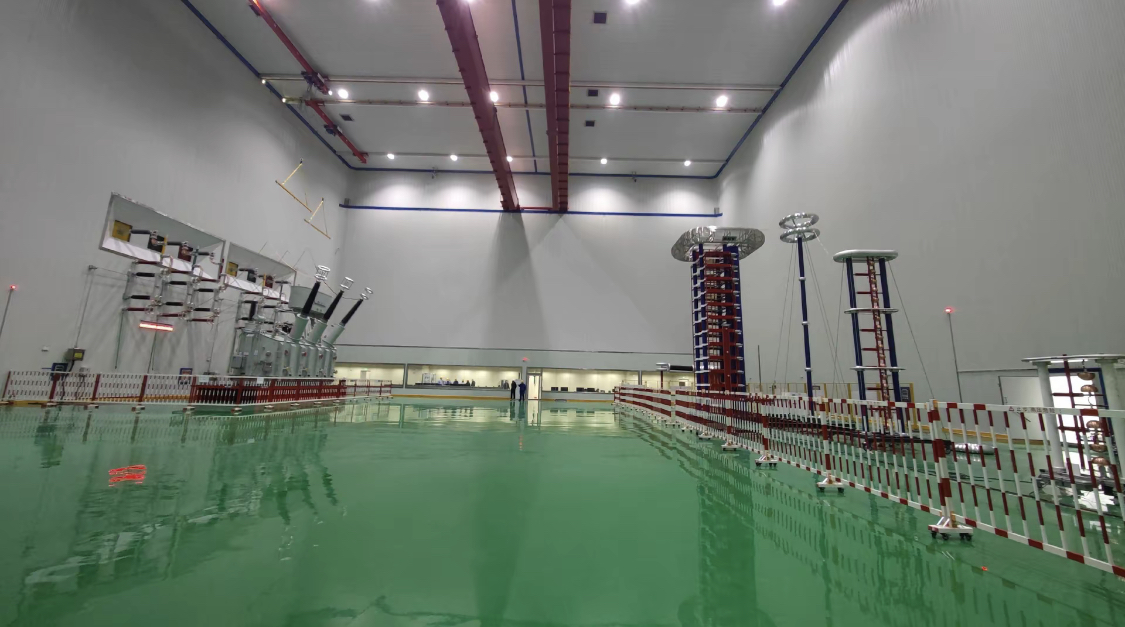
Before shipment, transformers should undergo comprehensive routine testing to verify electrical performance.
Typical factory tests include:
- Turns ratio verification
- Winding resistance measurement
- Insulation resistance test
- No-load loss test
- Load loss test
- Impedance measurement
- Applied voltage test
- Induced voltage test
- Partial discharge test (where required)
Reliable manufacturers also perform strict quality control throughout core assembly, winding production, insulation drying, final assembly, and factory acceptance testing.
Choosing the Right Transformer
When selecting a transformer, buyers should consider more than voltage and capacity.
Important questions include:
- Indoor or outdoor installation?
- Dry-type or oil-immersed?
- Natural cooling or forced cooling?
- IEC or ANSI standard?
- Copper or aluminum windings?
- Future capacity expansion?
- Renewable energy application?
- Harmonic loads?
- High-altitude installation?
Providing complete project information helps manufacturers recommend the most suitable transformer while reducing project delays and unexpected costs.
Conclusion
A transformer works by transferring electrical energy between two windings through electromagnetic induction. While the principle is straightforward, selecting the right transformer requires careful consideration of voltage, capacity, cooling, insulation, losses, environmental conditions, and industry standards.
DHDL provides customized transformer solutions for power utilities, industrial facilities, renewable energy projects, infrastructure, and commercial buildings. Whether you need a dry-type transformer, oil-immersed transformer, power transformer, or complete substation solution, our engineering team can recommend the right configuration based on your project requirements.
FAQ
1. How does a transformer work?
A transformer transfers electrical energy through electromagnetic induction. Alternating current in the primary winding creates a changing magnetic field, which induces voltage in the secondary winding.
2. Why do transformers only work with AC?
Transformers require a changing magnetic field to induce voltage. AC continuously changes direction, while DC does not, making standard transformers unsuitable for direct DC operation.
3. What is the difference between a step-up and step-down transformer?
A step-up transformer increases voltage for efficient power transmission, while a step-down transformer reduces voltage for safe power distribution to equipment and buildings.
4. What is the difference between dry-type and oil-immersed transformers?
Dry-type transformers use solid insulation and air cooling, making them ideal for indoor installations. Oil-immersed transformers use insulating oil for cooling and are commonly used in outdoor utility and industrial applications.
5. What information is needed when selecting a transformer?
Key information includes capacity, primary and secondary voltage, frequency, vector group, impedance, cooling method, installation environment, altitude, applicable standards, and project application.
6. Why is transformer efficiency important?
Higher-efficiency transformers reduce no-load and load losses, lowering energy consumption and operating costs throughout the transformer’s service life.