How to Select a 33–38.5kV Dry-Type Transformer for a Wind Power Project: 7 Critical Factors Beyond Capacity

In a wind power system, transformers are responsible for stepping up the turbine output voltage and transmitting electricity through the wind farm collection network. In 33kV, 35kV, and 38.5kV collection systems, an incorrectly selected transformer may cause excessive temperature rise, increased noise, higher power losses, shortened insulation life, and unstable grid connection.
Many buyers request quotations by providing only the wind turbine rating and a simple requirement such as “one 35kV transformer.” However, this information is not enough for accurate transformer design and pricing.
For wind power applications, buyers must also consider the turbine output current, voltage level, vector group, short-circuit impedance, harmonic loads, cooling method, installation environment, insulation level, and applicable electrical standards.
This article explains how to select a 33–38.5kV dry-type transformer for a wind power project and highlights several hidden issues that are often ignored during procurement.
1. Confirm the Transformer Installation Location
Before selecting the transformer, it is important to determine where the equipment will be installed.
A wind power transformer may be installed:
- Inside the wind turbine nacelle
- Inside the tower
- At the tower base
- In a prefabricated electrical cabin
- In a centralized wind farm substation
- In an offshore wind power platform
Different installation locations create different technical requirements.
For transformers installed inside a nacelle or tower, buyers should pay close attention to equipment dimensions, weight, vibration resistance, noise, ventilation, and lifting conditions.
For tower-base installations, humidity, condensation, dust, temperature changes, and limited ventilation must be considered.
For centralized substations, the main concerns may include rated capacity, parallel operation, short-circuit impedance, protection coordination, and long-term loading conditions.
Offshore wind projects require additional protection against salt spray, corrosion, high humidity, vibration, and difficult maintenance conditions.
Therefore, a transformer inquiry should not simply state that the unit is “for wind power.” The buyer should clearly describe the exact installation location and environmental conditions.
2. Do Not Select Capacity Based Only on Turbine MW Rating
A 5MW wind turbine does not automatically require a 5000kVA transformer.

Transformer capacity should be calculated according to the actual electrical and operating conditions, including:
- Rated active power of the wind turbine
- Maximum converter output current
- Power factor range
- Reactive power requirements
- Short-term overload conditions
- Ambient temperature
- Installation altitude
- Cooling method
- Future expansion plans
If the selected capacity is too small, the transformer may operate continuously at a high load level, leading to excessive temperature rise and accelerated insulation aging.
If the transformer is significantly oversized, the project may face higher procurement costs and unnecessary no-load losses.
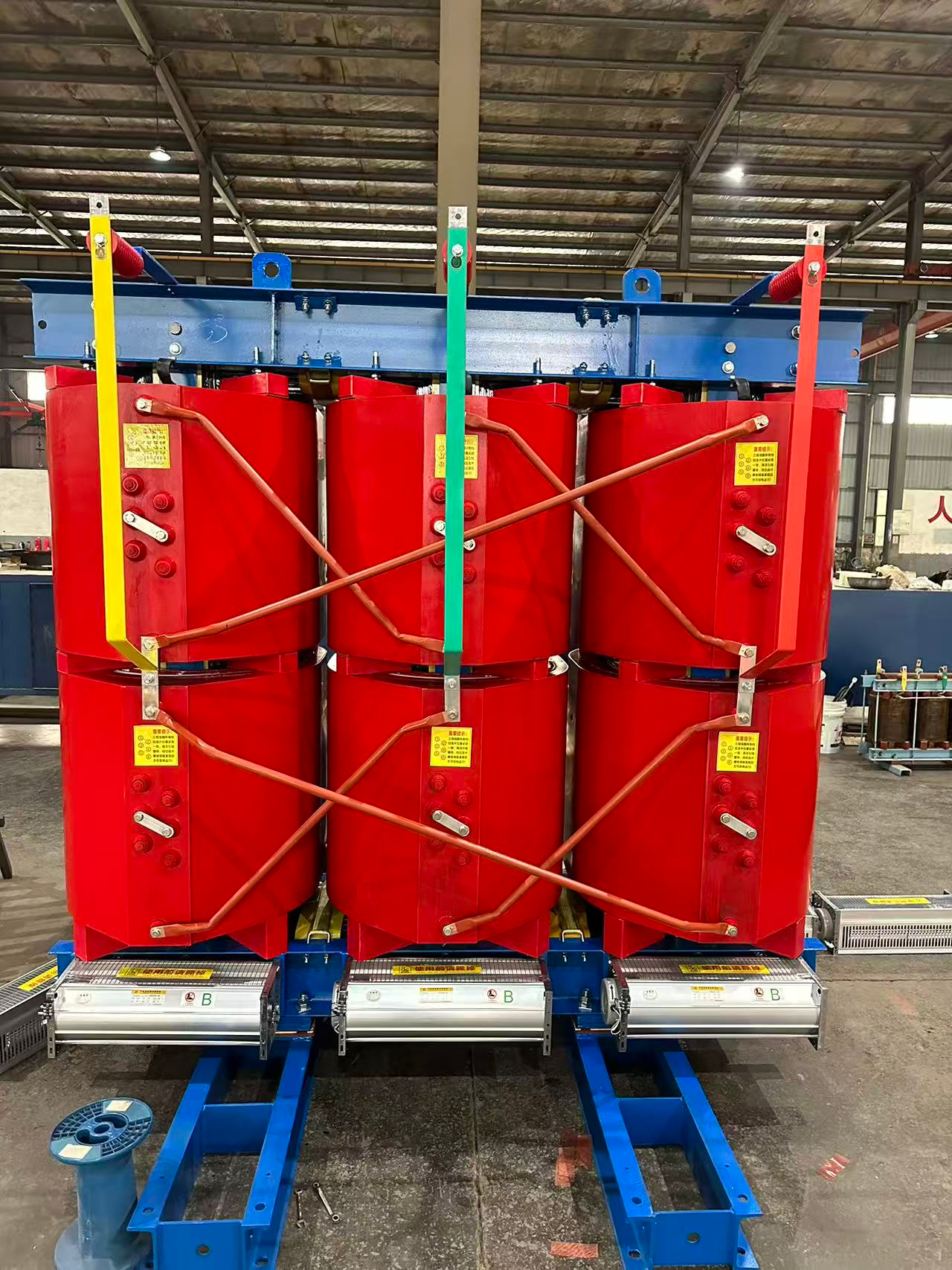
the SCB 33–38.5kV dry-type transformer series can cover capacities from approximately 800kVA to 20,000kVA. The appropriate capacity can be selected for an individual turbine, multiple wind turbines, or a centralized collection system.
One commonly overlooked issue is that the transformer capacity should be checked against the maximum continuous current and overload curve supplied by the wind turbine manufacturer, rather than being selected only according to the turbine nameplate power.
3. Understand the Difference Between 33kV, 35kV, and 38.5kV
Wind power project documents may mention 33kV, 35kV, 36kV, 37kV, 38.5kV, or 40.5kV. These values do not always refer to the same technical parameter.
Before placing an order, buyers should confirm:
- Nominal system voltage
- Transformer rated high-voltage winding voltage
- Highest voltage for equipment
- Power-frequency withstand voltage
- Lightning impulse withstand level
- Neutral grounding method
- Permitted grid voltage fluctuation
- Required insulation coordination
The product data includes high-voltage options such as 33kV and 38.5kV, with tapping ranges such as ±5% or ±2 × 2.5%.
The tapping range helps compensate for normal system voltage variation. However, it cannot replace the correct selection of rated voltage, insulation level, and withstand voltage.
For overseas wind power projects, a domestic 35kV transformer design should not be copied directly without technical verification. The transformer must be designed according to the local grid voltage, national standards, insulation requirements, and project technical specifications.
4. Match the Low-Voltage Side with the Turbine Output
The low-voltage side of the step-up transformer must match the output voltage of the wind turbine generator or converter.
Typical low-voltage options in the product data include:
- 0.4kV
- 6.3kV
- 10kV
- 10.5kV
- 11kV
However, wind turbine manufacturers may use different output voltages. The final design should therefore be based on the turbine manufacturer’s electrical data.
The buyer should provide:
- Rated turbine output voltage
- Maximum output current
- Operating frequency range
- Grounding method
- Insulation requirements
- Converter technical data
An incorrect transformer ratio or tapping position may result in high-voltage output deviation, increased losses, abnormal operating current, or grid-connection problems.
For this reason, the transformer manufacturer should review the complete wind turbine electrical specification before confirming the design.
5. Confirm Short-Circuit Impedance and Vector Group
Short-circuit impedance is an important technical parameter in a wind power transformer.
It affects:
- System short-circuit current
- Voltage drop under load
- Protection relay settings
- Mechanical short-circuit strength
- Parallel transformer operation
- Load distribution between transformers
According to the available product data, the impedance value may increase with transformer capacity. Smaller units may use an impedance of approximately 6%, while larger transformers may require values of 8%, 9%, or 10%.
A higher impedance is not always better.
If the impedance is too low, the short-circuit current may exceed the allowable system level. If it is too high, the transformer may create excessive voltage drop under load.
When multiple transformers operate in parallel, major differences in impedance may cause uneven load sharing.
Available vector groups may include:
- Dyn11
- Yd11
- Yyn11
- YNd11
The correct vector group should be selected according to the wind farm grounding system, zero-sequence current path, relay protection design, harmonic requirements, and grid-connection specification.
The vector group should never be selected only because it is commonly used in another project.
6. Consider Harmonics, Temperature Rise, and Variable Loading
Wind turbine output changes continuously with wind speed. Power converters may also produce harmonic currents, voltage distortion, and additional heat.
Therefore, a standard industrial distribution transformer may not be suitable for a wind turbine application without further technical evaluation.
A wind power dry-type transformer should be checked for:
- Harmonic current content
- Additional winding losses
- Winding hot-spot temperature
- Permitted temperature rise
- Frequent load changes
- Short-term overload capability
- Converter-generated voltage pulses
- Short-circuit mechanical strength
- Insulation aging under variable loading
The real factor that shortens transformer life is often not the rated load itself. It is the combined effect of high ambient temperature, poor ventilation, harmonic losses, repeated load variation, and long-term operation near the temperature limit.
When requesting a quotation, buyers should provide the converter harmonic spectrum or relevant turbine electrical data whenever available.
This allows the transformer manufacturer to evaluate additional losses and determine whether a capacity margin or special winding design is required.
7. Specify Environmental Class and Enclosure Protection in Advance
A dry-type transformer does not use insulating oil, but this does not mean it can be directly exposed to rain, salt spray, condensation, dust, or corrosive air.
The following environmental information should be confirmed during the design stage:
- Minimum ambient temperature
- Maximum ambient temperature
- Relative humidity
- Condensation conditions
- Installation altitude
- Salt spray level
- Corrosion category
- Dust concentration
- Required IP protection level
- Natural-air or forced-air cooling
- Heating and dehumidification requirements
- Temperature monitoring and remote alarm requirements
The enclosure should be designed together with the transformer cooling system.
A common procurement mistake is to order a standard indoor dry-type transformer first and add an outdoor enclosure later. An unsuitable enclosure may restrict airflow, increase internal temperature, and reduce transformer capacity.
For coastal and offshore wind projects, anti-corrosion treatment, stainless-steel components, sealed control boxes, space heaters, and moisture monitoring may also be necessary.
8. Three Hidden Issues Wind Power Buyers Often Ignore
8.1 Comparing Equipment Prices but Ignoring Power Losses
Wind power transformers operate for many years. Even a relatively small difference in no-load loss and load loss can create a significant long-term energy cost.
Buyers should request guaranteed loss values and compare the total operating cost rather than only the initial transformer price.
8.2 Failing to Check Transportation and Installation Dimensions
For tower and nacelle installations, buyers must confirm:
- Maximum lifting weight
- Tower door dimensions
- Equipment transport route
- Maintenance clearance
- Cable entry position
- Transformer center of gravity
- Installation and replacement method
A transformer that meets the electrical specification may still be unusable if it cannot be transported into the installation position.
8.3 Leaving Factory Tests Undefined
The technical agreement should clearly specify the required inspection and test items.
Typical tests may include:
- Winding resistance measurement
- Voltage ratio test
- Vector group verification
- No-load loss and current test
- Load loss and impedance test
- Power-frequency withstand test
- Induced voltage withstand test
- Partial discharge measurement
- Insulation resistance test
- Temperature-rise test, when required
- Additional project-specific tests
If test requirements are not written into the technical agreement, disputes may occur during inspection or project acceptance.
9. Information Required for an Accurate Quotation
To receive an accurate transformer proposal, buyers should provide the following information:
- Wind turbine rated power
- Maximum turbine output current
- Primary voltage
- Secondary voltage
- Rated frequency
- Required capacity
- Vector group
- Short-circuit impedance
- Tapping range
- Winding material
- Cooling method
- Installation location
- Ambient temperature
- Installation altitude
- Humidity and condensation conditions
- Required IP rating
- Applicable IEC or national standard
- Quantity
- Destination country
- Required delivery schedule
The more complete the technical information, the more accurate the transformer design, dimensions, losses, delivery time, and quotation will be.
Conclusion
Selecting a 33–38.5kV dry-type transformer for a wind power project requires more than checking the rated capacity and purchase price.
The correct selection process should begin with the wind turbine electrical data. Buyers should then confirm the rated voltage, transformer capacity, short-circuit impedance, vector group, insulation level, harmonic conditions, temperature rise, installation environment, and testing standards.
For overseas projects, local grid standards and environmental conditions must also be included in the design.
DHDL Dinghong provides dry-type transformers, oil-immersed transformers, power transformers, compact substations, switchgear, and related power distribution equipment for wind power and other energy projects.
Transformer specifications can be customized according to project capacity, voltage level, frequency, impedance, vector group, winding material, installation environment, climate conditions, and applicable national standards.
FAQ
1. Why are dry-type transformers used in wind power projects?
Dry-type transformers use an oil-free insulation system, reducing oil leakage and liquid fire risks. They are suitable for wind turbine towers, nacelles, prefabricated cabins, and locations with strict fire-safety or environmental requirements.
2. What transformer capacity is required for a 5MW wind turbine?
A 5MW turbine does not automatically require a 5000kVA transformer. Capacity should be calculated according to the turbine’s maximum output current, power factor, reactive power demand, overload curve, ambient temperature, altitude, cooling method, and harmonic conditions.
3. Are 33kV and 38.5kV dry-type transformers interchangeable?
No. Buyers must confirm the nominal system voltage, transformer rated voltage, highest voltage for equipment, insulation level, withstand voltage, tapping range, and local grid standards.
4. Which vector groups are commonly used for wind power transformers?
Common options may include Dyn11, Yd11, Yyn11, and YNd11. The final selection depends on the system grounding method, protection design, zero-sequence current path, harmonics, and grid-connection requirements.
5. Can dry-type transformers be used in offshore wind projects?
Yes, but the transformer must be specially designed for high humidity, salt spray, corrosion, vibration, restricted space, and difficult maintenance conditions. Suitable enclosures, anti-corrosion treatment, temperature control, and moisture protection are normally required.
6. What information should be provided when requesting a quotation?
Provide the wind turbine power, maximum output current, primary and secondary voltage, frequency, capacity, vector group, impedance, tapping range, installation location, altitude, temperature, humidity, IP rating, applicable standard, quantity, and destination country.
7. What tests should be required for a wind power dry-type transformer?
Typical requirements include winding resistance, voltage ratio, vector group, no-load loss, load loss, impedance, withstand voltage, insulation resistance, and partial discharge tests. Temperature-rise and other special tests may also be required by the project specification.