SF6 Gas Insulated Switchgear: A Practical Buyer’s Guide for Medium-Voltage Power Projects

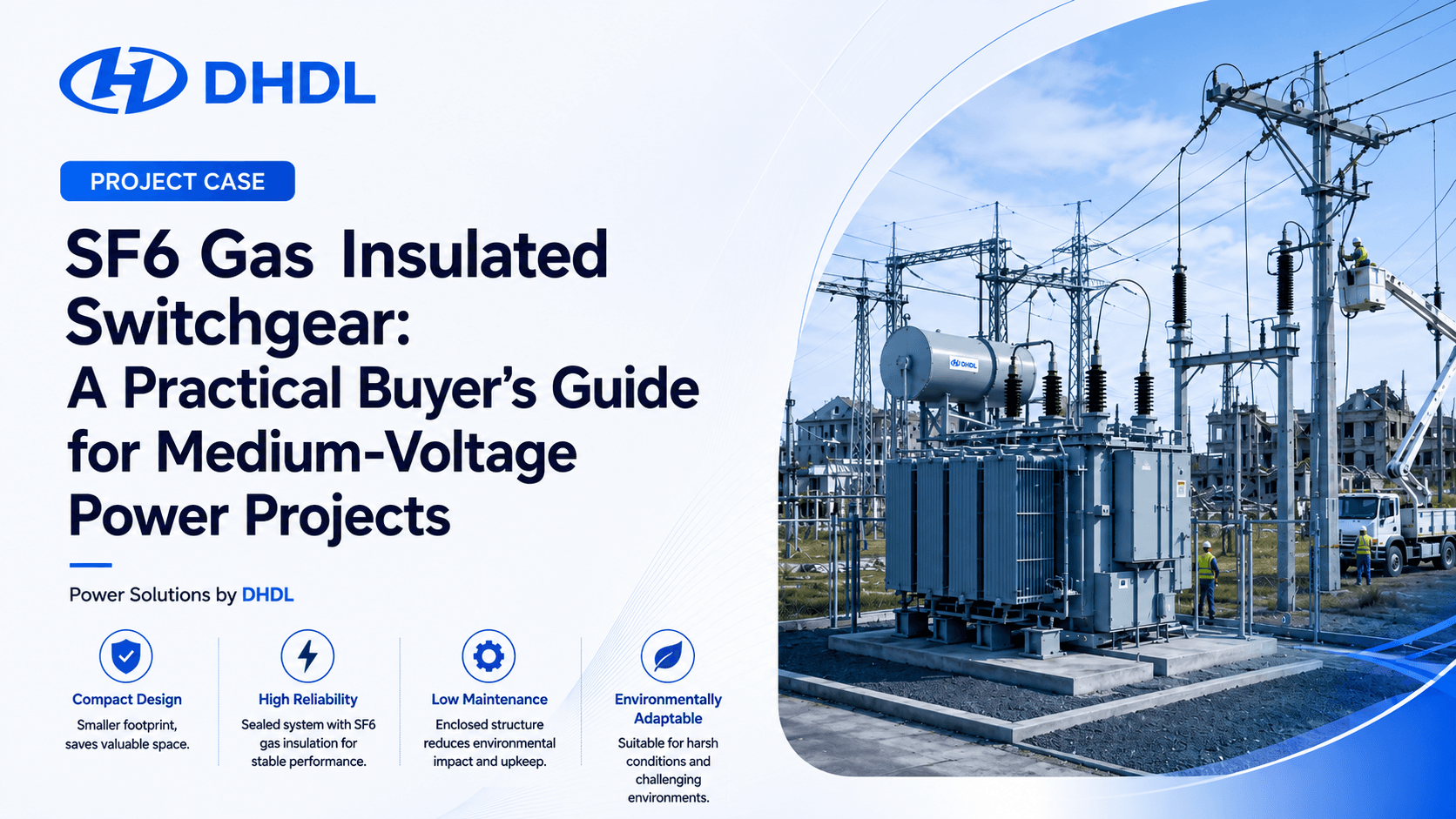
For medium-voltage power distribution projects, switchgear is not simply an electrical cabinet placed between the grid and a transformer. It determines how circuits are switched, isolated, protected, monitored, and maintained throughout the operating life of the system.
This makes the selection of SF6 gas insulated switchgear particularly important for substations, industrial facilities, renewable-energy projects, commercial infrastructure, ring main networks, and other applications where installation space and power reliability matter.
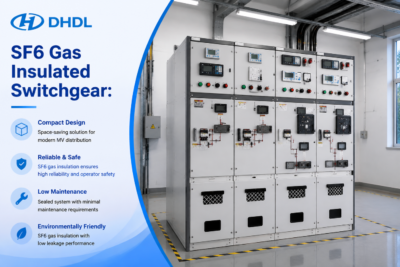
Compared with conventional air-insulated equipment, SF6 gas insulated switchgear uses sulfur hexafluoride gas as an insulating and arc-extinguishing medium. The sealed design allows key electrical components to operate within a controlled environment while keeping the overall equipment relatively compact.
But buyers should not select SF6 switchgear simply because it is “compact” or “low maintenance.”
The correct configuration depends on system voltage, rated current, short-circuit level, circuit arrangement, protection philosophy, installation environment, cable connections, communication requirements, and applicable standards.
This guide explains the practical factors buyers should check before requesting a quotation.
What Is SF6 Gas Insulated Switchgear?
SF6 gas insulated switchgear is medium-voltage electrical distribution equipment that uses SF6 gas for insulation and arc-extinguishing functions.
Depending on the system configuration, the switchgear can perform several functions:
- Power receiving and distribution
- Circuit switching
- Fault protection
- Electrical isolation
- Transformer protection
- Feeder control
- Measurement and monitoring
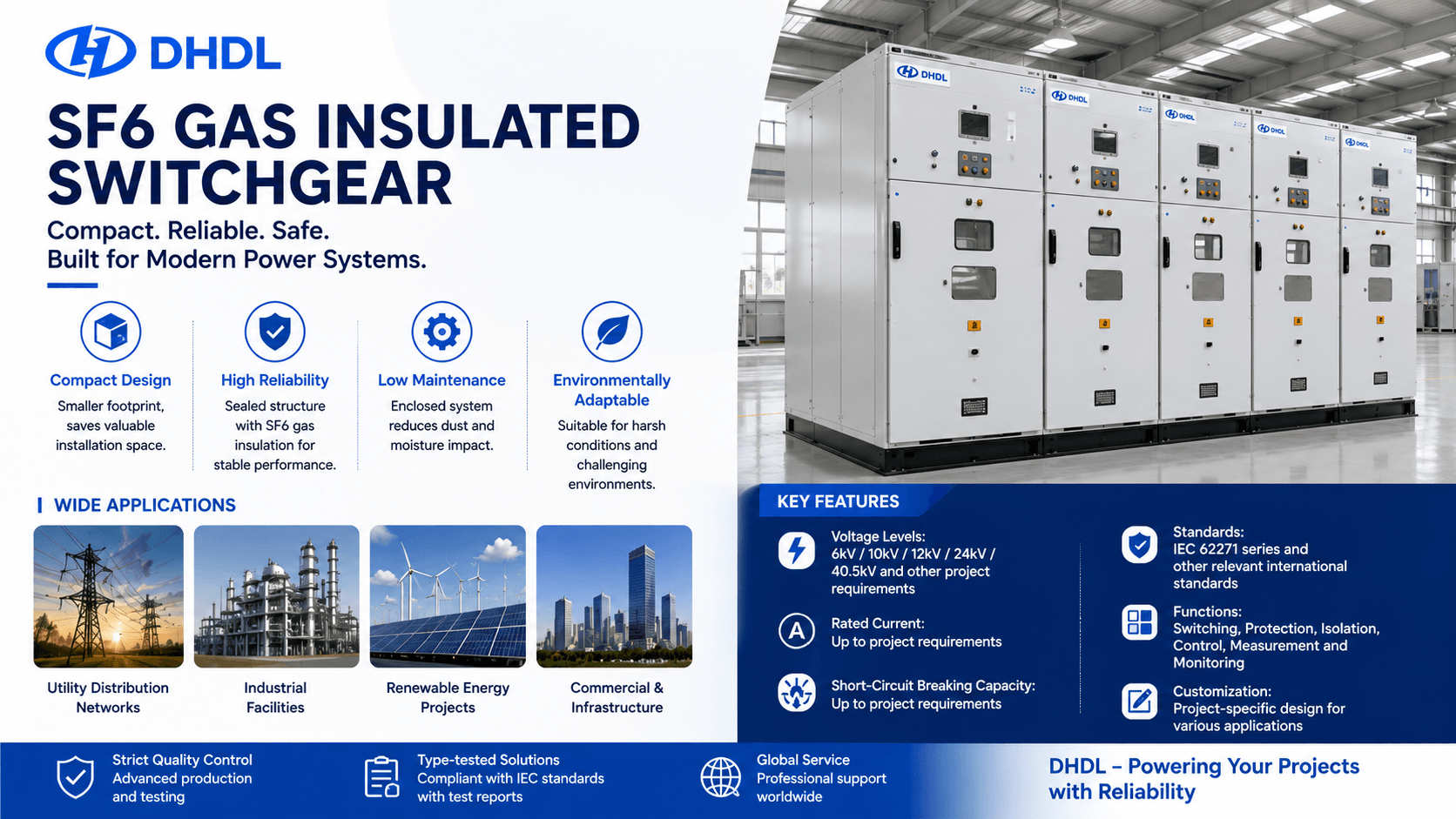
DHDL’s SF6 gas insulated switchgear uses a sealed compact structure and is designed for medium-voltage power distribution systems.
Available project voltage levels include:
- 6kV
- 10kV
- 12kV
- 24kV
- 40.5kV
- Other project-specific voltage levels
However, voltage level alone is not enough to select the correct cabinet.
How Does SF6 Gas Insulated Switchgear Work?
During normal operation, the switchgear controls the flow of electrical power between incoming feeders, busbars, transformers, outgoing feeders, and other circuits.
When the system operates normally, switching devices maintain the required electrical connections.
If an abnormal condition occurs—such as a short circuit or overcurrent—the protection system detects the fault and commands the appropriate switching device to interrupt the affected circuit.
The SF6 gas provides an insulating environment around critical electrical components and also supports arc extinction during switching operations.
This allows the equipment to maintain relatively small electrical clearances compared with many air-insulated arrangements.
The result is a compact switchgear structure that can be particularly useful where electrical-room space is limited.
Why Do Power Projects Use SF6 Gas Insulated Switchgear?
1. Compact Installation
Space is increasingly expensive in urban substations, commercial buildings, industrial plants, data centers, and renewable-energy facilities.
A compact switchgear lineup can help reduce the space required for medium-voltage distribution equipment.
However, buyers should look beyond cabinet width.
The complete room layout should also consider:
- Front operating clearance
- Cable bending radius
- Cable trench arrangement
- Maintenance access
- Emergency access
- Future expansion
- Equipment transportation route
A compact cabinet is useful only if the complete installation remains practical.
2. Reduced Exposure to Dust and Humidity
Because important components are enclosed within a sealed structure, their direct exposure to the external environment is reduced.
This can be beneficial in locations with:
- High humidity
- Dust
- Industrial contamination
- Coastal conditions
- Limited environmental control
But “sealed” does not mean that site conditions can be ignored.
A coastal project with salt-laden air, for example, may still require suitable external cabinet treatment, cable-interface design, corrosion protection, and installation planning.
Always provide actual environmental data to the manufacturer.
3. Reliable Insulation Performance
SF6 has strong electrical insulation properties, allowing the equipment to maintain reliable insulation performance within a compact structure.
This makes gas-insulated switchgear suitable for applications where both reliability and footprint are important.
Nevertheless, insulation performance must still be evaluated together with system voltage, insulation coordination, altitude, environmental conditions, and applicable standards.
4. Lower Routine Maintenance Requirements
The enclosed structure reduces contamination of internal components and can reduce some routine cleaning and environmental maintenance requirements.
This can be valuable for installations where maintenance access is difficult.
However, buyers should avoid interpreting “low maintenance” as “maintenance-free.”
Operating mechanisms, interlocks, protection devices, cable connections, indicators, auxiliary circuits, and gas-related systems still require inspection according to the manufacturer’s instructions and the project maintenance plan.
Where Is SF6 Gas Insulated Switchgear Used?
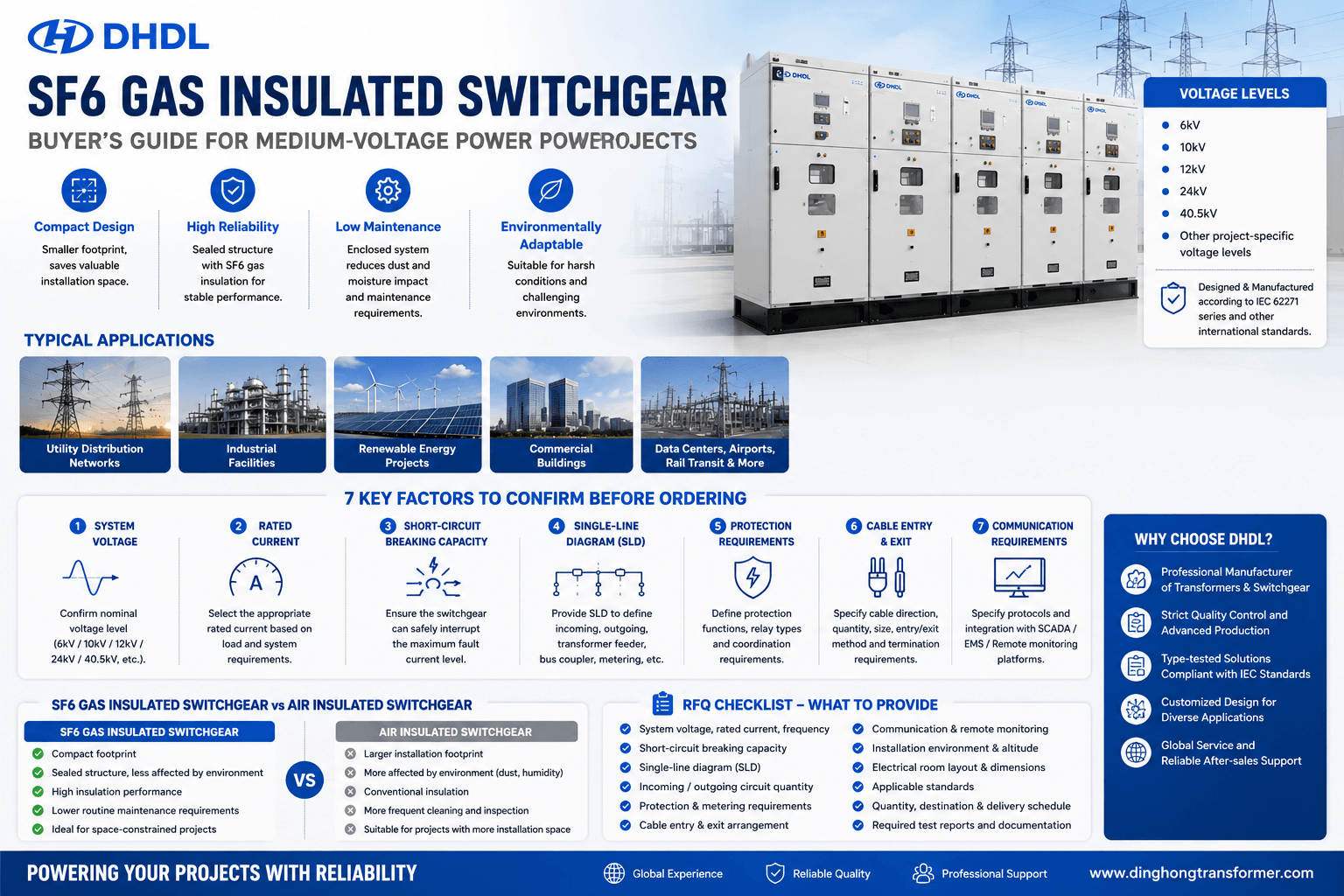
Utility Distribution Networks
SF6 switchgear can be used in urban and rural medium-voltage distribution systems for incoming power, outgoing feeders, transformer circuits, and ring network applications.
Its compact design is especially useful where substation space is limited.
Industrial Facilities
Factories, workshops, mining projects, manufacturing plants, and industrial parks require reliable switching and fault isolation.
For industrial buyers, important considerations include load characteristics, fault levels, operating continuity, expansion requirements, and protection coordination.
Renewable Energy Projects
Wind farms, solar power plants, battery energy-storage stations, and microgrids often use medium-voltage collection and distribution systems.
Switchgear may connect:
Generation / Energy Storage → Transformer → MV Switchgear → Grid or Load
For these projects, frequent load changes, environmental exposure, remote monitoring, and system integration should be considered during design.
Commercial and Infrastructure Projects
Compact medium-voltage equipment can also be used in commercial complexes, rail transit, airports, data centers, and other infrastructure projects where installation space and supply reliability are important.
SF6 Gas Insulated Switchgear vs Air Insulated Switchgear
One common buyer question is whether GIS is automatically better than air-insulated switchgear.
The answer is no—the correct choice depends on the project.
| Selection Factor | SF6 Gas Insulated Switchgear | Air Insulated Switchgear |
|---|---|---|
| Footprint | Generally more compact | Usually requires more space |
| Insulation | SF6 gas | Air |
| Environmental exposure | Internal components are more enclosed | More dependent on installation environment |
| Maintenance access | Lower environmental exposure, but sealed-system procedures matter | Components may be more accessible |
| Typical priority | Compactness and environmental adaptability | Accessibility and conventional layout |
| Project selection | Based on SLD and site conditions | Based on SLD and site conditions |
For buyers, the question should therefore not be:
“Which one is better?”
A more useful question is:
“Which switchgear architecture better matches our electrical system, installation space, environment, maintenance strategy, and lifecycle requirements?”
7 Specifications Buyers Should Confirm Before Ordering
1. System Voltage
Start with the nominal system voltage and required equipment voltage class.
DHDL’s published SF6 switchgear range includes 6kV, 10kV, 12kV, 24kV and 40.5kV configurations, with other project requirements subject to engineering confirmation.
2. Rated Current
Rated current affects the selection of busbars, switching devices, conductors, and thermal design.
Do not simply copy the current rating from another project.
3. Short-Circuit Breaking Capacity
This is one of the most important specifications buyers sometimes overlook.
The switchgear must safely interrupt the prospective fault current of the actual electrical system.
Your engineering team should provide the calculated short-circuit level rather than selecting a breaking capacity based only on price.
4. Single-Line Diagram
The single-line diagram (SLD) is one of the most useful documents you can send to a switchgear manufacturer.
It defines:
- Incoming circuits
- Outgoing circuits
- Transformer feeders
- Bus couplers
- Metering
- Protection arrangement
- Spare circuits
Without an SLD, the manufacturer may only be able to provide a preliminary configuration.
5. Protection Requirements
Specify required protection functions and relay requirements.
These may include:
- Overcurrent protection
- Earth-fault protection
- Transformer protection
- Voltage protection
- Communication and remote monitoring
The final protection philosophy should be coordinated with the complete electrical system.
6. Cable Entry and Exit
Confirm whether cables enter from the top, bottom, rear, or another project-specific arrangement.
Cable size, quantity, termination type, trench dimensions, and bending radius can directly affect cabinet design and site installation.
7. Communication Requirements
Modern projects increasingly require switchgear to communicate with:
- SCADA
- Building management systems
- Energy management systems
- Remote monitoring platforms
If communication is required, define the interfaces and protocol requirements during the RFQ stage—not after manufacturing begins.
A Hidden Cost Buyers Often Miss: Room Layout
One of the most expensive mistakes in switchgear procurement occurs when electrical equipment and civil construction are designed separately.
A cabinet may technically meet the electrical specification but still create installation problems because of:
- Insufficient room width
- Incorrect cable trenches
- Limited maintenance clearance
- Door conflicts
- Poor ventilation
- Difficult transportation access
- No room for future expansion
Before finalizing production, the buyer, consultant, EPC contractor, and switchgear manufacturer should review the equipment arrangement together.
Sending the electrical-room layout together with the SLD can prevent costly site modifications.
What Should Be Included in an SF6 Switchgear RFQ?
Instead of sending:
“Please quote SF6 switchgear.”
Provide a complete project package.
A useful RFQ should include:
- System voltage
- Rated current
- Frequency
- Single-line diagram
- Short-circuit breaking capacity
- Number of incoming and outgoing circuits
- Transformer feeder requirements
- Protection requirements
- Metering requirements
- Cable entry and exit arrangement
- Communication requirements
- Installation environment
- Altitude
- Electrical-room dimensions
- Applicable standards
- Required test reports
- Quantity
- Destination country
- Project delivery schedule
This information helps the manufacturer prepare a technical proposal based on the actual project rather than a generic cabinet quotation.
Standards, Testing and Documentation Matter
For international projects, compliance should be confirmed before production.
DHDL states that its SF6 gas insulated switchgear is designed and manufactured according to the IEC 62271 series and other relevant international standards, with type-test reports and certification documents available according to project requirements.
Buyers should specify required documentation during the quotation stage, including:
- Technical drawings
- Routine test reports
- Type-test reports
- Certificates
- Operation manuals
- Packing lists
- Nameplate requirements
- Inspection documentation
This is especially important for EPC projects and utility tenders where document approval is part of the procurement process.
Why Choose DHDL for Medium-Voltage Power Distribution?
DHDL provides more than individual switchgear cabinets.
Its manufacturing portfolio covers:
- Transformers
- High- and low-voltage switchgear
- Distribution cabinets
- Prefabricated substations
- Energy-storage cabinets
- EV charging equipment
This allows transformer and switchgear requirements to be considered as part of a complete power distribution system.
DHDL also supports project-specific adaptation for voltage, rated current, protection, cabinet layout, cable arrangement, communication functions, environmental conditions, and international standards.
For overseas projects, technical drawings, test reports, installation guidance, export documentation, and remote support can be provided according to project requirements.
Conclusion
SF6 gas insulated switchgear is a practical solution for medium-voltage projects that require compact installation, reliable insulation, reduced environmental exposure, and stable switching and protection performance.
But successful procurement depends on much more than choosing a voltage rating.
Before requesting a quotation, confirm the system voltage, rated current, short-circuit level, SLD, protection scheme, cable arrangement, communication requirements, site environment, room layout, standards, and documentation requirements.
The more accurate the information provided during the RFQ stage, the easier it is to avoid redesign, installation conflicts, project delays, and unexpected costs.
Choose DHDL for Your Power Distribution Solution
DHDL provides transformers, SF6 gas insulated switchgear, distribution cabinets, prefabricated substations, and integrated power distribution solutions for utility, industrial, renewable-energy, commercial, and infrastructure projects.
If you need an SF6 switchgear proposal, send your single-line diagram, system voltage, rated current, short-circuit level, circuit quantity, installation conditions, applicable standards, and destination country.
Our engineering team can review the project requirements and prepare a customized technical solution.
FAQ
1. What is SF6 gas insulated switchgear?
SF6 gas insulated switchgear is medium-voltage electrical equipment that uses sulfur hexafluoride gas as an insulating and arc-extinguishing medium. It performs switching, protection, isolation, control, and power-distribution functions.
2. What voltage levels does DHDL SF6 switchgear support?
DHDL lists 6kV, 10kV, 12kV, 24kV and 40.5kV configurations. Other voltage requirements can be evaluated according to the project.
3. What are the main advantages of SF6 gas insulated switchgear?
Its key advantages include compact installation, stable insulation performance, reduced exposure of internal components to dust and humidity, reliable switching, and lower routine maintenance requirements.
4. Is SF6 switchgear better than air-insulated switchgear?
Not necessarily. GIS is attractive where footprint and environmental protection are priorities, while air-insulated equipment may suit projects prioritizing conventional layouts and equipment accessibility. Selection should be based on the electrical design, site conditions, maintenance strategy, and budget.
5. Is SF6 gas insulated switchgear maintenance-free?
No. Its sealed construction can reduce contamination-related maintenance, but switching mechanisms, protection systems, connections, auxiliary circuits, interlocks, and gas-related systems still require appropriate inspection and maintenance.
6. What information is required for an SF6 switchgear quotation?
Provide the system voltage, rated current, short-circuit breaking capacity, SLD, circuit quantity, protection requirements, cable arrangement, communication requirements, installation environment, standards, room layout, quantity, and destination.
7. Can DHDL customize SF6 gas insulated switchgear?
Yes. DHDL supports customization of voltage level, rated current, circuit configuration, protection units, breaking capacity, cable entry and exit, communication functions, cabinet dimensions, and applicable standards.
Choose DHDL for Your Transformer Solution
DHDL is a professional transformer and power distribution equipment manufacturer serving utility, industrial, commercial and renewable-energy projects.
Our transformer solutions can be customized according to project capacity, voltage combination, frequency, winding material, installation environment and IEC or ANSI/IEEE requirements.
Whether you need a 75kVA three-phase transformer or a complete transformer and switchgear solution, providing complete electrical specifications at the RFQ stage helps our engineering team confirm a more accurate configuration.
Need a 75kVA transformer quotation? Send us your primary voltage, secondary voltage, frequency, application, standard, quantity and destination country.
💬WeChat/WhatsApp:+8613355383777
📩 Email:service@dinghongtransformer.com
🌐web:https://dinghongtransformer.com/