What You Need to Know About Oil-Immersed Transformers: A Complete Buyer’s Guide

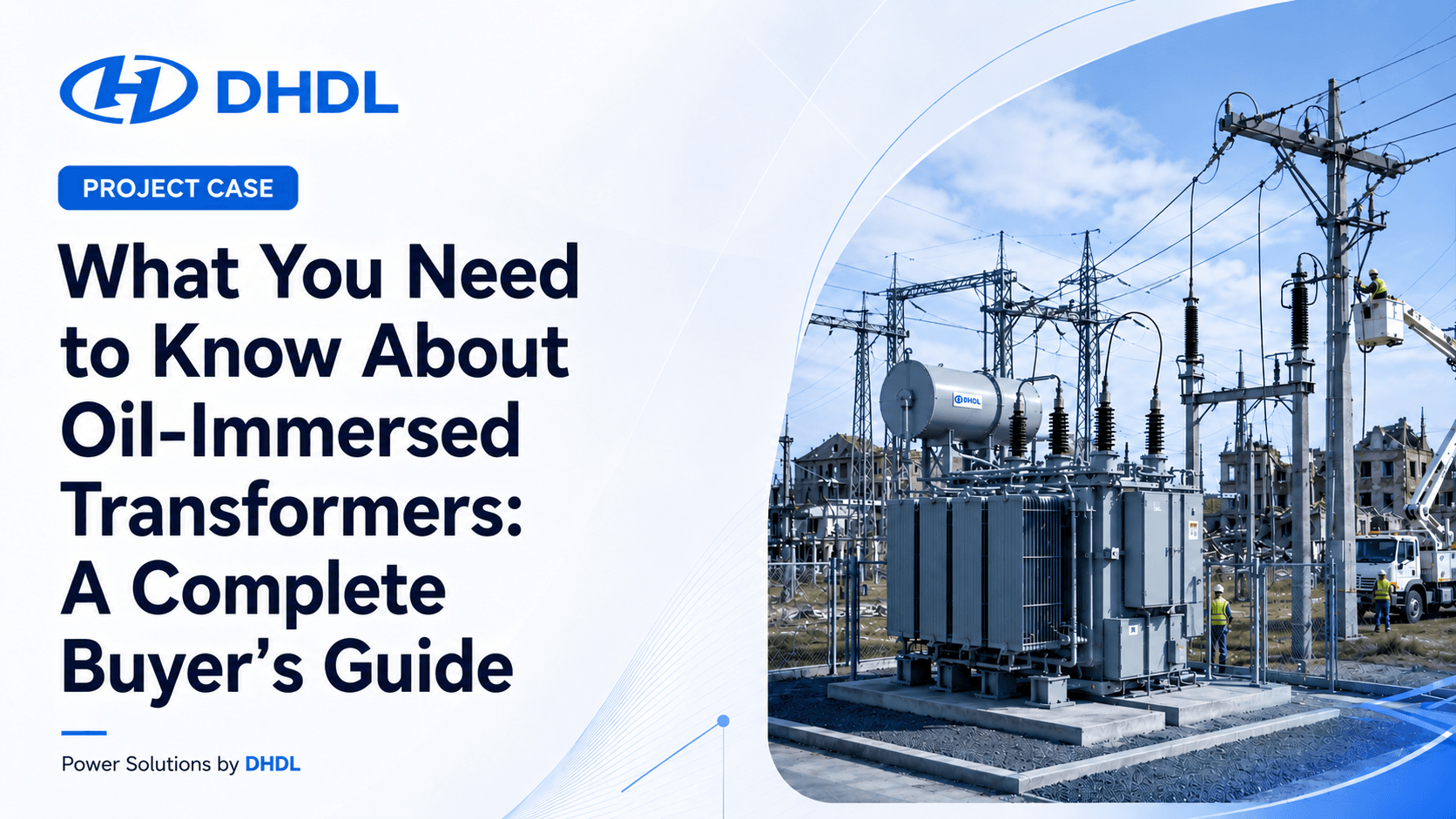
Oil-immersed transformers are widely used in power transmission, utility substations, industrial plants, renewable energy projects, and large-scale distribution networks. Thanks to their excellent cooling performance, high efficiency, and ability to handle large capacities, they remain one of the most reliable transformer types in modern power systems.
However, many buyers focus only on transformer capacity and price while overlooking critical factors such as insulation design, cooling methods, loss performance, maintenance requirements, and installation environment. These details can significantly affect operating costs and equipment lifespan.
This guide explains how oil-immersed transformers work, where they are used, and what buyers should consider before selecting one.
1. What Is an Oil-Immersed Transformer?
An oil-immersed transformer is a power transformer whose core and windings are completely immersed in insulating mineral oil or other approved insulating liquids.
The transformer oil performs two important functions:
- Provides electrical insulation between internal components.
- Transfers heat from the windings and core to the cooling system.
Compared with dry-type transformers, oil-immersed transformers generally offer higher power ratings, better heat dissipation, and lower initial equipment costs, making them ideal for outdoor and heavy-duty applications.
2. How Does an Oil-Immersed Transformer Work?
The working principle is based on electromagnetic induction.
When alternating current flows through the primary winding, it creates a changing magnetic field inside the laminated steel core. This magnetic flux induces voltage in the secondary winding, transferring electrical energy without a direct electrical connection.
During operation, heat is generated by the core and windings. The insulating oil absorbs this heat and circulates naturally—or with pumps in larger units—to radiators where it is cooled before returning to the transformer tank.
This continuous cooling process allows oil-immersed transformers to operate efficiently under high electrical loads.
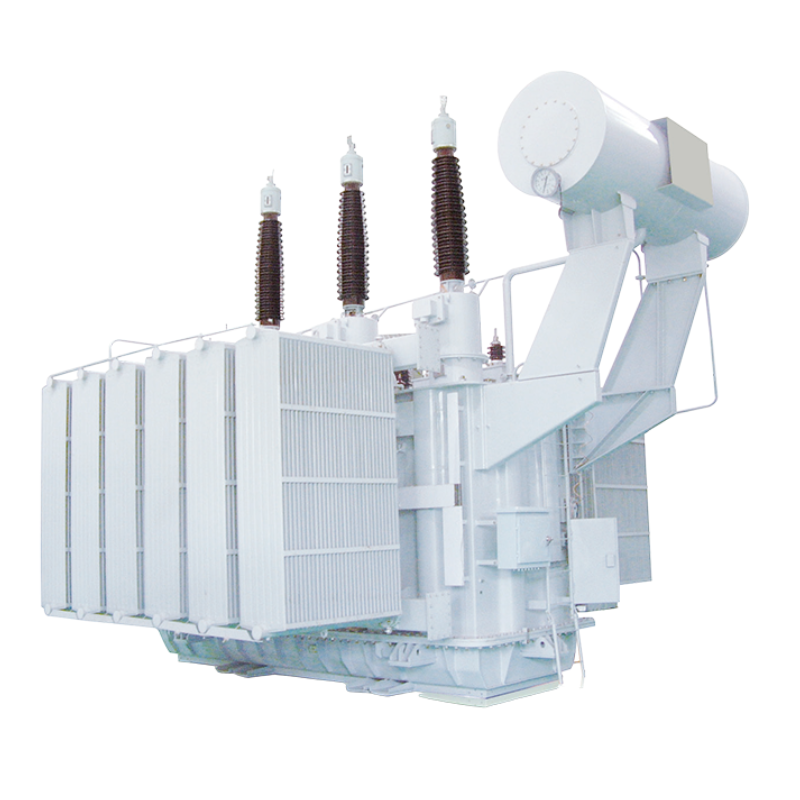
3. Main Components of an Oil-Immersed Transformer
Although designs vary by voltage and capacity, most oil-immersed transformers include:
- Magnetic core
- High-voltage winding
- Low-voltage winding
- Transformer tank
- Insulating oil
- Radiators
- Conservator tank
- Buchholz relay
- Breather
- Bushings
- Tap changer
- Oil level indicator
- Temperature monitoring system
- Pressure relief device
Each component contributes to safe operation, efficient cooling, and long service life.
4. Advantages of Oil-Immersed Transformers
4.1 Excellent Cooling Performance
Transformer oil transfers heat much more efficiently than air.
This enables higher continuous loading and improved thermal performance, especially in utility substations and industrial facilities.
4.2 Higher Capacity
Oil-immersed transformers are commonly manufactured from a few hundred kVA to several hundred MVA.
They are widely used for:
- Utility substations
- Power generation plants
- Wind farms
- Solar power stations
- Industrial parks
- Mining projects
- Grid transmission systems
DHDL manufactures oil-immersed transformers ranging from distribution transformers to 110kV, 220kV, 330kV, 400kV, and 500kV ultra-high-voltage power transformers, supporting customized solutions for global power projects.
4.3 Lower Initial Investment
For similar voltage and capacity ratings, oil-immersed transformers are often less expensive than dry-type transformers.
This makes them a preferred choice for outdoor installations where fire protection requirements are less restrictive.
4.4 Long Service Life
With proper maintenance, many oil-immersed transformers can operate reliably for 30 years or longer.
Routine oil testing and preventive maintenance help maximize equipment life.
5. Common Applications
Oil-immersed transformers are widely used in:
- Power utilities
- Electrical substations
- Manufacturing plants
- Mining operations
- Wind power projects
- Solar power stations
- Petrochemical facilities
- Railway systems
- Rural electrification
- Infrastructure construction
They are particularly suitable for projects requiring high power capacity and continuous operation.
6. Important Factors Buyers Should Consider
Many procurement teams compare only quotations.
In reality, several technical parameters are equally important.
6.1 Voltage Rating
Confirm:
- Primary voltage
- Secondary voltage
- Highest system voltage
- Frequency (50Hz or 60Hz)
Different countries follow different utility standards.
6.2 Rated Capacity
Capacity should be selected according to actual load demand rather than simply choosing the largest available transformer.
Oversized transformers increase no-load losses, while undersized units may overheat.
6.3 Cooling Method
Common cooling classes include:
- ONAN (Oil Natural Air Natural)
- ONAF (Oil Natural Air Forced)
- OFAF (Oil Forced Air Forced)
- OFWF (Oil Forced Water Forced)
The cooling system directly affects transformer capacity and efficiency.
6.4 Short-Circuit Impedance
Impedance influences:
- Fault current
- Voltage regulation
- Parallel operation
- Protection coordination
It should always match the system design.
6.5 Loss Performance
Two important values should always be compared:
- No-load loss
- Load loss
A transformer with slightly higher purchase cost but significantly lower losses may reduce operating expenses throughout its service life.
7. Hidden Costs Buyers Often Ignore
7.1 Fire Protection Requirements
Although oil-immersed transformers operate safely when properly designed and maintained, many indoor installations require:
- Fire barriers
- Oil containment pits
- Drainage systems
- Fire suppression equipment
These additional construction costs should be included in the project budget.
7.2 Oil Quality Monitoring
Transformer oil naturally ages over time.
Routine inspections typically include:
- Dielectric strength
- Moisture content
- Acidity
- Dissolved Gas Analysis (DGA)
Ignoring oil condition can lead to insulation failure.
7.3 Installation Environment
Ambient temperature, altitude, humidity, dust, and corrosive environments all influence transformer performance.
Outdoor transformers often require suitable enclosure protection and anti-corrosion treatment.
8. Why Manufacturer Quality Matters
A high-quality transformer depends on much more than good materials.
Reliable manufacturers perform strict quality control throughout:
- Core assembly
- Coil winding
- Vacuum drying
- Tank fabrication
- Oil filling
- Factory testing
- Final inspection
DHDL manufactures oil-immersed transformers according to international standards and offers customized designs for utility, industrial, renewable energy, and infrastructure projects worldwide.
Conclusion
Oil-immersed transformers remain the preferred solution for medium- and high-voltage power systems because of their excellent cooling performance, high reliability, large capacity, and competitive lifecycle cost.
When selecting an oil-immersed transformer, buyers should evaluate more than the purchase price. Voltage, capacity, cooling method, impedance, energy losses, installation conditions, maintenance requirements, and manufacturer capabilities all influence long-term project success.
Whether your project involves substations, industrial facilities, renewable energy, or grid expansion, choosing the right transformer supplier can improve efficiency, reduce operating costs, and ensure reliable power distribution for decades.
FAQ
1. What is an oil-immersed transformer?
An oil-immersed transformer uses insulating oil to provide electrical insulation and remove heat from the core and windings, making it suitable for medium- and high-voltage power applications.
2. What are the advantages of oil-immersed transformers?
They offer excellent cooling performance, high efficiency, large power capacity, lower initial cost, and long service life, making them ideal for utility, industrial, and renewable energy projects.
3. Where are oil-immersed transformers commonly used?
They are widely installed in substations, power plants, industrial facilities, wind farms, solar power stations, mining operations, and utility distribution networks.
4. What is the difference between ONAN and ONAF cooling?
ONAN uses natural oil circulation and natural air cooling, while ONAF adds forced-air fans to improve cooling efficiency and increase transformer loading capacity.
5. How often should transformer oil be tested?
The testing interval depends on operating conditions and project requirements. Periodic oil analysis, including moisture, dielectric strength, acidity, and dissolved gas analysis (DGA), is recommended to monitor insulation condition and detect potential faults early.
6. What information should I provide when requesting a quotation?
Provide the rated capacity, primary and secondary voltage, frequency, cooling method, vector group, impedance, installation environment, applicable standards, quantity, and destination country to receive an accurate technical proposal and quotation.
Choose DHDL for Your Transformer Solutions
DHDL is a professional transformer manufacturer specializing in dry-type transformers, oil-immersed transformers, power transformers, distribution transformers, and complete power distribution solutions.
We support customized transformer designs based on project voltage, capacity, frequency, installation environment, and international standards.
Whether for industrial facilities, renewable energy projects, data centers, utilities, or infrastructure applications, DHDL delivers reliable, efficient, and customized power solutions worldwide.
Contact DHDL today for professional transformer selection support and a customized quotation.