
How to Size a Transformer for Commercial and Industrial Buildings

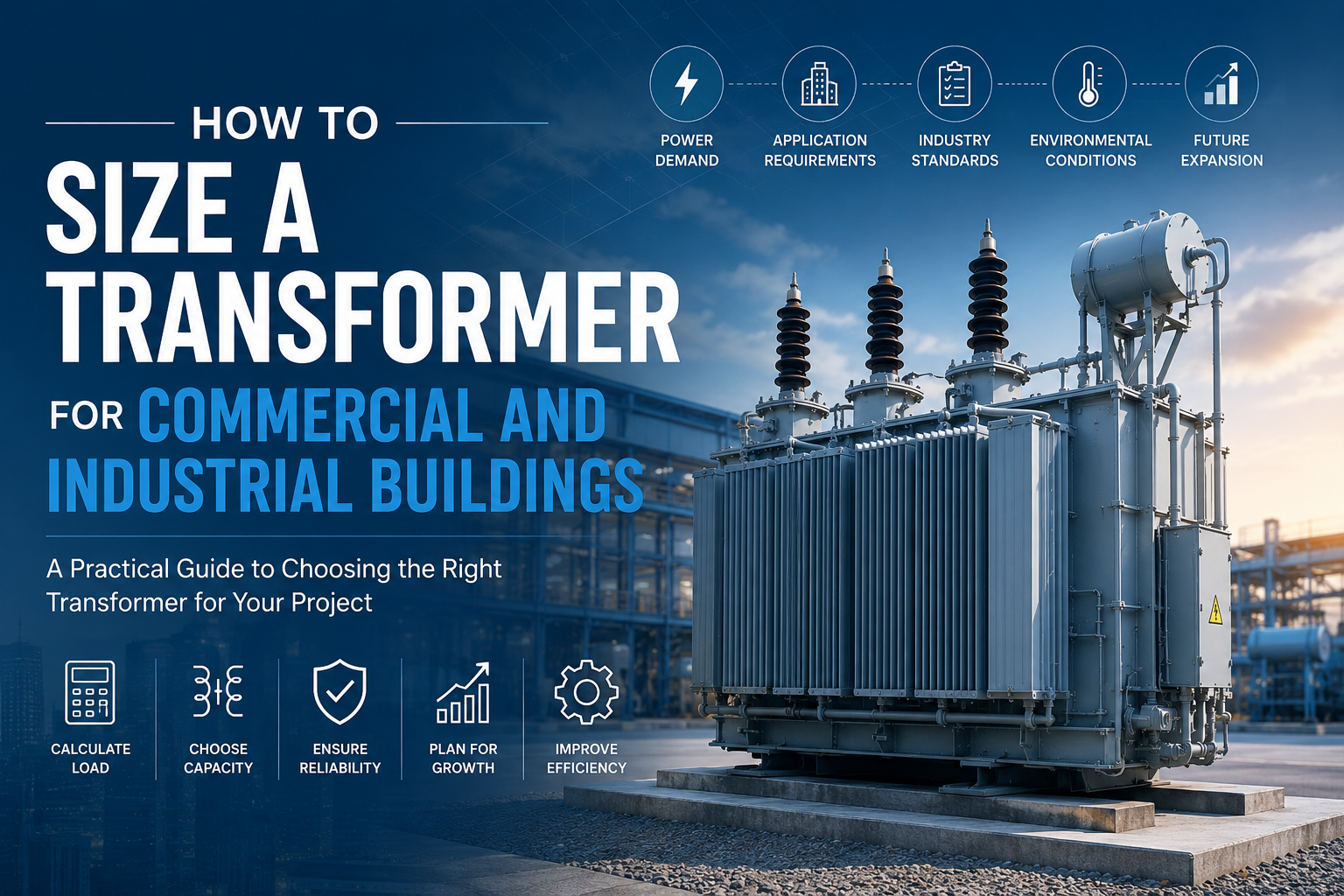
Selecting the correct transformer size is one of the most important decisions in any commercial or industrial electrical project. An undersized transformer can lead to overheating, voltage drops, equipment failures, and costly downtime. On the other hand, an oversized transformer increases initial investment costs and can reduce overall energy efficiency.Whether you’re designing a new facility, expanding an existing operation, or replacing aging equipment, understanding how to properly size a transformer ensures reliable power distribution and long-term operational performance.
Why Proper Transformer Sizing Matters
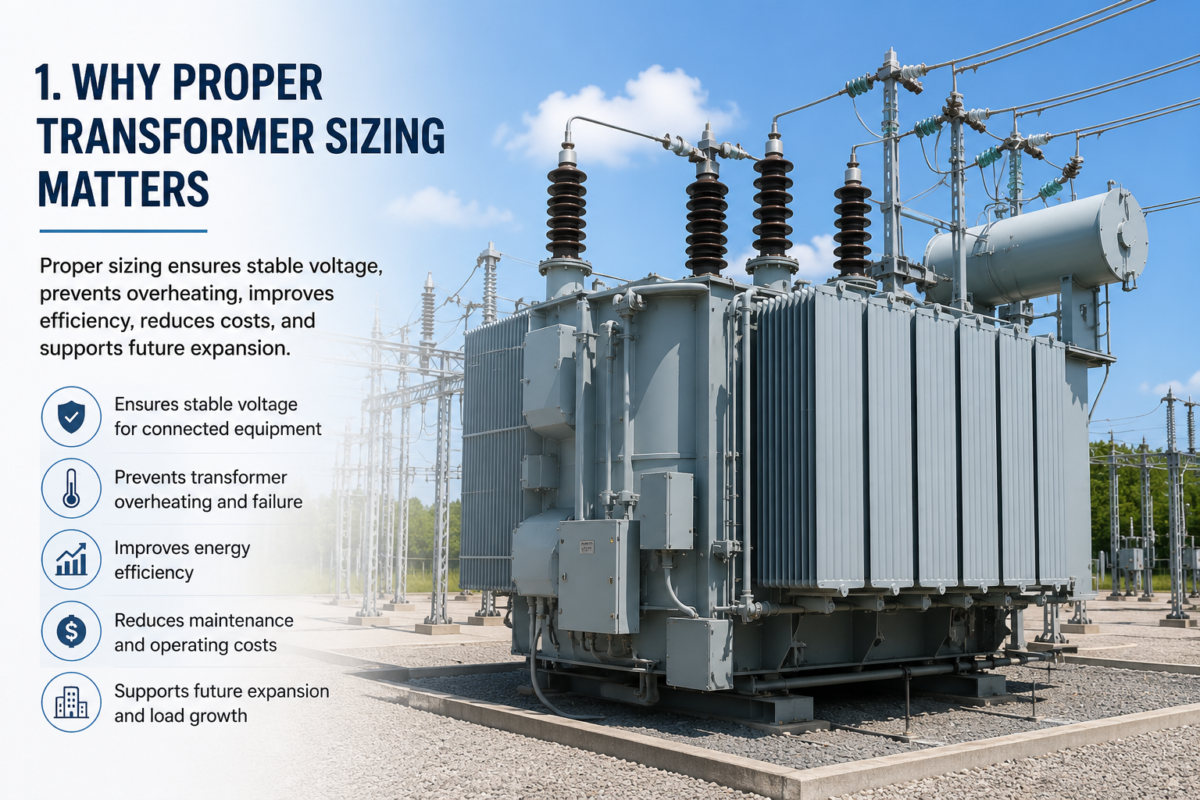
A transformer serves as the backbone of your electrical distribution system.
Choosing the right capacity helps to:
Ensure stable voltage for connected equipment.
Prevent transformer overheating and premature failure.
Improve energy efficiency.
Reduce maintenance and operating costs.
Support future expansion without frequent upgrades.
Proper sizing is especially critical in industries where continuous power is essential, such as manufacturing plants, hospitals, commercial complexes, data centers, and renewable energy facilities.
Step 1: Determine the Total Connected Load
Begin by identifying all electrical equipment that will be powered by the transformer.
This includes:
Lighting systems
HVAC equipment
Industrial machinery
Motors
Elevators
Office equipment
Pumps and compressors
Production lines
Record the power rating of each load in kilowatts (kW) or kilovolt-amperes (kVA).
Step 2: Calculate the Total Demand Load
Not every piece of equipment operates at full capacity simultaneously. Apply a demand factor based on the expected operating conditions to estimate the actual load.
For example:
Total connected load: 600 kW
Demand factor: 80%
Actual demand:600 × 0.8 = 480 kW
Using demand load instead of connected load results in a more practical transformer selection.
Step 3: Convert kW to kVA
Transformers are rated in kVA, not kW.
Use the formula:kVA = kW ÷ Power Factor (PF)
Example:
Load = 480 kWPower Factor = 0.8480 ÷ 0.8 = 600 kVA
In this case, a transformer with a rating of approximately 600 kVA would be required before considering additional safety margins.
Step 4: Allow for Future Expansion
Commercial and industrial facilities often increase their electrical demand over time.
When selecting a transformer, consider future additions such as:
New production equipment
Extra office space
Additional HVAC systems
EV charging stations
Renewable energy integration
Many engineers include a reserve capacity of approximately 15–25% to accommodate future growth without replacing the transformer.
Step 5: Consider Starting Currents
Large motors and compressors draw significantly higher current during startup.
If your facility contains:
Industrial motors
Compressors
Cranes
Pumps
Heavy manufacturing equipment
The transformer should be capable of handling these temporary inrush currents without excessive voltage drop.
Step 6: Evaluate Environmental Conditions
Installation conditions also affect transformer selection.
Consider factors such as:
Indoor or outdoor installation
Ambient temperature
Ventilation
Humidity
Dust levels
Altitude
Corrosive environments
Harsh environments may require specialized transformer designs or enhanced cooling systems to maintain reliable operation.
Common Transformer Sizing Mistakes
Avoid these common errors when choosing a transformer:
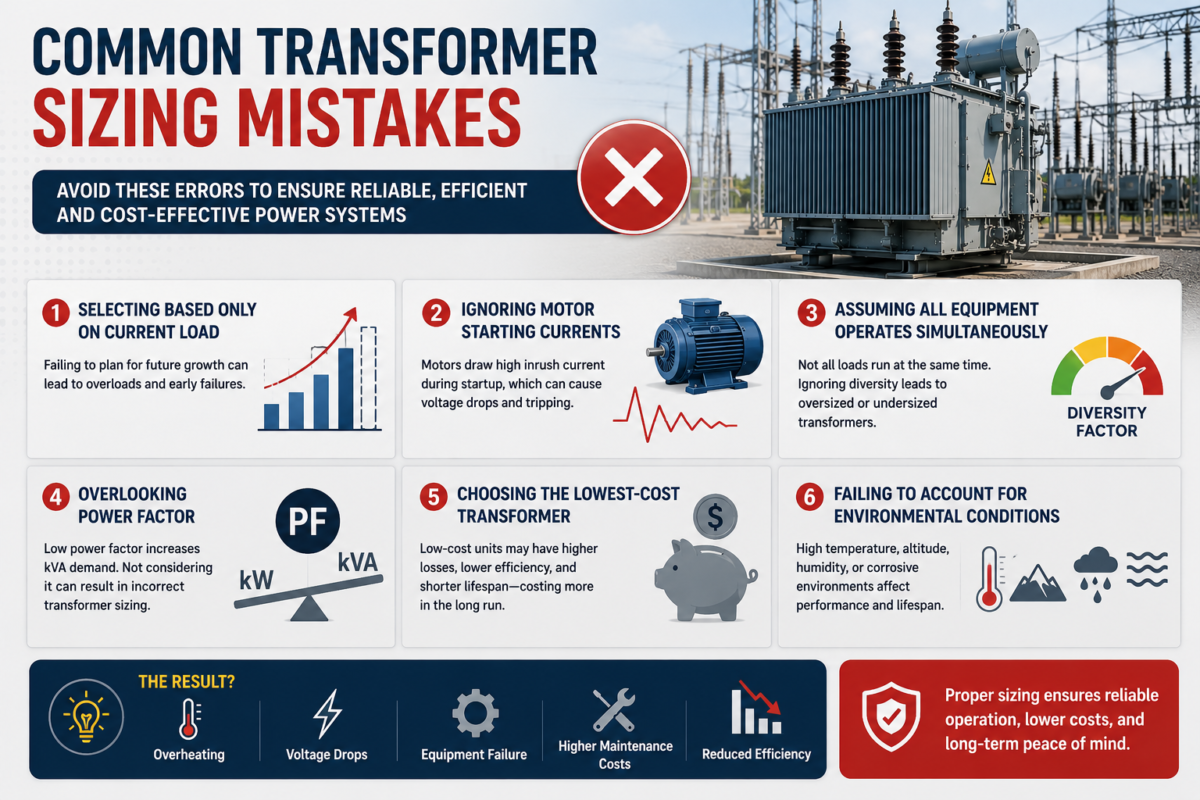
- Selecting based only on current load without planning for expansion.
- Ignoring motor starting currents.
- Assuming all equipment operates simultaneously
Partner with Dinghong Transformer for Expert Solutions
Choosing the correct transformer involves more than calculating electrical load.
Application requirements, industry standards, environmental conditions, and future operational needs all play an important role in selecting the right solution.
At Dinghong Transformer, we specialize in designing and manufacturing high-quality power and distribution transformers for commercial, industrial, utility, and renewable energy applications.
Our experienced engineering team works closely with clients to recommend transformer solutions that match their voltage requirements, load capacity, installation environment, and long-term operational goals.
Whether you need an oil-immersed transformer, dry-type transformer, or a customized power distribution solution, Dinghong Transformer is committed to delivering reliable, energy-efficient products that meet international quality standards.
By partnering with Dinghong you gain a trusted manufacturer focused on performance, durability, and long-term value for every project.