What Is an Electric Furnace Transformer? A Complete Guide for Steel & Metallurgy

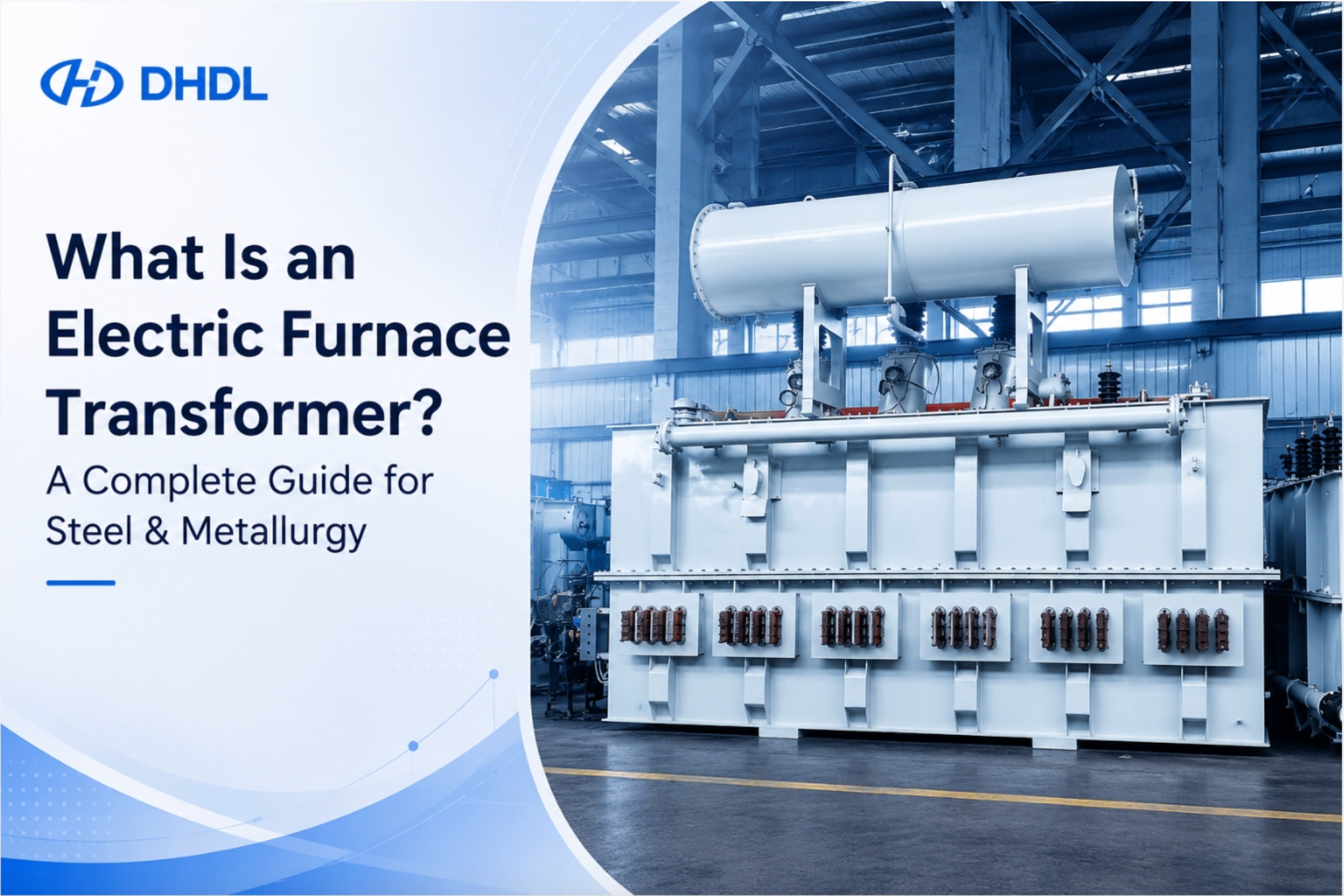
An electric furnace transformer supplies the regulated, high-current power required by electric arc furnaces, ladle refining furnaces and other metallurgical smelting systems.
Unlike a standard distribution transformer, an electric furnace transformer must manage frequent load fluctuations, repeated impact currents, long heavy-load operating periods and changing voltage requirements during different furnace stages.
DHDL designed the HSPSZ-18000/110 Electric Furnace Transformer for steelmaking and metallurgical applications. Its reference configuration combines an 18,000 kVA rated capacity, a 110 kV main-transformer input, a regulated 175–305 V furnace-side output and OFAF cooling.
DHDL applies this transformer to electric arc furnaces, ladle refining furnaces, steel smelting, non-ferrous metal smelting and heavy industrial systems that require stable high-current power.
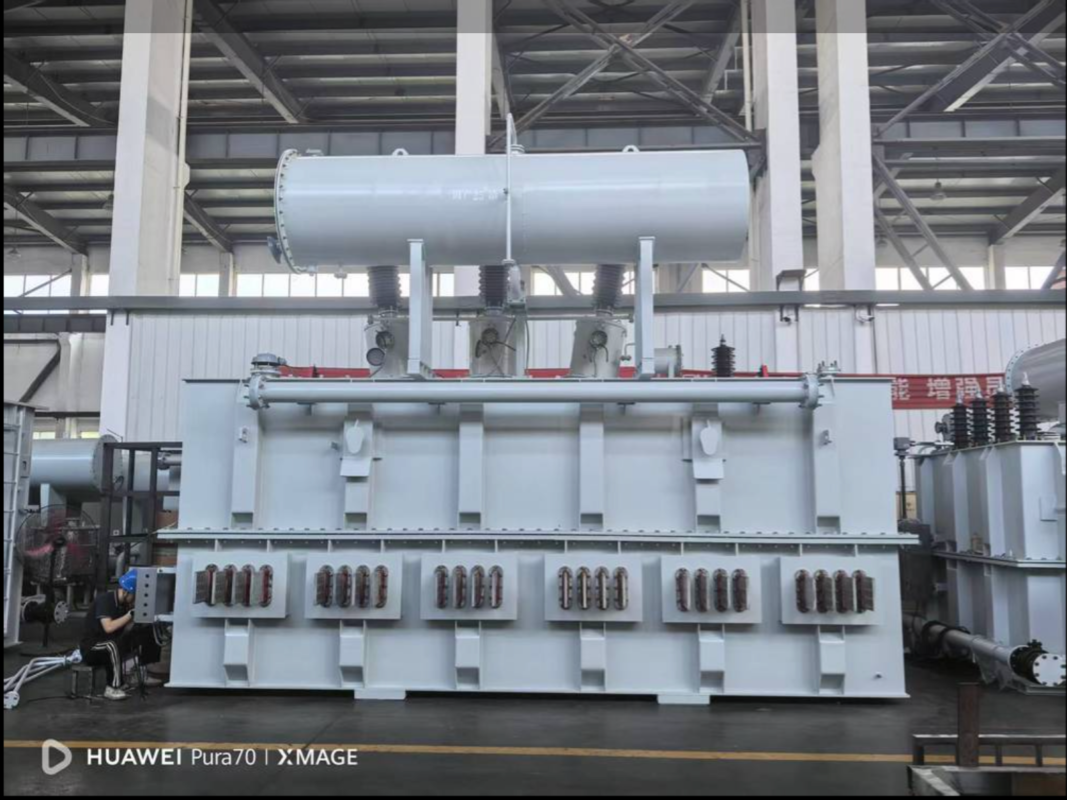
How Does an Electric Furnace Transformer Work?
An electric furnace transformer converts high-voltage power into the regulated low-voltage, high-current output required by a furnace.
The transformer must do more than supply one fixed secondary voltage. It must support the changing electrical requirements of the furnace as production moves through melting, heating and refining stages.
Readers who need a broader introduction can first review DHDL’s guide to how power transformers work and where industries use them.
High-voltage power enters the main transformer
In the HSPSZ-18000/110 reference configuration, the main transformer receives a 110,000 V input.
It converts that input to a regulated 175–305 V furnace-side output. The lower voltage supports the high-current requirements of the furnace circuit.
Voltage regulation supports different furnace stages
An electric furnace can require different voltage and current combinations during different operating stages.
The DHDL furnace transformer supports multi-level voltage regulation across its 175–305 V output range. This design allows the electrical system to respond to changing smelting requirements instead of supplying one fixed output throughout the process.
The transformer handles fluctuating loads
Electric furnaces create frequent load fluctuations and impact currents. These conditions place electrical, mechanical and thermal stress on the transformer.
DHDL uses an optimized structure to help the transformer withstand the impact current and repeated load changes that occur during furnace operation.
Why Does an Electric Furnace Need a Dedicated Transformer?
A standard power or distribution transformer can serve a stable grid, building or general industrial load. An electric furnace creates a substantially different operating profile.
The furnace needs a transformer that matches its high-current demand, voltage-regulation range, duty cycle and impact-load conditions.
Electric furnaces require high current
Steel and metallurgical smelting processes require high-current power at a comparatively low secondary voltage.
DHDL designed the HSPSZ-18000/110 specifically to provide high-current output for electric furnace smelting and other high-power metallurgical processes.
Furnace loads change frequently
The furnace load can change as operators start the furnace, establish or stabilize the arc, heat the charge and adjust the smelting process.
The DHDL product page states that ordinary transformers may experience excessive temperature rise and accelerated insulation aging if their design does not account for strong load fluctuations.
Heavy-load operation creates demanding thermal conditions
High current and prolonged operation generate heat. The transformer must control its oil and winding temperatures while it continues to supply the furnace.
DHDL combines an oil-immersed structure with OFAF cooling to support operation under heavy-load and high-temperature conditions.
Buyers who want more information about transformer oil, cooling and maintenance can read DHDL’s oil-immersed transformer buyer’s guide.
Incorrect selection can affect production
The product page identifies several possible consequences of an incorrect furnace-transformer selection.
| Selection problem | Possible operational effect |
|---|---|
| Transformer does not match the furnace load | Unstable furnace temperature |
| Output does not match process requirements | Lower smelting efficiency |
| Structure does not account for impact loads | More frequent transformer failures |
| Thermal design does not match the duty cycle | Shutdowns and maintenance |
| Buyer focuses only on initial price | Higher long-term costs |
These risks explain why buyers should evaluate more than rated capacity and purchase price.
If you already know your furnace type, incoming voltage and required output range, send the details through the DHDL contact page. DHDL can use this information to begin reviewing the required configuration.
Electric Furnace Transformer vs. Distribution Transformer
An electric furnace transformer and an oil-immersed distribution transformer can both use oil for insulation and cooling, but they serve different load profiles.
The following comparison helps buyers choose the correct transformer category. It does not suggest that one type is universally better than the other.
| Selection factor | Electric furnace transformer | Oil-immersed distribution transformer |
| Primary purpose | Supplies electric furnaces and metallurgical smelting systems | Supplies utility grids, industrial facilities and general distribution systems |
| Typical load profile | Frequent fluctuations, impact currents and heavy smelting loads | General power-distribution loads |
| Secondary requirement | Regulated low-voltage, high-current furnace output | Conventional distribution-voltage conversion |
| Voltage control | Multi-level regulation for furnace operating stages | Tap settings configured for distribution requirements |
| Structural priority | Resistance to furnace impact loads and fluctuating current | Reliable general distribution and environmental adaptability |
| Reference DHDL product | HSPSZ-18000/110, 18,000 kVA | 6–38.5 kV series, 30–2,500 kVA |
| Typical application | Electric arc furnace, ladle refining furnace and metallurgical smelting | Grid distribution, infrastructure and general industrial distribution |
A buyer should start with an electric furnace transformer when the load comes directly from an electric arc furnace, ladle refining furnace or similar high-current smelting system.
For a utility grid, renewable-energy project, outdoor substation or general industrial distribution system, DHDL’s 6–38.5 kV oil-immersed distribution transformer may provide a more appropriate starting point.
HSPSZ-18000/110 Technical Specifications
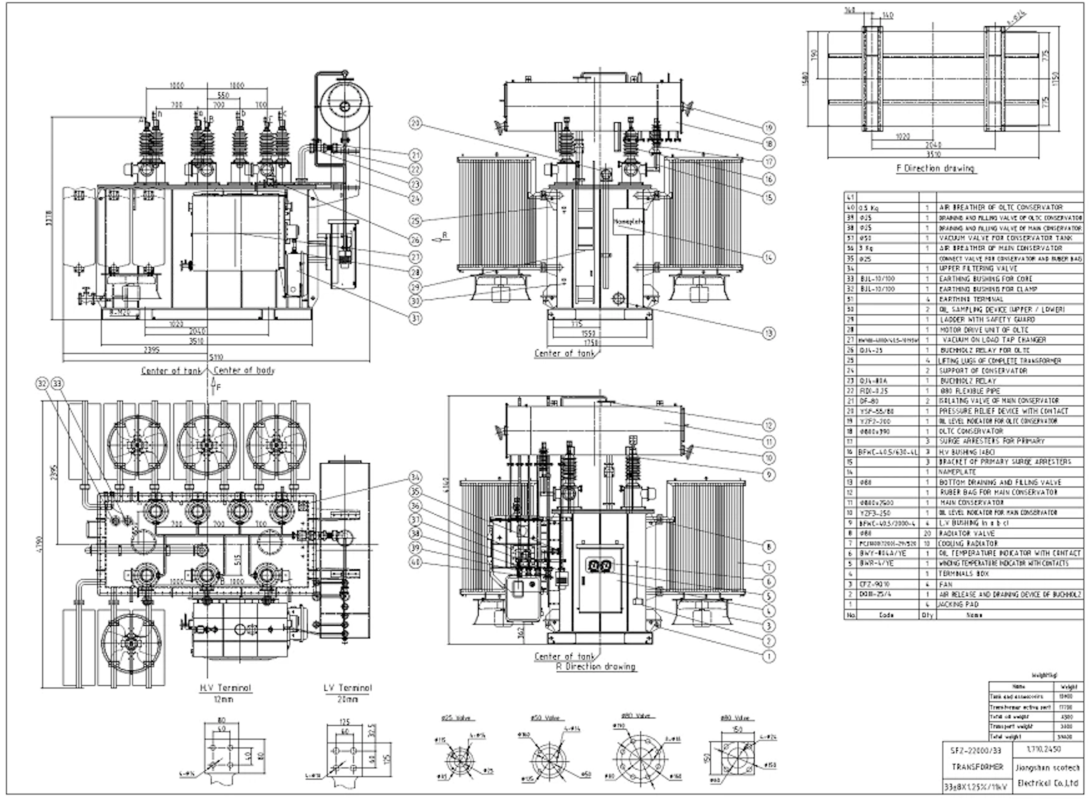
HSPSZ-18000/110 as an 18,000 kVA electric furnace transformer for steel and metallurgical applications.
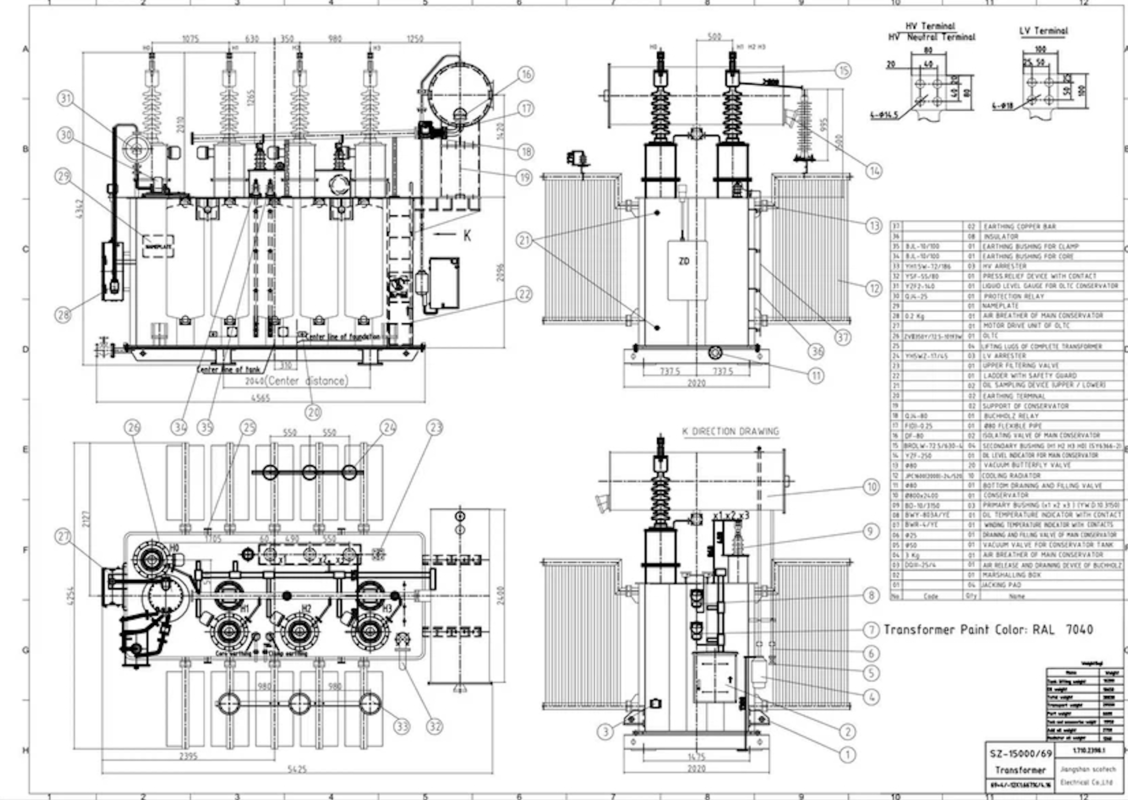
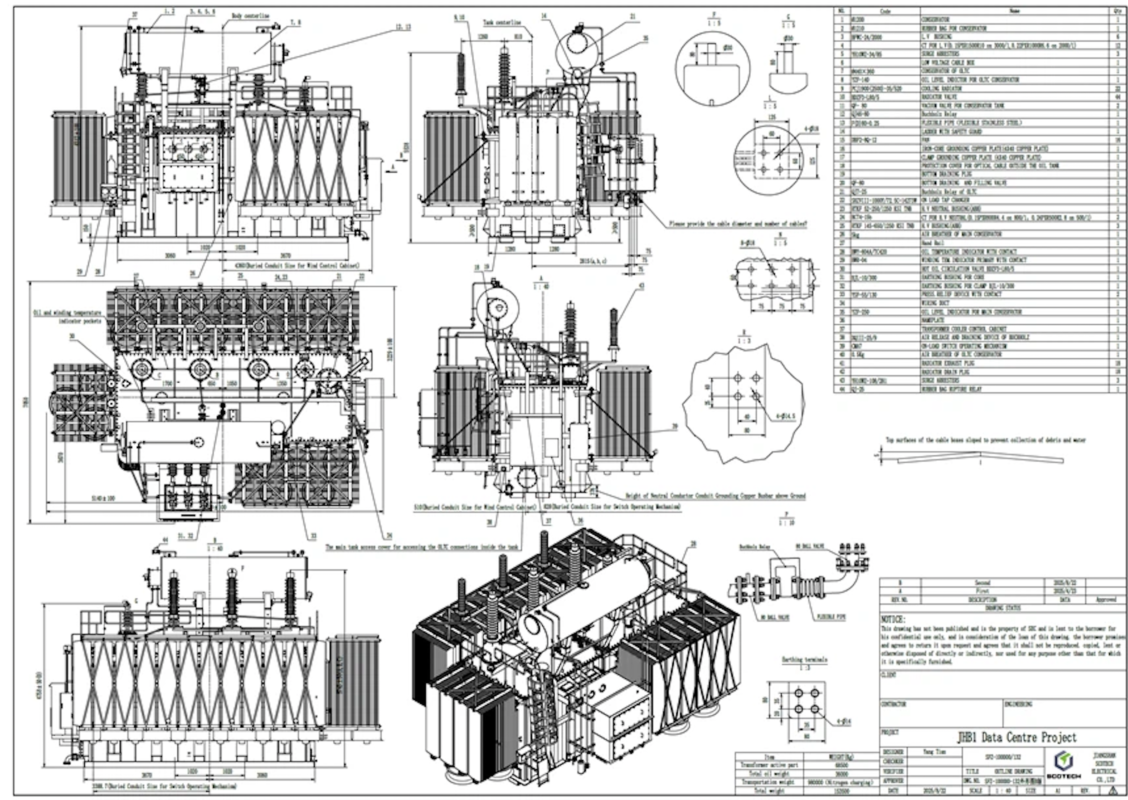
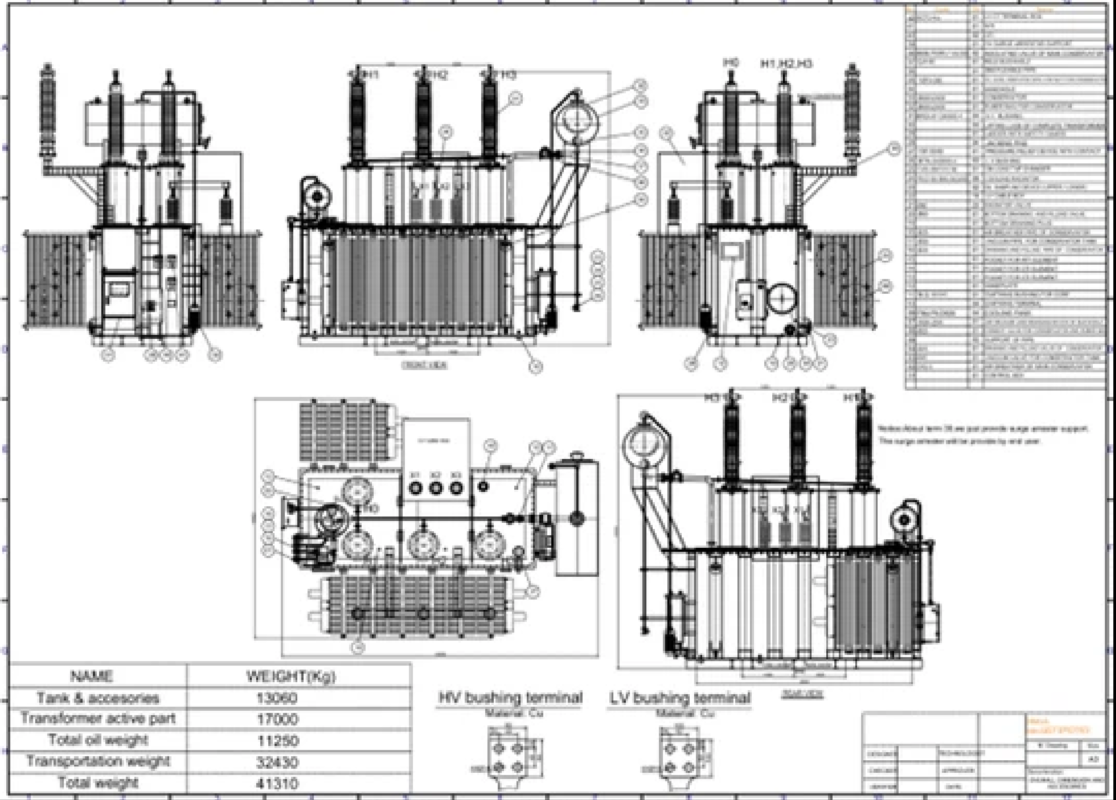
Main product specifications
| Item | Specification |
| Product type | Electric Furnace Transformer |
| Product model | HSPSZ-18000/110 |
| Rated capacity | 18,000 kVA |
| Main-transformer voltage ratio | 110,000 / 175–305 V |
| Compensation-transformer voltage ratio | 11,608.3–20,231.7 / 175–305 V |
| Cooling method | OFAF |
| Rated frequency | 50 Hz |
| Main-transformer short-circuit impedance | ≤6% |
| Noise level | ≤65 dB(A) |
| Primary applications | Steel smelting, metallurgy, electric arc furnaces, refining furnaces and non-ferrous metal smelting |
DHDL can customize the final parameters according to the furnace type, smelting process, voltage-regulation requirements, installation environment and applicable project standards.
Rated capacity and voltage ratios
The transformer carries an 18,000 kVA rated capacity.
The following table separates the main and compensation transformer voltage arrangements.
| Transformer section | High-voltage side | Regulated output |
| Main transformer | 110,000 V | 175–305 V |
| Compensation transformer | 11,608.3–20,231.7 V | 175–305 V |
Buyers should not use the capacity figure alone to determine project suitability. The final selection must also account for furnace power, voltage range, operating stages, load pattern and cooling requirements.
Connection symbols
The product page lists different connection symbols for single-phase and three-phase configurations.
| Transformer section | Single-phase connection | Three-phase connection |
| Main transformer | Ii0 | Dd0 |
| Compensation transformer | Ii0 | Yd11 |
Buyers should provide the required phase arrangement and furnace electrical diagram during technical confirmation.
Short-circuit impedance
The product page specifies a short-circuit impedance of no more than 6% for the main transformer.
This value applies to the main transformer in the reference configuration. The approved project documents should confirm the final impedance requirement.
Insulation levels
| Transformer section | Insulation level |
| Main transformer | LI480AC200 / AC45 / AC5 |
| Compensation-transformer high-voltage side | LI200AC85 |
These values apply to the product page’s reference configuration. DHDL can review the final insulation requirements against the installation environment and applicable project standard.
Temperature rise and noise
| Parameter | Reference value |
| Top-oil temperature-rise limit | 50 K |
| Average-winding temperature-rise limit | 65 K |
| Noise level | ≤65 dB(A) |
How Should Buyers Select an Electric Furnace Transformer?
A strong purchasing specification should describe the furnace, electrical system and operating environment together.
Furnace and process information
Prepare the following information:
- Furnace type
- Furnace rated power or capacity
- Smelting material
- Smelting or refining process
- Furnace operating stages
- Expected duty pattern
- Load-fluctuation characteristics
Electrical requirements
Provide:
- Incoming voltage
- Required furnace-side voltage range
- Rated frequency
- Phase arrangement
- Connection requirements
- Voltage-regulation requirements
- Required short-circuit impedance
Installation and environmental conditions
Provide:
- Indoor or outdoor installation
- Ambient temperature
- Installation altitude
- Ventilation conditions
- Available installation space
- Transportation restrictions
- Site access conditions
Cooling requirements
The HSPSZ-18000/110 uses OFAF cooling in its reference configuration.
Buyers should confirm the expected loading pattern, environmental temperature, cooling-system requirements and any site limitations that could affect the cooling arrangement.
Winding-material requirements
The product page does not specify the winding conductor used in the reference model.
If winding material forms part of the procurement specification, ask DHDL to confirm it in the approved technical documents. DHDL’s article on copper versus aluminum transformer windings provides additional background for this discussion.
Standards and documentation
Provide:
- Applicable technical standard
- Project-specific acceptance requirements
- Required drawings
- Required test reports
- Nameplate language
- Manual and document language
- Packing requirements
DHDL lists IEC, ANSI, IEEE, GB and project-specific technical requirements on the product page. The final technical agreement should identify the exact standard and acceptance criteria.
How Does DHDL Manufacture and Test Furnace Transformers?
A buyer must evaluate both the transformer design and the process that turns the design into finished equipment.
DHDL’s transformer manufacturing capabilities cover material preparation, core processing, winding, vacuum drying, assembly and final inspection.
Production quality control
DHDL lists the following production controls:
- Material inspection
- Winding and assembly control
- Drying and oil-treatment processes
- Routine testing
- Final inspection before delivery
View the HSPSZ-18000/110 product details or send your project requirements to DHDL!