Copper vs. Aluminum Transformer Windings: Which Performs Better?

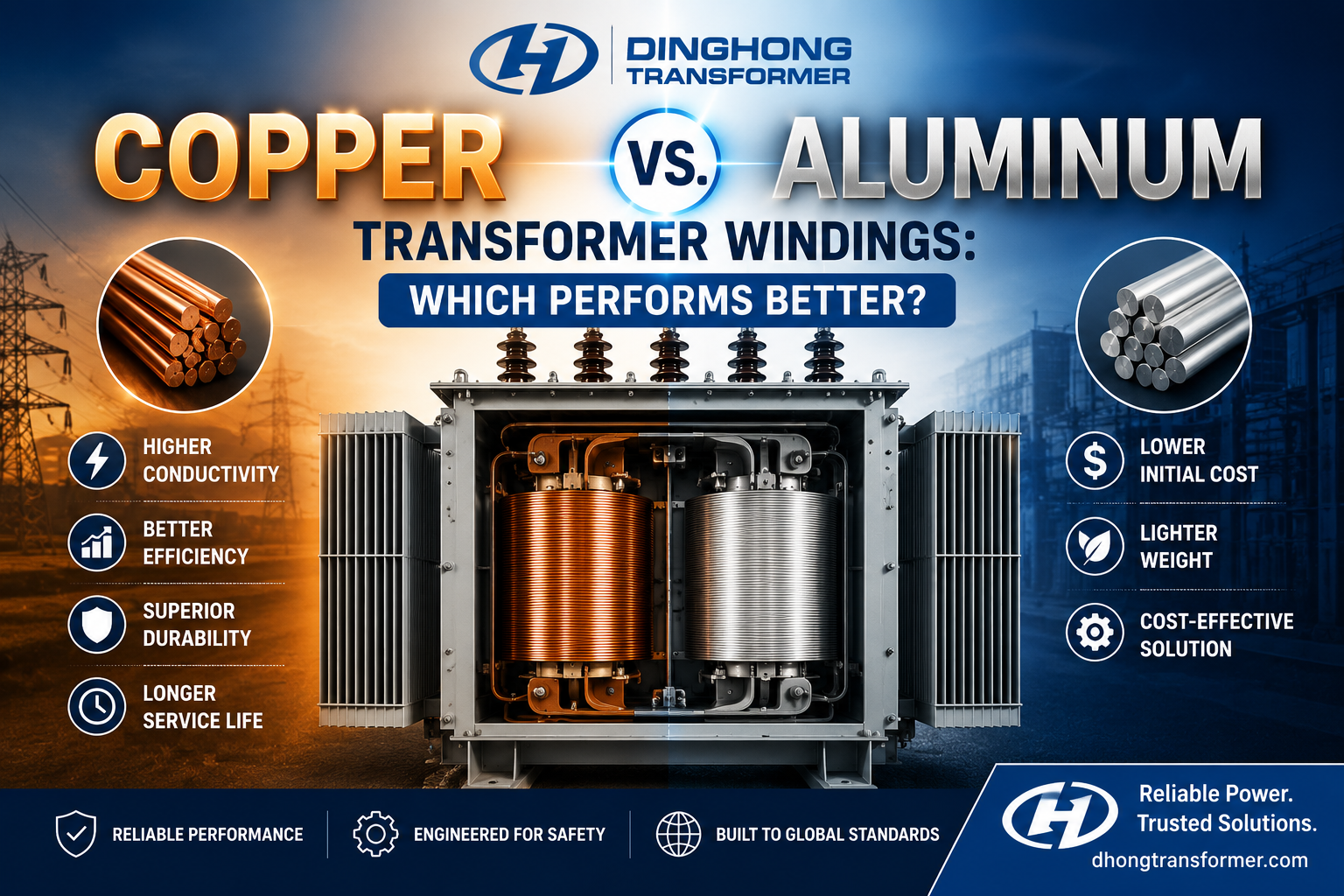
When selecting a transformer, one of the most important decisions is the choice of winding material. Copper and aluminum are the two most commonly used conductor materials in transformer windings, and each offers distinct advantages depending on the application.
While both materials are capable of delivering reliable electrical performance, differences in conductivity, mechanical strength, efficiency, cost, and maintenance requirements can significantly impact the transformer’s long-term performance and total cost of ownership.
In this guide, we’ll compare copper and aluminum transformer windings to help engineers, procurement managers, and project developers determine which option best suits their commercial or industrial power distribution needs.
What Are Transformer Windings?
Transformer windings are insulated coils of conductive material wrapped around the transformer’s core. Their primary function is to transfer electrical energy between circuits through electromagnetic induction.
The quality of the winding material directly affects several key performance factors, including:
- Electrical efficiency
- Heat generation
- Voltage regulation
- Mechanical durability
- Service life
- maintenance requirements
For this reason, selecting the appropriate winding material is an essential part of transformer design.
Copper Transformer Windings
Copper has long been considered the industry standard for transformer windings due to its excellent electrical and mechanical properties.
Advantages of Copper Windings
- Higher Electrical Conductivity
Copper has significantly higher electrical conductivity than aluminum. This means it carries more current with lower resistance, reducing energy losses and improving transformer efficiency.
- Excellent Mechanical Strength
Copper is stronger and more resistant to mechanical stress. It performs exceptionally well during short circuits, load fluctuations, and transportation, helping maintain winding integrity over many years of operation.
- Better Thermal Performance
Copper dissipates heat efficiently, allowing transformers to operate at lower temperatures under heavy loads. Lower operating temperatures generally contribute to a longer service life.
Limitations of Copper
Despite its many benefits, copper has a few disadvantages:
- Higher raw material cost
- Heavier transformer weight
- Greater initial investment
However, many organizations find that the improved efficiency and durability justify the higher upfront cost over the transformer’s operating life.
Aluminum Transformer Windings
Aluminum has become an increasingly popular alternative, particularly in applications where reducing equipment costs or weight is a priority.
Advantages of Aluminum Windings
1:-Lower Material Cost
Aluminum is generally less expensive than copper, making it attractive for projects with tighter budgets.
2:- Lighter Weight
Aluminum weighs approximately one-third as much as copper.
This can simplify transportation, installation, and structural support requirements.
3:- Cost-Effective for Large Installations
For certain distribution transformer applications, aluminum windings provide an economical solution while still delivering dependable performance when properly designed.
Limitations of Aluminum
Although aluminum offers cost advantages, it also presents some trade-offs.
1:- Lower Electrical Conductivity
Because aluminum has lower conductivity, larger conductor cross-sections are required to achieve the same current-carrying capacity as copper.
2:- Higher Thermal Expansion
Aluminum expands and contracts more with temperature changes, which may increase mechanical stress over time if not properly engineered.
3:- Reduced Mechanical Strength
Compared with copper, aluminum is more susceptible to deformation under mechanical or electrical stress, particularly during fault conditions.
Which Performs Better?
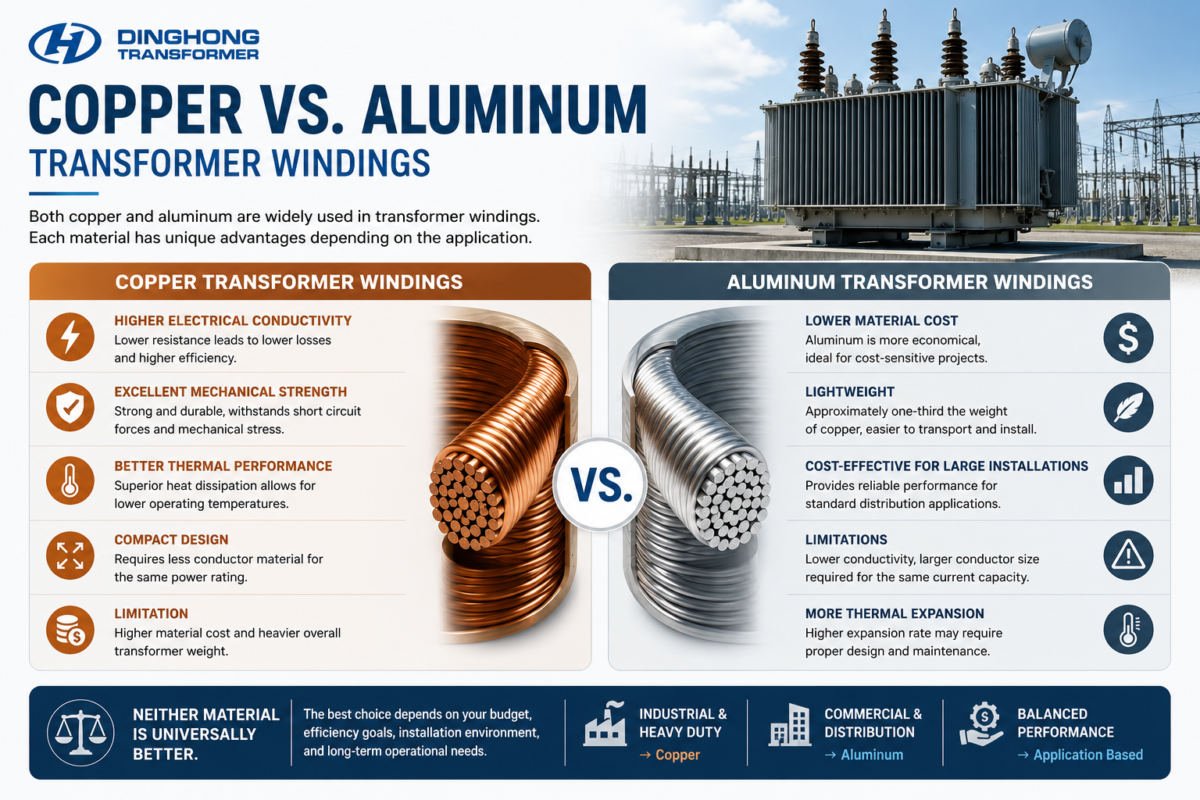
For applications where maximum efficiency, reliability, and long-term durability are essential, copper windings generally outperform aluminum.
Copper is often the preferred choice for:
-Industrial manufacturing plants
-Data centers
-Hospitals
-Utility substations
-Renewable energy facilities
-Critical infrastructure
-High-load commercial buildings
Aluminum windings are commonly selected for:
-Budget-conscious commercial projects
-Standard distribution systems
-Installations where lower weight is beneficial
-Projects with moderate load requirements
Ultimately, proper transformer design has a greater impact on performance than conductor material alone.
Factors to Consider Before Choosing
Before selecting copper or aluminum transformer windings, consider the following:
1:- Project Budget
If minimizing initial investment is the primary objective, aluminum may provide a cost-effective solution.
2:- Energy Efficiency Goals
Organizations seeking lower operating costs and improved efficiency over decades of service often benefit from copper windings.
3:-Installation Environment
Harsh industrial environments, heavy-duty applications, and continuous operation typically favor copper because of its superior mechanical and thermal characteristics
Choosing the Right Transformer Manufacturer
Selecting the right winding material is only one part of building a reliable power distribution system. Manufacturing quality, engineering expertise, insulation systems, and rigorous testing all play an equally important role in transformer performance.
At Dinghong Transformer we manufacture high-quality oil-immersed transformers, dry-type transformers, power transformers, and distribution transformers designed to meet the unique requirements of commercial, industrial, utility, and renewable energy projects.Our engineering team works closely with customers to determine whether copper or aluminum windings are the best fit for their application, considering electrical load, operating environment, efficiency goals, and long-term operating costs.
Every transformer undergoes strict quality control and testing to ensure dependable performance, safety, and compliance with international standards.Whether you require a standard transformer or a customized solution, Dinghong Transformer is committed to delivering reliable products that support efficient and stable power distribution for projects around the world.