
How EV Charging Infrastructure Is Increasing Transformer Demand

Discover how the rapid expansion of EV charging infrastructure is driving demand for power transformers and what utilities, developers, and businesses should consider when selecting transformers for charging projects.
The global transition to electric vehicles (EVs) is reshaping the power industry at an unprecedented pace.
Governments are encouraging EV adoption through incentives, stricter emissions regulations, and investments in charging infrastructure.
At the same time, businesses, shopping centres, logistics companies, and property developers are installing charging stations to meet growing customer and operational needs.
While charging stations are the most visible part of this transformation, a less obvious but equally critical component sits behind every successful EV charging project—the power transformer.
Every EV charger depends on a reliable electrical distribution system, and transformers are responsible for converting and delivering electricity safely and efficiently.
As EV charging networks continue to expand, demand for high-quality distribution and power transformers is increasing across residential, commercial, and industrial sectors.In this article, we’ll explore why EV charging infrastructure is driving transformer demand, the technical challenges involved, and how choosing the right transformer partner can help ensure long-term project success.
Why EV Charging Requires More Electrical Capacity
Unlike traditional household electrical loads, EV chargers consume significant amounts of power.
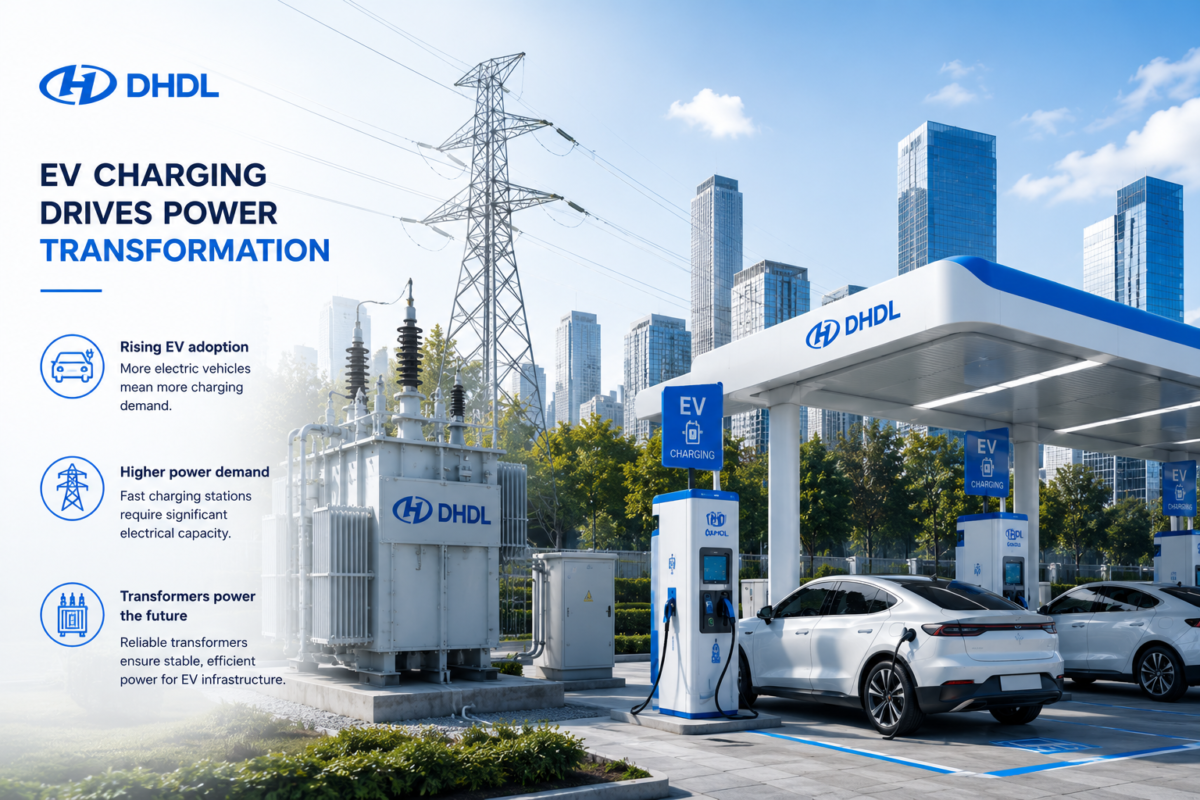
A standard residential charger may only require several kilowatts, but commercial fast-charging stations often require hundreds of kilowatts, while ultra-fast charging hubs can exceed one megawatt of connected load.
As more charging stations are installed, existing electrical infrastructure often becomes insufficient.
Utilities and facility owners frequently need to:
- Upgrade existing transformers
- Install new distribution transformers
- Expand substations
- Improve grid capacity
- Reduce voltage fluctuations during peak charging periods
Without adequate transformer capacity, charging stations may experience unstable voltage, reduced charging performance, equipment failures, or overloaded electrical systems.
Different Types of EV Charging Require Different Transformers
Not every charging project has the same electrical requirements.
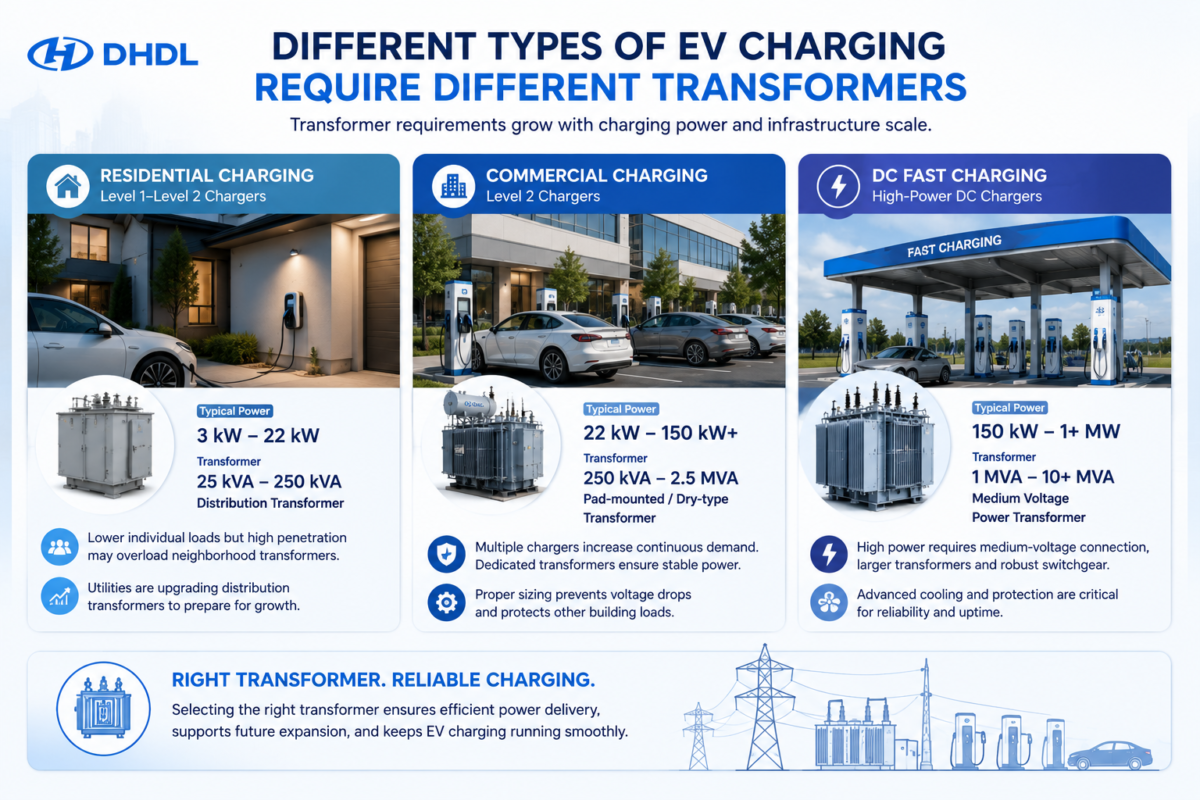
Residential Charging
Home charging typically uses lower-capacity distribution transformers already serving residential neighbourhoods.
However, increasing EV ownership can gradually overload local transformers if multiple households begin charging simultaneously.
Utilities worldwide are already upgrading neighbourhood transformers to prepare for rising residential charging demand.
Commercial Charging
Shopping malls, office buildings, hotels, supermarkets, hospitals, and parking facilities increasingly install multiple Level 2 chargers.
These projects often require dedicated distribution transformers to provide reliable power without affecting existing building loads.
DC Fast Charging
Fast-charging stations present the greatest challenge.
Many DC fast chargers operate between 150 kW and 350 kW, while next-generation charging hubs continue increasing power output.
These installations typically require:
- Medium-voltage connections
- Dedicated transformers
- Protective switchgear
- Reliable cooling systems
- Advanced power monitoring
As charging speeds continue increasing, transformer sizing becomes even more important.
Why Transformer Demand Is Growing So Quickly
Several market trends are accelerating transformer demand.
Government Investment
Countries worldwide are investing billions in EV infrastructure to meet carbon reduction goals.National charging networks require thousands of new transformers to support substations, charging hubs, and public charging facilities.
Fleet Electrification
Delivery companies, logistics operators, mining businesses, airports, ports, and public transportation systems are electrifying their vehicle fleets.
Fleet depots often install dozens or even hundreds of chargers operating simultaneously, creating extremely high power requirements.
Commercial Property Development
Property developers increasingly view EV charging as a competitive advantage.Office buildings, apartment complexes, hotels, and retail centres now include charging facilities as standard amenities, increasing demand for reliable electrical distribution equipment.
Renewable Energy Integration
Many EV charging projects integrate solar energy and battery storage systems.These hybrid systems require carefully designed transformers capable of managing multiple power sources while maintaining grid stability.
Challenges for Transformer Manufacturers
Supplying transformers for EV infrastructure involves more than simply increasing capacity.
Manufacturers must consider several technical factors.
Higher Load Variability
EV charging creates rapidly changing electrical loads.Transformers must withstand frequent load fluctuations while maintaining voltage stability.
Heat Management
Continuous high-power charging generates additional heat.Efficient cooling systems become increasingly important for maintaining transformer lifespan.
Future Expansion
Many charging stations are designed for future growth.
Selecting a transformer with expansion capacity helps avoid costly replacements as charger numbers increase.
Energy Efficiency
Utilities and developers seek transformers with lower energy losses to reduce operating costs over decades of service.High-efficiency transformers also support sustainability objectives.
Choosing the Right Transformer for EV Charging Projects
Selecting the correct transformer requires more than matching voltage ratings.
Project developers should evaluate:
- Total charging capacity
- Peak demand
- Future expansion plans
- Installation environment
- Local utility requirements
- Cooling method
- Efficiency standards
- Safety certifications
- Maintenance accessibility
Working closely with experienced transformer manufacturers during the design phase helps avoid expensive modifications later.
Why Quality Matters
EV charging infrastructure represents long-term investment.
Poor-quality transformers can lead to:
- Unexpected downtime
- Increased maintenance costs
- Reduced charging reliability
- Lower equipment lifespan
- Customer dissatisfaction
- Higher operating expenses
Reliable transformers improve overall charging network performance while reducing lifecycle costs.
Dinghong Transformer Supports Modern Power Infrastructure
As EV charging infrastructure continues expanding worldwide, dependable transformer manufacturers play a vital role in supporting reliable power distribution.
Dinghong Transformer designs and manufactures high-quality distribution transformers, power transformers, and customised electrical solutions for utilities, industrial facilities, renewable energy projects, and modern infrastructure applications.
With advanced manufacturing capabilities, strict quality control, and extensive international experience, DinghongTransformers helps customers select transformer solutions that meet today’s performance requirements while preparing for tomorrow’s growing energy demands.Whether you’re developing a commercial charging station, upgrading a utility network, or planning a large-scale EV charging hub, partnering with an experienced manufacturer can help ensure safe, efficient, and reliable power delivery.
Conclusion
The rapid growth of electric vehicles is transforming the electrical industry and significantly increasing demand for transformers.
Every new charging station depends on reliable power distribution, making transformers one of the most important components of EV infrastructure.As governments, utilities, and private businesses continue investing in electrified transportation, demand for high-performance, energy-efficient transformers will only continue to grow.
By choosing the right transformer and working with trusted manufacturers such as Dinghong Transformer, project developers can build charging networks that are reliable, scalable, and ready for the future.