Electrical Transformer: How Does It Work? A Practical Guide for Power Project Buyers

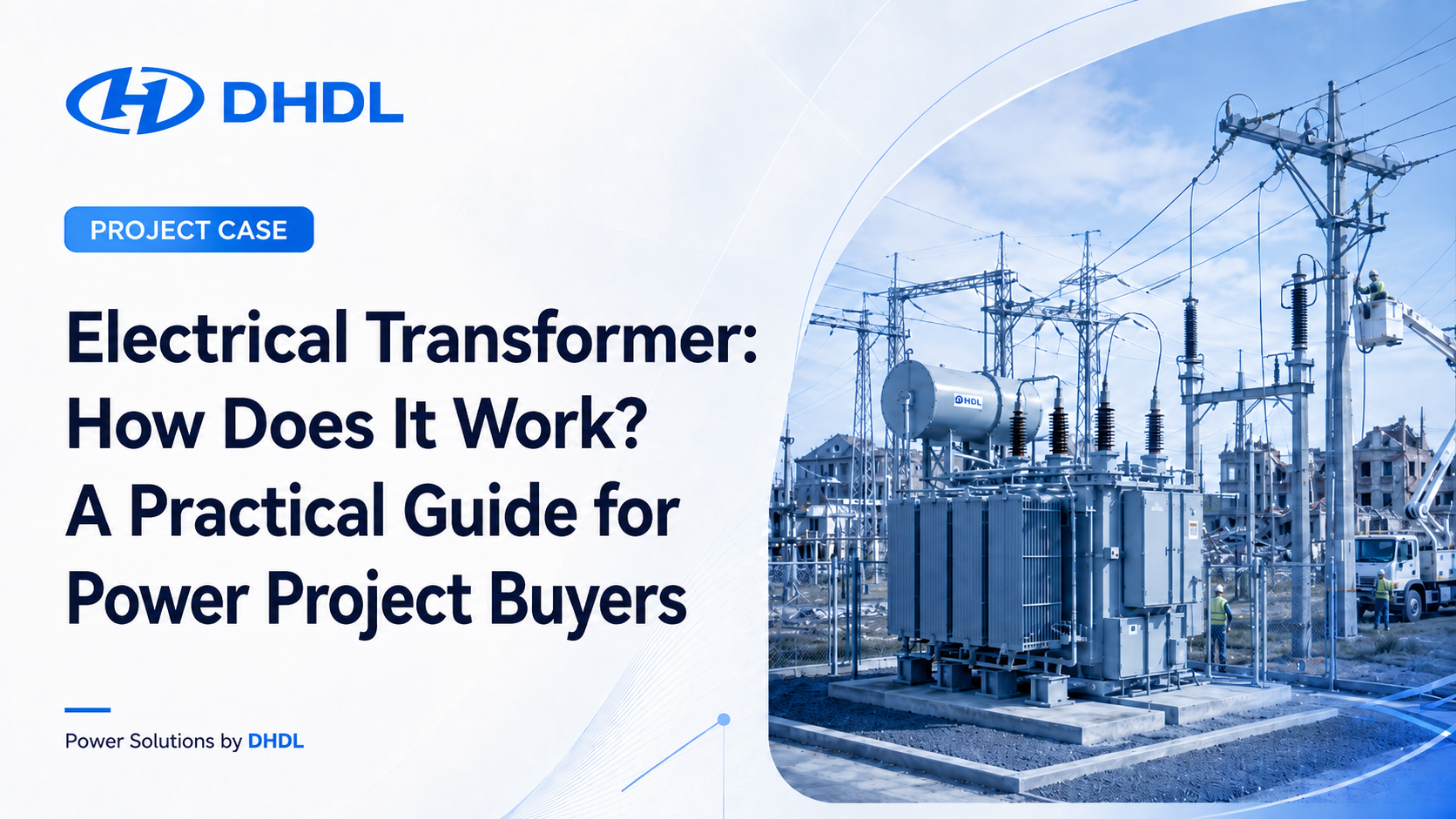
An electrical transformer is one of the most important devices in a power system. It allows electricity to be transmitted at high voltage, distributed through substations, and reduced to a usable voltage for factories, buildings, data centers, renewable energy projects, and residential networks.
Although transformers are available in many sizes and designs, their basic operating principle is surprisingly simple: they transfer alternating-current electrical energy between circuits through electromagnetic induction, normally changing the voltage without changing the frequency.
Understanding how a transformer works helps buyers select the correct capacity, voltage ratio, winding material, cooling method, and protection design—and avoid costly specification mistakes.
1. What Are the Main Parts of a Transformer?
A basic transformer contains three essential components:
Primary winding: Connected to the incoming AC power supply.
Secondary winding: Connected to the equipment, distribution network, or load.
Magnetic core: Provides a controlled path for magnetic flux between the windings.
The primary and secondary windings are electrically insulated from each other. They do not normally transfer power through a direct metal connection. Instead, energy passes through the changing magnetic field inside the core.
In practical power transformers, additional components may include insulation materials, bushings, tap changers, cooling fans, radiators, oil tanks, temperature sensors, protective relays, enclosures, and monitoring devices.
2. How Does an Electrical Transformer Work?
When an alternating voltage is applied to the primary winding, an alternating current flows through the coil. This current creates a changing magnetic flux in the transformer core.
The magnetic flux passes through the secondary winding and induces an alternating voltage across it. This process is called mutual electromagnetic induction.
The output voltage depends mainly on the ratio between the number of turns in the primary and secondary windings:
Primary voltage ÷ secondary voltage ≈ primary turns ÷ secondary turns
For example, when the secondary winding has more turns than the primary winding, the output voltage increases. This is a step-up transformer.
When the secondary winding has fewer turns, the output voltage decreases. This is a step-down transformer.
In an ideal transformer, raising the voltage reduces the current, while lowering the voltage increases the current. The transformer changes the voltage-current combination, but it does not create additional electrical power.
Real transformers always have some losses, which is why buyers must check no-load loss, load loss, temperature rise, and efficiency—not only rated capacity.
3. Why Is Alternating Current Required?
A conventional transformer requires a changing magnetic field. Alternating current continuously changes direction and magnitude, producing the magnetic variation needed to induce voltage in the secondary winding.
Direct current remains steady after switching and does not continuously produce the changing flux required for normal transformer action. Applying DC directly to a conventional AC transformer can cause excessive current, overheating, insulation damage, and winding failure.
This is one of the most important transformer facts that is often missing from basic purchasing guides: a transformer does not simply “reduce electricity.” It depends on frequency, waveform, magnetic flux, and winding design.
A transformer designed for 50Hz should therefore not automatically be used in a different-frequency system without technical confirmation. Frequency affects core flux, losses, temperature rise, noise, and physical design.
4. Step-Up vs Step-Down Transformers
Step-up transformers are commonly installed near generators, solar farms, wind turbines, and power plants. They increase voltage before electricity enters a transmission or collection network.
Higher voltage allows the same amount of power to be transmitted with lower current. Lower current helps reduce conductor losses and may reduce the required cable size.
Step-down transformers are used closer to the final load. They convert transmission or medium-voltage electricity into levels suitable for industrial machines, commercial buildings, lighting systems, charging stations, and other equipment.
A wind power project, for example, may use a transformer to increase turbine output voltage to 33kV or 38.5kV. An industrial facility may use another transformer to reduce 10kV or 11kV power to 0.4kV for low-voltage equipment.
5. Dry-Type and Oil-Immersed Transformers
The electromagnetic principle is similar, but the insulation and cooling methods are different.
A dry-type transformer uses solid insulation materials, commonly cast resin or impregnated insulation, and is cooled by natural or forced air. It has no insulating-oil leakage risk and is often selected for hospitals, schools, airports, metro systems, data centers, industrial buildings, and indoor power rooms.
The supplied DHDL product information includes 6–22kV dry-type distribution transformers and 33–38.5kV cast-resin dry-type transformers for commercial, industrial, renewable-energy, and critical-infrastructure applications.
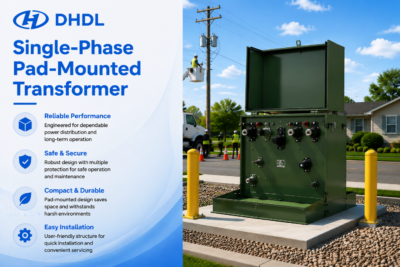
An oil-immersed transformer places the core and windings inside insulating liquid. The oil provides electrical insulation and transfers heat to the transformer tank and radiators. This design is widely used in outdoor substations, industrial parks, utility networks, rural distribution, and higher-capacity power projects.
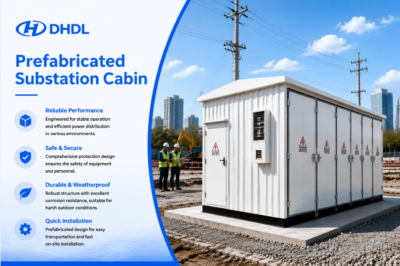
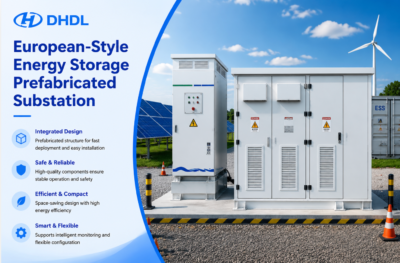
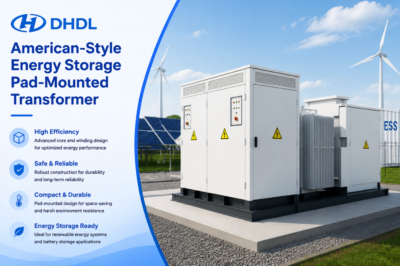
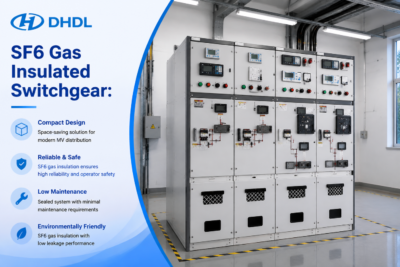
DHDL’s product portfolio includes dry-type, distribution, ultra-high-voltage, and special transformers, together with switchgear and prefabricated-substation solutions for utility, industrial, data-center, and renewable-energy projects.
6. Hidden Transformer Facts Buyers Should Know
6.1 Rated capacity is normally expressed in kVA, not kW
Transformer capacity is based on voltage and current. The usable active power in kW also depends on the load power factor. A 1000kVA transformer does not always supply 1000kW of usable active power.
6.2 A transformer still consumes power without a load
When the secondary side is disconnected, the energized transformer still draws magnetizing current and produces core losses. This is called no-load loss.
For transformers that remain energized continuously, even a small no-load-loss difference can create a significant lifecycle electricity cost.
6.3 Two transformers with the same kVA are not necessarily equivalent
Two 1000kVA transformers may have different:
- Primary and secondary voltages
- Short-circuit impedance
- Vector groups
- Winding materials
- Loss values
- Temperature-rise limits
- Insulation levels
- Enclosure ratings
- Applicable standards
Comparing only capacity and price can lead to the wrong purchasing decision.
6.5 Transformer humming is not automatically a fault
A transformer commonly produces a low-frequency operating sound caused mainly by magnetic activity in the core. However, unusual increases in noise may indicate loose components, overvoltage, harmonics, mechanical vibration, poor installation, or abnormal loading.
6.6 Installation conditions affect actual performance
High altitude, high ambient temperature, restricted ventilation, humidity, dust, salt spray, and corrosive environments may require capacity correction or a customized design.
DHDL states that its equipment can be adapted for IEC, ANSI, 50Hz or 60Hz requirements, copper or aluminum windings, and environmental conditions including high temperature, humidity, dust, corrosion, and outdoor installation.
7. What Information Should Buyers Provide?
A useful transformer inquiry should include more than a requested capacity.
Provide:
- Rated capacity in kVA or MVA
- Primary and secondary voltage
- Frequency
- Phase configuration
- Vector group
- Short-circuit impedance
- Tap range
- Copper or aluminum winding
- Indoor or outdoor installation
- Ambient temperature and altitude
- Required IP protection level
- Dry-type or oil-immersed design
- IEC, ANSI/IEEE, or project-specific standard
- Quantity and delivery destination
For renewable-energy or converter-connected loads, harmonic data and overload requirements may also be necessary.
8. Why Factory Testing Matters
A transformer can look correct externally while still having internal problems related to winding resistance, insulation, voltage ratio, losses, or assembly quality.
Important routine tests typically include voltage-ratio testing, winding DC-resistance measurement, insulation testing, withstand-voltage testing, no-load-loss testing, load-loss testing, and impedance verification.
DHDL describes process controls covering core materials, winding, vacuum drying, assembly, insulation, loss control, and routine factory testing, with technical files and test reports available for project delivery.
Conclusion
An electrical transformer works by using alternating current in the primary winding to create a changing magnetic field. This magnetic field induces voltage in the secondary winding, allowing the transformer to increase or decrease voltage while maintaining the same frequency.
However, correct transformer selection requires more than understanding the basic working principle. Capacity, voltage ratio, impedance, vector group, losses, insulation, cooling, installation conditions, and local standards all affect long-term reliability.
DHDL manufactures transformers and integrated power-distribution equipment for industrial, utility, renewable-energy, data-center, and infrastructure projects. To receive an accurate proposal, buyers should provide the complete electrical specification, installation environment, required standard, quantity, and destination country.
FAQ
1. What is the basic working principle of a transformer?
A transformer works through electromagnetic induction. Alternating current in the primary winding creates changing magnetic flux, which induces voltage in the secondary winding.
2. Does a transformer change frequency?
No. A conventional transformer changes voltage and current levels but normally keeps the output frequency the same as the input frequency.
3. Can a transformer operate with DC power?
A conventional AC transformer cannot operate normally with steady DC power because DC does not continuously create changing magnetic flux. Direct DC connection may cause overheating and winding damage.
4. What is the difference between a step-up and step-down transformer?
A step-up transformer increases the secondary voltage, while a step-down transformer reduces it. The voltage change is determined mainly by the winding-turn ratio.
5. Why are transformer ratings expressed in kVA?
Transformer heating depends mainly on voltage and current, while the load power factor determines active power in kW. Therefore, transformers are normally rated in kVA or MVA.
6. What details are needed for a transformer quotation?
Provide capacity, high and low voltage, frequency, vector group, impedance, tap range, winding material, installation conditions, applicable standard, quantity, and destination country.