What Is a Power Transformer and How Is It Used? A Complete Guide for Industrial & Energy Projects

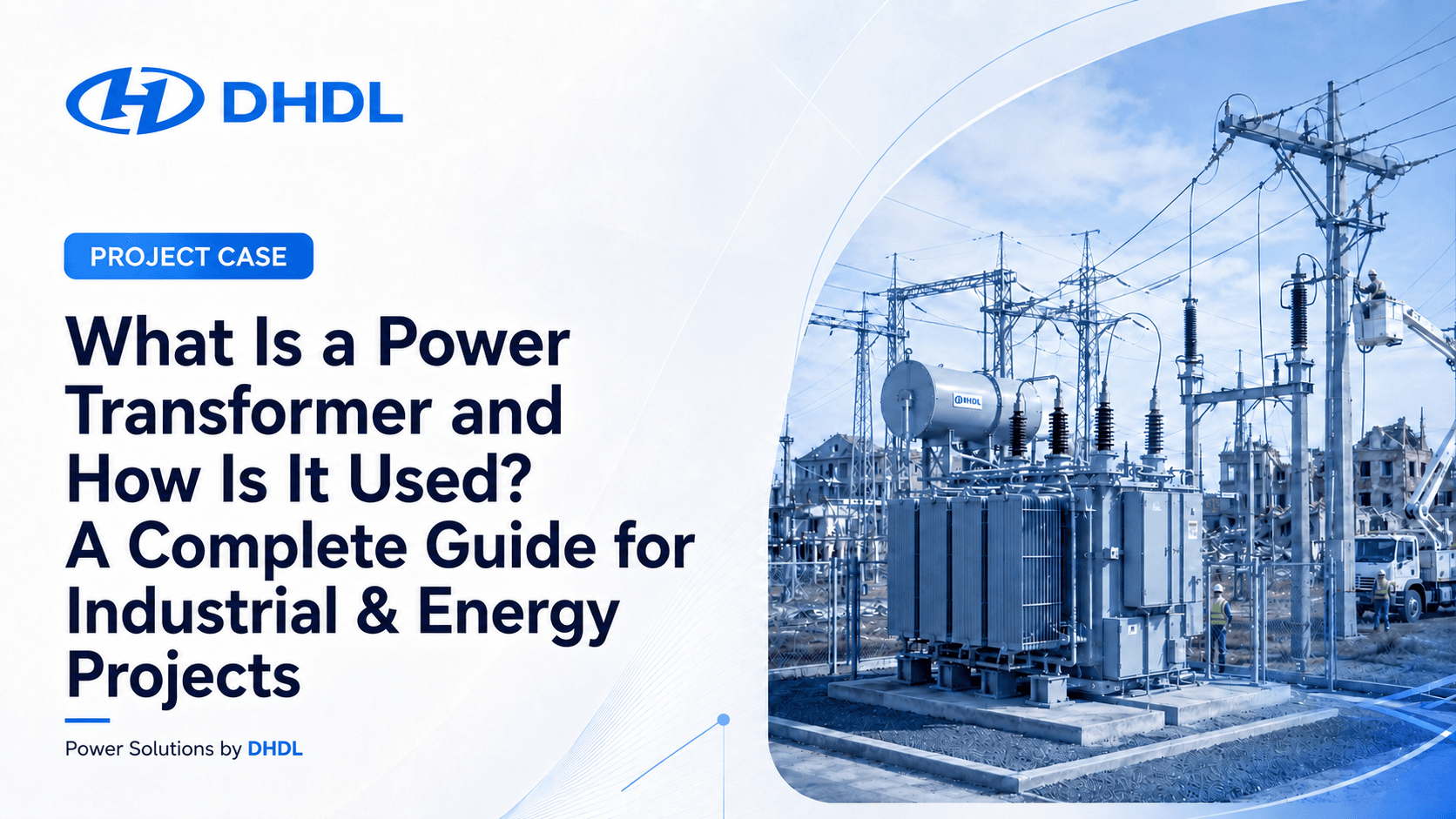
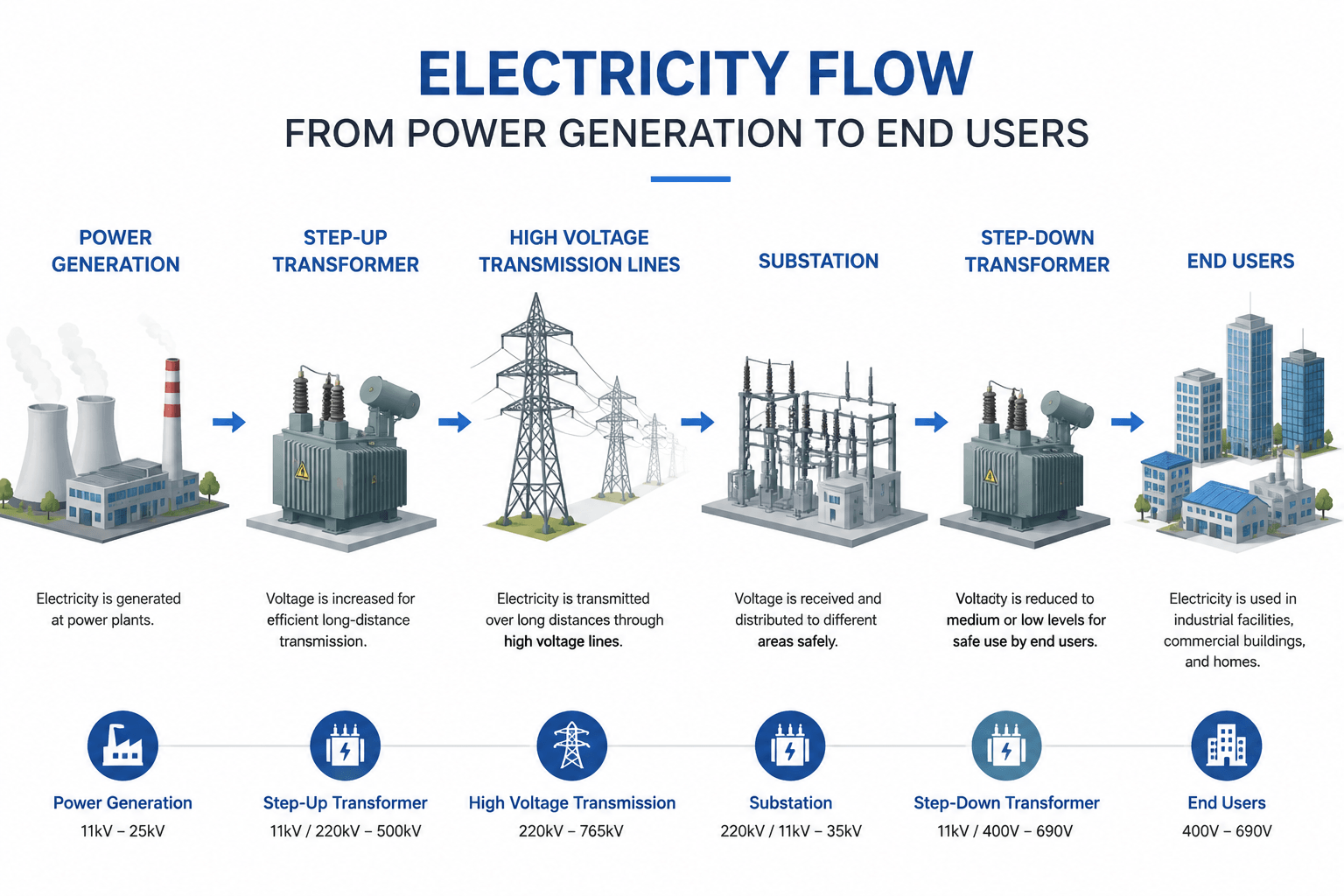
Electricity generated from power plants, wind farms, solar stations, and other energy sources cannot always be used directly by end equipment. The voltage level must be increased for efficient transmission and reduced for safe distribution.
This is where power transformers play a critical role.
A power transformer is one of the most important pieces of equipment in modern electrical systems. It ensures reliable energy transmission between generation, transmission, distribution, and end users.
From utility substations and industrial facilities to renewable energy projects and large infrastructure systems, power transformers provide the voltage conversion needed for stable and efficient power delivery.
However, selecting a power transformer is not simply about choosing a capacity rating. Factors such as voltage level, cooling method, insulation system, efficiency, installation environment, and operating conditions directly affect long-term performance.
This guide explains what a power transformer is, how it works, where it is used, and what buyers should consider before purchasing one.
What Is a Power Transformer?
A power transformer is a static electrical device that transfers electrical energy between circuits through electromagnetic induction.
Its main function is to:
- Increase voltage for long-distance transmission
- Reduce voltage for distribution and consumption
- Improve power system efficiency
- Maintain stable electricity supply
Unlike electronic converters, transformers do not generate electricity. They only change voltage and current levels while maintaining the same frequency.
Power transformers are mainly used in high-voltage transmission and large-scale power systems, typically handling higher capacities than distribution transformers.
Common applications include:
- Power generation plants
- Transmission substations
- Industrial power systems
- Renewable energy projects
- Utility networks
- Large commercial facilities
How Does a Power Transformer Work?
The working principle of a power transformer is based on electromagnetic induction.
A transformer mainly consists of:
- Magnetic core
- Primary winding
- Secondary winding
- Insulation system
- Cooling system
When alternating current enters the primary winding, it creates a changing magnetic field inside the core.
This magnetic field passes through the secondary winding and generates an induced voltage.
The voltage ratio depends on the number of turns in each winding:
More turns on the secondary winding → higher output voltage
Fewer turns on the secondary winding → lower output voltage
This allows transformers to step voltage up or down according to the requirements of the power system.
For example:
- A generator may produce medium voltage electricity.
- A step-up power transformer increases the voltage for transmission.
- A substation transformer reduces the voltage for industrial or commercial use.
Why Are Power Transformers Important?
Without power transformers, modern electrical grids would not operate efficiently.
Electricity transmitted at low voltage requires higher current, causing greater energy losses during transmission.
Power transformers solve this problem by increasing voltage and reducing current.
Higher transmission voltage provides several benefits:
- Lower transmission losses
- Smaller conductor requirements
- Improved grid efficiency
- Longer transmission distances
This is why large power transformers are commonly installed between power generation facilities and transmission networks.
Main Types of Power Transformers
Power transformers can be classified according to their insulation method, application, and voltage level.
1. Oil-Immersed Power Transformers
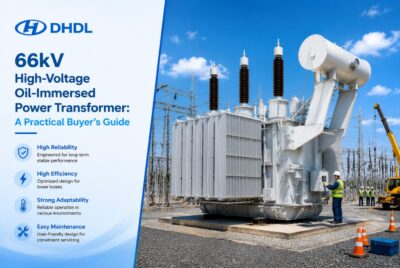
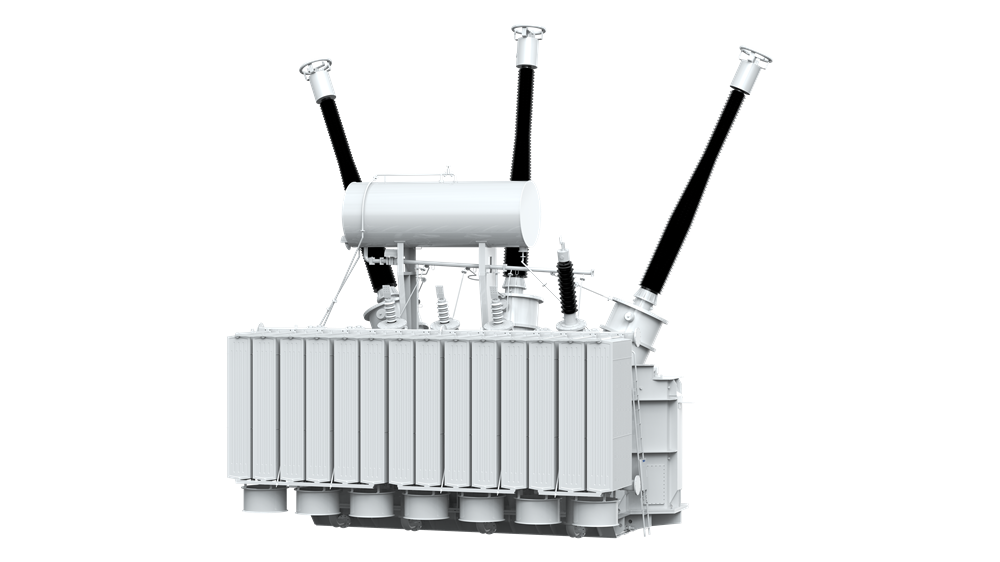
Oil-immersed transformers use insulating oil for electrical insulation and heat dissipation.
330kV-500kV High Voltage Oil-immersed Power Transformer
Advantages:
- Excellent cooling performance
- Suitable for high capacity applications
- Reliable long-term operation
- Cost-effective for large power systems
Common applications:
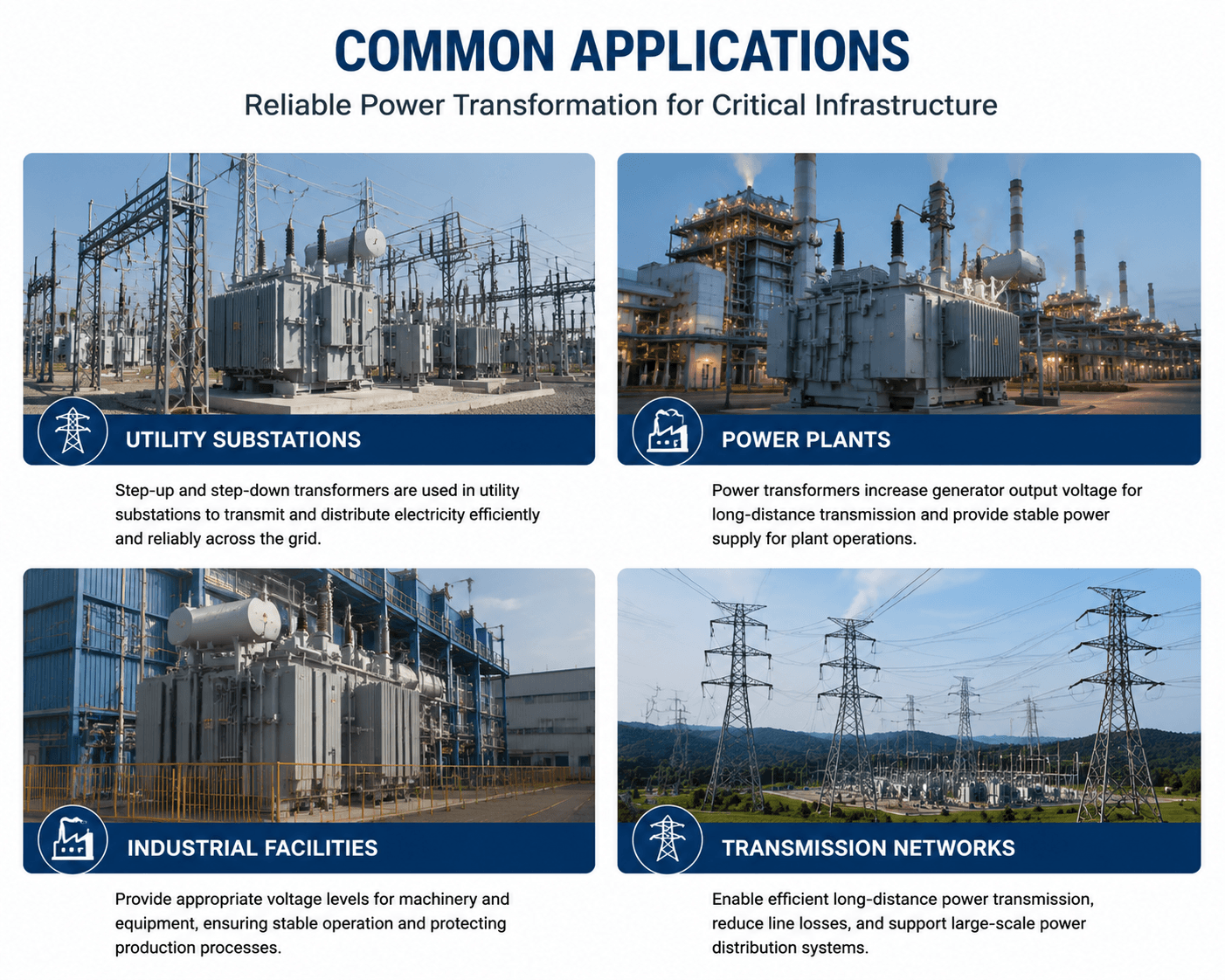
- Utility substations
- Power plants
- Industrial facilities
- Transmission networks
DHDL provides oil-immersed power transformers covering medium and ultra-high voltage applications, including solutions for 110kV, 220kV, 330kV, 400kV, and 500kV power systems.
Read more: What You Need to Know About Oil-Immersed Transformers: A Complete Buyer’s Guide
2. Dry-Type Power Transformers
Dry-type transformers use solid insulation materials such as epoxy resin instead of insulating oil.
Advantages:
6-20KV-1.png)
- No oil leakage risk
- Reduced fire hazards
- Lower maintenance requirements
- Suitable for indoor installations
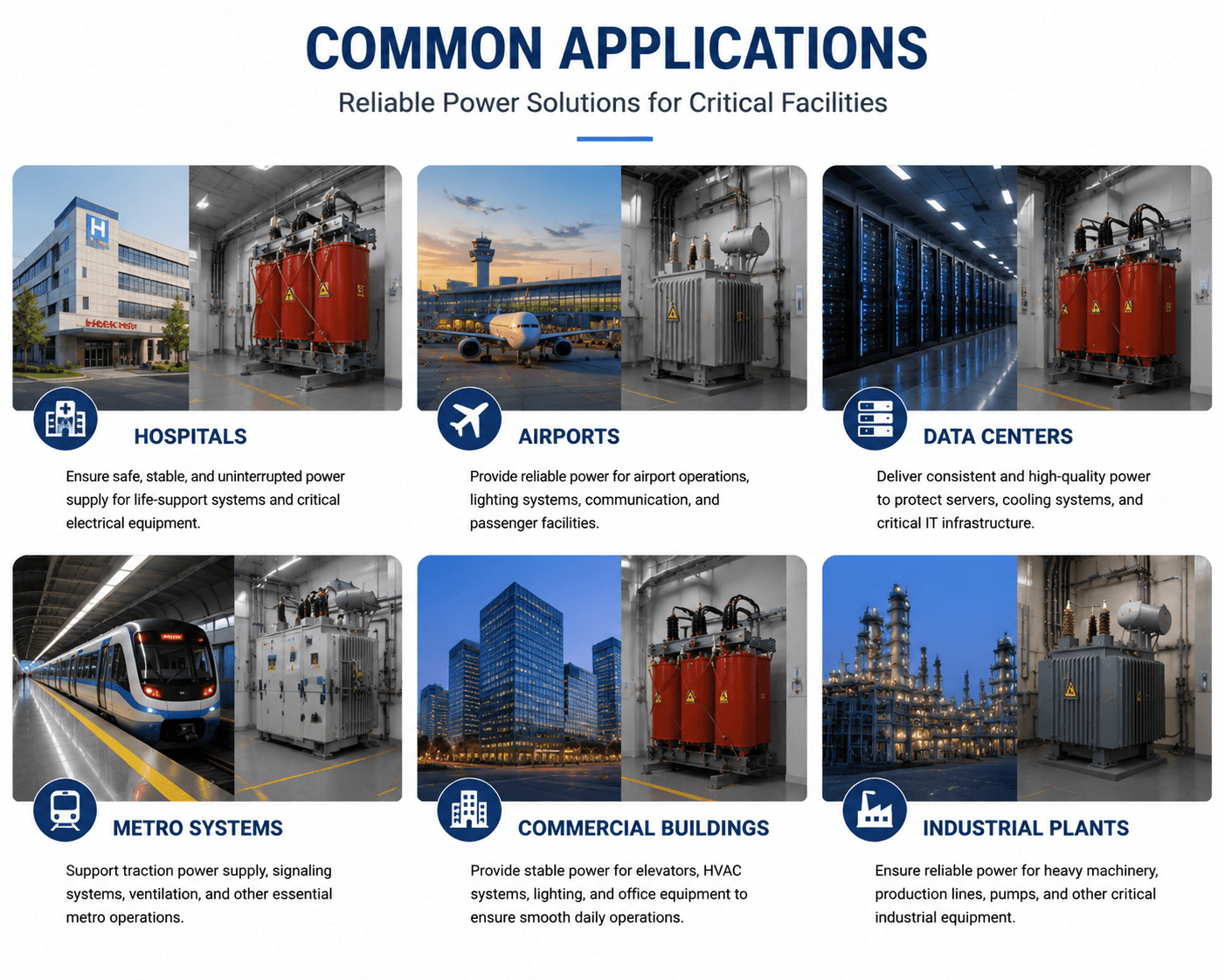
Common applications:
- Hospitals
- Airports
- Data centers
- Metro systems
- Commercial buildings
- Industrial plants
DHDL offers cast resin dry-type transformers for medium-voltage applications, including 6–38.5kV systems.
Where Are Power Transformers Used?
Power transformers are essential across many industries.
Power Generation Plants
Generators usually produce electricity at medium voltage. Power transformers increase the voltage before electricity enters transmission networks.
Applications:
- Hydropower stations
- Thermal power plants
- Wind farms
- Solar power stations
Industrial Facilities
Large factories require stable and reliable electricity for heavy machinery.
Power transformers help provide:
- Suitable voltage levels
- Reliable power supply
- Protection for production equipment
Industries using power transformers include:
- Steel manufacturing
- Mining
- Chemical plants
- Automotive production
- Heavy industries
Renewable Energy Projects
Renewable energy systems often require specialized transformer solutions.
Examples:
Wind Power
Wind turbines generate electricity at relatively low voltage levels. Transformers increase voltage for collection systems, commonly including 33kV and 38.5kV networks.
Solar Power
Solar farms use transformers to increase inverter output voltage before grid connection.
Utility Distribution Networks
Electric utilities use power transformers in substations to transfer electricity between different voltage levels.
Typical functions include:
- Grid voltage conversion
- Load distribution
- System protection
Important Factors When Selecting a Power Transformer
Many buyers only compare transformer price and capacity. However, several technical factors are more important.
1. Rated Capacity
Capacity determines how much electrical load the transformer can handle.
Choosing the wrong capacity can cause:
- Overheating
- Reduced service life
- Increased losses
- Higher operating costs
The selection should consider:
- Current load demand
- Future expansion
- Operating conditions
- Overload requirements
2. Voltage Ratio
The primary and secondary voltage must match the power system.
Incorrect voltage selection may result in:
- Poor equipment performance
- Voltage instability
- Grid connection issues
3. Cooling Method
Cooling affects transformer performance and lifetime.
Common methods include:
- ONAN (Oil Natural Air Natural)
- ONAF (Oil Natural Air Forced)
- Air natural cooling
- Forced air cooling
The correct cooling design depends on capacity and installation conditions.
4. Energy Losses
A transformer operates continuously for many years.
Important parameters include:
- No-load loss
- Load loss
- Efficiency level
A transformer with lower losses can significantly reduce long-term electricity costs.
5. Short-Circuit Impedance
Impedance affects:
- Fault current
- Voltage regulation
- Protection coordination
- Parallel operation
It must match the overall power system design.
6. Installation Environment
Environmental conditions influence transformer design.
Important factors include:
- Temperature
- Humidity
- Altitude
- Dust
- Corrosion
- Indoor or outdoor installation
For harsh environments, customized protection may be required.
7. International Standards
Different projects may require different standards:
- IEC
- ANSI/IEEE
- Local grid requirements
Confirming standards before production helps avoid project delays.
Hidden Costs Buyers Often Ignore
The Cheapest Transformer Is Not Always the Lowest-Cost Solution
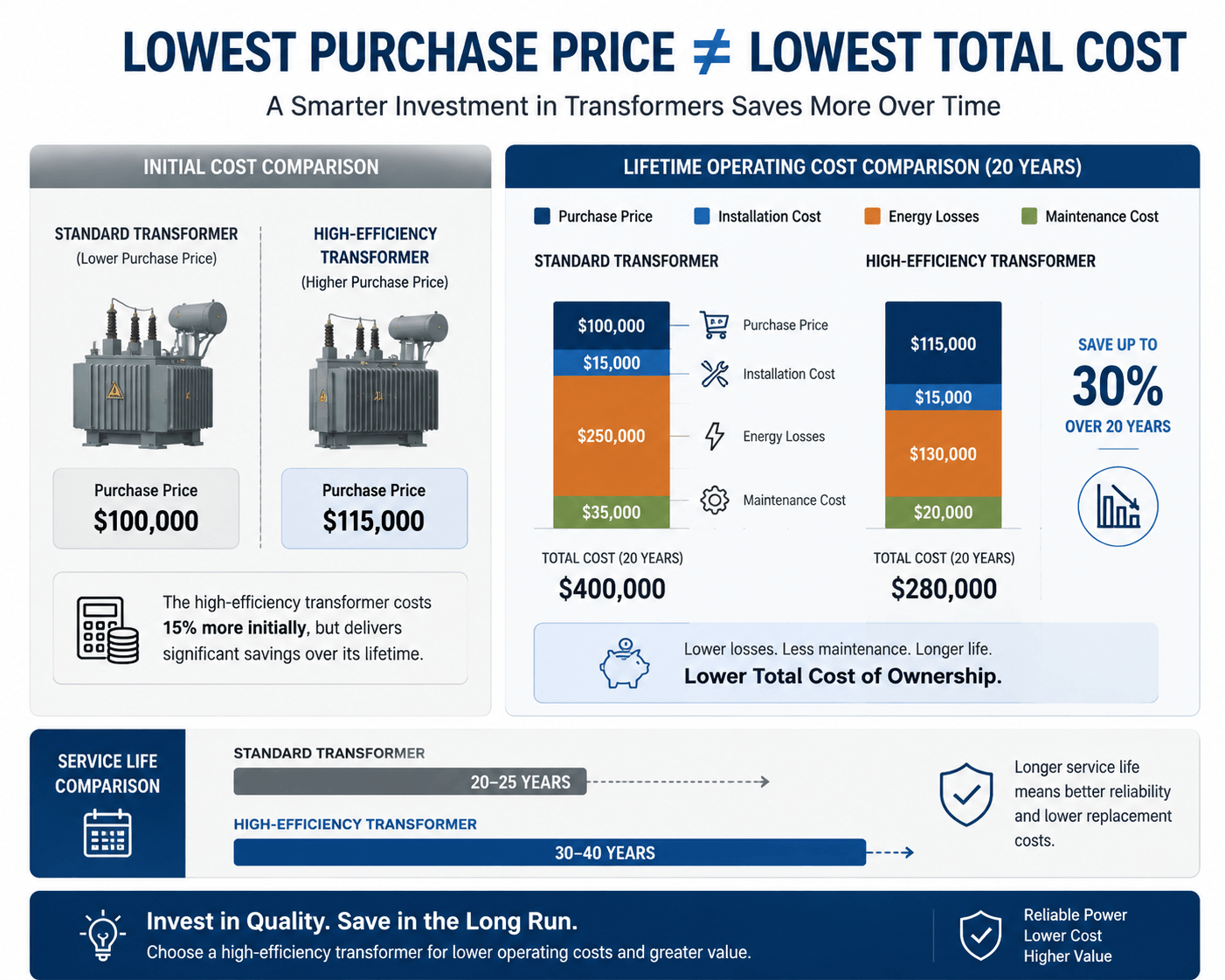
A lower purchase price may lead to higher long-term expenses.
Additional costs may come from:
- Higher energy losses
- More frequent maintenance
- Shorter service life
- Additional cooling requirements
- Installation modifications
Incorrect Specifications Cause Expensive Problems
A transformer may fail project requirements if buyers ignore:
- Frequency differences
- Voltage tolerance
- Load characteristics
- Harmonic conditions
- Protection requirements
Providing complete technical information before quotation helps avoid redesign costs.
Why Choose DHDL Power Transformer Solutions?
DHDL is a professional transformer manufacturer providing complete power solutions for global customers.
Product solutions include:
- Power transformers
- Oil-immersed transformers
- Dry-type transformers
- Distribution transformers
- High voltage transformers
- Switchgear and power distribution equipment
DHDL supports customized designs according to:
- Voltage levels
- Capacity requirements
- Frequency standards
- Installation environments
- International specifications
With professional engineering support and strict manufacturing processes, DHDL provides reliable transformer solutions for utilities, industries, renewable energy projects, and infrastructure applications worldwide.
Conclusion
Power transformers are the backbone of modern electrical systems. They enable efficient electricity transmission, safe voltage conversion, and reliable power distribution.
Choosing the right transformer requires more than checking capacity and price. Voltage level, cooling method, efficiency, insulation design, environmental conditions, and project standards all influence long-term performance.
Whether for industrial facilities, renewable energy projects, substations, or utility networks, selecting a reliable transformer manufacturer is essential for safe and stable power operation.
DHDL provides customized transformer solutions designed for global power projects, helping customers achieve efficient, reliable, and sustainable energy distribution.
FAQ
1. What is a power transformer?
A power transformer is an electrical device that transfers energy between circuits through electromagnetic induction and changes voltage levels for transmission and distribution.
2. What is the difference between a power transformer and a distribution transformer?
Power transformers are mainly used in high-voltage transmission systems and large substations, while distribution transformers are used closer to end users for lower-voltage power delivery.
3. What are the main types of power transformers?
The main types include oil-immersed transformers and dry-type transformers. The selection depends on capacity, voltage level, installation environment, and safety requirements.
4. Where are power transformers used?
Power transformers are used in power plants, substations, industrial facilities, renewable energy projects, utility networks, and large infrastructure systems.
5. How long does a power transformer last?
With proper design, installation, and maintenance, a high-quality power transformer can typically operate reliably for several decades.
6. What information is needed for a transformer quotation?
Buyers should provide rated capacity, voltage levels, frequency, cooling method, insulation requirements, installation environment, applicable standards, quantity, and project location.
7. Why is transformer efficiency important?
Because transformers operate continuously, lower losses can significantly reduce electricity consumption and operating costs throughout the equipment lifecycle.
Choose DHDL for Your Transformer Solutions
DHDL is a professional transformer manufacturer specializing in dry-type transformers, oil-immersed transformers, power transformers, distribution transformers, and complete power distribution solutions.
We support customized transformer designs based on project voltage, capacity, frequency, installation environment, and international standards.
Whether for industrial facilities, renewable energy projects, data centers, utilities, or infrastructure applications, DHDL delivers reliable, efficient, and customized power solutions worldwide.
Contact DHDL today for professional transformer selection support and a customized quotation.
💬WeChat/WhatsApp:+8613355383777
📩 Email:service@dinghongtransformer.com
🌐web:https://dinghongtransformer.com/