Signs Your Electrical Transformer Needs Maintenance or Replacement.

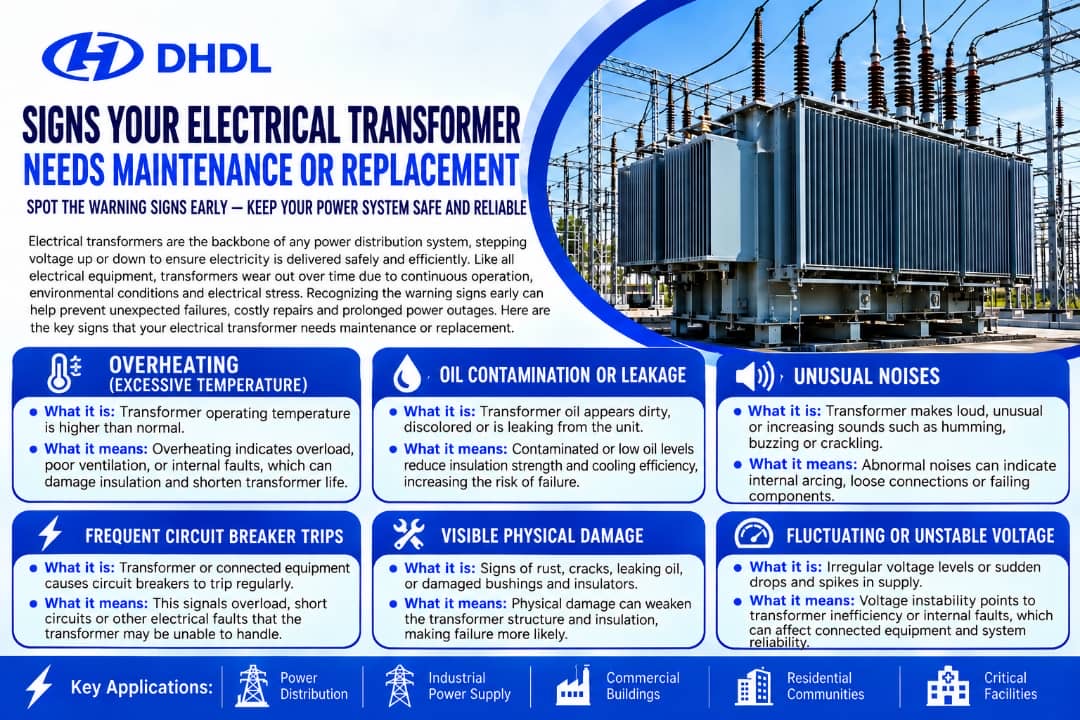
Electrical transformers are essential components of modern power systems. From industrial facilities and commercial buildings to substations and utility networks, transformers help transfer electrical energy between voltage levels so that electricity can be distributed and used safely and efficiently.
However, like every electrical asset, transformers experience wear, aging, thermal stress, contamination, and mechanical deterioration. Ignoring early warning signs can lead to unexpected shutdowns, equipment damage, expensive repairs, or complete transformer failure.
Knowing the signs your electrical transformer needs maintenance or replacement can help operators take action before a minor problem becomes a major power-system failure.
Why Transformer Maintenance Matters
Regular transformer maintenance helps identify developing problems before they affect reliability. Preventive maintenance can include visual inspections, electrical testing, oil analysis, temperature monitoring, connection checks, and inspection of components such as bushings and tap changers.
For oil-filled transformers, the condition of the insulating oil is particularly important. Moisture, contaminants, oxidation, and dissolved gases can provide valuable information about the condition of the transformer and its insulation system. Hitachi Energy identifies oil and gas analysis as an important part of transformer condition assessment.
A structured maintenance program can therefore extend equipment life while reducing the risk of unplanned downtime.
1. Unusual Transformer Noise or Vibration
Transformers normally produce a characteristic humming sound. However, a sudden change in noise level or unusual vibration should not be ignored.
Excessive noise can be associated with loose components, mechanical problems, changes in magnetic forces, cooling-system issues, or other developing faults.
If an operator notices a new buzzing, rattling, clicking, or unusually loud humming sound, qualified personnel should investigate the cause.
2. Excessive Operating Temperature
Heat is one of the major factors that can accelerate transformer aging.
A transformer operating consistently above its expected temperature range may be experiencing excessive loading, inadequate cooling, blocked ventilation, poor connections, or internal problems.
Persistent overheating can accelerate deterioration of insulation materials and shorten transformer service life.
Temperature trends should therefore be monitored rather than relying only on occasional observations.
3. Oil Leaks or Low Oil Level
For oil-filled transformers, visible oil leakage is a significant warning sign.
Oil may leak through:
- Gaskets
- Valves
- Bushings
- Radiators
- Tank joints
- Seals and fittings
A low oil level can affect insulation and cooling performance. Even a small leak should be investigated because it can worsen over time.
Routine transformer maintenance programs commonly include leak repairs, gasket repairs, and valve repairs.
4. Discolored or Deteriorated Transformer Oil
The condition of transformer oil can provide useful information about equipment health.
Oil testing may evaluate properties such as dielectric breakdown strength, acidity, moisture, power factor, and dissolved gases. DGA, or dissolved gas analysis, can help identify gases associated with developing electrical or thermal faults. (Hitachi Energy)
This makes transformer oil analysis an important diagnostic tool for many oil-filled transformers.
A professional transformer oil analysis guide should always be applied according to the transformer manufacturer’s recommendations and the relevant testing standards.
5. Frequent Circuit Breaker Trips
Repeated tripping of protective devices should never simply be reset without determining the underlying cause.
Frequent trips may indicate:
- Transformer overload
- Short circuits
- Insulation problems
- Internal faults
- Excessive temperature
- Protection-system issues
If protective devices are operating more frequently than normal, the transformer and associated electrical system should be inspected by qualified personnel.
6. Abnormal Voltage or Power Quality
A transformer that is no longer maintaining expected voltage levels may require investigation.
Voltage fluctuations can result from loading conditions, incorrect tap settings, winding problems, connection issues, or faults elsewhere in the electrical system.
For systems using a power distribution transformer, monitoring voltage and load conditions can help identify changes in performance before they become severe.
7. Corrosion, Rust, or Physical Damage
The physical condition of a transformer can reveal environmental or mechanical problems.
Operators should look for:
- Rust
- Corrosion
- Damaged enclosures
- Cracked insulators
- Loose connections
- Damaged cooling components
- Deteriorated paint or protective coatings
Schneider Electric’s transformer maintenance guidance recommends visual inspection for physical damage, overheating, corrosion, rust, and deterioration of insulating surfaces.
8. Repeated Overloading
Transformers are designed for specific electrical loads. Operating continuously beyond their rated capacity can generate excessive heat and accelerate insulation aging.
If a transformer is repeatedly overloaded because electrical demand has increased, maintenance alone may not solve the problem.
In such cases, upgrading the transformer or installing additional capacity may be more appropriate.
For example, facilities may need to evaluate whether a 3 phase transformer, step down transformer, or higher-capacity utility transformer is better suited to their current requirements.
9. Aging Insulation
Transformer insulation gradually deteriorates because of heat, moisture, electrical stress, oxidation, and operating conditions.
For oil-filled transformers, insulation condition can be assessed through several diagnostic methods, including oil testing and dissolved gas analysis. Furan analysis can also provide information about paper insulation degradation. (Hitachi Energy)
When insulation deterioration becomes severe, replacement may become more economical and reliable than continued repair.
10. Increasing Maintenance Costs
Another important sign is the financial cost of keeping an aging transformer operational.
If a transformer requires increasingly frequent repairs, replacement components, oil treatment, testing, or emergency interventions, operators should compare the ongoing maintenance cost with the cost of a new unit.
Modern transformer service programs can include condition assessment, oil services, electrical testing, tap-changer maintenance, and life-extension solutions. (Hitachi Energy)
Maintenance or Replacement: Which Is Better?
Not every problem means a transformer must be replaced.
Maintenance may be appropriate when:
- The transformer remains fundamentally sound.
- The problem is relatively minor.
- Oil can be treated or replaced.
- Leaks can be repaired.
- Connections or components can be restored.
- Diagnostic results show acceptable remaining life.
Replacement may be preferable when:
- Insulation has seriously deteriorated.
- Major internal damage has occurred.
- The transformer is repeatedly failing.
- Repair costs are approaching replacement costs.
- Capacity is no longer sufficient.
- The equipment has reached the end of its practical service life.
The decision should be based on inspection results, test data, operating history, safety considerations, and total lifecycle cost.
The Role of Transformer Monitoring Systems
Modern transformer monitoring systems can provide additional information about equipment condition. Online monitoring can track parameters such as dissolved gases, moisture, temperature, and other operating conditions.
Advanced monitoring can help identify developing faults earlier, allowing operators to plan maintenance instead of waiting for an unexpected failure. Hitachi Energy notes that online dissolved-gas and moisture monitoring can provide early warnings of developing transformer faults. (Hitachi Energy)
Final Thoughts
Recognizing the signs your electrical transformer needs maintenance or replacement is essential for maintaining a reliable electrical distribution system.
Unusual noise, excessive temperature, oil leaks, deteriorated oil, frequent protection trips, abnormal voltage, corrosion, overloading, insulation deterioration, and rising maintenance costs should all prompt further investigation.
Regular inspections and condition-based maintenance can help extend transformer life and reduce unexpected outages. However, when diagnostic results show severe deterioration or when repair costs become excessive, replacing the transformer may be the safer and more economical solution.
For businesses and utilities, investing in reliable power transformer and distribution transformer equipment, combined with an appropriate maintenance strategy, can improve electrical reliability and protect critical infrastructure.