Containerized Immersion Liquid-Cooled Energy Storage System: Buyer’s Guide

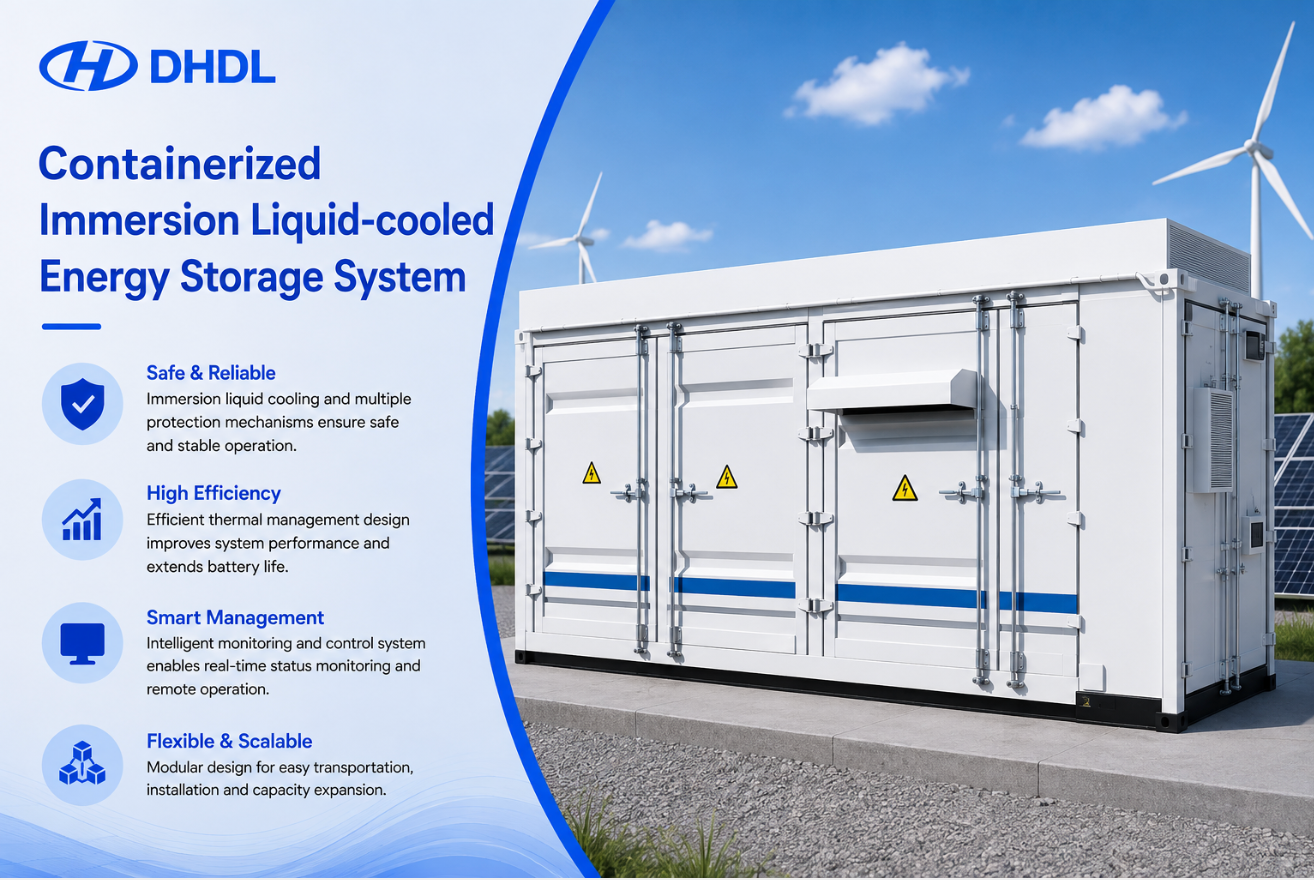
Large-scale battery energy storage projects must manage more than energy capacity. They also need to coordinate charge and discharge power, battery temperature, power conversion, grid connection, system control, protection, monitoring, fire safety, transport, installation, and future expansion.
The DHDL Containerized Immersion Liquid-Cooled Energy Storage Systemintegrates battery modules, BMS, EMS, PCS, immersion liquid cooling, safety protection, and intelligent monitoring within a containerized structure.
Unlike a conventional air-cooled cabinet, this system places battery cells directly in an insulating coolant. The circulating coolant removes heat from the cells and supports faster, more uniform thermal management.
Therefore, DHDL positions the system for large-scale independent storage stations, renewable-energy integration, utility applications, commercial and industrial storage, grid peak shaving and frequency regulation, microgrids, backup power, and solar-storage-charging projects.
However, the product page does not publish one fixed MWh capacity, MW power, battery chemistry, container dimension, efficiency, operating-temperature range, or service-life value. DHDL configures these items according to the actual project.
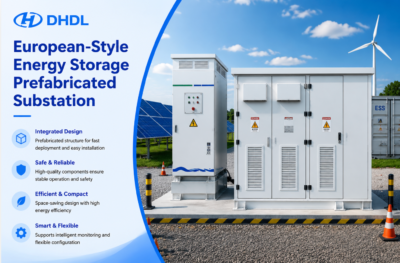
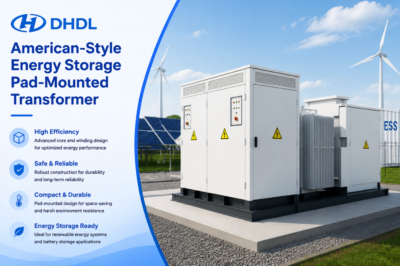
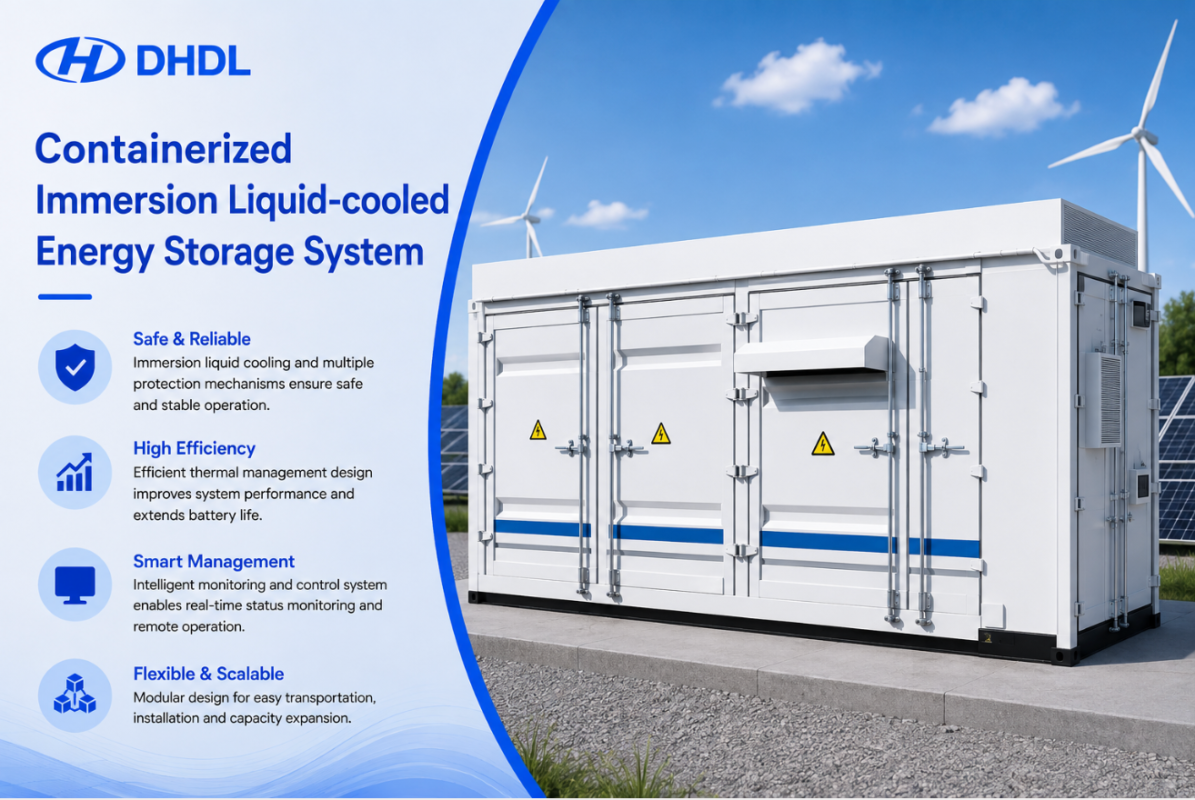
DHDL containerized immersion liquid-cooled energy storage system for utility-scale, renewable-energy, commercial, industrial, microgrid, and backup-power projects.
What Is a Containerized Immersion Liquid-Cooled Energy Storage System?
A containerized immersion liquid-cooled energy storage system combines battery storage, power conversion, control, cooling, protection, and monitoring equipment within a transportable containerized structure.
DHDL lists the following integrated systems:
- Battery modules
- Battery management system, or BMS
- Energy management system, or EMS
- Power conversion system, or PCS
- Immersion liquid-cooling system
- Electrical and system safety protection
- Fire-protection system
- Intelligent monitoring system
The battery cells sit directly in an insulating coolant. Consequently, the cooling medium surrounds a much larger part of the cell surface than an indirect cooling arrangement.
The liquid-circulation and heat-exchange system then removes heat from the coolant. According to DHDL, this design supports fast and uniform heat dissipation, improves temperature consistency, and reduces overheating risk.
Nevertheless, “containerized” does not mean that the product automatically includes every grid-connection component. Buyers should confirm whether the proposed scope includes transformers, medium-voltage switchgear, external cables, auxiliary power, site controllers, civil works, installation, and commissioning.
How Does Immersion Liquid Cooling Work?
Direct Cell-to-Coolant Contact
In the DHDL system, insulating coolant directly surrounds the battery cells.
As the cells generate heat, the coolant absorbs it. The cooling system then circulates the liquid through the heat-exchange arrangement.
This direct thermal interface can support more uniform cooling than a system that relies only on cabinet air movement. However, DHDL should confirm the final coolant, circulation design, heat exchanger, temperature-control strategy, and monitoring arrangement for each project.
Temperature Consistency
Uneven cell temperatures can create uneven operating conditions across a battery system.
According to the product page, immersion cooling helps reduce cell-temperature differences and improve temperature consistency. Therefore, the system can support stable operation under high-load charge and discharge conditions.
Still, the website does not publish a guaranteed maximum temperature difference. Buyers with a numerical requirement should include it in the technical specification and request confirmation.
Heat Exchange
The system uses a high-efficiency heat-exchange design to remove heat from the circulating coolant.
The final heat-rejection arrangement depends on:
- System capacity
- Charge and discharge power
- Duty cycle
- Battery losses
- Ambient temperature
- Installation altitude
- Solar exposure
- Container layout
- Site cooling conditions
- Required operating limits
Consequently, buyers should provide the expected operating profile rather than only the nominal MWh capacity.
Coolant Management
The product FAQ identifies the cooling medium as an insulating coolant.
However, the product page does not publish its chemical type, dielectric properties, flash point, environmental characteristics, compatibility, replacement interval, or maintenance procedure.
Therefore, buyers should request:
- Coolant technical datasheet
- Electrical-insulation properties
- Material-compatibility information
- Operating-temperature range
- Fire and safety information
- Environmental information
- Filling and replacement procedure
- Leakage-detection strategy
- Storage and transport requirements
- Maintenance interval
- End-of-life handling instructions
Published Product Specifications
DHDL publishes the following general specification framework.
| Item | Published product information |
|---|---|
| Product type | Containerized Immersion Liquid-Cooled Energy Storage System |
| System structure | Containerized design for transportation, installation, deployment, and project expansion |
| Cooling method | Battery cells directly immersed in coolant for fast and uniform heat dissipation |
| Thermal management | Heat-exchange design intended to improve battery-temperature consistency and reduce overheating risk |
| Main functions | Large-scale storage, charge and discharge control, thermal management, safety protection, energy management, and monitoring |
| Integrated systems | Battery system, immersion cooling, BMS, PCS, EMS, fire protection, and intelligent monitoring |
| Applications | Utility-scale storage, C&I storage, renewable-energy integration, microgrids, and backup power |
| Capacity management | Modular system design supports project-specific expansion |
| Customization | Capacity, battery configuration, cooling design, container layout, grid mode, communication protocol, and safety requirements |
| Additional FAQ customization | Output power, PCS brand, grid-connection voltage, container size, and overall system solution |
These specifications define the available system scope. However, the approved project datasheet, equipment schedule, interface matrix, single-line diagram, general arrangement, and test plan should define the final contractual configuration.
Why Consider Immersion Cooling for a Large-Scale BESS?
More Direct Heat Removal
The coolant surrounds the battery cells directly. Therefore, the system can transfer heat through a more direct interface than air cooling.
This characteristic can help projects with:
- High-capacity battery systems
- High charge or discharge rates
- Demanding thermal loads
- Tight temperature-consistency requirements
- Large-scale modular deployment
- Significant ambient-temperature challenges
Nevertheless, DHDL must size the complete cooling system for the actual operating conditions.
Improved Temperature Uniformity
DHDL identifies smaller cell-temperature differences as an advantage of immersion cooling.
More uniform thermal conditions can help reduce temperature imbalance across the battery system. However, the website does not publish configuration-specific measurements or test conditions.
Consequently, buyers should request numerical temperature-uniformity data if it forms part of the tender evaluation.
Lower Overheating Risk
The product page states that the cooling and heat-exchange design helps reduce overheating risk.
This is a measured risk-reduction statement rather than a claim that thermal events cannot occur. Battery safety still depends on:
- Cell selection
- Battery integration
- BMS logic
- Temperature monitoring
- Electrical protection
- Coolant properties
- Fire protection
- Container separation
- Emergency shutdown
- Installation
- Operation and maintenance
Therefore, buyers should assess the complete safety architecture.
Modular Capacity Expansion
The containerized and modular structure supports project expansion.
As a result, buyers can plan multiple system blocks or phased capacity growth. Nevertheless, expansion requires advance provision for:
- Site area
- Foundations
- Grid capacity
- Transformers
- Switchgear
- Cable routes
- EMS addresses
- Protection coordination
- Communication bandwidth
- Fire separation
- Access roads
- Future auxiliary loads
Modular hardware only supports expansion effectively when the original project design reserves the necessary infrastructure.
Transportable Containerized Structure
The containerized structure can simplify transportation and deployment compared with a fully site-built battery building.
However, the buyer must still review:
- Container dimensions
- Shipping weight
- Transport route
- Port and customs restrictions
- Road width
- Bridge limits
- Crane capacity
- Lifting points
- Site turning radius
- Foundation preparation
- Delivery sequence
The product page does not publish one universal container size or weight. Therefore, DHDL should confirm logistics after establishing the system configuration.
Where Can Buyers Use This System?
Independent Energy Storage Stations
DHDL lists large-scale independent energy storage stations as an application.
These projects may require multiple containerized units, centralized control, grid-connected PCS equipment, transformers, switchgear, auxiliary systems, monitoring, fire protection, and plant-level EMS integration.
Consequently, buyers should define both the container-level and station-level scope.
Utility-Scale Energy Storage
Utilities may use battery storage to support grid operations according to the approved project strategy.
The product page lists peak shaving and frequency regulation among its applications. However, DHDL must configure the PCS, EMS, communication, response logic, and grid interface for the intended service.
Solar and Wind Energy Integration
Renewable-energy generation can vary with weather conditions. Therefore, a storage project may charge or discharge according to the generation profile, grid requirements, and operating objectives.
Buyers should provide:
- Solar or wind capacity
- Generation profile
- Curtailment information
- Grid export limit
- Required storage duration
- PCS power
- Point-of-connection voltage
- Operating strategy
- Dispatch requirements
- Expansion plan
Commercial and Industrial Storage
DHDL also lists commercial and industrial energy storage as an application.
A large industrial site may need storage for peak management, renewable-energy integration, backup support, or a microgrid. Nevertheless, a containerized immersion-cooled solution may exceed the needs of a smaller facility.
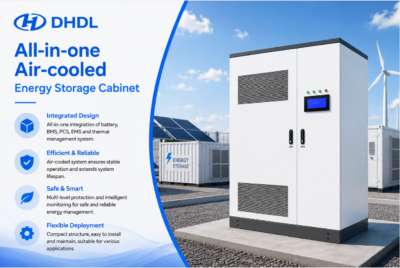
Therefore, buyers should compare it with a more compact All-in-One Air-Cooled Energy Storage Cabinet before selecting the system architecture.
Mcrogrids
A microgrid coordinates generation, storage, loads, and the utility interface.
The battery system can support the storage component. However, a complete microgrid may also require generators, PV inverters, transformers, switchgear, protection, controllers, communication, and load-management equipment.
Backup-Power Projects
The system can support backup-power applications when DHDL configures the power, capacity, control, and grid mode appropriately.
However, buyers should define:
- Critical loads
- Required backup duration
- Maximum load
- Starting currents
- Acceptable transfer time
- Grid-loss response
- Black-start requirement
- Generator coordination
- Required reserve state of charge
- Redundancy
The product page does not publish a guaranteed transfer time or black-start function for every configuration.
Solar-Storage-Charging Projects
A solar-storage-charging project combines PV generation, battery storage, and EV charging.
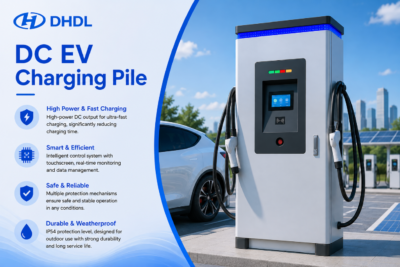
For example, the system may coordinate with DHDL’s DC EV Charging Pile in a high-power charging project.
Nevertheless, the project must balance PV generation, grid capacity, battery power, storage duration, vehicle demand, charger utilization, and EMS control.
Immersion Liquid Cooling vs. Air Cooling
DHDL offers both the target containerized system and an air-cooled integrated cabinet.
| Selection factor | Containerized immersion liquid-cooled system | All-in-one air-cooled cabinet |
| Published primary scale | Large-scale energy storage | Commercial and industrial energy storage |
| Physical structure | Containerized system | Compact integrated cabinet |
| Cooling method | Battery cells directly immersed in insulating coolant | Air-cooling thermal management |
| Thermal emphasis | Fast, uniform heat dissipation and improved cell-temperature consistency | Stable cabinet temperature control and convenient maintenance |
| Main integrated equipment | Battery modules, BMS, EMS, PCS, immersion cooling, protection, fire system, and monitoring | Battery modules, BMS, EMS, PCS, air cooling, electrical protection, fire system, and monitoring |
| Expansion approach | Modular containerized capacity expansion | Modular battery-capacity configuration |
| Published applications | Utility scale, C&I, renewable energy, microgrids, backup power | C&I, distributed energy, PV integration, backup power, and microgrids |
| Main buyer priority | Large capacity, high thermal load, uniform cooling, and containerized deployment | Compact C&I integration and simpler air-cooling architecture |
| Primary maintenance focus | Coolant, pumps, circulation, heat exchange, sealing, monitoring, and integrated equipment | Airflow, fans, filters where applicable, thermal paths, and integrated equipment |
| Final selection basis | MWh/MW demand, duty cycle, temperature requirements, scale, environment, and lifecycle strategy | kWh/kW demand, footprint, duty cycle, environment, maintenance, and cost |
Immersion cooling offers a more direct cell-to-coolant heat-transfer path. Conversely, air cooling avoids a system in which cells sit directly in coolant.
Therefore, the project should compare scale, thermal load, efficiency targets, auxiliary power, maintenance expertise, coolant management, environment, cost, safety, and future expansion.
Immersion Cooling vs. Indirect Liquid Cooling
The category title uses “liquid-cooled,” while the specific DHDL product uses immersion liquid cooling. These terms should not be treated as interchangeable.
| Cooling route | Cooling-medium relationship to cells | Main design distinction |
| Immersion liquid cooling | Insulating coolant directly surrounds the battery cells | Direct cell-to-coolant thermal interface |
| Indirect liquid cooling | Liquid typically flows through plates, pipes, or another heat-transfer structure | Coolant does not directly surround the cells |
| Air cooling | Air carries heat away from the battery equipment | No liquid-based battery cooling loop |
The DHDL product page specifically confirms immersion cooling. Therefore, this article does not claim specifications for a separate cold-plate or indirect liquid-cooling product.
How Do BMS, EMS, and PCS Work Together?
BMS
The battery management system monitors and manages the battery system according to the approved architecture.
Buyers should confirm:
- Cell and module monitoring
- Temperature monitoring
- State-of-charge calculation
- State-of-health functions
- Alarm thresholds
- Shutdown logic
- Balancing
- Communication
- Data recording
- Interface with cooling and fire systems
PCS
The power conversion system manages electrical charging and discharging.
DHDL lists the PCS brand and output power as customizable. Therefore, buyers should provide:
- Required MW power
- Battery DC-voltage range
- AC voltage
- Frequency
- Grid mode
- Reactive-power requirements
- Overload requirements
- Harmonic limits
- Grid-support functions
- Transformer interface
EMS
The energy management system coordinates the operating strategy.
It may manage charging schedules, discharge commands, power limits, renewable-energy coordination, grid dispatch, peak shaving, or backup reserve according to the project.
However, the product page does not publish one universal EMS platform or protocol. Buyers should provide the required communication, dispatch, reporting, and third-party integration functions.
What Can DHDL Customize?
Energy and Power
DHDL can customize:
- Energy-storage capacity
- Output power
- Battery configuration
- PCS brand
- Modular system arrangement
Capacity and power are different design inputs. Therefore, buyers should state both the required MWh and MW.
Cooling System
DHDL can customize:
- Cooling requirements
- Cooling-system design
- Heat-exchange arrangement
- Container thermal layout
- Project-specific thermal controls
The buyer should provide the duty cycle, ambient conditions, altitude, and required temperature limits.
Grid Connection
DHDL can customize:
- Grid-connection voltage
- Grid-connected or project-specific operating mode
- PCS configuration
- Communication protocol
- Energy-management interface
- Protection requirements
Container and Site Configuration
DHDL can customize:
- Container size
- Container layout
- Internal equipment arrangement
- Site-specific installation configuration
- Safety requirements
- Environmental adaptation
Overall System Solution
The product FAQ states that DHDL can customize the overall system solution.
Nevertheless, the proposal should explicitly identify the scope of:
- Battery system
- PCS
- EMS
- BMS
- Cooling
- Fire protection
- Monitoring
- Transformer
- Switchgear
- External cables
- Installation
- Commissioning
- Training
- Spare parts
- Warranty
- Documentation
Critical Buyer Checks Before Ordering
Confirm MWh and MW Requirements
MWh defines energy capacity, while MW defines charge or discharge power.
Two projects can use the same MWh capacity but require different power, duration, cooling, PCS, transformer, and cable configurations.
Therefore, provide:
- Required energy
- Required power
- Storage duration
- Charge rate
- Discharge rate
- Daily cycles
- Operating profile
- Grid-service requirements
Confirm the Battery Configuration
Request written confirmation of:
- Cell chemistry
- Cell manufacturer
- Cell capacity
- Module and rack architecture
- Nominal and operating voltage
- Usable energy
- Depth of discharge
- Cycle-life basis
- Degradation assumptions
- Warranty conditions
- Replacement strategy
The product page does not publish these details for one standard system.
Confirm the Thermal Design
Specify:
- Maximum and minimum ambient temperature
- Operating altitude
- Solar exposure
- Humidity
- Required cell-temperature range
- Maximum temperature difference
- Coolant specification
- Cooling redundancy
- Auxiliary consumption
- Leakage detection
- Emergency cooling response
Confirm Fire and Safety Functions
The system includes safety protection and a fire-protection system. However, buyers should verify:
- Detection devices
- Alarm levels
- Fire-suppression medium
- Isolation logic
- Emergency shutdown
- Venting strategy
- External fire-system interface
- Container separation
- Emergency access
- Applicable fire standard
- Local approval requirements
Confirm Grid-Connection Equipment
Determine whether the proposed scope includes:
- PCS
- Step-up transformer
- Medium-voltage switchgear
- Low-voltage distribution
- Protection relays
- Metering
- Auxiliary transformer
- Plant controller
- SCADA connection
- External cables
- Grounding system
DHDL offers related transformer and distribution-cabinet products, but buyers should not assume that every item comes automatically with the storage container.
Confirm Logistics
Provide:
- Destination
- Transport route
- Port
- Road restrictions
- Crane availability
- Maximum shipping dimensions
- Weight limits
- Foundation plan
- Delivery sequence
- Customs requirements
- Battery transport documents
Target-Market Considerations
DHDL’s target markets include Ukraine, Ethiopia, Vietnam, Thailand, Myanmar, Uzbekistan, Russia, and Nigeria. However, exact site and grid data must determine the configuration.
| Target market | Information buyers should prioritize |
| Ukraine | Minimum temperature, heating requirements, grid connection, site security, fire rules, logistics, and documentation |
| Ethiopia | Altitude, ambient heat, dust, grid voltage, transport route, cooling derating, and site access |
| Vietnam | Humidity, rainfall, flooding, coastal corrosion where applicable, cooling conditions, grid code, and fire requirements |
| Thailand | High temperature, humidity, solar exposure, drainage, cooling load, grid requirements, and site access |
| Myanmar | Monsoon exposure, grid stability, communication availability, logistics, maintenance resources, and site security |
| Uzbekistan | Seasonal temperatures, dust and sand, altitude, transport restrictions, cooling demand, and grid requirements |
| Russia | Minimum temperature, snow, heating, grid standards, fire regulations, transport restrictions, and documentation |
| Nigeria | Ambient heat, humidity, rainfall, dust, grid availability, backup strategy, logistics, communication, and security |
For example, a high-altitude project in Ethiopia needs a different thermal review from a low-altitude site. Meanwhile, projects in Vietnam or Thailand may place greater emphasis on humidity, rainfall, drainage, and high-temperature cooling performance.
Therefore, buyers should submit measured environmental values rather than only the destination country.
Documentation and Verification Requirements
Before order approval, buyers should request a project-specific document list.
| Document or verification item | Purpose |
| System datasheet | Defines MWh, MW, voltage, cooling, and environmental ratings |
| Single-line diagram | Defines the electrical architecture |
| Equipment list | Clarifies included components and brands |
| Battery datasheet | Defines cell and battery performance |
| PCS datasheet | Defines power-conversion capability |
| Cooling-system datasheet | Defines coolant, circulation, heat exchange, and thermal limits |
| Container layout | Defines dimensions, equipment arrangement, and access |
| Communication matrix | Defines BMS, PCS, EMS, SCADA, and external interfaces |
| Protection philosophy | Defines alarms, trips, isolation, and coordination |
| Fire-safety documents | Defines detection, suppression, and emergency response |
| Test plan | Defines battery, PCS, cooling, control, protection, and integrated tests |
| Transport documents | Supports battery and container shipment |
| Installation manual | Supports foundation, lifting, cables, and commissioning |
| Warranty terms | Defines coverage, conditions, exclusions, and responsibilities |
The product page contains a “Factory Test Items” table, but that table lists transformer-specific tests such as winding resistance, voltage ratio, vector group, and transformer-oil testing. These tests do not match the published scope of the target energy storage system.
Therefore, buyers should request a dedicated BESS factory-acceptance test plan rather than rely on that webpage table.
What Information Does DHDL Need for a Quotation?
| RFQ information | Why it matters |
| Application scenario | Defines utility, renewable-energy, C&I, microgrid, backup, or charging use |
| Required capacity in MWh | Establishes storage energy |
| Required power in MW | Establishes charge and discharge power |
| Storage duration | Relates power to energy requirements |
| Operating mode | Defines charge, discharge, grid, backup, and dispatch logic |
| Grid-connection voltage | Establishes the electrical interface |
| Grid-code requirements | Defines control, protection, and compliance functions |
| Battery requirements | Supports chemistry, brand, voltage, and lifecycle selection |
| PCS requirements | Supports power-conversion configuration |
| Charge and discharge profile | Supports battery and cooling design |
| Installation environment | Supports thermal, container, and safety design |
| Site layout | Supports container quantity, access, and cable planning |
| Communication protocol | Defines EMS and SCADA integration |
| Safety requirements | Defines protection and fire-system scope |
| Expansion plan | Supports modular capacity planning |
| Applicable standards | Establishes the engineering and documentation basis |
| Project quantity | Supports system and commercial planning |
| Destination and schedule | Supports logistics, manufacturing, and delivery planning |
If the project remains at the concept stage, send the target MWh, MW, storage duration, application, grid voltage, site location, and operating objective first. DHDL can then identify the remaining technical inputs.
Frequently Asked Questions
What makes this system different from a standard liquid-cooled BESS?
The DHDL product uses immersion liquid cooling. Its insulating coolant directly surrounds the battery cells. In contrast, an indirect liquid-cooling system normally transfers heat through cold plates or another physical interface.
Which systems does the container integrate?
The product page lists battery modules, BMS, EMS, PCS, immersion cooling, safety protection, fire protection, and intelligent monitoring.
Does DHDL publish a fixed MWh capacity?
No. DHDL customizes the capacity according to the project.
Can DHDL customize the output power?
Yes. The FAQ lists output power as customizable. Buyers should provide the required MW value and operating profile.
Can buyers specify the PCS brand?
The product FAQ states that PCS-brand customization is supported. Final availability and compatibility require confirmation.
Which applications suit the system?
DHDL lists independent storage stations, utility-scale storage, renewable-energy integration, C&I storage, peak shaving, frequency regulation, microgrids, backup power, and solar-storage-charging projects.
Does immersion cooling eliminate thermal risk?
No. The product page states that immersion cooling helps reduce overheating risk and improve temperature consistency. The complete battery, cooling, protection, monitoring, fire-safety, installation, and operating design still determines system risk.
Can the system expand later?
The modular containerized design supports project-specific capacity expansion. However, buyers must reserve grid, civil, cable, communication, safety, and site capacity.
What should buyers submit for a quotation?
DHDL requests the capacity in MWh, power in MW, application, grid voltage, operating mode, environment, and quantity. Buyers should also provide battery, cooling, communication, safety, standard, and expansion requirements.
Configure the System Around the Actual Duty Cycle
The DHDL Containerized Immersion Liquid-Cooled Energy Storage System combines battery modules, BMS, EMS, PCS, direct immersion cooling, safety protection, fire protection, and intelligent monitoring within a modular containerized platform.
Therefore, it can support large-scale independent storage, utility projects, renewable-energy integration, commercial and industrial applications, microgrids, backup power, and solar-storage-charging infrastructure.
However, the correct configuration depends on much more than MWh capacity. Buyers should confirm the MW power, storage duration, battery chemistry, duty cycle, cooling conditions, coolant, PCS, grid connection, fire protection, communication, environment, logistics, and expansion plan.
To request a project-specific solution, send your required MWh and MW, storage duration, application, grid voltage, charge and discharge profile, battery requirements, installation environment, communication protocol, safety requirements, project quantity, destination, and schedule through the DHDL contact page.