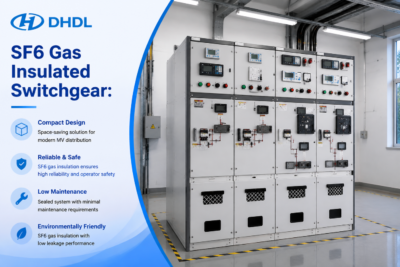
GIS Gas-Insulated Switchgear: A Buyer’s Guide for Compact and Reliable Substations

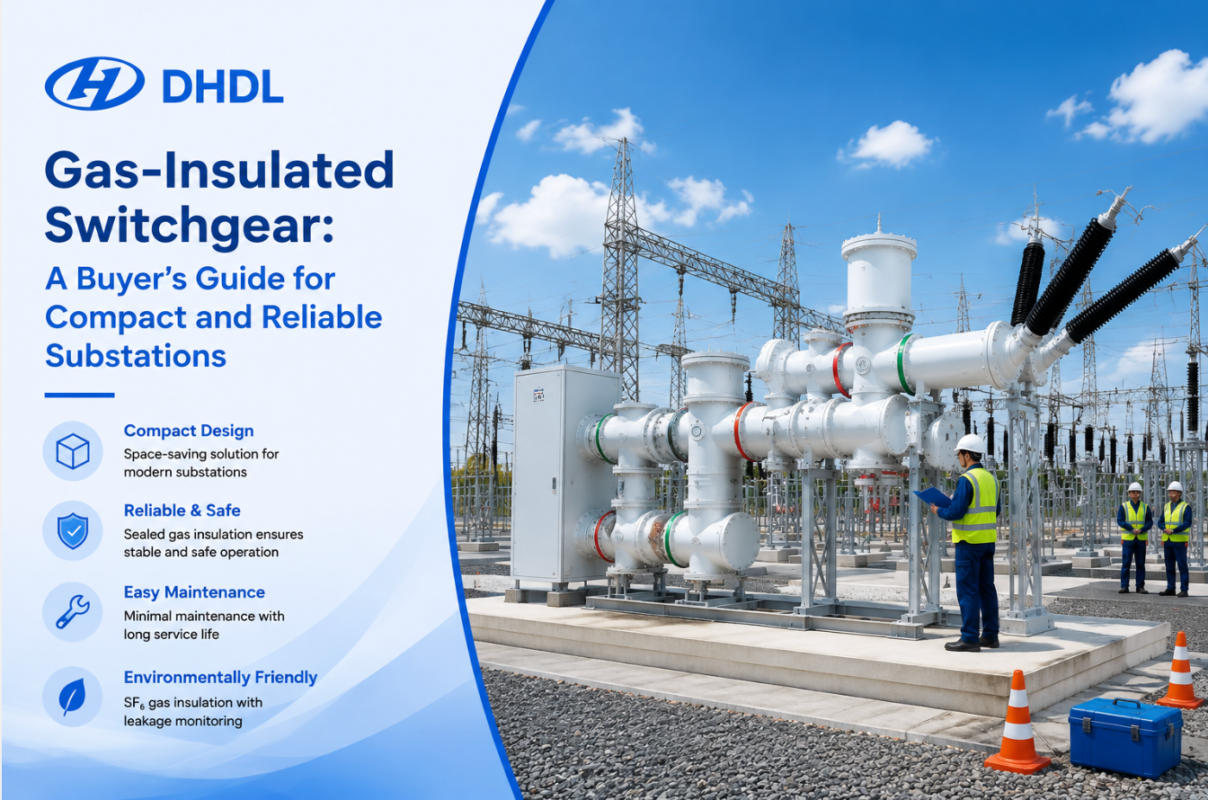
Substation space, environmental exposure, maintenance access, and power-supply continuity can significantly influence switchgear selection.
In an open or spacious site, conventional air-insulated equipment may remain practical. However, when a project has restricted space, harsh environmental conditions, or demanding continuity requirements, GIS gas-insulated switchgear may provide a more suitable direction.
Nevertheless, buyers should not select GIS only because it appears compact.
Instead, they should confirm whether the equipment matches the network voltage, rated current, short-circuit level, protection system, cable arrangement, operating environment, applicable standard, expansion plan, and maintenance capability.
The DHDL GIS gas-insulated switchgear is intended for power distribution and substation applications that require a gas-insulated switching arrangement.
From a user’s perspective, the most important question is not simply:
“Will GIS save space?”
A better question is:
“Will this GIS configuration match our electrical system, site environment, operating philosophy, future expansion, and lifecycle requirements?”
This guide explains how to make that evaluation.
What Is GIS Gas-Insulated Switchgear?
GIS stands for gas-insulated switchgear.
In a GIS system, key energized components operate inside grounded metal enclosures that use an insulating gas system. Depending on the approved design, the GIS assembly may integrate switching, isolation, earthing, busbar, measurement, and connection functions into a compact arrangement.
Consequently, GIS can reduce the amount of external air-insulation clearance required around primary energized components.
A project-specific GIS system may include functions such as:
- Circuit breaking
- Busbar connection
- Disconnection
- Earthing
- Current measurement
- Voltage measurement
- Cable termination
- Transformer connection
- Protection and control interfaces
- Pressure or density monitoring
- Mechanical and electrical interlocking
However, the exact functions depend on the product design and project configuration.
Therefore, buyers should request a complete bay schedule, single-line diagram, equipment list, and technical data sheet from DHDL before comparing proposals.
Why Buyers Consider GIS for a Substation
GIS can offer practical advantages, particularly when the project must balance limited space, environmental conditions, and operational requirements.
Compact Substation Layout
First, GIS places primary components inside a compact metal-enclosed arrangement.
As a result, it may reduce the required substation footprint compared with a conventional air-insulated layout designed for the same network function.
This can be valuable for:
- Urban substations
- Industrial plants
- Renewable energy facilities
- Transport infrastructure
- Underground or enclosed substations
- Sites with expensive land
- Expansion projects with limited available space
- Prefabricated or integrated substation solutions
However, compact equipment does not eliminate the need for maintenance and installation space. Therefore, the buyer must still reserve room for cable work, operating mechanisms, gas handling, panel removal, lifting, testing, and future extension.
Protection from Environmental Exposure
Because primary components operate inside enclosed compartments, GIS can reduce their direct exposure to dust, humidity, salt, pollution, insects, and other external contaminants.
Nevertheless, the complete switchgear installation still includes external interfaces, mechanisms, secondary cabinets, seals, cable terminations, and building systems.
Consequently, the buyer should define the environment for the entire installation rather than assume that an enclosed primary circuit solves every site problem.
Integrated Substation Design
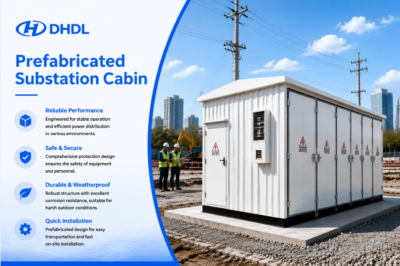
GIS can form part of a wider power solution that includes transformers, protection panels, low-voltage distribution, prefabricated substations, and control systems.
DHDL states that it manufactures transformers, high- and low-voltage distribution cabinets, prefabricated substations, and supporting power equipment. Therefore, projects that require transformer–switchgear integration can discuss the complete interface rather than purchasing each component independently.
You can review the broader DHDL equipment range on the DHDL homepage and its manufacturing capability page.
GIS vs. AIS: Which One Better Fits Your Project?
Gas-insulated switchgear and air-insulated switchgear can perform similar network functions. However, they use different insulation and layout approaches.
| Comparison factor | GIS gas-insulated switchgear | AIS air-insulated switchgear | Buyer-side interpretation |
|---|---|---|---|
| Primary insulation arrangement | Primary components operate in gas-insulated metal compartments | Primary insulation relies more heavily on air clearances | GIS can support a more compact arrangement |
| Substation footprint | Generally compact | Generally requires more space | Land cost and available area may influence the decision |
| Environmental exposure | Primary components receive more enclosure protection | Primary components may have greater exposure to the site environment | Dust, humidity, salt, and pollution deserve project-specific review |
| Visual inspection | Internal primary parts are not normally visible | More components may be visually accessible | GIS requires suitable diagnostic and maintenance procedures |
| Initial project complexity | Requires careful interface and compartment planning | Layout may be more conventional | GIS design should begin early in the substation project |
| Extension planning | Future bays and extension interfaces should be defined early | Physical extension may be more flexible where land remains available | Include realistic expansion requirements in the initial GIS design |
| Installation | Uses compact factory-assembled or modular sections, depending on design | May involve more site-installed open equipment | Confirm shipping sections, assembly scope, and site responsibilities |
| Maintenance approach | Focuses on mechanisms, monitoring, diagnostics, and sealed-compartment procedures | May allow easier direct access to some primary components | Compare lifecycle procedures, not only maintenance frequency |
| Suitable project type | Space-constrained, polluted, enclosed, urban, industrial, or integrated substations | Open sites with sufficient land and conventional layouts | Neither solution is automatically better for every project |
| Procurement comparison | Must include bay functions, gas system, interfaces, testing, and service scope | Must include structures, clearances, insulators, and external connections | Compare complete substation cost rather than panel price alone |
Therefore, the correct choice depends on land, environment, network requirements, project schedule, maintenance resources, lifecycle cost, and expansion strategy.
GIS should not win automatically because it is compact. Likewise, AIS should not win automatically because its arrangement appears simpler.
Start with the Single-Line Diagram
Before asking for a GIS quotation, prepare the single-line diagram.
The single-line diagram should identify:
- Incoming circuits
- Outgoing circuits
- Transformer feeders
- Bus sections
- Bus couplers
- Bus sectionalizers
- Metering circuits
- Earthing requirements
- Auxiliary transformer connections
- Future bays
- Protection zones
- Normal operating arrangement
- Emergency operating arrangement
Without this information, two suppliers may quote very different scopes while appearing to offer the same number of panels.
Therefore, the buyer should issue a clear bay schedule alongside the single-line diagram.
Define Every Bay Function
A GIS quotation should describe each bay individually.
| Bay information | What the buyer should confirm |
| Bay designation | Incoming, outgoing, transformer, bus coupler, metering, or other duty |
| Rated voltage | Must match the system and applicable equipment class |
| Rated current | Must match continuous loading and future requirements |
| Short-circuit rating | Must match the network fault study |
| Circuit breaker | Confirm duty, operating mechanism, control voltage, and operating sequence |
| Disconnector | Confirm quantity, position, and interlocking |
| Earthing switch | Confirm normal or high-speed duty where applicable |
| Current transformers | Confirm ratios, cores, classes, burden, and protection application |
| Voltage transformers | Confirm ratio, class, burden, and secondary arrangement |
| Surge protection | Confirm whether it belongs to the GIS or external scope |
| Cable termination | Confirm cable type, size, quantity, and interface |
| Transformer interface | Confirm cable, bus duct, or other connection arrangement |
| Protection interface | Confirm trip coils, alarms, indications, and communication |
| Future extension | Confirm extension direction and prepared interface |
In addition, request a clear boundary-of-supply drawing. Otherwise, the GIS supplier, cable supplier, transformer manufacturer, and EPC contractor may interpret interfaces differently.
Electrical Parameters Buyers Must Confirm
The product page identifies the equipment as GIS gas-insulated switchgear. However, the final electrical ratings must match the project.
Therefore, request written confirmation of:
- Rated voltage
- Highest voltage for equipment
- Rated frequency
- Rated normal current
- Rated short-time withstand current
- Short-circuit duration
- Rated peak withstand current
- Circuit-breaker short-circuit breaking current
- Circuit-breaker making current
- Insulation levels
- Internal-arc requirements
- Mechanical endurance
- Electrical endurance
- Operating sequence
- Control voltage
- Auxiliary voltage
- Applicable standard
Do not assume a value based on another GIS manufacturer’s catalogue.
Instead, place every required rating in the project specification and ask DHDL to identify any deviation.
Gas System Requirements Must Be Clear
“Gas-insulated” does not fully define the insulation medium, pressure arrangement, environmental obligations, or maintenance process.
Therefore, buyers should ask DHDL to confirm:
- Insulating gas or gas mixture
- Gas compartment arrangement
- Rated filling pressure
- Alarm level
- Lockout level
- Monitoring method
- Leakage-rate guarantee
- Gas filling procedure
- Gas recovery procedure
- Required service equipment
- Environmental and regulatory documentation
- End-of-life handling
- Operator training requirements
This information becomes especially important because gas regulations and environmental requirements may vary by market and may change over time.
Consequently, buyers in Ukraine, Ethiopia, Vietnam, Thailand, Myanmar, Uzbekistan, Russia, and Nigeria should confirm current national requirements, utility rules, import conditions, and environmental obligations before approving the gas system.
Review the GIS Drawing Before Production
A compact design still requires detailed spatial coordination.
Therefore, review the general arrangement drawing before production.
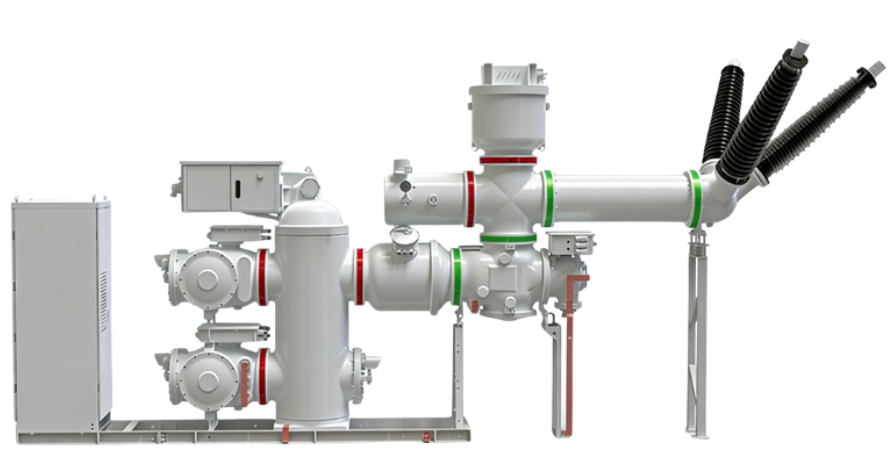
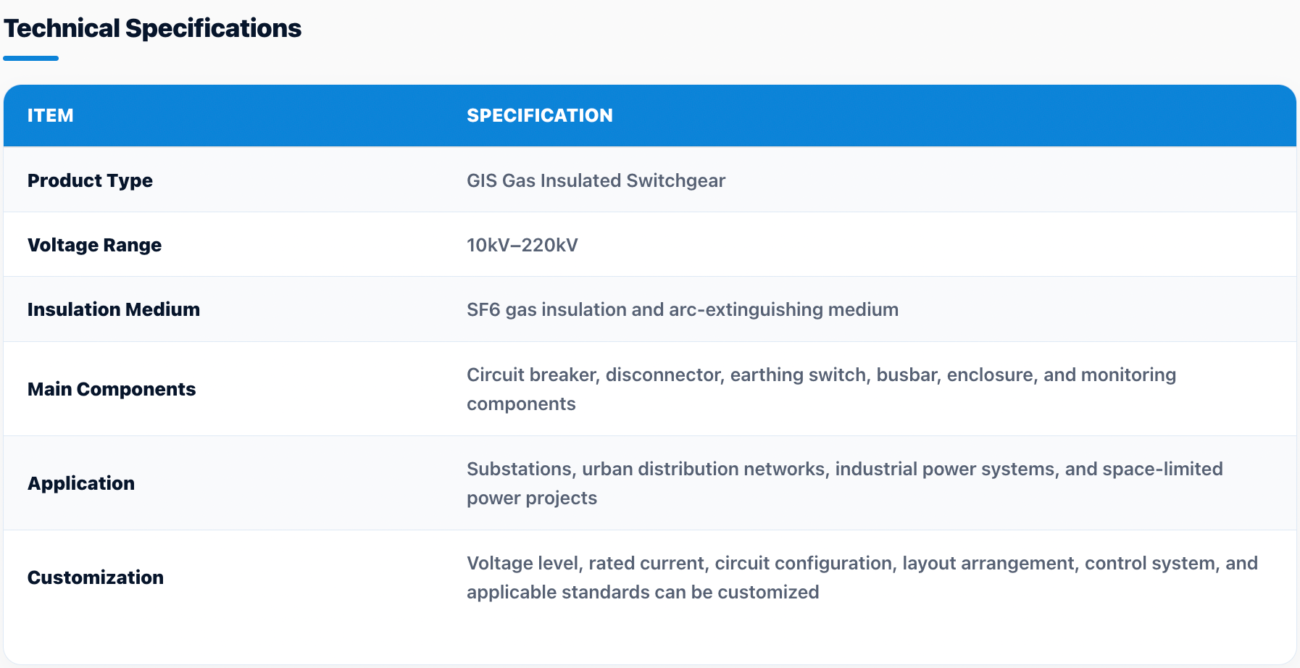
Check the following items:
| Drawing item | Buyer-side verification |
| Total lineup length | Confirm compatibility with the switchgear room |
| Panel or bay width | Check building columns, doors, and extension space |
| Equipment height | Confirm ceiling, crane, and ventilation clearance |
| Shipping-section dimensions | Verify port, container, truck, building entrance, and lifting access |
| Shipping-section weight | Confirm crane, floor, and handling capacity |
| Cable entry | Confirm bottom, rear, side, or project-specific arrangement |
| Cable basement | Check depth, support, bending radius, and pulling space |
| Transformer connection | Coordinate cable, bus duct, or other interface |
| Operating-mechanism access | Reserve safe inspection and maintenance space |
| Gas-compartment boundaries | Coordinate monitoring, isolation, and maintenance procedures |
| Pressure-relief direction | Keep discharge paths away from personnel and critical equipment |
| Control cabinet | Confirm access, cable routing, and SCADA interfaces |
| Future extension | Reserve physical space and define the prepared connection |
| Earthing points | Coordinate the station earthing system |
| Building ventilation | Match equipment and safety requirements |
In addition, require the civil, electrical, cable, protection, fire-safety, and installation teams to review the same drawing.
This coordinated review can prevent cable conflicts, insufficient ceiling clearance, inaccessible mechanisms, and unusable extension interfaces.
Cable and Transformer Interfaces Deserve Early Attention
GIS often forms only one part of the complete substation.
Therefore, the buyer must coordinate it with:
- Incoming cables
- Outgoing cables
- Power transformers
- Station service transformers
- Protection panels
- Control and communication systems
- Earthing system
- DC auxiliary supply
- AC auxiliary supply
- SCADA
- Building services
For projects requiring a high-voltage transformer connection, DHDL’s 66kV oil-immersed power transformer provides a relevant internal-link opportunity.
Similarly, transmission-level projects can review the 330kV–500kV oil-immersed transformer range.
These related products do not determine GIS suitability. However, they demonstrate why transformer–switchgear interface coordination should begin before either product enters production.
Protection, Control, and SCADA Integration
A GIS project includes more than primary equipment.
Consequently, the buyer should define:
- Protection relay scope
- Local control
- Remote control
- Trip circuits
- Closing circuits
- Interlocking
- Position indication
- Gas alarms
- Mechanism alarms
- Heater alarms
- DC supervision
- Communication protocol
- Time synchronization
- SCADA point list
- Event recording
- Cybersecurity requirements
- Remote diagnostic requirements
Moreover, hardwired and communication-based signals should have a clear responsibility matrix.
Without this matrix, the GIS supplier and automation contractor may leave interface gaps that only become visible during commissioning.
Regional Considerations for Target Markets
The following table does not claim that every project within a country has the same conditions. Instead, it identifies practical questions that buyers in DHDL’s target markets should investigate.
| Target market | Project conditions to investigate | Information to include in the RFQ |
| Ukraine | Winter temperature, grid reconstruction requirements, indoor heating, transport route, and local utility standards | Minimum temperature, building conditions, network data, required documents, and project schedule |
| Ethiopia | High ambient temperature, altitude, dust, solar exposure, transport access, and ventilation | Site elevation, maximum temperature, dust conditions, installation type, and delivery route |
| Vietnam | High humidity, heavy rainfall, coastal exposure where applicable, and indoor condensation control | Humidity, pollution level, corrosion category, building ventilation, and cable-entry sealing |
| Thailand | High temperature, humidity, industrial or renewable project duty, and ventilation | Maximum ambient temperature, load profile, air-conditioning strategy, and corrosion requirements |
| Myanmar | High humidity, seasonal rainfall, project logistics, and local maintenance capability | Site conditions, access route, spare strategy, installation support, and documentation requirements |
| Uzbekistan | Large seasonal temperature range, dust, dry climate, remote sites, and transport planning | Minimum and maximum temperature, dust level, route limitations, heating, and sealing requirements |
| Russia | Low-temperature operation, indoor heating, snow and ice exposure where relevant, and local technical requirements | Minimum temperature, building design, control-heater requirements, standards, and documentation language |
| Nigeria | High temperature, humidity in some regions, dust in others, coastal corrosion where applicable, and grid operating conditions | Exact city or site, temperature, humidity, pollution, corrosion, load profile, and network fault data |
For example, a GIS project in coastal Vietnam should not automatically use the same environmental design as an inland project in Uzbekistan. Likewise, a heated indoor installation in Russia may require a different configuration from an outdoor installation in Ethiopia.
Therefore, always provide the exact city, altitude, temperature range, humidity, pollution, and building conditions rather than the country name alone.
Existing DHDL Project Content for Regional Buyers
DHDL’s website includes project content related to Ukraine and Uzbekistan.
The Ukraine distribution network recovery case discusses coordinated supply for multiple power equipment requirements and local grid applications.
Meanwhile, the Uzbekistan industrial park substation expansion case discusses high-temperature operation, dust, project scheduling, and equipment delivery.
These cases concern transformer projects rather than the target GIS product. Therefore, they should not be presented as proof of GIS delivery.
Nevertheless, they provide relevant internal reading on how project conditions, technical confirmation, documentation, production, and delivery can influence overseas power equipment procurement.
GIS Testing and Acceptance
Testing should verify the equipment against the approved design and applicable project standard.
Depending on the product and contract, the inspection and test plan may need to address:
- Visual inspection
- Nameplate verification
- Wiring inspection
- Main-circuit resistance
- Insulation verification
- Power-frequency withstand testing
- Circuit-breaker operation
- Mechanical operation
- Interlocking
- Disconnector operation
- Earthing-switch operation
- Current-transformer checks
- Voltage-transformer checks
- Gas-compartment tightness
- Gas monitoring
- Alarm and lockout simulation
- Control and protection interfaces
- Partial-discharge requirements where applicable
- Packing inspection
The exact test scope must come from the approved product standard, project specification, and DHDL technical offer.
Therefore, ask for the inspection and test plan before ordering, not after production.
In addition, define:
- Witness points
- Hold points
- Third-party inspection
- Acceptance criteria
- Test-report format
- Language
- Calibration requirements
- Factory-acceptance-test procedure
- Site-acceptance-test procedure
Why Manufacturing and Integration Control Matter
GIS reliability depends on more than final panel appearance.
Instead, enclosure quality, internal assembly, insulation cleanliness, sealing, mechanism adjustment, wiring, gas handling, interlocking, and factory testing all affect project readiness.
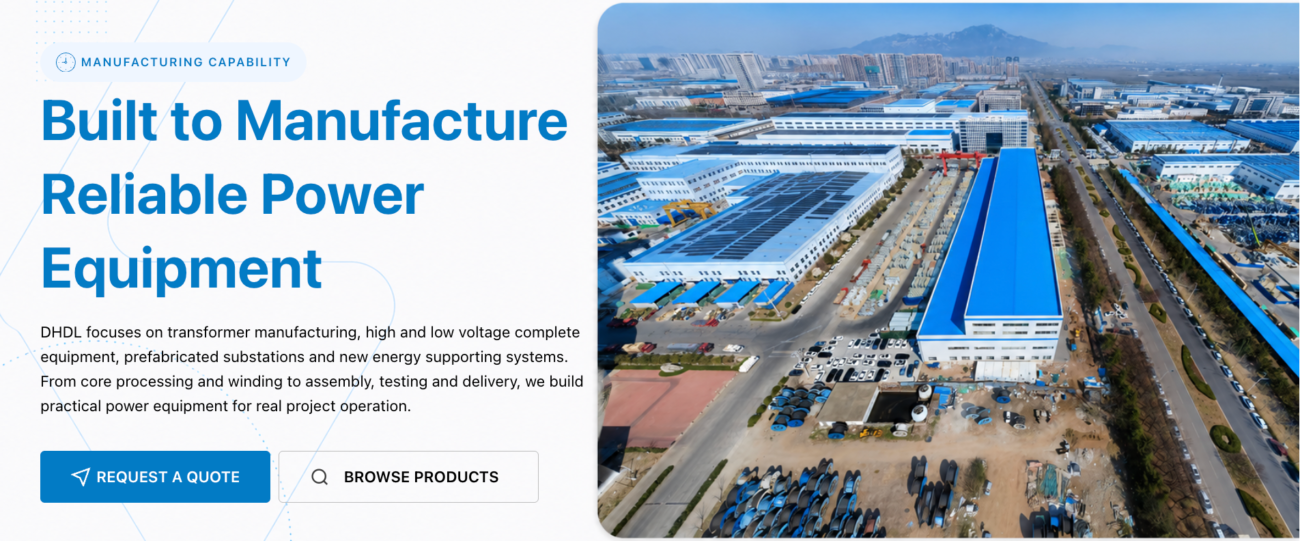
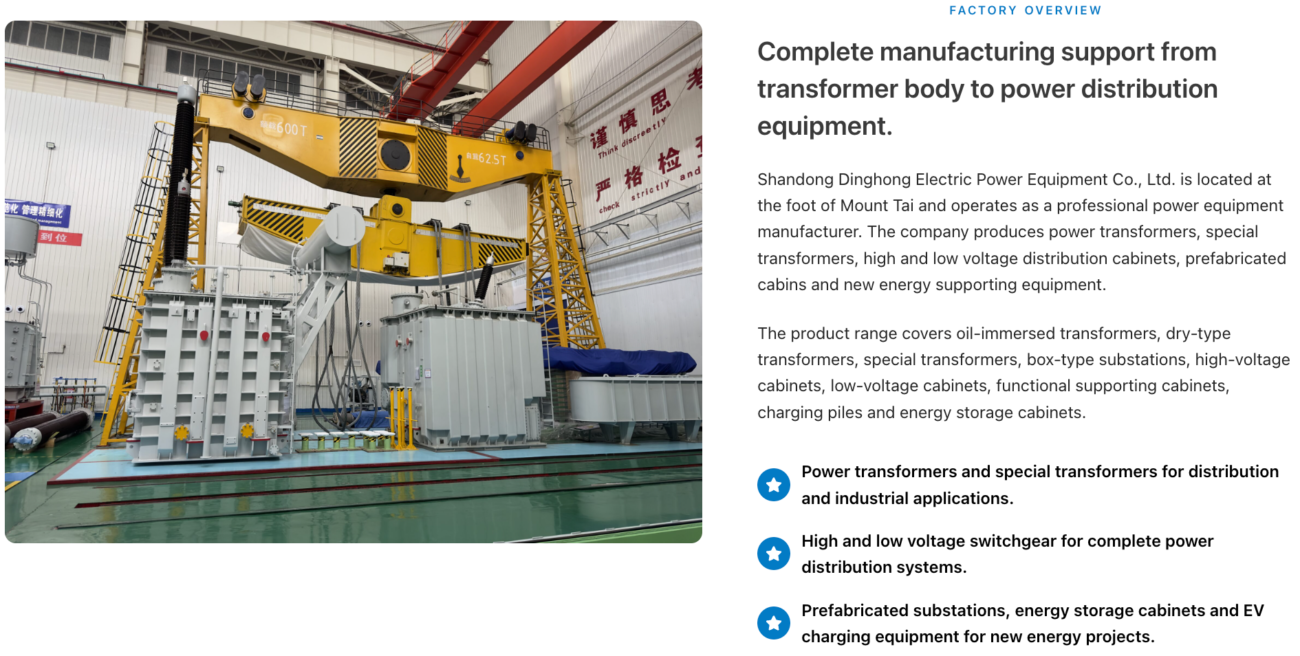
DHDL’s published manufacturing capability covers switchgear installation and complete equipment integration alongside transformer and substation production.
From a buyer’s perspective, however, general factory capability should become an order-specific quality plan.
Therefore, request:
- Approved technical schedule
- Manufacturing schedule
- Quality plan
- Component list
- Inspection plan
- Gas-handling procedure
- Wiring drawings
- Interlocking matrix
- Factory-acceptance-test procedure
- Packing procedure
- Site installation manual
- Commissioning procedure
- Recommended spare-parts list
- Training scope
You can also review the broader company profile on the About DHDL page.
GIS Procurement Mistakes to Avoid
Selecting GIS Only to Save Space
Compactness is valuable. However, the equipment still requires cable space, maintenance access, lifting clearance, pressure-relief planning, and extension space.
Therefore, compare the complete room arrangement.
Comparing Only the Number of Bays
Two five-bay quotations may include different circuit breakers, instrument transformers, earthing switches, protection functions, cable interfaces, and extension provisions.
Consequently, compare each bay function line by line.
Leaving the Gas Type Undefined
Different gas systems may involve different pressure, monitoring, environmental, regulatory, and service requirements.
Therefore, confirm the gas system and supporting documents in writing.
Ignoring Future Expansion
A GIS lineup may become difficult to extend if the project does not prepare a suitable interface.
Accordingly, identify the number, direction, timing, and rating of future bays.
Approving the Building Before the GIS Drawing
The GIS arrangement affects room dimensions, cable basement, ceiling height, lifting access, ventilation, and pressure-relief design.
Therefore, coordinate the equipment and building designs together.
Leaving Cable Data Until Production
Cable size, quantity, termination type, bending radius, and entry direction influence the GIS interface.
As a result, late cable information can cause redesign.
Assuming Local Standards Are the Same Everywhere
Ukraine, Ethiopia, Vietnam, Thailand, Myanmar, Uzbekistan, Russia, and Nigeria can have different utility practices, documentation needs, import rules, climatic conditions, and approval processes.
Therefore, define the destination-country and project requirements at the RFQ stage.
Information to Include in Your GIS RFQ
Electrical System Data
- Rated voltage
- Highest voltage for equipment
- Frequency
- Rated current
- Short-circuit level
- Short-circuit duration
- Peak withstand current
- Insulation level
- Earthing system
- Busbar arrangement
- Normal operating configuration
- Emergency operating configuration
Bay Schedule
- Incoming bays
- Outgoing bays
- Transformer bays
- Bus couplers
- Bus sectionalizers
- Metering bays
- Earthing requirements
- Future bays
- Spare bays
Protection and Control
- Protection philosophy
- Relay requirements
- Control voltage
- Auxiliary voltage
- Trip and closing circuits
- Interlocking matrix
- Communication protocol
- SCADA point list
- Cybersecurity requirements
- Remote monitoring
Site Conditions
- Destination country
- Project city
- Indoor or outdoor installation
- Minimum temperature
- Maximum temperature
- Altitude
- Relative humidity
- Pollution level
- Dust
- Corrosion category
- Seismic requirement
- Building ventilation
- Condensation-control requirement
Mechanical Interfaces
- Switchgear room dimensions
- Door dimensions
- Cable-basement depth
- Cable type
- Cable size
- Number of cables per phase
- Cable-entry direction
- Transformer interface
- Shipping-section limits
- Maximum lifting weight
- Future-extension direction
Standards and Documents
- Applicable standard
- Utility specification
- Required gas documentation
- Inspection requirements
- Third-party witness
- Drawing list
- Document language
- Factory test reports
- Installation manual
- Commissioning manual
- Spare-parts list
- Training requirements
Commercial Requirements
- Quantity
- Delivery destination
- Required delivery date
- Trade term
- Packing requirements
- Installation scope
- Commissioning scope
- Warranty
- Project schedule
If some information remains undecided, send DHDL the single-line diagram, fault-level study, substation layout, cable schedule, site conditions, and project standard.
Frequently Asked Questions
What is the main advantage of GIS gas-insulated switchgear?
GIS can provide a compact arrangement and protect primary components within enclosed gas-insulated compartments.
However, the actual value depends on the project’s land, environment, maintenance strategy, reliability target, and lifecycle cost.
Is GIS always better than AIS?
No.
GIS may suit space-constrained, contaminated, enclosed, industrial, or urban sites. Conversely, AIS may remain practical where sufficient land and suitable environmental conditions exist.
Therefore, compare the complete substation solution.
Which voltage and current ratings does the DHDL GIS support?
The accessible website data does not provide enough verified information to state a complete rating range.
Accordingly, buyers should request the product data sheet and confirm voltage, current, short-circuit rating, insulation level, and breaking capacity directly with DHDL.
Which insulating gas does the product use?
The accessible product information does not provide a verified gas specification.
Therefore, request written confirmation of the gas type, filling pressure, monitoring levels, leakage guarantee, recovery process, and regulatory documentation.
Can GIS be used in hot or humid countries?
GIS may be considered for hot, humid, dusty, or polluted environments because its primary components use an enclosed insulation arrangement.
Nevertheless, the complete installation still requires project-specific design for temperature, humidity, condensation, corrosion, ventilation, cable sealing, and auxiliary systems.
What should buyers in the target markets provide?
Buyers in Ukraine, Ethiopia, Vietnam, Thailand, Myanmar, Uzbekistan, Russia, and Nigeria should provide the exact site location and operating conditions.
Country-level assumptions alone are not sufficient.
Can DHDL supply related power equipment?
DHDL states that it manufactures transformers, high- and low-voltage switchgear, prefabricated substations, and supporting power equipment.
Therefore, buyers can discuss transformer, switchgear, cabinet, and substation interfaces as part of a coordinated project.
What should I approve before production?
Approve at least:
- Technical data sheet
- Single-line diagram
- Bay schedule
- General arrangement drawing
- Gas-compartment arrangement
- Cable interface
- Transformer interface
- Interlocking matrix
- Protection and control interface
- SCADA point list
- Accessory list
- Inspection and test plan
- Technical deviation list
- Documentation schedule
Choose GIS Around the Complete Substation
GIS gas-insulated switchgear should not be treated as a row of compact panels.
Instead, it should be selected around the complete power system:
- Confirm network ratings.
- Prepare the single-line diagram.
- Define every bay function.
- Confirm the short-circuit duty.
- Specify the gas system.
- Coordinate cable and transformer interfaces.
- Define protection, control, and SCADA.
- Provide exact site conditions.
- Review the building and cable basement.
- Plan future extension.
- Approve the GIS drawing.
- Confirm testing, installation, and commissioning.
- Close every technical deviation before production.
By following this process, buyers can reduce missing scope, interface conflicts, building modifications, cable problems, commissioning delays, and lifecycle uncertainty.
For a project-specific proposal, send DHDL your single-line diagram, voltage, rated current, short-circuit level, bay schedule, cable data, protection requirements, site conditions, applicable standard, destination country, quantity, and project schedule.
Contact DHDL to discuss GIS gas-insulated switchgear for a utility, industrial, renewable energy, or infrastructure project in Ukraine, Ethiopia, Vietnam, Thailand, Myanmar, Uzbekistan, Russia, Nigeria, or another international market.