Mining Flameproof Transformer for Underground Coal Mines: A Buyer’s Selection Guide

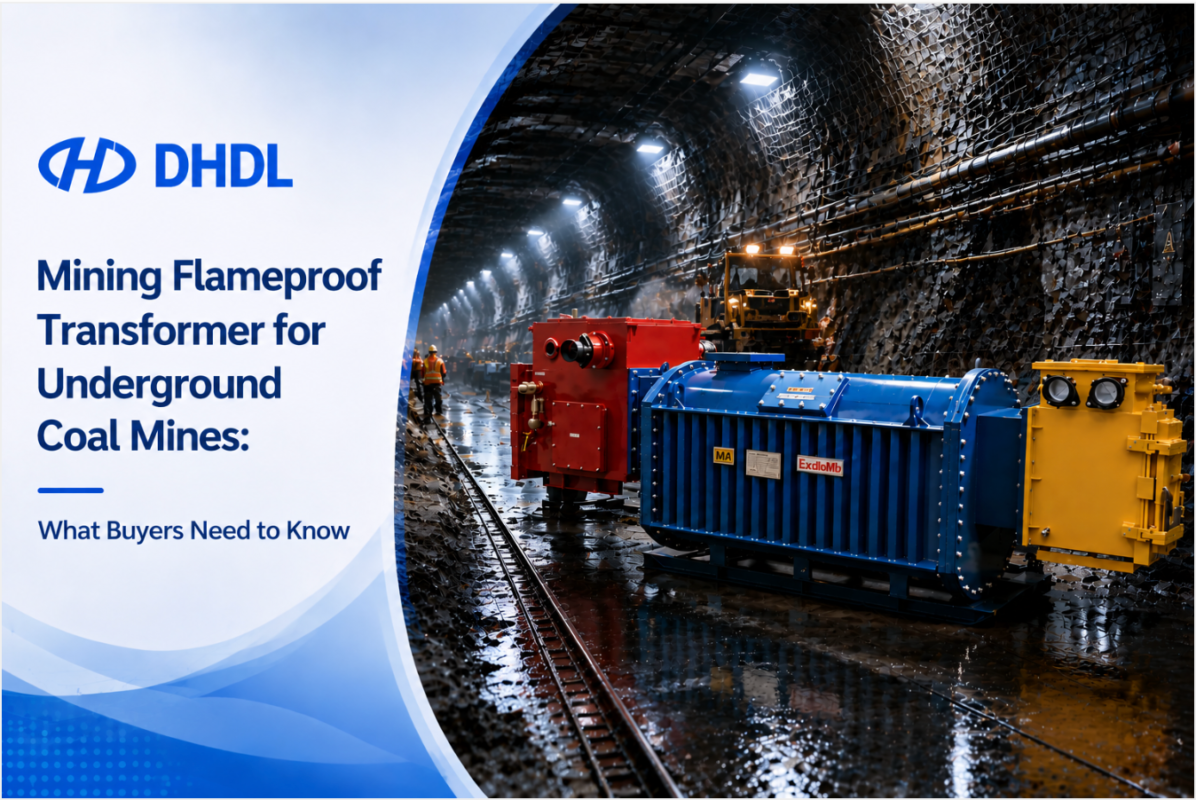
Underground coal mine power distribution presents challenges that ordinary industrial sites do not face. Limited installation space, coal dust, moisture, difficult access, heavy electrical loads, and potentially hazardous underground conditions all influence transformer selection.
For a mine owner, EPC contractor, electrical engineer, or procurement manager, choosing a transformer involves much more than comparing rated capacity and price. You need to confirm whether the equipment matches the actual underground environment, incoming voltage, connected loads, protection system, installation arrangement, transport restrictions, and applicable project requirements.
The DHDL mining flameproof transformer for underground coal mines is intended for underground coal mine power distribution applications.
This guide explains how buyers can evaluate the transformer from a practical project perspective, which technical details deserve attention, how to review the equipment drawing, and what information to provide when requesting a quotation.
Why Underground Coal Mines Need a Purpose-Built Transformer
A conventional transformer may operate successfully in a factory, commercial building, or surface substation. However, that does not automatically make it suitable for an underground coal mine.
Underground installations may involve a combination of demanding conditions:
- Coal dust and difficult-to-control contamination
- Moisture and high relative humidity
- Restricted installation and maintenance space
- Limited ventilation
- Long cable runs
- Frequent motor starting
- Mechanical vibration
- Loads that change as the working face advances
- Difficult equipment transportation
- Site-specific electrical and safety requirements
These conditions can affect enclosure design, insulation, heat dissipation, electrical clearances, cable entries, mechanical strength, accessibility, installation method, and protection coordination.
From a buyer’s perspective, the most important question is not simply:
“Is this a transformer with the right capacity?”
The more useful question is:
“Has the transformer been configured for my mine’s electrical system, underground environment, installation method, transport route, and applicable safety requirements?”
This distinction helps buyers avoid selecting equipment that works electrically but does not fit the actual project.
What Is a Mining Flameproof Transformer?
A mining flameproof transformer converts the incoming electrical supply into the voltage required by underground mining equipment while using a structure intended for mining power distribution conditions.
Depending on the project configuration, it may supply power to equipment such as:
- Underground conveyors
- Drainage and dewatering pumps
- Ventilation equipment
- Coal mining machinery
- Auxiliary underground power systems
- Maintenance equipment
- Other underground electrical loads
The target product covered in this article is specifically presented by DHDL as a mining flameproof transformer for underground coal mines.
However, buyers should not use the product name as a replacement for technical verification. Before ordering, ask the manufacturer to confirm the required capacity, voltage ratio, frequency, connection group, impedance, cooling arrangement, enclosure configuration, cable interfaces, accessories, applicable standard, and documentation.
Mining Flameproof Transformer vs. Ordinary Distribution Transformer
An ordinary distribution transformer should not automatically replace equipment intended for an underground coal mine.
The following comparison shows why buyers need to evaluate the complete application instead of comparing price and capacity alone.
| Selection factor | Mining flameproof transformer | Ordinary distribution transformer | Why it matters to the buyer |
|---|---|---|---|
| Intended application | Underground mining power distribution | General utility, commercial, or industrial distribution | Application suitability must be established before comparing price |
| Operating environment | Selected around underground mine conditions | Usually selected for conventional indoor or outdoor conditions | Dust, moisture, ventilation, and site hazards can change the required design |
| Enclosure consideration | Enclosure and interfaces require mining-project review | Standard enclosure options may be sufficient | The enclosure must match the actual installation environment |
| Cable connection | Must coordinate with mine cables and connected equipment | Often uses standard distribution-system terminations | Incorrect interfaces can cause installation delays and modification costs |
| Mechanical arrangement | Must consider restricted space, transport access, and underground installation | Usually designed around transformer rooms or outdoor foundations | Dimensions and weight can determine whether the unit can reach its installation point |
| Load characteristics | May supply motors and mining machinery with changing or starting loads | Often selected for conventional distribution loads | Starting current and load cycles can affect capacity and impedance selection |
| Protection coordination | Must coordinate with the mine’s upstream and downstream protection system | Uses general distribution protection practices | Incorrect coordination can cause nuisance trips or inadequate fault response |
| Documentation | Requires project-specific drawings, parameters, test records, and compliance confirmation | Standard documentation may be sufficient | Mine acceptance teams may require detailed technical evidence |
This comparison does not mean that every mining flameproof transformer uses the same configuration. It explains why buyers should define their operating conditions before selecting a model.
Start with the Mine, Not the Transformer Catalogue
Many procurement problems begin when a buyer requests a standard transformer before defining the application.
A more reliable selection process starts with the mine’s electrical system, connected loads, physical constraints, and approval requirements.
1. Confirm the Incoming and Required Output Voltage
Provide both the high-voltage supply and the required low-voltage output.
Do not provide only the nominal network voltage when the project uses a special voltage combination. The manufacturer needs the exact voltage relationship to evaluate:
- Winding design
- Insulation requirements
- Connection arrangement
- Protection coordination
- Compatibility with downstream equipment
The transformer voltage should match the actual mine power system rather than a general catalogue configuration.
2. Calculate the Real Load Demand
Prepare a load list that includes:
- Rated motor power
- Number of connected loads
- Largest motor
- Motor-starting method
- Simultaneous operating loads
- Expected load factor
- Continuous and intermittent loads
- Planned future expansion
A transformer selected only from the total installed motor power may be oversized or undersized.
Motor starting can create a substantial short-duration demand. The largest motor, starting method, cable length, and acceptable voltage drop may influence the final transformer capacity and impedance.
3. Describe the Underground Environment
Tell the manufacturer exactly where and how the transformer will operate.
Provide information about:
- Installation location
- Ambient temperature
- Relative humidity
- Coal dust conditions
- Ventilation
- Altitude
- Corrosive substances
- Water ingress or dripping risk
- Available maintenance clearance
- Transport-route restrictions
- Fixed or relocatable installation requirements
DHDL states that it can support project-based environmental design for conditions such as high temperature, high humidity, high altitude, and dusty areas. The final transformer configuration still needs to be confirmed against the actual mine conditions.
4. Define the Applicable Standard and Approval Requirements
- Destination country
- Applicable electrical standard
- Mine-specific technical specification
- Required flameproof or explosion-protection classification
- Required certificates or approvals
- Inspection authority
- Documentation language
- Third-party inspection requirements
The exact compliance scope, certification status, and flameproof classification must be confirmed in writing for the intended destination and application before ordering.
How Buyers Should Evaluate the Offered Transformer
Buyers can divide the technical evaluation into four levels.
Level 1: Application Suitability
First, confirm whether the offered transformer is intended for the actual underground coal mine application.
Ask the supplier to identify:
- Product model and transformer type
- Intended installation environment
- Fixed or movable arrangement
- Permitted operating conditions
- Applicable product standard
- Flameproof classification
- Product limitations
- Required installation conditions
A quotation that lists only capacity, voltage, and price does not provide enough information for a responsible technical decision.
The supplier should clearly state what it is offering and how that configuration matches the project.
Level 2: Electrical Matching
Next, verify how the transformer will interact with the mine’s electrical network.
Review the following parameters:
- Rated capacity
- High-voltage rating
- Low-voltage rating
- Frequency
- Number of phases
- Vector group
- Tap range
- Short-circuit impedance
- Insulation level
- No-load loss
- Load loss
- Temperature-rise limits
- Cooling method
- Earthing arrangement
Ask the manufacturer to identify and explain any deviation from the project specification.
Document all approved deviations. Do not rely on verbal confirmation when a parameter affects system compatibility or project acceptance.
Level 3: Mechanical and Installation Compatibility
A transformer can meet its electrical requirements and still create serious installation problems underground.
Confirm:
- Overall dimensions
- Total weight
- Transport dimensions
- Lifting points
- Wheel or base arrangement
- Cable entry direction
- High-voltage terminal arrangement
- Low-voltage terminal arrangement
- Operating clearance
- Maintenance access
- Installation orientation
- Connections to upstream and downstream equipment
Compare this information with the mine shaft, cage, tunnel, rail system, turning radius, lifting equipment, and final installation location.
This review helps prevent one of the most expensive underground procurement mistakes: receiving equipment that cannot be transported to or installed at the designated location.
Review the Equipment Drawing Before Approving Production
The equipment drawing helps your engineering team evaluate whether the proposed transformer can be transported, positioned, connected, operated, and maintained at the intended underground location.
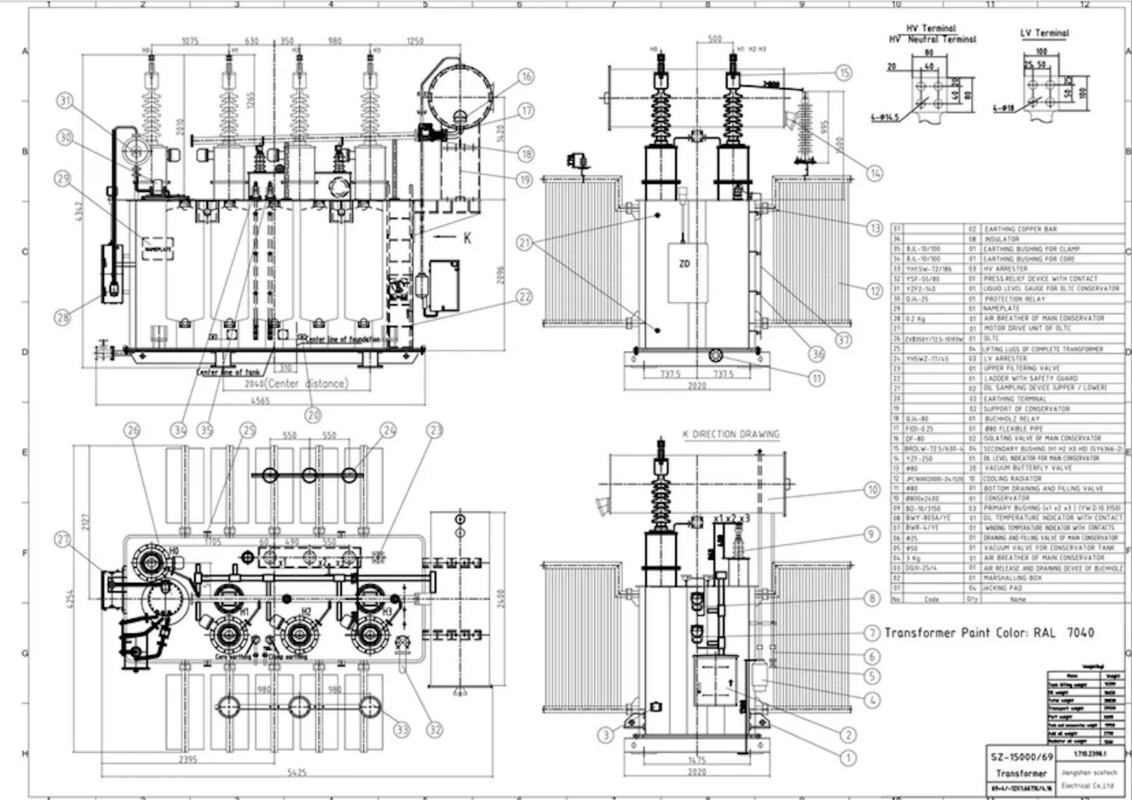
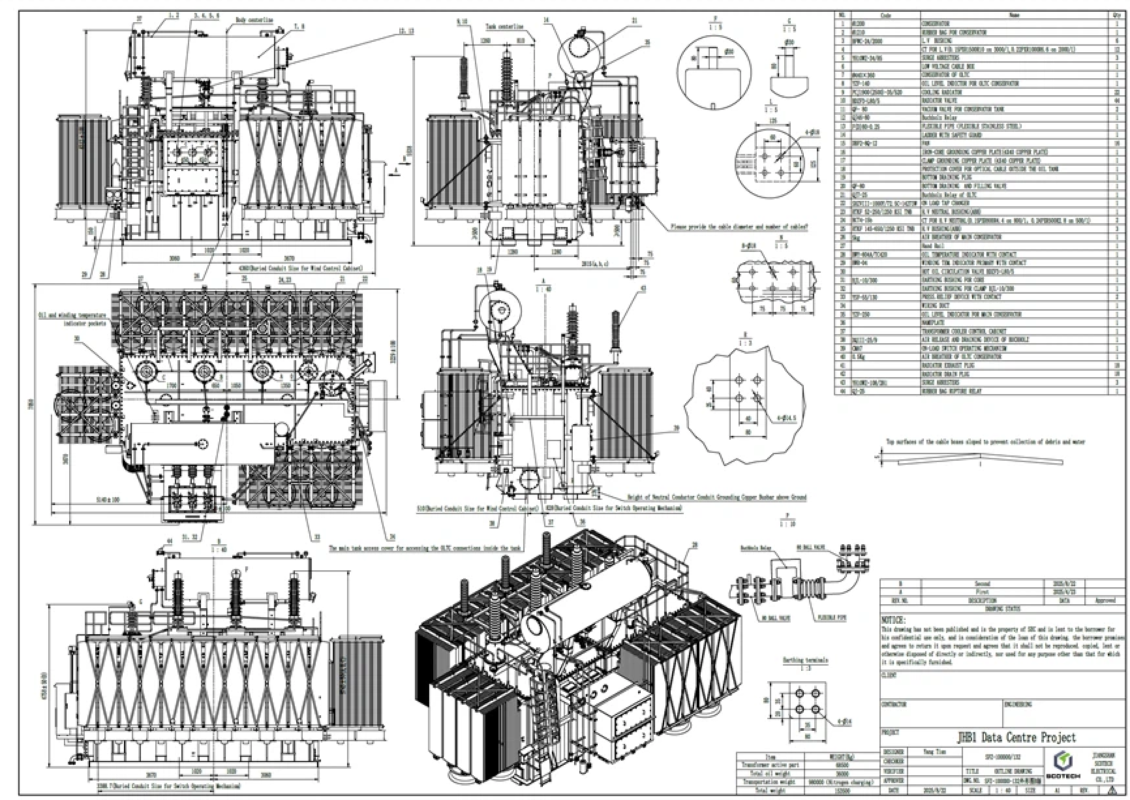
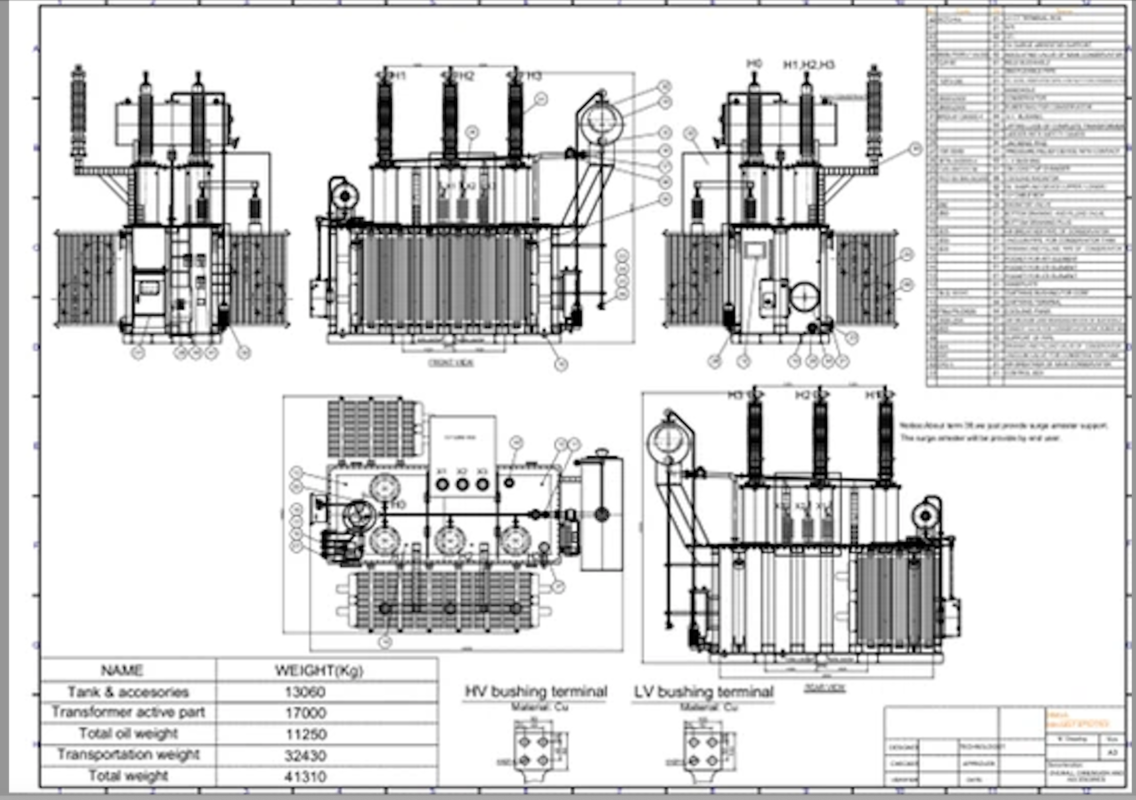
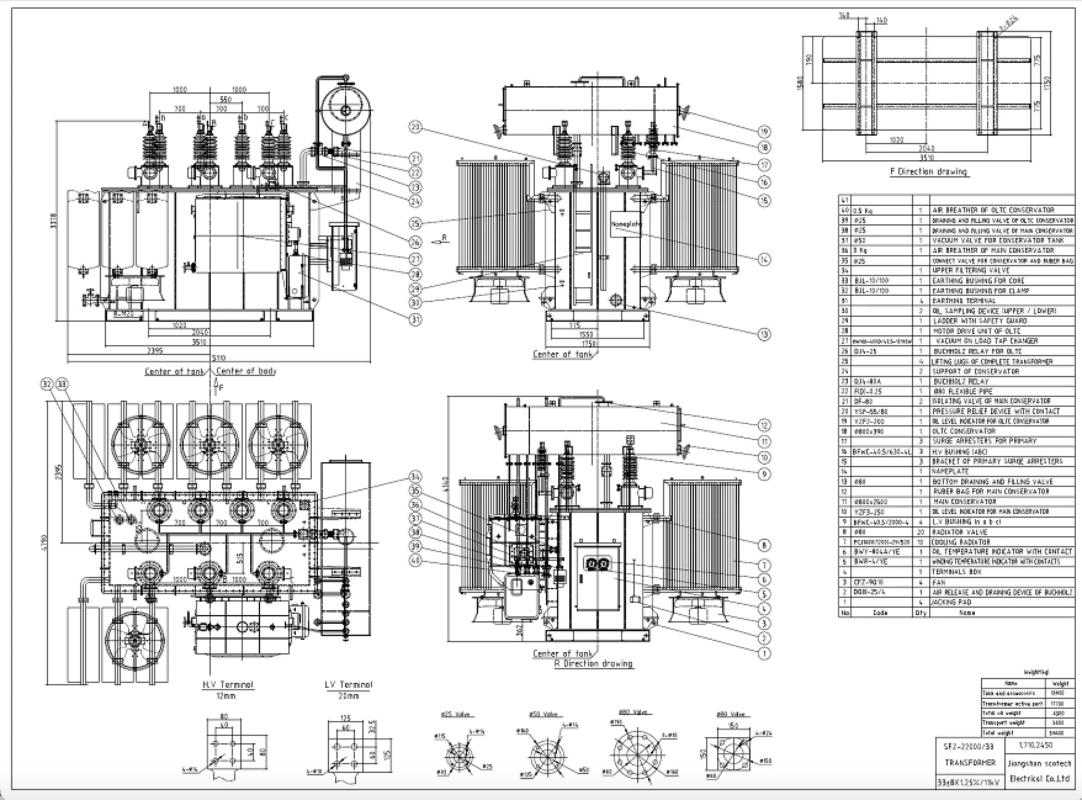
Reference equipment drawing for the DHDL mining flameproof transformer. Buyers should confirm the final dimensions, cable entry arrangement, connection interfaces, weight, and installation clearances against the approved project drawing before production.
When reviewing the drawing, do not check the transformer dimensions alone. Compare the complete drawing with the actual underground transport and installation conditions.
| Drawing item to review | Buyer-side verification |
| Overall length, width, and height | Confirm that the equipment can pass through the shaft, cage, tunnel, doors, and turning points |
| Total and transport weight | Check the capacity of the cage, rail system, lifting equipment, and installation foundation |
| High-voltage cable entry | Confirm cable type, entry direction, connector arrangement, and available bending radius |
| Low-voltage cable entry | Verify compatibility with downstream switchgear and mining equipment |
| Lifting points | Confirm that the mine has suitable lifting equipment and adequate overhead clearance |
| Base or wheel arrangement | Check compatibility with the underground foundation, platform, or rail system |
| Operating clearance | Reserve enough space for connection, inspection, and safe operation |
| Maintenance clearance | Make sure personnel can access components that require inspection or servicing |
| Terminal orientation | Confirm that the connection direction matches the underground cable route |
| Enclosure arrangement | Verify that covers and removable parts can be accessed at the installation position |
The drawing on the product page should serve as a product reference. DHDL should provide an order-specific general arrangement drawing after confirming the capacity, voltage combination, enclosure configuration, cable interfaces, accessories, and installation requirements.
Before approving production, ask both the project engineer and the underground installation team to review and sign off on the final drawing.
This step can prevent:
- Equipment-access problems
- Cable-interface conflicts
- Insufficient maintenance clearance
- Incorrect terminal orientation
- On-site structural modification
- Commissioning delays
Level 4: Testing and Documentation
Finally, confirm what evidence the supplier will provide before shipment.
DHDL describes a manufacturing process that includes material inspection, core processing, winding production, insulation treatment, assembly, final inspection, and transformer testing.
Its published manufacturing information also mentions testing capabilities such as:
- Turns-ratio testing
- DC-resistance testing
- Insulation-resistance testing
- Power-frequency withstand testing
- Induced-withstand-voltage testing
- No-load-loss testing
- Sealing-performance testing where applicable
Not every listed test necessarily applies to every transformer configuration. Ask DHDL to issue the exact inspection and test plan for the offered mining flameproof transformer.
The test plan should identify:
- Applicable test standard
- Routine tests
- Type or special tests, if required
- Acceptance criteria
- Witness points
- Test-report format
- Third-party inspection requirements
- Documents supplied before shipment
What Should Be Included in the Technical Quotation?
A useful technical quotation should allow your engineering team to determine whether the proposed transformer matches the project.
| Required quotation item | What the buyer should check |
| Product model and type | Confirm that the model corresponds to the required underground mining application |
| Rated capacity | Compare it with continuous load, motor starting, diversity, and expansion margin |
| Voltage ratio | Check both incoming and outgoing system voltages |
| Frequency and phase | Match the mine’s electrical network |
| Vector group | Confirm compatibility with the earthing and protection design |
| Short-circuit impedance | Review its influence on fault current and motor starting |
| Insulation and temperature data | Confirm suitability for the electrical and thermal duty |
| Cooling arrangement | Check operation under available underground ventilation conditions |
| Enclosure and cable interfaces | Match the site environment and installation drawings |
| Dimensions and weight | Verify the complete underground transport route |
| Applicable standard | Match the destination country and project specification |
| Flameproof classification | Confirm the exact classification and supporting documents |
| Routine tests | Request the test list and report format |
| Drawings | Review outline, base, terminal, cable entry, and lifting details |
| Spare parts | Confirm commissioning and recommended operating spares |
| Technical documents | Check language, format, quantities, and delivery schedule |
| Warranty | Confirm the starting point, scope, exclusions, and claim procedure |
If the supplier cannot confirm a critical item, mark it as “pending technical confirmation.” Do not replace missing information with assumptions.
How the Transformer Can Support Underground Mining Loads
When properly selected, a mining flameproof transformer can become a central part of the underground power distribution system.
Supporting Heavy Mining Equipment
Conveyors, pumps, ventilation systems, and mining machinery can create substantial and changing electrical demand.
The transformer must support the real operating cycle without causing unacceptable voltage drop or excessive thermal stress.
Provide motor lists and starting information instead of requesting a transformer based only on approximate capacity.
Bringing Power Closer to the Load
Installing power conversion equipment closer to underground loads can reduce the distance over which low-voltage power must travel.
However, this arrangement makes the following issues more important:
- Installation environment
- Transport dimensions
- Cable routing
- Protection coordination
- Maintenance access
- Ventilation
- Relocation requirements
The project engineer should evaluate the complete underground distribution system instead of treating the transformer as an isolated component.
Supporting Project-Specific Configuration
DHDL states that it supports customized transformer production based on voltage level, frequency, applicable standards, installation environment, application, and customer requirements.
Possible project-specific items may include:
- Rated capacity
- Voltage combination
- Frequency
- Vector group
- Impedance
- Terminal orientation
- Cable interface
- Enclosure arrangement
- Overall dimensions
- Transport arrangement
- Nameplate language
- Technical documentation
- Export packing
The manufacturer must confirm the availability of each option for the specific product model and order.
Common Procurement Mistakes to Avoid
Choosing Only by Price per kVA
Two quotations with the same capacity may include different enclosures, cable interfaces, losses, accessories, test scopes, documentation, and compliance provisions.
Compare the complete technical offer rather than the unit price alone.
Treating “Flameproof” as a Complete Specification
The word “flameproof” does not provide all the information required for technical approval.
You still need to confirm:
- Exact protection classification
- Applicable standard
- Certification scope
- Permitted installation conditions
- Supporting documentation
Ignoring Motor Starting
Large conveyors, pumps, and mining machines can create substantial starting demand.
If the buyer does not disclose the largest motor and starting method, the manufacturer cannot accurately assess capacity, impedance, or voltage performance.
Reviewing Dimensions After Production
Underground transport restrictions should influence equipment design from the beginning.
Check the shaft, cage, tunnel, rail system, turns, lifting equipment, and final installation space before approving the drawing.
Leaving Cable Interfaces Undefined
High- and low-voltage cable arrangements must match the mine’s equipment and installation plan.
Late interface changes can delay commissioning and create additional underground work.
Assuming Every Test Is Automatically Included
Ask for an inspection and test plan before placing the order.
State which test reports, witness points, certificates, and third-party inspections the project requires.
A Practical Selection Workflow
Use the following process when sourcing a mining flameproof transformer:
- Define the underground operating environment.
- Prepare a complete electrical load list.
- Confirm the incoming and required output voltages.
- Identify the largest motor and starting method.
- Define the applicable standard and approval requirements.
- Confirm the required flameproof classification.
- Map the complete underground transport route.
- Define the cable and terminal interfaces.
- Request a complete technical quotation.
- Review the preliminary equipment drawing.
- Confirm dimensions, weight, and installation clearances.
- Review the technical deviations.
- Approve the final general arrangement drawing.
- Approve the inspection and test plan.
- Confirm documents, packing, shipping, installation, and after-sales support.
This process requires more information than a one-line price request, but it reduces the likelihood of specification changes, installation problems, and acceptance delays.
Why Manufacturing and Testing Transparency Matter
Transformer reliability depends on more than the finished appearance of the equipment.
Material control, winding quality, insulation processing, assembly, testing, and documentation all influence project risk.
DHDL presents a manufacturing process covering transformer production from material preparation and core processing to winding, insulation treatment, assembly, and final inspection.
For an overseas mining project, convert these general capabilities into order-specific deliverables:
- Approved technical data sheet
- General arrangement drawing
- Foundation or base drawing
- Terminal and cable-interface drawing
- Nameplate drawing
- Inspection and test plan
- Factory test report
- Packing list
- Installation manual
- Operating and maintenance manual
- Recommended spare-parts list
- Certificate package required by the project
You can review more information about the factory’s production and quality-control process on the DHDL manufacturing capability page.
Information to Send with Your Inquiry
To receive a more accurate proposal, send the following information:
- Destination country
- Underground installation location
- Required transformer type
- Rated capacity
- High-voltage rating
- Low-voltage rating
- Frequency
- Phase
- Vector group
- Impedance requirement
- Largest motor rating
- Motor-starting method
- Complete load list
- Ambient temperature
- Relative humidity
- Altitude
- Dust conditions
- Water or dripping conditions
- Flameproof classification
- Applicable standard
- Required certificates
- Cable type
- Cable entry direction
- Maximum dimensions
- Maximum transport weight
- Fixed or movable installation
- Required accessories
- Required drawings and documents
- Quantity
- Project schedule
If some parameters remain undecided, provide the single-line diagram, motor list, site conditions, transport restrictions, and available installation space.
DHDL’s engineering team can then identify which information still requires confirmation.
Frequently Asked Questions
Is a mining flameproof transformer the same as an ordinary dry-type transformer?
No. The products may share some transformer principles, but buyers must evaluate underground application suitability, enclosure requirements, cable interfaces, installation restrictions, protection coordination, and applicable mining requirements separately.
How should I select the correct transformer capacity?
Start with the complete load list.
Include simultaneous demand, the largest motor, starting method, operating cycle, future expansion, cable voltage drop, and required reserve margin. Ask the manufacturer to check the selection against the actual load profile.
What information is required to confirm the flameproof configuration?
Provide the destination country, mine classification, applicable standard, required protection classification, installation location, environmental conditions, and required certification documents.
Ask the supplier to confirm compliance in writing.
Why should I review the equipment drawing before ordering?
The drawing allows you to verify dimensions, weight, lifting points, base arrangement, cable entries, terminal orientation, operating clearance, and maintenance access.
This review helps prevent transport and installation problems after the equipment reaches the mine.
Is the drawing on the product page the final production drawing?
It should be treated as a reference unless DHDL confirms otherwise for the specific order.
Request an order-specific drawing after the manufacturer confirms the capacity, voltage, interfaces, enclosure, accessories, and installation conditions.
Can DHDL customize the transformer?
DHDL states that it supports project-based customization according to voltage, frequency, applicable standards, operating environment, application, and other technical requirements.
Confirm the exact customization scope during the technical review.
Which factory tests should I request?
Ask for a model-specific inspection and test plan.
Typical transformer verification can include ratio, DC resistance, insulation resistance, withstand voltage, induced voltage, and loss-related tests. The final test list must match the offered product, applicable standard, and contract requirements.
What should I approve before production?
Approve the following documents and details:
- Technical data sheet
- General arrangement drawing
- Dimensions and weight
- Lifting arrangement
- Base or wheel arrangement
- Cable entries
- Terminal orientation
- Accessories
- Nameplate
- Documentation list
- Inspection and test plan
- Technical deviation list
Resolve every critical technical deviation before production begins.
Reduce Underground Transformer Procurement Risk Before Production Starts
A mining flameproof transformer should not be treated as a catalogue-only purchase.
Its suitability depends on:
- Underground operating conditions
- Connected electrical loads
- Motor-starting duty
- Transport limitations
- Installation dimensions
- Cable interfaces
- Protection coordination
- Applicable standards
- Required approvals and documents
The earlier you provide this information, the easier it becomes to identify a suitable configuration and avoid costly changes later.
For a project-specific proposal, send DHDL your capacity, voltage combination, frequency, load list, largest motor, installation conditions, flameproof requirements, applicable standard, maximum dimensions, quantity, and destination country.
Contact DHDL to discuss a mining flameproof transformer for your underground coal mine project.