Transformer Oil Testing: What Engineers Should Check Before Failure Occurs

Transformer oil does more than provide insulation. In oil immersed transformer, insulating oil also helps transfer heat away from windings.
As the transformer operates, the oil can deteriorate because of heat, moisture, oxidation, electrical stress, and contamination.
That makes transformer oil testing an important part of preventive maintenance. By checking oil condition before problems develop, engineers can identify warning signs, monitor transformer health, and plan corrective action before an outage occurs.
Why Is Transformer Oil Testing Important?
Transformer oil changes during service.
High operating temperatures can accelerate oxidation, while moisture and contaminants can reduce insulation performance.
Electrical faults can produce gases and chemical changes in the oil.Regular testing gives engineers information about these changes.
Instead of waiting for visible damage or a transformer failure, maintenance teams can compare test results over time and identify developing problems.
What Should Engineers Check?
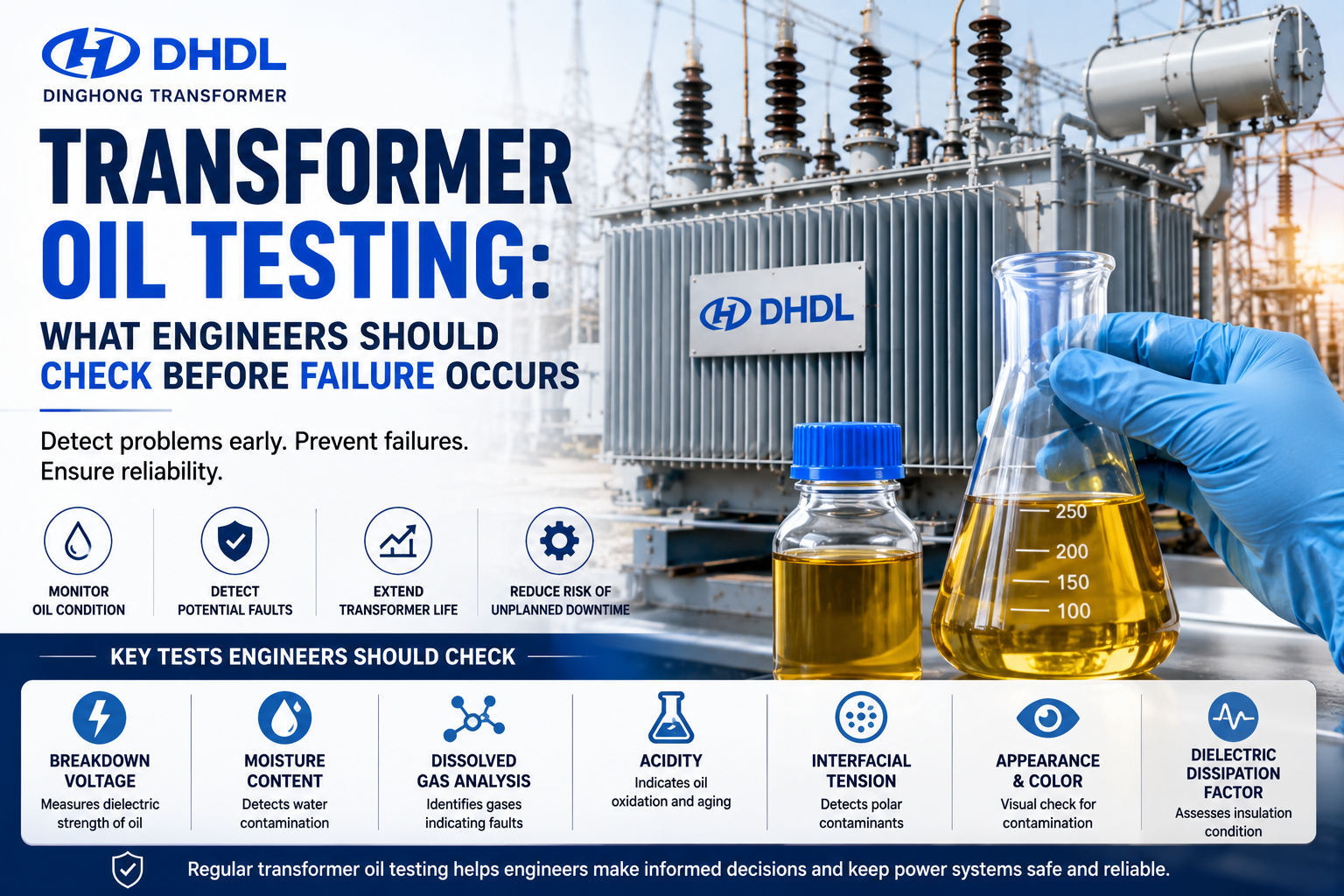
A complete transformer oil testing program can include several tests. Each test provides information about a specific aspect of oil and transformer condition.
1. Breakdown Voltage
Breakdown voltage testing measures the voltage at which an electrical arc occurs through an oil sample under specified test conditions.
A reduced breakdown voltage can indicate moisture, particles, or other contamination. Because transformer oil is part of the insulation system, maintaining suitable dielectric strength is essential for operation.
2. Moisture Content
Water is a major contaminant in transformer insulation systems.
Moisture can reduce the dielectric strength of oil and affect solid insulation such as transformer paper.
Engineers can use moisture testing to monitor changes and investigate possible sources of water ingress.
Storage, seals, breathing systems, and operating conditions can all influence moisture levels.
3. Dissolved Gas Analysis
Dissolved Gas Analysis, commonly called DGA, is a valuable diagnostic technique for oil-filled transformers.
Electrical and thermal faults can cause gases to form and dissolve in transformer oil. Testing can identify gases such as hydrogen, methane, ethane, ethylene, acetylene, carbon monoxide, and carbon dioxide.
The pattern and concentration of gases can provide clues about possible thermal faults, electrical discharges, or insulation degradation.
DGA results should be interpreted by qualified specialists using standards and historical data.
4. Acidity
Oxidation can produce acidic compounds in transformer oil. Increasing acidity can indicate oil aging and may contribute to deterioration of solid insulation.
Tracking acidity helps engineers determine whether the oil is aging normally or whether additional maintenance may be required.
5. Interfacial Tension
Interfacial tension can provide information about polar contaminants and oil degradation. A declining value may accompany oxidation products and contamination.
When combined with other laboratory results, interfacial tension testing can help create a clearer picture of transformer oil condition.
6. Color and Appearance
A visual inspection is simple but useful.
Changes in transformer oil color or appearance can indicate aging or contamination.Cloudiness, sediment, particles, or an unusual color should prompt further investigation rather than being treated as a definitive diagnosis.
7. Dielectric Dissipation Factor
The dielectric dissipation factor, often referred to as tan delta, helps evaluate dielectric losses and the general insulation condition of the oil.
An increasing value can indicate contamination, moisture, or oil deterioration. Engineers interpret this result alongside other electrical and chemical tests.
When Should Transformer Oil Be Tested?
Testing frequency depends on transformer age, voltage level, Loading, operating environment, criticality, and maintenance strategy.
New transformers may undergo baseline testing before commissioning.
In-service transformers can then be tested periodically so results can be compared.Additional testing may be appropriate after abnormal events, major faults, prolonged overloading, unusual temperature conditions, or maintenance.
Why Trend Analysis Matters
A single test result provides information, but a series of results can be more valuable.
Trend analysis allows engineers to observe whether moisture, acidity, dissolved gases, or other indicators are increasing.
A gradual change may reveal developing deterioration before it becomes a major failure.This supports condition-based maintenance, helping organizations prioritize inspections and repairs based on transformer condition.
Dinghong Transformer and Transformer Reliability
DinghongTransformer (DHDL) manufactures oil-immersed transformers, power transformers, distribution transformers, dry-type transformers, and related power equipment for industrial, utility, infrastructure, and renewable-energy applications.
Transformer reliability starts with appropriate design and manufacturing, but performance also depends on installation, loading, maintenance, and condition monitoring.
For projects involving oil-filled transformers, working with an experienced manufacturer can help engineers consider the transformer specification, cooling arrangement, insulation system, accessories, and operating environment.
Final Thoughts
Transformer oil testing is an essential tool for monitoring oil-filled transformer condition and identifying potential problems before they develop into expensive failures.
Tests such as breakdown voltage, moisture content, dissolved gas analysis, acidity, interfacial tension, appearance, and dielectric dissipation factor provide different pieces of information about transformer health.The most effective approach is to establish reliable baseline measurements, test at appropriate intervals, and compare results.
Engineers should also investigate sudden changes rather than relying on a single measurement.By combining transformer oil testing with inspections, electrical testing, load monitoring, and professional maintenance, industrial facilities can make better decisions about transformer condition and reduce the risk of downtime.
For organizations planning new transformer installations, selecting equipment from an experienced manufacturer such as Dinghong Transformer can also provide a stronger foundation for reliability and maintainability.