
Transformer Bushings Explained: Types, Functions and Common Failure Risks

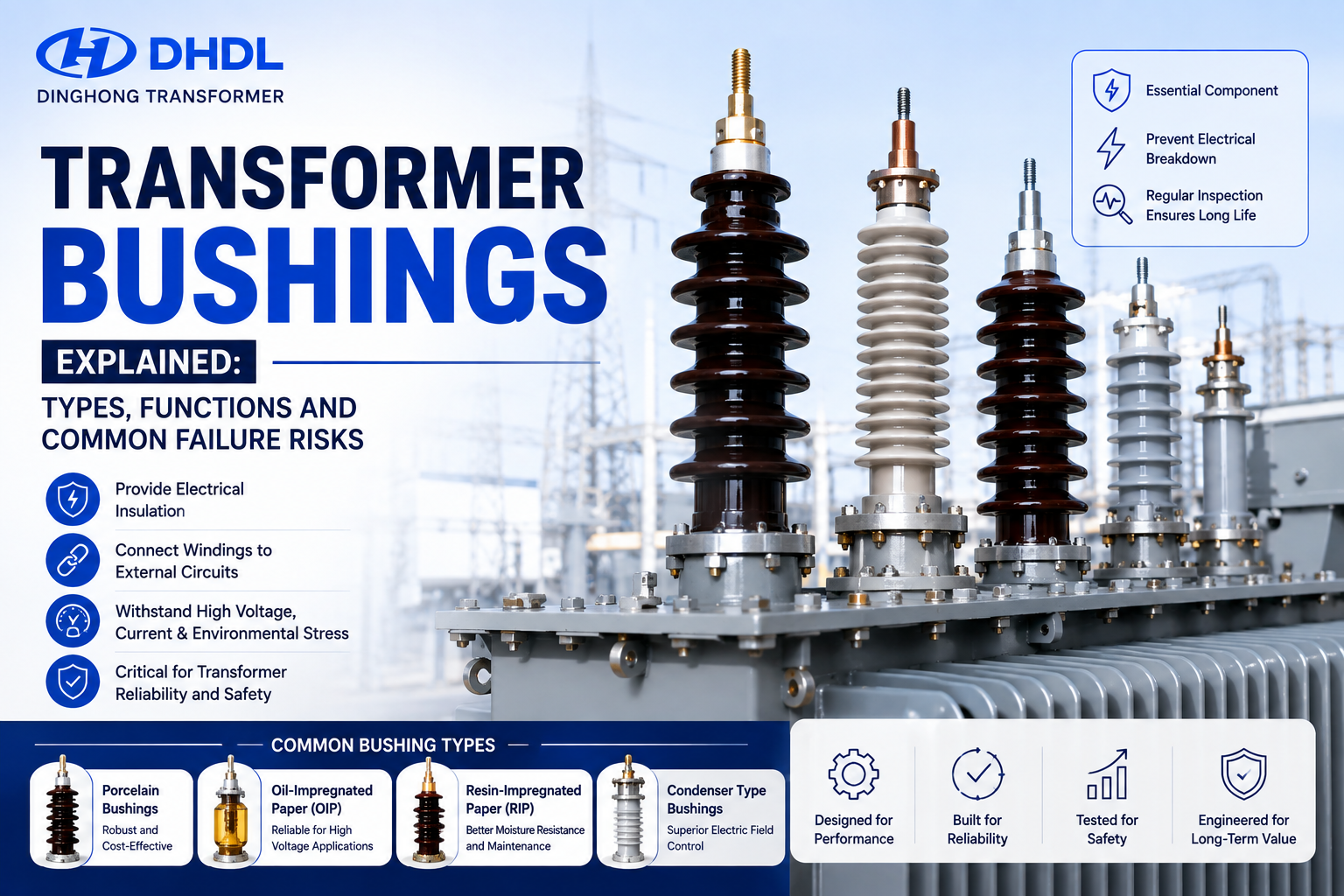
Transformer bushings are essential components that allow electrical conductors to pass safely through a transformer tank or enclosure. Although smaller than the transformer itself, bushings play a critical role in insulation, electrical safety, and reliable power transmission.
What Is a Transformer Bushing?
A transformer bushing is an insulated device that carries a high-voltage or low-voltage conductor through the transformer tank while electrically isolating the conductor from the grounded tank.
A bushing must withstand electrical stress, mechanical forces, temperature changes, and environmental exposure throughout the transformer’s service life.
Its design depends on voltage level, current rating, insulation system, installation environment, and transformer configuration.
In an oil immersed transformer, bushings connect internal windings to external cables, busbars, or overhead conductors.
Their condition is important for maintaining the transformer insulation system.
A bushing must withstand electrical stress, mechanical forces, temperature changes, and environmental exposure throughout the transformer’s service life.
Its design depends on voltage level, current rating, insulation system, installation environment, and transformer configuration.In an oil-immersed transformer, bushings connect internal windings to external cables, busbars, or overhead conductors.
Their condition is important for maintaining the transformer insulation system.
Why Are Transformer Bushings Important?
A transformer bushing provides both electrical connection and insulation.
Without adequate insulation, an energized conductor could create an electrical path to the transformer tank, causing flashover, partial discharge, equipment damage, or failure.
For this reason, bushing specifications should be considered during transformer design rather than treated as an afterthought.
Common Types of Transformer Bushings
Transformer bushings are available in several designs, with different insulation technologies suited to different voltage and application requirements.
Porcelain bushings use ceramic insulation and have been widely used in power systems. They provide robust outdoor insulation but can be vulnerable to mechanical damage.
Oil-impregnated paper (OIP) bushings use paper insulation impregnated with insulating oil. They are common in high-voltage applications and require appropriate monitoring and maintenance.
Resin-impregnated paper (RIP) bushings use resin as the impregnating material. They provide a solid insulation system without the same free-oil arrangement found in conventional OIP designs.
How Do Transformer Bushings Work?
The basic function is simple: provide a conductive path while preventing the energized conductor from contacting the grounded transformer structure.Inside a high-voltage bushing, the insulation system distributes electrical stress.
In condenser-type bushings, conductive layers are arranged within the insulation to control the electric field along the bushing.
The bushing therefore becomes part of the transformer’s overall insulation coordination.
Common Transformer Bushing Failure Risks
- Moisture ingress is a major concern because water can reduce insulation performance.
– Damaged seals, aging materials, or poor storage can allow moisture to enter.Insulation deterioration can occur because of thermal stress, electrical stress, contamination, or aging.
Over time, this can increase the risk of partial discharge and breakdown.
- Surface contamination is particularly important for outdoor bushings.
- Dust, salt, industrial pollutants, and moisture can create conductive paths across the surface and increase the risk of flashover.
- Mechanical damage can also occur during transportation, installation, or operation.
- Cracks or damaged terminals should never be ignored.
Signs of a Potential Bushing Problem
Regular inspection can help identify developing issues. Warning signs may include
- oil leakage,
- abnormal heating,
- cracked porcelain,
- discoloration,
- unusual noise,
- surface tracking, or damaged terminals.
For high-voltage equipment, tests such as capacitance and dissipation-factor measurements may help assess bushing insulation. The testing program should follow the manufacturer’s recommendations and applicable standards.
How to Maintain Transformer Bushings
Effective bushing maintenance begins with visual inspection.
- Technicians should check bushings, terminals, seals, connections, and surrounding surfaces for visible damage or contamination.
- Outdoor installations may require cleaning when environmental contamination accumulates.
- Connections should also be checked for appropriate mechanical condition and signs of overheating.
- Where applicable, oil level and oil condition should be monitored.
- For condenser bushings, scheduled electrical testing can help identify insulation deterioration before serious failure occurs.
- Maintenance intervals should reflect voltage level, environment, loading, equipment age, and operating history.
Choosing the Right Transformer Bushing
Bushing selection should match the transformer’s electrical and environmental requirements. Important specifications can include rated voltage, current, insulation level, creepage distance, short-circuit requirements, installation position, and applicable standards.
Project conditions also matter.
Coastal, dusty, humid, polluted, or high-altitude environments may require different bushing characteristics from a controlled indoor installation.
Dinghong Transformer for Reliable Power Equipment
Dinghong Transformer (DHDL) manufactures transformers and power-distribution equipment for industrial, utility, infrastructure, and renewable-energy applications.
When developing a transformer, components such as bushings, windings, insulation systems, cooling equipment, protection devices, and connections must work together as one engineered system.
Dinghong Transformer can provide project-specific transformer configurations based on capacity, voltage, installation environment, cooling requirements, and applicable technical standards.
This approach helps customers select equipment suited to actual operating conditions.
Final Thoughts
Transformer bushings may be relatively small components, but their role in electrical insulation and safe power transmission is critical.
A damaged or deteriorated bushing can become a serious reliability risk and, in severe cases, contribute to transformer failure.Understanding bushing types, functions, failure risks, and maintenance requirements allows engineers and facility operators to make better decisions about transformer specification and condition monitoring.
For new installations, selecting the appropriate bushing should be part of the transformer design process.
For existing equipment, regular inspection and appropriate electrical testing can help detect deterioration before it becomes an unexpected outage.
By paying attention to transformer bushings and the complete insulation system, industrial facilities can improve equipment reliability, reduce avoidable failures, and support safer long-term power-system operation for long-term reliability.