
How Ambient Temperature Changes Transformer Design Requirements

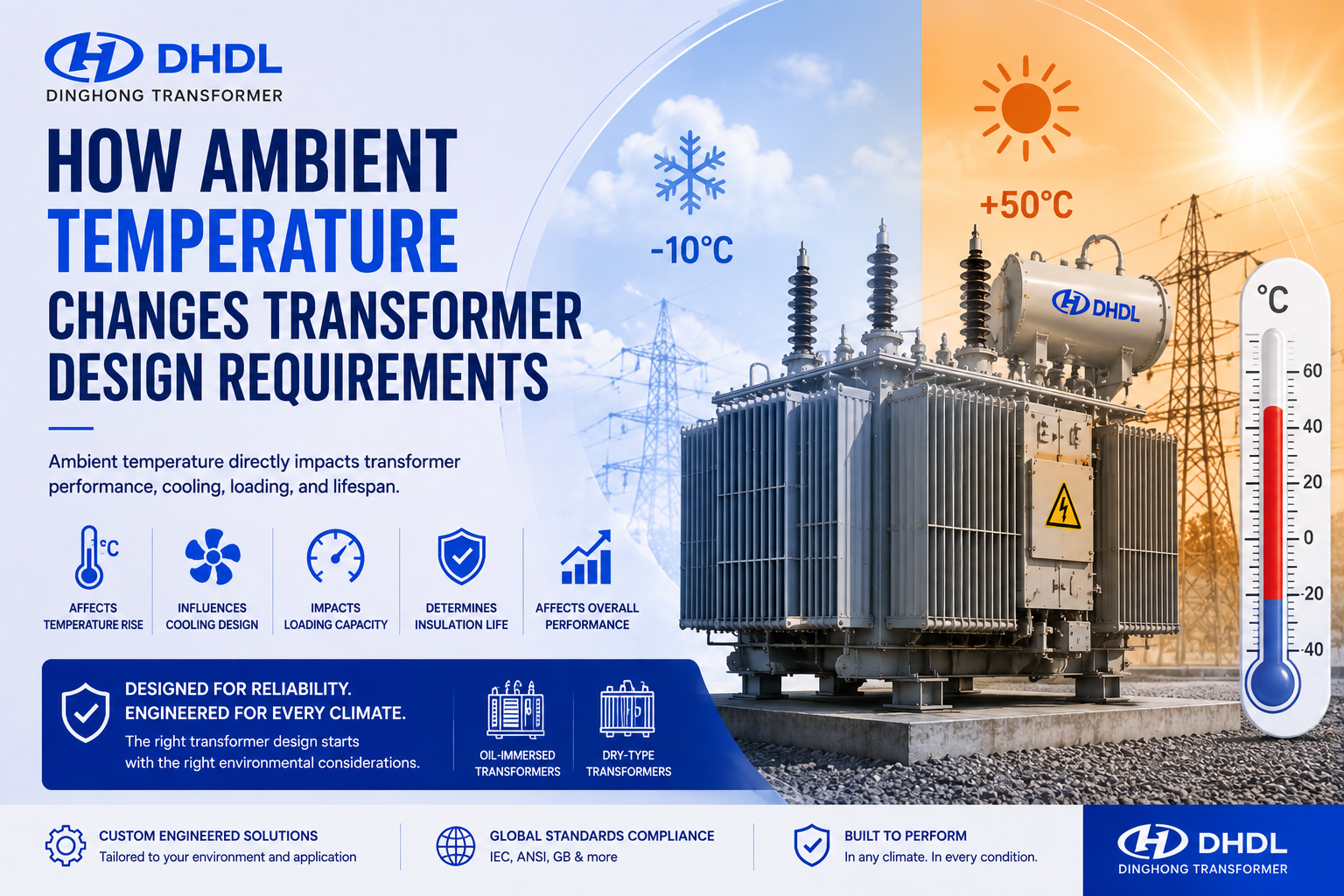
Ambient temperature is one of the most overlooked factors in transformer design and selection. A transformer that performs reliably in a cool environment may experience significantly greater thermal stress when installed in a hot industrial facility, outdoor substation, desert region, or tropical climate.
This matters because transformer temperature is closely connected to loading, insulation aging, cooling performance, efficiency, and service life.
IEC 60076-7 specifically addresses how ambient temperature and loading conditions affect the operating temperature and life of mineral-oil-immersed transformers.
For businesses selecting an industrial transformer, power transformer, distribution transformer, or dry type transformer, ambient temperature should therefore be considered during the design stage—not after installation.
What Is Ambient Temperature?
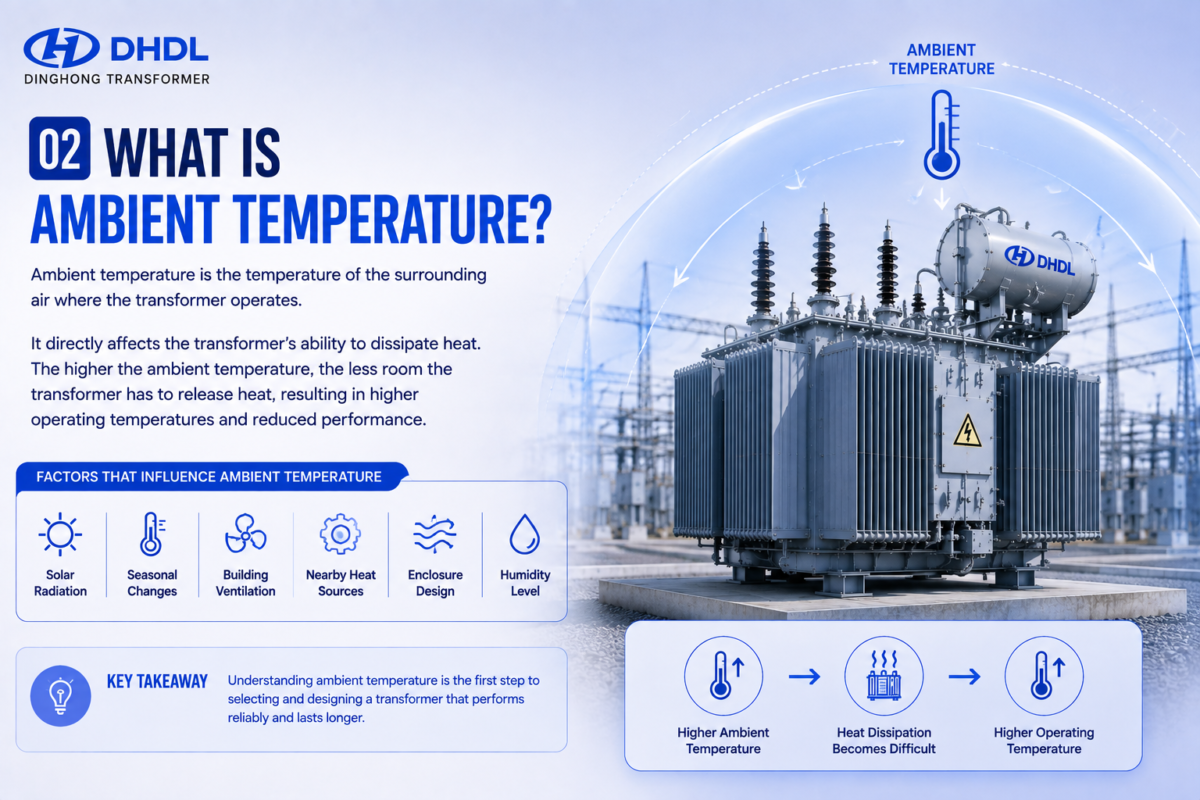
Ambient temperature is the temperature surrounding the transformer during operation.For an outdoor transformer, this is influenced by the surrounding air, solar radiation, seasonal conditions, enclosure design, and ventilation.
For an indoor transformer, the surrounding temperature can be affected by building ventilation, nearby equipment, heat-generating machinery, and room size.
The higher the ambient temperature, the less room a transformer has to dissipate the heat produced during normal operation.
This is particularly important in hot climates where daytime temperatures can remain high for extended periods.
Why Does Ambient Temperature Matter for Transformer Design?
Transformers naturally generate heat while converting electrical energy.Some of this heat comes from winding losses, while other losses occur in the core and other components.
The transformer cooling system must remove this heat to maintain acceptable operating temperatures.
When ambient temperature increases, the temperature difference between the transformer and surrounding air decreases.
That makes heat dissipation more difficult.
As a result, a transformer operating at the same electrical load can run hotter in a high-temperature environment than it would in a cooler location.
This is why transformer design requirements cannot be separated from the environment in which the equipment will operate.
High Ambient Temperature Can Reduce Transformer Life
One of the biggest concerns with high ambient temperature is accelerated insulation aging.Transformer insulation is designed to operate within specified thermal limits.
If operating temperatures remain excessively high, insulation deterioration can accelerate.
Over time, this can reduce the expected service life of the transformer and increase the likelihood of maintenance or premature replacement.IEC 60076-7 provides guidance on the relationship between ambient temperature, loading, operating temperature, and thermal aging for mineral-oil-immersed transformers.
This means a transformer designed for a particular climate should not automatically be assumed to have identical performance in a significantly hotter environment.
1. Transformer Cooling Requirements May Change
Cooling is one of the most important considerations when designing a transformer for a hot environment.
Depending on the application, engineers may need to evaluate natural or forced cooling arrangements, radiator capacity, airflow, fans, ventilation, enclosure design, and installation clearances.
For an oil immersed transformer, the insulating liquid and cooling system play an important role in transferring heat away from the windings and core.
For a dry type transformer, heat must be dissipated through air circulation and the surrounding installation environment. IEC 60076-12 provides guidance for estimating insulation aging in dry-type transformers as a function of operating temperature, time, and loading.
The appropriate solution depends on the transformer type and project conditions.
2. Transformer Capacity May Need to Be Reassessed
High ambient temperature can affect how much continuous load a transformer can safely carry.
This is particularly important during transformer kVA selection.
A transformer should not be selected based only on the facility’s calculated electrical demand. Engineers should also consider the expected ambient conditions and the transformer’s thermal performance.
For example, a facility requiring 1,000 kVA may not necessarily have the same transformer design requirements in a mild climate as it would in an extremely hot outdoor environment.
The final design may require a different cooling arrangement, additional thermal margin, or another appropriate engineering solution.
3. Outdoor Transformer Installation Requires Extra Attention
Outdoor transformers are exposed to changing environmental conditions throughout their service life.
These may include:
- High ambient Temperature
- direct solar radiation
- Dust
- Humidity
- Rain
- Salt exposure in coastal areas
- Seasonal temperature changes
An outdoor power distribution transformer therefore needs to be designed and installed with its actual environment in mind.
Enclosure design, ventilation, surface treatment, cooling equipment, insulation and protection can all become important considerations.
For projects in hot or harsh climates, specifying the installation environment during the RFQ stage can help the transformer manufacturer recommend the appropriate configuration.
4. Dry-Type Transformers Are Also Affected
It is sometimes assumed that a dry type transformer is unaffected by high ambient temperature because it does not use insulating oil.
That is incorrect.Dry-type transformers still generate heat, and their cooling performance depends heavily on the surrounding environment and airflow.
IEC 60076-11:2018 covers dry-type power transformers and specifically includes consideration of climatic classes and environmental conditions.
For indoor installations, engineers should consider room temperature, ventilation and transformer clearance.
For outdoor or enclosed installations, the enclosure itself can influence heat accumulation.
This makes dry type transformer design particularly important in compact electrical rooms and industrial facilities.
5. High Temperature and High Loading Can Compound Each Other
Ambient temperature becomes even more important when a transformer operates near its rated capacity.
Consider a transformer installed in an industrial facility during a period of peak production.
The facility’s electrical demand increases, transformer losses increase, and the surrounding temperature is already high.These factors can combine to create significantly greater thermal stress.
This is why transformer loading should be considered together with ambient conditions rather than evaluated independently.
A transformer monitoring system can also help operators understand actual loading and temperature behavior over time.
How Does Climate Affect Transformer Selection?
Different installation locations can create very different transformer design requirements.
Hot and Dry Environments
Desert and semi-arid regions may experience high daytime temperatures and strong solar radiation.The design may need to account for heat buildup, outdoor exposure and cooling performance.
Tropical Environments
Tropical regions can combine high temperatures with high humidity and heavy rainfall.Moisture management, corrosion protection, ventilation and insulation considerations can therefore become important.
Coastal Environments
Coastal facilities may experience salt-laden air that increases corrosion risks.
Transformer enclosures, accessories and surface protection may require appropriate consideration.
Industrial Environments
Factories can create additional heat around electrical equipment through furnaces, motors, production machinery and HVAC systems.
The actual temperature around the transformer may therefore be higher than the general outdoor temperature.
How Can Engineers Manage High Ambient Temperature?
There is no single solution for every project.
Depending on the application, engineers may consider:
Correct transformer sizing: Avoid selecting a transformer solely from the nominal load.
Improved cooling: Evaluate whether natural or forced cooling is appropriate.
Installation ventilation: Ensure sufficient airflow around the transformer.
Thermal monitoring: Track transformer temperature and loading during operation.
Installation location: Avoid unnecessary exposure to additional heat sources.
Future load planning: Consider how future expansion could increase transformer loading.
Climate-specific design: Communicate the actual site conditions to the transformer manufacturer.
These measures can help maintain reliable transformer operation without unnecessarily oversizing the equipment.
Why Climate-Specific Transformer Design Matters
The best transformer is not necessarily the largest transformer.
It is the transformer properly designed for its electrical load, installation environment, operating conditions and expected service life.
For an industrial transformer, this means engineers should provide the manufacturer with accurate information about the project location, ambient temperature range, indoor or outdoor installation, load profile, altitude, cooling requirements and future expansion.
This allows the manufacturer to evaluate the appropriate transformer configuration instead of relying on a generic specification.
Choosing Dinghong Transformer for Climate-Specific Applications
Dinghong Transformer(DHDL) provides customized transformer and power-distribution solutions for industrial, utility, renewable-energy and infrastructure applications.
When selecting a transformer, DHDL can evaluate project-specific requirements such as rated capacity, voltage, cooling method, installation environment and applicable standards.
This is particularly valuable for projects operating in challenging climates where a standard transformer configuration may not provide the desired thermal performance.
DHDL’s product range includes oil immersed transformer , Dry-type Transformer, power transformer, distribution transformers, prefabricated substations and switchgear, allowing customers to develop a broader power-distribution solution around their project requirements.
For international projects, communicating the actual environmental conditions at the specification stage is essential.
Temperature, humidity, altitude and installation location can all influence the final transformer design.
Final Thoughts
Ambient temperature is not simply an environmental detail—it can directly influence transformer design, cooling requirements, loading capability, insulation aging and service life.
A transformer operating in a hot industrial environment may face considerably more thermal stress than the same transformer operating in a cooler location.
For this reason, transformer manufacturers and electrical engineers should consider ambient temperature during the initial design and transformer kVA selection process.
Whether the project requires an industrial power transformer, power distribution transformer, oil immersed transformer, dry type transformer or complete substation solution, the equipment should be engineered around the actual site conditions.
Dinghong Transformer helps industrial and infrastructure customers develop transformer solutions based on project-specific electrical and environmental requirements.
The right transformer is not just sized for the load—it is designed for the environment in which it must perform.