
Low-Voltage Distribution Cabinet: Specifications, Applications & Buyer’s Guide

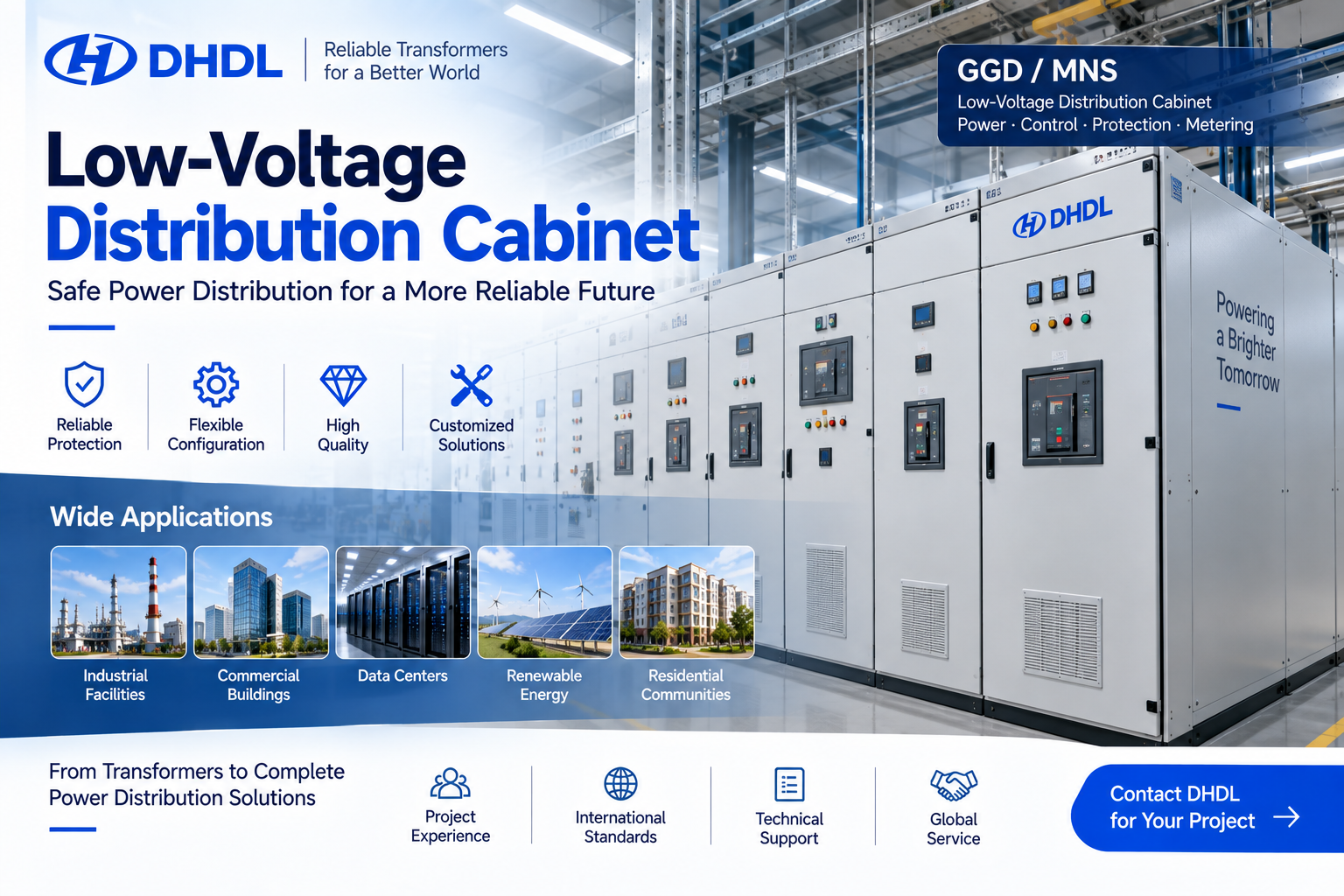
A low-voltage distribution cabinet is one of the last major stages between a transformer and the electrical loads inside a factory, commercial building, data center, industrial park, or infrastructure project.
Its job is not simply to “distribute electricity.”
A properly designed low-voltage cabinet must distribute power safely, isolate faults, protect outgoing circuits, support metering and control, and leave enough capacity for future loads.
This means buyers should not request a quotation by saying only:
“We need a 400V low-voltage distribution cabinet.”
The manufacturer still needs to know the rated current, short-circuit level, number of feeders, breaker configuration, busbar requirements, protection functions, cable arrangement, IP rating, installation environment, and applicable standards.
DHDL manufactures low-voltage distribution equipment as part of its transformer and power-distribution portfolio, with project-specific customization for industrial, commercial, utility, renewable-energy, and data-center applications.
This guide explains the technical parameters buyers should confirm before purchasing a low-voltage distribution cabinet, including several details that are frequently missed during the RFQ stage.
1. What Is a Low-Voltage Distribution Cabinet?
A low-voltage distribution cabinet receives electrical power from a transformer or upstream low-voltage source and distributes it to downstream loads through protected outgoing circuits.
In a typical industrial power system, the electrical path may look like this:
Medium-Voltage Network → Transformer → Low-Voltage Main Cabinet → Distribution Feeders → Motors / Buildings / Equipment
Depending on the electrical design, a low-voltage cabinet may perform several functions:
- Power distribution
- Circuit protection
- Switching and isolation
- Electrical metering
- Motor feeder control
- Power-factor correction
- Automatic transfer
- Local or remote monitoring
- Connection to downstream distribution panels
DHDL’s GGD low-voltage cabinet is designed for low-voltage power distribution, control, protection, and metering in industrial, commercial, and public-building power systems. Cabinet dimensions, incoming and outgoing circuits, breaker configurations, busbar systems, protection levels, and standards can be customized according to the project.
2. Key Specifications Buyers Should Confirm
Voltage alone does not define a low-voltage cabinet.
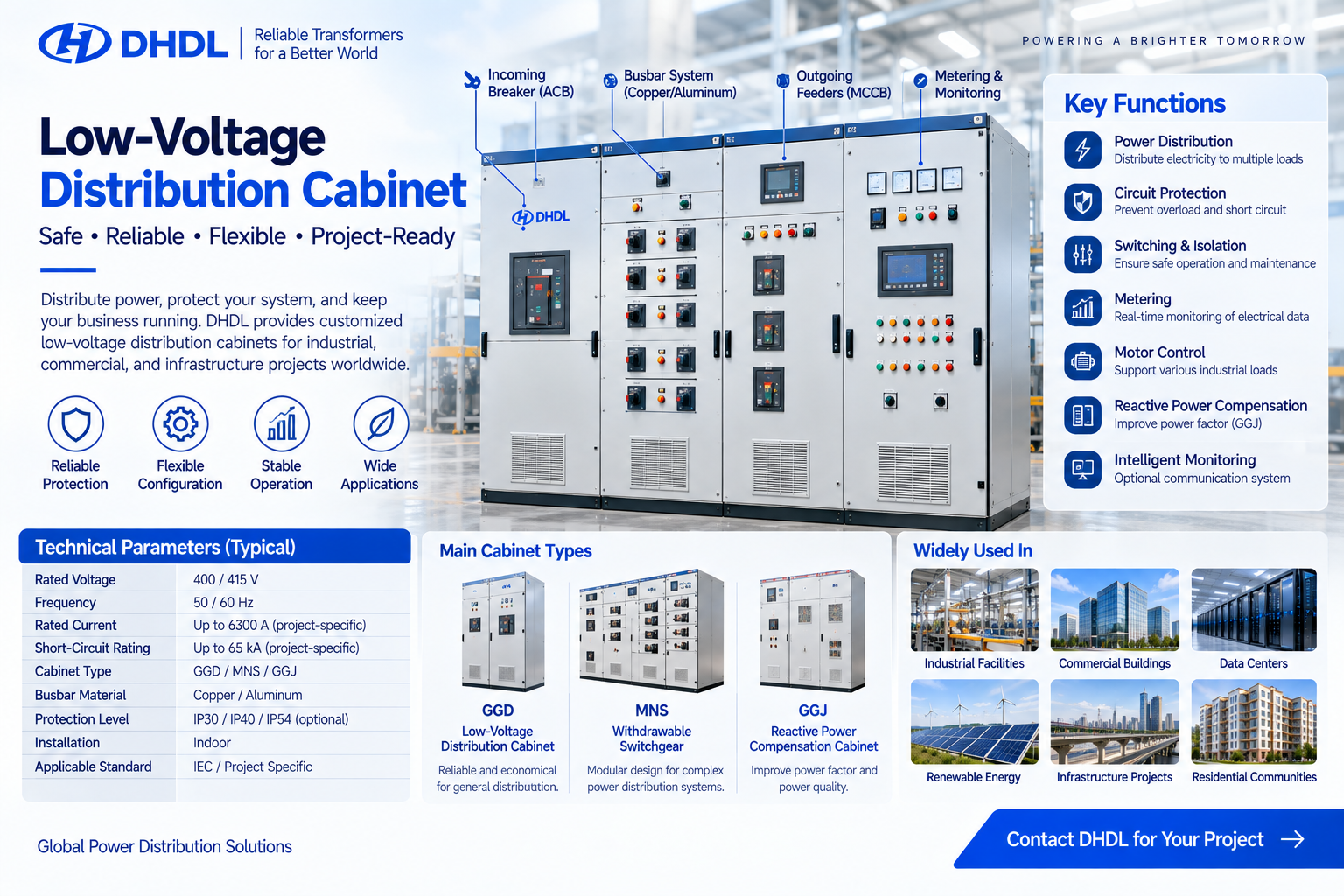
Before requesting a quotation, buyers should provide the main electrical parameters.
| Parameter | Example Project Requirement |
|---|---|
| System Voltage | 400 / 415V |
| Frequency | 50Hz |
| Phase | 3 Phase + N + PE |
| Main Bus Current | 2500A |
| Incoming Breaker | 2500A ACB |
| Outgoing Feeders | Project Specific |
| Short-Circuit Rating | According to System Study |
| Busbar Material | Copper |
| Cabinet Type | GGD / MNS / Project Specific |
| Installation | Indoor |
| Cable Entry | Bottom |
| Protection Level | Project Specific |
| Metering | Multifunction Meter |
| Communication | Project Specific |
| Standard | IEC / Project Specification |
The final values must be determined from the project’s electrical design rather than copied from another installation.
Three specifications deserve particular attention: rated current, short-circuit rating, and feeder configuration.
3. Rated Current: Do Not Select It from Transformer kVA Alone
Suppose a project uses a 1,000kVA, 10/0.4kV transformer.
The approximate full-load secondary current is:
I = 1000 × 1000 ÷ (√3 × 400) ≈ 1,443A
This does not automatically mean that a 1,500A cabinet is the correct choice.
The engineer should also consider:
- Transformer overload capability
- Actual maximum demand
- Ambient temperature
- Busbar temperature rise
- Future expansion
- Parallel transformer operation
- Diversity factor
- Main breaker rating
- Cable capacity
A project expecting future load growth may therefore require a higher busbar rating than the transformer’s present operating current suggests.
Hidden buyer tip: Ask whether the quoted current refers to the main busbar rating, incoming breaker rating, or actual load current. They are related, but they are not automatically the same number.
4. Short-Circuit Rating Can Be More Important Than Normal Load Current
This is one of the specifications buyers frequently overlook.
The cabinet must not only carry normal operating current. It must also withstand the electrical and thermal stress associated with a fault until the protection system clears it.
The required short-circuit rating depends on factors such as:
- Transformer capacity
- Transformer impedance
- System voltage
- Cable impedance
- Parallel transformer operation
- Upstream network strength
- Protection clearing time
For example, two 400V systems carrying similar normal load current can have very different prospective fault currents if one is supplied by a small transformer and the other by multiple large transformers operating in parallel.
Therefore, do not write only:
Rated Current: 2500A
Also provide the calculated fault level or required short-time withstand and breaking capability according to the project design.
This allows the manufacturer to select the correct breaker and busbar system.
5. GGD vs MNS: Which Low-Voltage Cabinet Fits the Project?
Not every project needs the same cabinet structure.
DHDL’s portfolio and published project information include both GGD low-voltage distribution cabinets and MNS withdrawable switchgear.
A simplified purchasing comparison is:
| Feature | GGD Cabinet | MNS Withdrawable Switchgear |
|---|---|---|
| Structure | Fixed-type distribution cabinet | Modular withdrawable system |
| Typical Use | General distribution | More complex distribution systems |
| Maintenance | Conventional fixed arrangement | Withdrawable functional units can simplify servicing |
| Configuration | Incoming/outgoing distribution | Multiple functional feeders |
| Typical Projects | Factories, buildings, general distribution | Data centers, larger industrial systems, critical loads |
| Customization | Breakers, busbars, feeders, enclosure | Feeders, drawers, protection, metering, control |
This does not mean MNS is automatically “better” than GGD.
The correct choice depends on:
System Architecture + Maintenance Strategy + Reliability Requirement + Number of Feeders + Project Budget
A straightforward factory distribution system may not need the same cabinet architecture as a 24/7 data center.
6. Real Project Example: Harbin Intelligent Computing Center
A useful example of low-voltage switchgear in a critical-load application comes from DHDL’s Harbin Intelligent Computing Center Phase I project.
The published project information describes approximately 18MW of new IT load, around 1,800 additional cabinets, and a total project capacity of 40MVA.
The electrical architecture uses dual power supplies, double busbars, and N+1 redundancy to support continuous data-center operation.
The equipment scope included:
| Equipment | Project Configuration |
|---|---|
| Dry-Type Transformers | 16 Units |
| Transformer Capacity | 2500kVA Each |
| KYN28A-12 MV Switchgear | 32 Panels |
| MNS Low-Voltage Switchgear | 156 Panels |
| IT Load | Approx. 18MW |
| Total Capacity | 40MVA |
| Power Architecture | Dual Supply + Double Busbar |
| Redundancy | N+1 |
The MNS cabinets were used for low-voltage distribution supporting data-center operation.
This project illustrates why cabinet selection cannot be based on rated voltage alone.
For a data center, buyers also need to consider:
- Power-supply redundancy
- Bus segmentation
- Maintenance without unnecessary service interruption
- Protection coordination
- Monitoring
- Feeder organization
- Future expansion
- Environmental conditions
In Harbin, the low-temperature environment was another project consideration, with winter temperatures approaching approximately −30°C according to DHDL’s project description.
7. The Hidden Specification: Incoming and Outgoing Feeders
A common RFQ might say:
“Need 10 low-voltage cabinets, 400V, 2500A.”
That still does not define the actual cabinet lineup.
The manufacturer needs the single-line diagram (SLD).
The SLD should identify:
- Incoming circuits
- Bus sections
- Bus coupler
- Outgoing feeders
- Motor feeders
- Capacitor compensation
- ATS requirements
- Metering circuits
- Spare feeders
- Future expansion
- Generator or backup supply interfaces
For example, one 2500A incoming cabinet may supply several different outgoing circuits.
These feeders may require different breaker ratings, protection functions, metering, and cable connections.
Without an SLD, two suppliers may quote completely different scopes even when both quotations say “2500A Low-Voltage Cabinet.”
8. Breaker Configuration: ACB, MCCB and Protection
Circuit breakers should be selected according to the duty of each circuit.
A typical project may use:
- ACB for main incomers
- ACB for bus couplers
- MCCB for larger outgoing feeders
- MCCB or other protective devices for smaller circuits
- Dedicated motor protection where required
The exact selection depends on current, fault level, protection coordination, operating sequence, and project requirements.
Buyers should define whether they require functions such as:
- Overload protection
- Short-circuit protection
- Ground-fault protection
- Undervoltage protection
- Overvoltage monitoring
- Remote trip
- Shunt trip
- Electrical interlocking
- Mechanical interlocking
- Communication interface
Hidden procurement issue: The breaker brand and protection trip unit can significantly affect cabinet price.
When comparing quotations, make sure suppliers are quoting equivalent breaker specifications rather than comparing only cabinet dimensions and rated current.
9. Busbar Design Matters
The busbar is the main current-carrying path inside the cabinet.
Buyers should confirm:
- Rated busbar current
- Copper or aluminum
- Neutral busbar requirements
- PE busbar requirements
- Short-time withstand rating
- Busbar arrangement
- Temperature-rise requirements
- Surface treatment if required
For nonlinear loads such as data centers, UPS systems, LED lighting, and certain electronic equipment, neutral-current and harmonic conditions may also require engineering review.
Do not automatically assume the neutral conductor should be designed only from the phase current without checking the actual load characteristics.
10. Cable Entry and Cabinet Layout Can Create Site Problems
A cabinet can be electrically correct and still be difficult to install.
Before production, confirm:
- Top or bottom cable entry
- Cable trench position
- Incoming cable quantity
- Cable cross-section
- Cable bending radius
- Front access
- Rear access
- Cabinet lineup length
- Cabinet height and depth
- Wall clearance
- Maintenance space
- Future extension direction
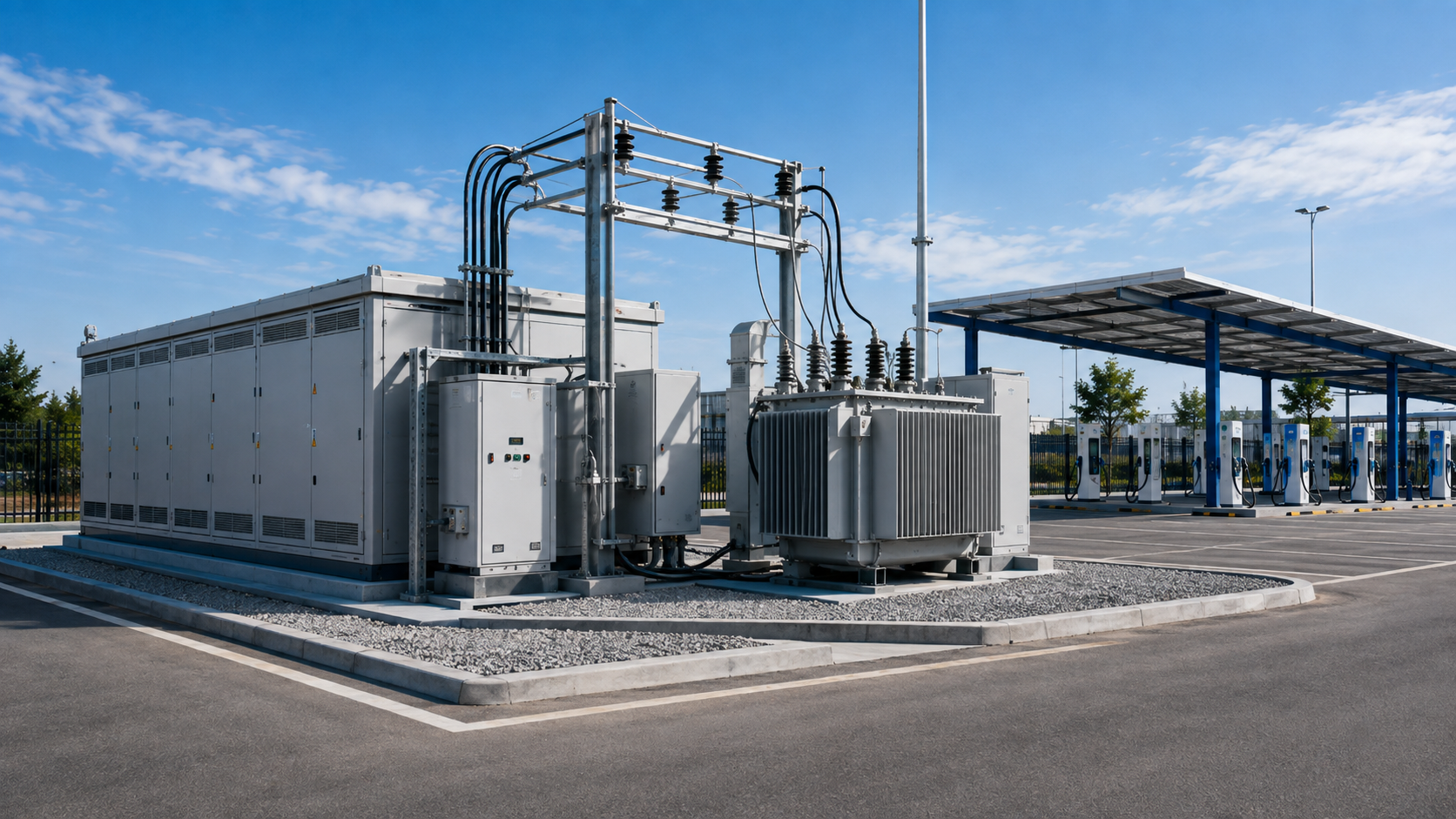
This is especially important when the low-voltage cabinet is integrated into a prefabricated substation cabin.
DHDL’s prefabricated cabin guidance notes that low-voltage configuration may depend on rated voltage, main bus current, outgoing feeders, circuit-breaker requirements, motor loads, metering, power-factor correction, automatic transfer, external cable arrangement, and future feeder reserves.
11. Do You Need Reactive Power Compensation?
Industrial facilities with motors, pumps, compressors, HVAC equipment, and other inductive loads may operate with a lower power factor.
In these cases, a reactive power compensation cabinet may be incorporated into the low-voltage system.
DHDL’s GGJ low-voltage reactive power compensation cabinet uses capacitors, controllers, switching devices, protection components, and monitoring units to adjust reactive power according to load changes.
When requesting compensation equipment, provide:
- System voltage
- Existing power factor
- Target power factor
- Active load
- Required compensation capacity
- Harmonic conditions
- Load fluctuation
- Capacitor configuration requirements
- Controller requirements
Do not select capacitor capacity only from transformer kVA.
The actual load profile and harmonic environment should be reviewed first.
12. Standards, Testing and Documentation
For international projects, buyers should specify the applicable standard at the beginning of the RFQ.
DHDL states that its power equipment can be adapted to IEC, ANSI, and project-specific technical requirements.
Depending on the project, buyers should request relevant inspection and verification documentation for the cabinet configuration.
The technical document package may include:
- Approved single-line diagram
- Cabinet arrangement drawing
- Technical datasheet
- Component list
- Busbar information
- Wiring diagram
- Terminal diagram
- Nameplate information
- Test reports
- Packing list
- Installation documentation
- Operation and maintenance manual
DHDL’s website also lists an MNS Switchgear Type Test Report among its quality and compliance materials.
For export projects, confirm documentation requirements before production rather than asking for additional files immediately before shipment.
13. Low-Voltage Distribution Cabinet RFQ Checklist
Before requesting a quotation, prepare the following information:
| RFQ Item | Buyer Input |
|---|---|
| Application | __________ |
| System Voltage | _____ V |
| Frequency | 50 / 60Hz |
| Phase | __________ |
| Main Bus Current | _____ A |
| Incoming Breaker | __________ |
| Outgoing Feeders | __________ |
| Short-Circuit Level | _____ kA |
| Cabinet Type | GGD / MNS / Other |
| Busbar Material | Cu / Al |
| Cable Entry | Top / Bottom |
| Installation | Indoor / Outdoor |
| IP Rating | __________ |
| Metering | __________ |
| Protection Functions | __________ |
| Communication | __________ |
| Compensation Requirement | _____ kvar |
| Applicable Standard | __________ |
| Quantity | _____ Panels |
| Destination | __________ |
| Required Delivery | __________ |
Recommended RFQ Attachments
Whenever possible, attach:
- Single-Line Diagram
- Load schedule
- Transformer specifications
- Short-circuit calculation
- Protection philosophy
- Cable schedule
- Power-room layout
- Required component brands
- Metering requirements
- Communication requirements
- Applicable technical standard
- Tender specification
- Project schedule
For substations and switchgear projects, DHDL specifically recommends providing the SLD, IP rating, site conditions, and project schedule to support technical confirmation.
Choose DHDL for Your Transformer Solutions
DHDL is a professional transformer manufacturer specializing indry-type transformers, oil-immersed transformers, power transformers, distribution transformers, and complete power distribution solutions.
We support customized transformer designs based on project voltage, capacity, frequency, installation environment, and international standards.
Whether for industrial facilities, renewable energy projects, data centers, utilities, or infrastructure applications, DHDL delivers reliable, efficient, and customized power solutions worldwide.
Contact DHDL today for professional transformer selection support and a customized quotation.
FAQ
1. What is a low-voltage distribution cabinet used for?
A low-voltage distribution cabinet receives power from a transformer or upstream source and distributes it to downstream electrical loads.
Depending on the project, it can provide switching, protection, metering, control, feeder distribution, and monitoring functions. DHDL’s GGD cabinet is designed for industrial, commercial, and public-building power systems.
2. What information is required to quote a low-voltage distribution cabinet?
Provide:
- System voltage
- Frequency
- Rated current
- Short-circuit level
- Incoming breaker
- Outgoing feeders
- Busbar requirements
- Cable-entry direction
- IP rating
- Protection requirements
- Applicable standard
- Quantity
A Single-Line Diagram is strongly recommended.
3. What is the difference between GGD and MNS low-voltage switchgear?
GGD is generally used as a fixed low-voltage distribution cabinet, while MNS uses a modular withdrawable structure that can be suitable for more complex systems and applications requiring flexible feeder organization and maintenance.
The final choice should follow the approved electrical design rather than cabinet type alone.
4. How do I calculate the current for a 1,000kVA 400V transformer?
For a three-phase system:
I = S ÷ (√3 × V)
For a 1,000kVA transformer at 400V, the approximate full-load current is 1,443A.
However, the final cabinet and busbar rating should also consider overload, temperature, future expansion, protection coordination, and project requirements.
5. Why is short-circuit rating important for an LV cabinet?
The cabinet and breakers must safely withstand and interrupt fault conditions according to the electrical system design.
Fault current can depend on transformer capacity, transformer impedance, network configuration, cables, and whether transformers operate in parallel.
6. Can DHDL integrate low-voltage cabinets into a complete substation?
Yes. DHDL’s prefabricated substation cabin solution can integrate transformers, high-voltage switchgear, low-voltage switchgear, metering, protection, control, and monitoring equipment in a modular enclosure.