
Why Vacuum Drying Is Critical During Transformer Manufacturing

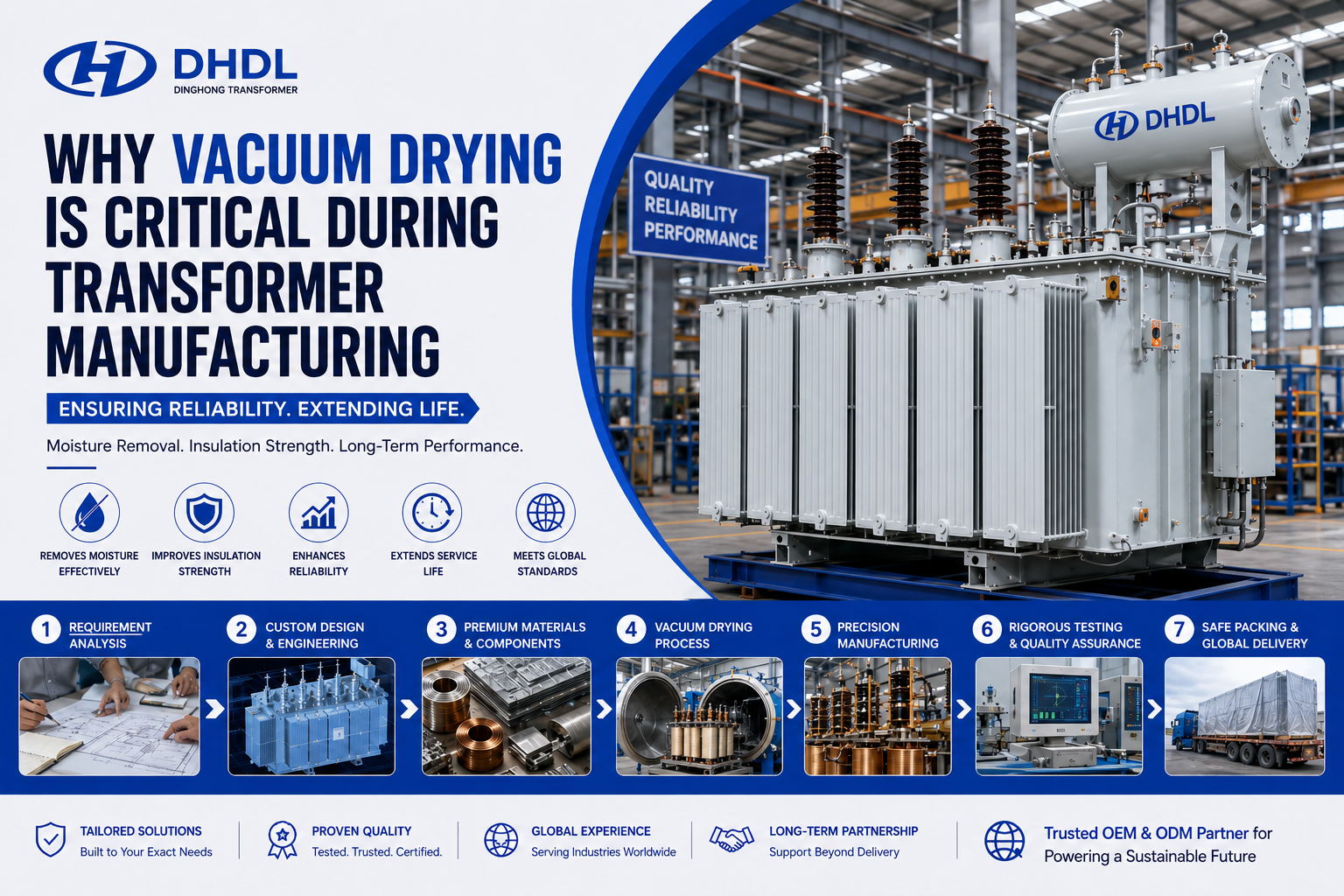
Transformer reliability depends on much more than the quality of the core, windings, and enclosure. The manufacturing process itself plays a major role in determining how efficiently and safely a transformer will operate throughout its service life.
One of the most important manufacturing processes is vacuum drying.During transformer production, moisture can become trapped in insulation materials, windings, paper, pressboard, and other components.
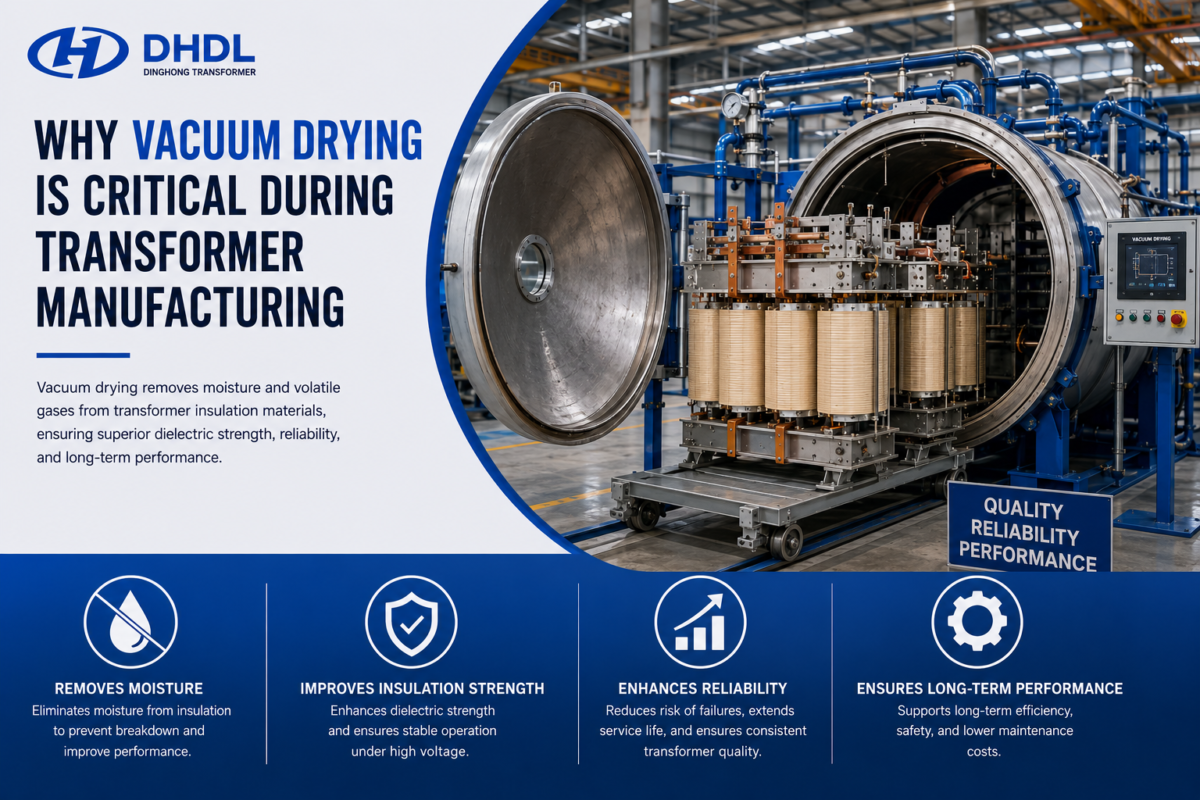
If this moisture is not effectively removed before final assembly or oil filling, it can reduce insulation performance, accelerate ageing, increase the risk of electrical failure, and shorten the transformer’s operating life.
For manufacturers producing power transformers, distribution transformers, and oil-immersed transformers, vacuum drying is therefore a critical quality-control process.
What Is Vacuum Drying in Transformer Manufacturing?
Vacuum drying is a controlled process used to remove moisture and other volatile substances from the transformer’s insulation system and internal components.
Transformer insulation materials are particularly sensitive to moisture.
Materials such as cellulose-based paper and pressboard can absorb water from the surrounding environment during manufacturing and handling.During vacuum drying, the transformer or its active parts are placed inside a controlled drying system. Heat is applied while a vacuum is created to lower the pressure surrounding the materials.
The reduced pressure helps moisture evaporate at lower temperatures, allowing manufacturers to extract moisture from areas that may otherwise be difficult to dry effectively.
The exact drying procedure depends on the transformer design, insulation system, size, and manufacturer’s production process.
Why Does Moisture Matter in Transformers?
Moisture is one of the major enemies of transformer insulation.
When water remains inside the insulation system, it can reduce dielectric strength and increase the likelihood of insulation deterioration. In oil-immersed transformers, moisture can also migrate between solid insulation and transformer oil, affecting the overall insulation system.
Excessive moisture can contribute to:
- Reduced insulation resistance
- Lower dielectric strength
- Accelerated insulation ageing
- Increased risk of partial discharge
- Higher probability of electrical breakdown
- Reduced transformer service life
Because transformer insulation is essential for separating energized components, maintaining a dry insulation system is fundamental to reliable operation.
How Vacuum Drying Improves Transformer Insulation
The primary purpose of vacuum drying is to achieve the appropriate level of dryness throughout the transformer’s insulation system.
A properly dried insulation structure provides better electrical performance and greater resistance to ageing.
Vacuum drying can help manufacturers achieve:
Higher Insulation Reliability
Removing moisture improves the dielectric properties of insulation and reduces the risk of electrical breakdown.
Longer Service Life
Dry insulation is less vulnerable to accelerated ageing, helping transformers maintain their performance over many years.
Better Mechanical Strength
Moisture can affect the mechanical properties of cellulose insulation. Proper drying helps preserve the structural integrity of the insulation system.
Improved Oil-Insulation Performance
For oil-immersed transformers, keeping moisture under control helps maintain the performance of both the solid insulation and transformer oil.
How the Vacuum Drying Process Works
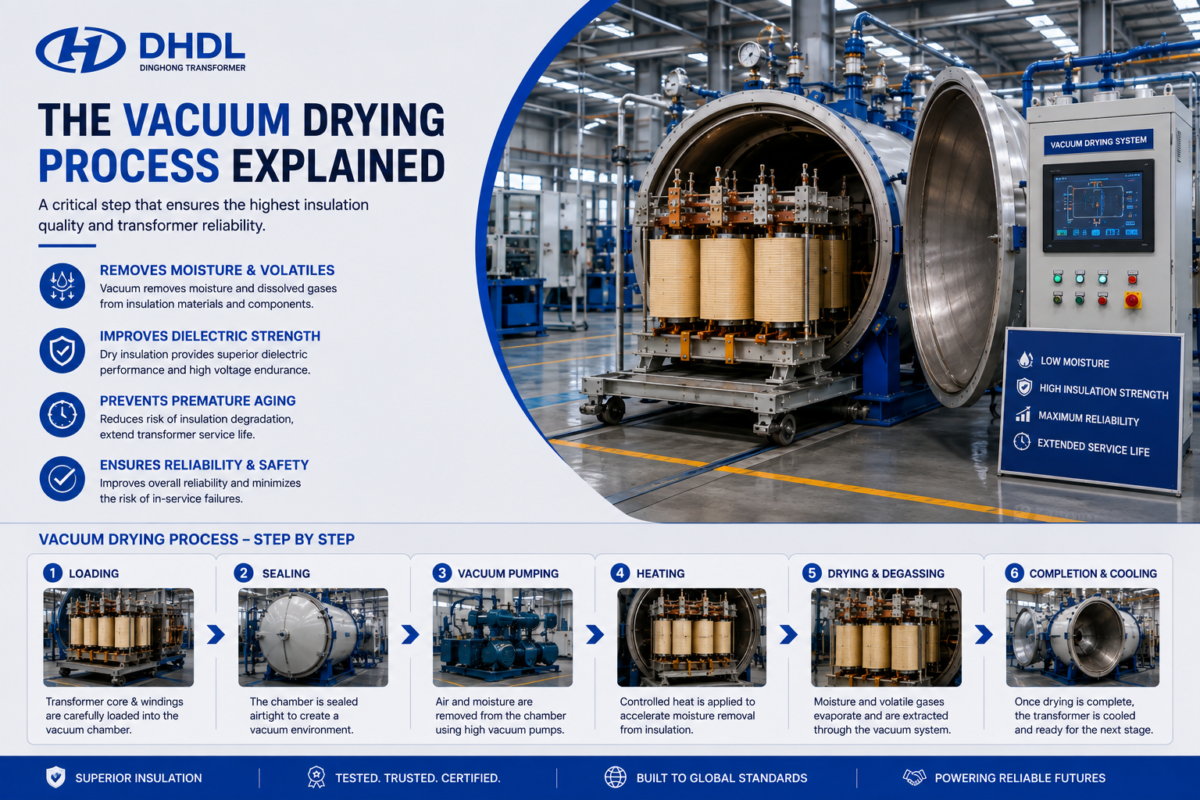
Although procedures differ between manufacturers, transformer vacuum drying generally involves several stages.
1. Preparation
The transformer core, windings, and insulation components are prepared for the drying process. Excess surface moisture and contaminants are removed where necessary.
2. Controlled Heating
Heat is introduced gradually to raise the temperature of the active parts and encourage moisture within the insulation to migrate toward the surface.
The heating process must be carefully controlled. Excessive temperatures can damage insulation materials, so manufacturers follow defined temperature and time parameters.
3. Applying Vacuum
A vacuum is created around the transformer components.
Lower pressure allows water to evaporate more easily and assists in extracting moisture from the insulation structure.
4. Moisture Removal
The vacuum system continuously removes moisture and other vapors released during the drying process.
Depending on transformer size and construction, the process can take many hours or longer. Large power transformers require particularly careful drying because moisture can be deeply absorbed within thick insulation materials.
5. Monitoring and Verification
Temperature, vacuum level, drying time, and other process parameters are monitored throughout production.
Manufacturers may also use electrical and quality-control tests to verify that the insulation system has achieved the required condition before the transformer proceeds to subsequent manufacturing stages.
Why Vacuum Drying Is Especially Important for Oil-Immersed Transformers
Vacuum drying is particularly important in the production of oil-immersed transformers because these transformers depend on a combination of solid insulation and insulating oil.
The oil provides electrical insulation and helps transfer heat away from the windings and core. However, moisture within solid insulation can negatively affect the entire insulation system.Proper drying before oil filling helps ensure that the transformer starts its operating life with an appropriately controlled moisture level.
This is especially important for transformers used in demanding applications such as:
- Electrical substations
- Industrial facilities
- Utility networks
- Renewable energy projects
- Manufacturing plants
- Commercial power systems
Vacuum Drying and Transformer Quality Control
Vacuum drying should not be considered an isolated manufacturing step. It forms part of a broader transformer quality-control process.
A reliable manufacturing process should combine proper material selection, controlled winding, core assembly, insulation treatment, vacuum drying, assembly, oil processing where applicable, and electrical testing.
Quality control throughout these stages helps manufacturers identify potential problems before the transformer reaches the customer.
For buyers, this means that manufacturing processes can be just as important as the final product specifications.
What Happens If Transformer Insulation Is Not Properly Dried?
Insufficient drying can create long-term reliability problems.
A transformer containing excessive moisture may experience reduced insulation performance and accelerated ageing.
Under high electrical and thermal stress, these weaknesses can become more significant.
Potential consequences include:
- Reduced operating life
- Increased maintenance requirements
- Insulation degradation
- Electrical faults
- Unexpected downtime
- Higher lifecycle costs
For large transformers, replacing or repairing equipment after installation can be extremely expensive. Proper manufacturing and moisture control are therefore important investments in long-term reliability.
Vacuum Drying at Dinghong Transformer
At Dinghong Transformer, manufacturing quality is an important part of delivering reliable transformer solutions.
The company manufactures oil-immersed transformers, distribution transformers, power transformers, dry type transformer, and customized transformer solutions for commercial, industrial, utility, and renewable energy applications.
For oil-immersed transformer production, controlled manufacturing processes, insulation treatment, drying, assembly, and electrical testing are essential to achieving dependable performance.
DinghongTransformer combines engineering expertise, quality materials, controlled production processes, and testing procedures to develop transformer products suited to different electrical and environmental requirements.
For customers purchasing transformers for long-term infrastructure projects, understanding how the transformer is manufactured can provide valuable insight into expected reliability and service life
Conclusion
Vacuum drying is a critical stage in transformer manufacturing because moisture can significantly affect insulation performance, electrical reliability, and transformer lifespan.
By carefully heating transformer components and applying controlled vacuum conditions, manufacturers can remove moisture from insulation materials before the transformer enters service.
This helps improve dielectric performance, reduce insulation ageing, and support reliable operation.When purchasing a transformer, buyers should therefore look beyond capacity, voltage, and price.
Manufacturing processes such as vacuum drying, insulation treatment, material inspection, assembly, and factory testing can have a major impact on long-term transformer performance.
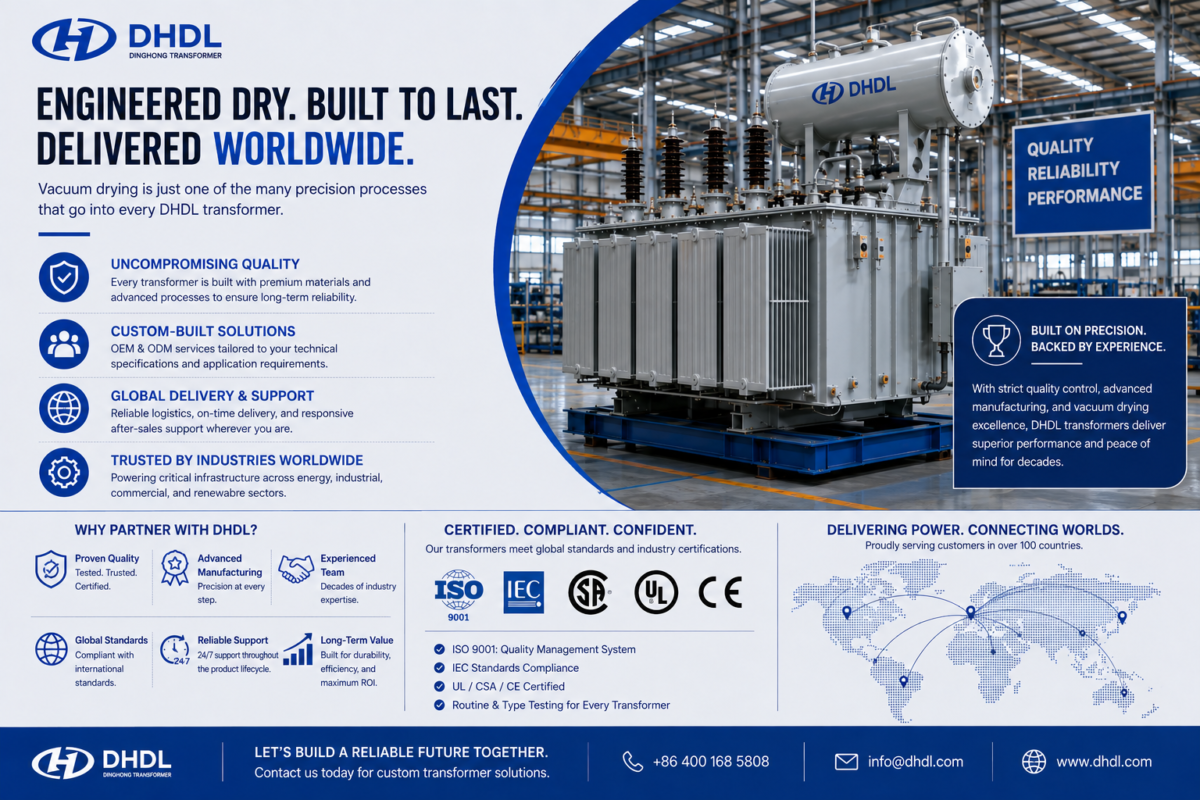
Choosing an experienced manufacturer such as Dinghong Transformer gives project owners and procurement teams access to professionally manufactured transformer solutions designed with reliability, efficiency, and long-term operational performance in mind.