
Types of Electrical Transformers and their Applications.

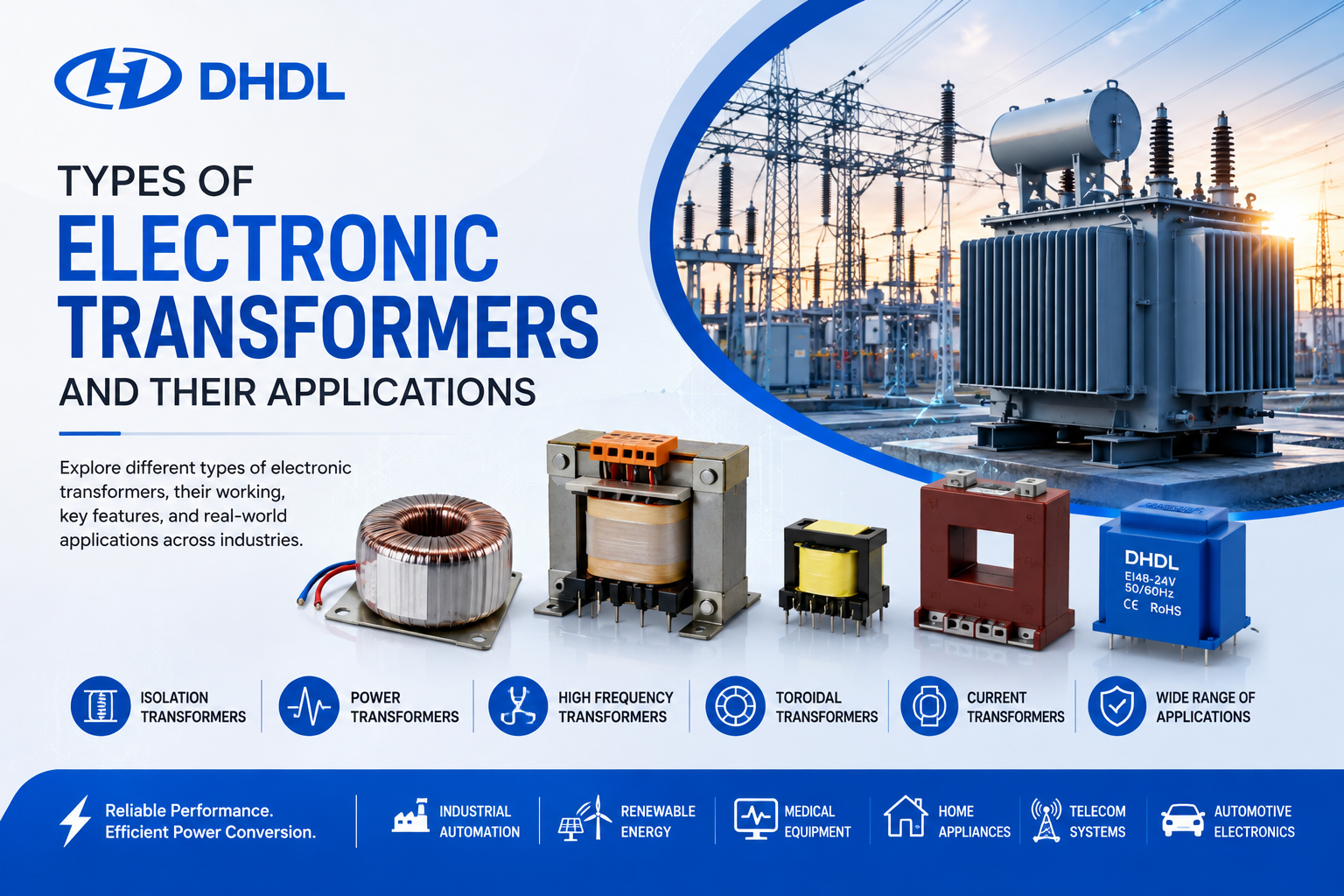
Electrical transformers are essential components of modern power systems. They make it possible to transfer electrical energy efficiently between different voltage levels, supporting everything from power generation and long-distance transmission to industrial facilities, commercial buildings, renewable energy projects, and residential electricity distribution. Because different electrical systems have different voltage, capacity, insulation, cooling, and safety requirements, transformers are available in several types and configurations.
Understanding the types of electrical transformers and their applications is important for engineers, contractors, facility managers, energy developers, and buyers who need to select the right equipment for a specific project. Transformers can be classified according to their function, construction, voltage level, cooling method, phase, and application.
This guide explains the major types of electrical transformers, their applications, and the factors to consider when choosing a transformer.
What Is an Electrical Transformer?
An electrical transformer is a static electrical device that transfers alternating-current electrical energy from one circuit to another through electromagnetic induction. Its primary purpose is to increase or decrease voltage while maintaining the same frequency.
For example, a step-up transformer increases voltage for efficient long-distance power transmission, while a step-down transformer reduces voltage to levels suitable for distribution and end-use equipment. Power and distribution transformers therefore play different roles within an electrical network. (Eshop)
Transformers generally consist of a magnetic core, primary winding, secondary winding, insulation system, enclosure or tank, and, depending on the design, a cooling system and accessories.
1. Power Transformers
Power transformers are designed for high-capacity electrical power transmission and grid applications. They are commonly installed at generating stations and high-voltage substations where large quantities of electricity need to be transferred between voltage levels.
A power transformer may be used to step up voltage from a generating plant before electricity enters a transmission network. At a receiving substation, another transformer can step the voltage down for subsequent distribution.
Applications of Power Transformers
Power transformers are commonly used in:
- Electrical generating stations
- High-voltage substations
- Transmission networks
- Large industrial facilities
- Renewable energy grid connections
- Regional and national power infrastructure
For very high-voltage applications, oil-immersed power transformers are widely used because their insulation and cooling systems can support demanding operating conditions. Dinghong Transformer Homepage
is designed for transmission systems, substations, industrial networks, renewable-energy grid connections, and major infrastructure projects. (Dinghongtransformer)
View the 330kV–500kV High Voltage Oil-immersed Power Transformer
2. Distribution Transformers
Distribution transformers are used closer to electricity consumers. Their main function is to reduce medium-voltage electricity to a lower voltage that can be safely distributed to homes, businesses, commercial buildings, and smaller industrial loads.
They are an important part of the final stage of the electrical power delivery system. Distribution transformers may be installed on utility poles, on concrete pads, or inside transformer rooms, depending on the system design.
Applications of Distribution Transformers
Common applications include:
- Residential electricity supply
- Commercial buildings
- Factories and workshops
- Rural electrification
- Urban distribution networks
- Renewable energy distribution systems
- Industrial parks
Dinghong’s 6–38.5kV Oil-immersed Distribution Transformer is designed for utility grids, industrial facilities, renewable energy projects, outdoor substations, and infrastructure power systems. It is available across a rated capacity range of 30–2500kVA and can be customized for project requirements. (Dinghongtransformer)
View the 6–38.5kV Oil-immersed Distribution Transformer
3. Step-Up Transformers
A step-up transformer increases the output voltage above the input voltage. It is particularly important in power generation and transmission because transmitting electricity at a higher voltage can reduce current for a given power level, helping reduce transmission losses.
For example, electricity generated at a power plant can be increased to a much higher voltage before being transmitted over long distances.
Applications of Step-Up Transformers
Step-up transformers are used in:
- Power generation plants
- Transmission substations
- Solar power plants
- Wind farms
- High-voltage grid connections
- Industrial power systems
Renewable energy projects can also use transformers to increase the voltage generated by solar or wind facilities to a level suitable for grid connection.
4. Step-Down Transformers
Step-down transformers reduce voltage from a higher level to a lower level. They are commonly found in substations and distribution networks.
A typical electricity network may use several stages of voltage reduction before electricity reaches the final consumer. This makes step-down transformers essential for supplying usable electrical power to commercial, industrial, and residential loads.
Applications of Step-Down Transformers
They are used in:
- Distribution substations
- Residential areas
- Commercial buildings
- Manufacturing facilities
- Industrial plants
- Electrical equipment
- Control systems
A distribution transformer is essentially one of the most common practical examples of a step-down transformer because it reduces medium-voltage distribution electricity to a lower voltage suitable for consumers.
5. Oil-Immersed Transformers
Oil-immersed transformers use insulating liquid for both electrical insulation and heat dissipation. The transformer oil helps transfer heat away from the core and windings, allowing the transformer to operate reliably under significant loads.
Oil-immersed designs are particularly common in outdoor substations, utility networks, industrial facilities, and high-capacity applications.
Applications of Oil-Immersed Transformers
They are suitable for:
- Utility power distribution
- Industrial power systems
- Outdoor substations
- High-voltage transmission
- Renewable energy projects
- Large infrastructure projects
The choice of cooling arrangement depends on transformer capacity, loading conditions, installation environment, and project requirements. Dinghong’s high-voltage oil-immersed transformer range includes ONAN, ONAF, and OFAF cooling configurations depending on the application. (Dinghongtransformer)
6. Dry-Type Transformers
Dry-type transformers do not use liquid insulation as their primary cooling and insulation medium. Instead, they use solid insulation materials and air-based cooling arrangements.
Because they avoid transformer oil, dry-type transformers can be advantageous in locations where fire safety, indoor installation, or environmental considerations are important. They are commonly used in commercial and industrial buildings.
Applications of Dry-Type Transformers
Typical applications include:
- Office buildings
- Hospitals
- Shopping centers
- Schools
- Factories
- Data centers
- Indoor substations
- Commercial facilities
The decision between a dry-type and oil-immersed transformer should consider load requirements, installation location, fire-safety requirements, environmental conditions, maintenance expectations, and applicable standards.
7. Single-Phase Transformers
Single-phase transformers are designed for single-phase electrical systems. They are generally smaller than many three-phase transformers and are commonly used where the electrical load does not require a three-phase supply.
One common application is overhead distribution, particularly in residential and rural areas.
Dinghong’s Single Phase Pole-mounted Distribution Transformer is designed for outdoor distribution networks and is used to reduce medium-voltage electricity to a lower voltage for residential, commercial, and small industrial users. (Dinghongtransformer)
View the Single Phase Pole-mounted Distribution Transformer
8. Three-Phase Transformers
Three-phase transformers are designed for three-phase electrical systems and are widely used in commercial, industrial, and utility power networks.
Three-phase systems are particularly suitable for transmitting and distributing large amounts of electrical power. As a result, three-phase transformers are frequently found in factories, substations, industrial parks, large commercial buildings, and renewable energy installations.
Applications of Three-Phase Transformers
They are commonly used in:
- Industrial manufacturing plants
- Large commercial buildings
- Utility substations
- Mining operations
- Renewable energy projects
- Data center infrastructure
- Large-scale distribution networks
The appropriate transformer configuration depends on voltage ratio, rated capacity, vector group, impedance, cooling requirements, and the characteristics of the connected load.
9. Instrument Transformers
Instrument transformers are designed primarily for measurement and protection rather than bulk power transfer. The two major categories are current transformers (CTs) and potential or voltage transformers (PTs/VTs).
A current transformer reduces high current to a lower, measurable value, while a voltage transformer reduces high voltage to a safer level for meters, monitoring equipment, and protection relays. (Eshop)
Applications of Instrument Transformers
They are used for:
- Electrical metering
- Protection systems
- Substation monitoring
- Power-system control
- Fault detection
- Industrial electrical panels
Instrument transformers help electrical engineers and protection systems monitor high-voltage and high-current circuits without directly connecting measuring equipment to dangerous electrical levels.
10. Isolation Transformers
Isolation transformers are designed to provide electrical separation between the input and output circuits. They can be used to improve electrical safety and reduce the transfer of certain electrical disturbances between circuits.
Applications of Isolation Transformers
They may be used in:
- Sensitive electronic equipment
- Medical facilities
- Industrial control systems
- Testing equipment
- Communication systems
- Maintenance and service environments
The exact design requirements depend on the application, isolation voltage, load, frequency, insulation system, and required protection characteristics.
How to Choose the Right Electrical Transformer
Selecting the correct transformer requires more than simply choosing a voltage ratio. Important factors include:
1. Rated Capacity
Determine the required kVA or MVA rating based on the connected load, expected demand, and future expansion requirements.
2. Input and Output Voltage
Confirm the primary and secondary voltage levels. An incorrect voltage ratio can cause poor equipment performance, overheating, or system problems.
3. Transformer Type
Choose between power, distribution, dry-type, oil-immersed, single-phase, three-phase, or specialized transformers according to the application.
4. Installation Environment
Consider whether the transformer will be installed indoors or outdoors and evaluate temperature, humidity, dust, altitude, corrosion, and other environmental conditions.
5. Cooling Method
Cooling requirements increase with transformer size and loading. Common cooling arrangements include natural and forced cooling systems.
6. Applicable Standards
Projects may require compliance with IEC, ANSI, IEEE, GB, or other national and project-specific standards. Dinghong states that its transformer solutions can be adapted to IEC, ANSI, IEEE, GB, and project-specific technical requirements. (Dinghongtransformer)
7. Future Expansion
If the electrical system is expected to grow, transformer capacity should be selected with appropriate consideration for future load requirements rather than focusing only on today’s demand.
Why Understanding Transformer Types Matters
Choosing the correct electrical transformer can improve power-system reliability, efficiency, safety, and operating costs. A transformer designed for a utility substation may have very different requirements from one intended for an indoor commercial building or a renewable energy installation.
For example, high-voltage oil-immersed transformers are appropriate for demanding transmission and substation applications, while distribution transformers are commonly used to deliver electricity closer to consumers. Dry-type transformers may be preferable for certain indoor installations, while pole-mounted transformers are practical for overhead distribution networks.
Therefore, transformer selection should always be based on the project’s voltage, capacity, load characteristics, installation environment, applicable standards, and long-term operating requirements.
Conclusion
The different types of electrical transformers and their applications reflect the wide range of requirements found in modern electrical power systems. Power transformers support high-capacity transmission and substations, distribution transformers deliver electricity to end users, step-up and step-down transformers manage voltage levels, while oil-immersed and dry-type transformers provide different insulation and cooling solutions.
Single-phase and three-phase transformers address different electrical system configurations, while instrument and isolation transformers serve specialized measurement, protection, safety, and equipment-isolation requirements.
For transformer buyers and project developers, understanding these differences is the first step toward selecting reliable and cost-effective equipment. The right transformer should be matched to the project’s voltage, capacity, application, environment, standards, and expected operating conditions.