
How to Choose the Right Transformer for Your Electrical System.

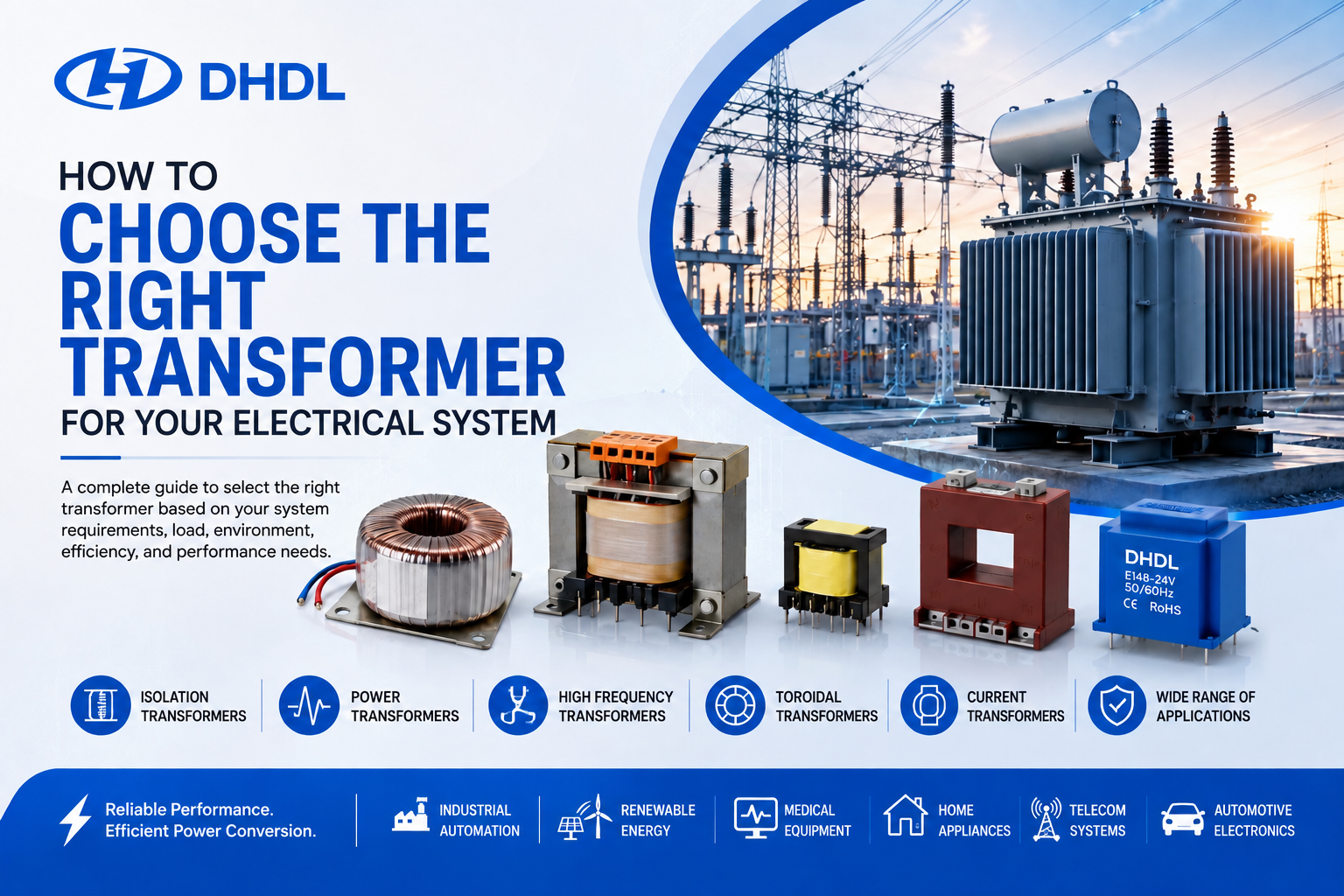
Choosing the right transformer is one of the most important decisions when designing, upgrading, or expanding an electrical system. A properly selected transformer can improve voltage regulation, reduce energy losses, support equipment reliability, and provide stable power for years. On the other hand, selecting a transformer with the wrong voltage, capacity, cooling method, or installation design can lead to overheating, poor performance, unnecessary energy costs, and premature equipment failure.
Whether you are designing a factory power system, commercial building, renewable energy project, industrial facility, utility distribution network, or substation, understanding how to choose the right transformer is essential.
Dinghon’s transformer product range includes oil-immersed transformers, dry-type transformers, and special transformers for different power distribution and industrial applications. The company also supports customized solutions based on voltage, capacity, frequency, environmental conditions, and applicable standards.
What Is an Electrical Transformer?
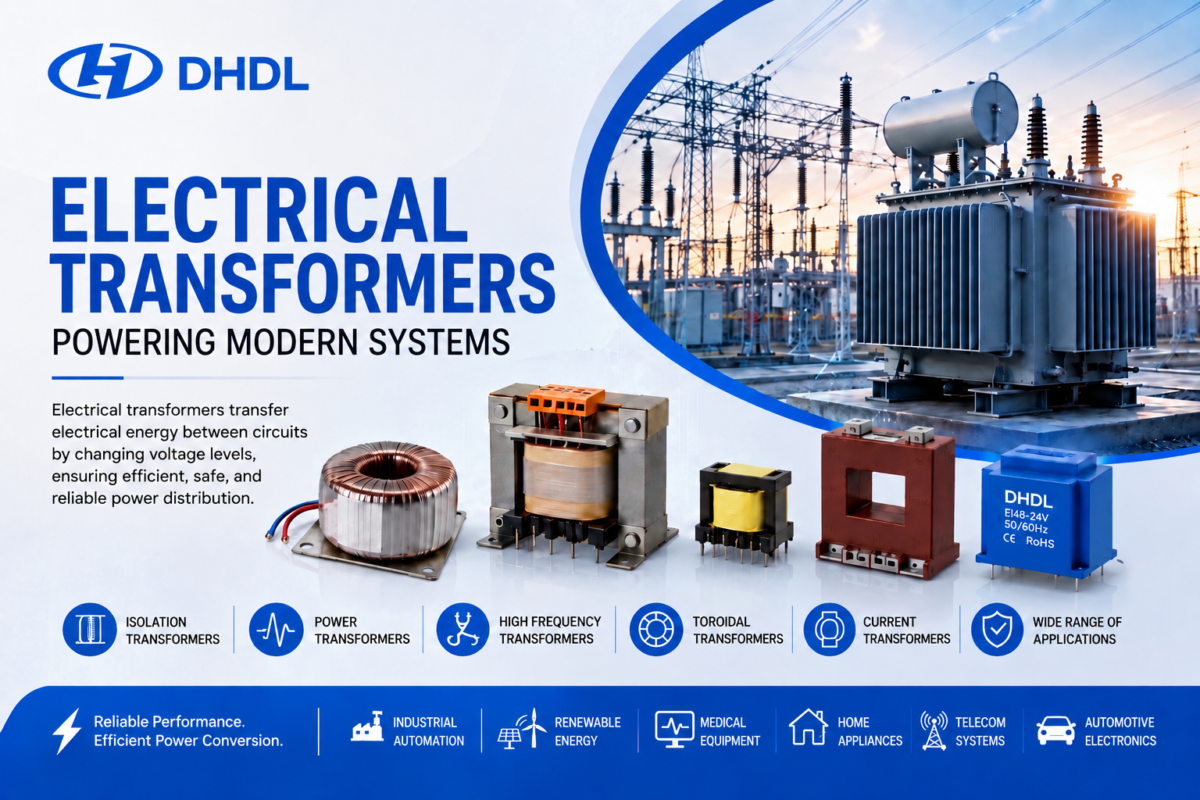
An electrical transformer is a static device used to transfer electrical energy between circuits through electromagnetic induction. Its primary purpose is to change voltage from one level to another while maintaining the frequency of the electrical supply.
A transformer can be designed to:
- Step up voltage for transmission
- Step down voltage for distribution and equipment
- Provide electrical isolation
- Match voltage requirements between different parts of a system
- Support specialized industrial applications
For example, a distribution transformer may reduce medium-voltage electricity to a lower voltage suitable for buildings, factories, or other end users.
Because transformers operate continuously in many electrical systems, selecting the correct unit requires more than simply choosing a transformer with the desired voltage ratio.
1. Determine the Required Voltage
The first step when choosing a transformer is to identify the input and output voltage requirements of your electrical system.
You should determine:
- Primary or high-voltage input
- Secondary or low-voltage output
- Required voltage ratio
- Frequency, such as 50 Hz or 60 Hz
- Whether the system is single-phase or three-phase
For example, a project may require a transformer that converts 33 kV to 0.4 kV for a distribution application. Dinghong’s 6–38.5kV Oil-immersed Distribution Transformer supports medium-voltage applications and can be configured with a 0.4 kV low-voltage side.
Choosing the correct voltage rating is essential because a mismatch can affect insulation performance, voltage regulation, connected equipment, and overall system safety.
2. Calculate the Required Transformer Capacity
Transformer capacity is normally expressed in VA, kVA, or MVA. Selecting the correct capacity ensures that the transformer can supply the connected electrical loads without excessive heating or overloading.
Start by calculating the total expected load. Consider equipment such as:
- Motors
- Lighting systems
- HVAC equipment
- Pumps
- Industrial machinery
- Data center equipment
- Battery and energy storage systems
- Commercial appliances
- Renewable energy equipment
Do not select transformer capacity based only on the current load. Future expansion should also be considered.
However, oversizing a transformer unnecessarily can increase purchase costs may increase no-load losses. The goal is to select a transformer that provides adequate capacity while maintaining an efficient operating load.
Dinghong’s medium-voltage oil-immersed distribution transformer range, for example, includes ratings from 30 kVA to 2500 kVA, with project-specific customization available.
3. Consider the Type of Transformer
Different electrical systems require different transformer designs. The major transformer types you should consider include oil-immersed transformers, dry-type transformers, power transformers, distribution transformers, and special-purpose transformers.
Oil-Immersed Transformers
Oil-immersed transformers use transformer oil for insulation and cooling. They are widely used in outdoor substations, utility networks, industrial facilities, and medium- and high-voltage applications.
They can be a good choice when the system requires:
- High capacity
- Strong heat dissipation
- Outdoor installation
- Long-term continuous operation
- Industrial power distribution
- Utility distribution
6–38.5kV Oil-immersed Distribution Transformer
Dry-Type Transformers
Dry-type transformers dry type do not use liquid insulation. They are often preferred for indoor installations where fire safety, low maintenance, and environmental considerations are important.
They are commonly suitable for:
- Commercial buildings
- Factories
- Schools
- Hospitals
- Airports
- Data centers
- Indoor electrical rooms
Dinghong identifies dry-type transformers as suitable for buildings, factories, schools, stations, commercial centers, and indoor load centers.
Power Transformers
Power transformers are generally used in larger power transmission and substation applications. They are appropriate for high-capacity systems where electricity must be stepped up or stepped down between major voltage levels.
For very high-voltage transmission and substation projects, Dinghong offers high-voltage oil-immersed transformer solutions covering voltage levels including 66 kV, 110 kV, 220 kV, 330 kV, and 500 kV.
330kV–500kV High Voltage Oil-immersed Power Transformer
4. Choose Between Single-Phase and Three-Phase
The electrical system configuration also determines the transformer you need.
Single-Phase Transformers
Single-phase transformers are commonly used for residential distribution, rural electrification, small commercial applications, and systems with single-phase loads.
For overhead distribution networks, a pole-mounted transformer can provide a practical solution.
Single Phase Pole-mounted Distribution Transformer
Dinghong’s single-phase pole-mounted distribution transformer can be customized according to voltage level, capacity, installation environment, protection requirements, and applicable grid standards.
Three-Phase Transformers
Three-phase transformers are commonly used for industrial facilities, commercial buildings, utility distribution, large machinery, and other applications requiring three-phase electrical power.
If your system has substantial three-phase loads, selecting a properly rated three-phase transformer can provide an efficient solution for power distribution.
5. Evaluate the Installation Environment
Where the transformer will be installed is another important consideration.
Ask the following questions:
- Will the transformer be installed indoors or outdoors?
- Is the location exposed to rain or moisture?
- Is the ambient temperature high?
- Is there significant dust or pollution?
- Is the site at high altitude?
- Is there limited installation space?
- Are there strict fire-safety requirements?
- Is the transformer exposed to corrosive conditions?
Environmental conditions can influence the transformer enclosure, insulation, cooling method, protection system, and material selection.
For example, Dinghong’s oil-immersed distribution transformers are designed for applications that may involve high temperature, high humidity, high altitude, and outdoor operating environments.
6. Consider Transformer Efficiency and Energy Losses
Transformer efficiency should be an important part of your purchasing decision.
Transformers experience different types of losses, including:
- No-load or core losses
- Load or winding losses
Although these losses may appear small individually, a transformer operating continuously for many years can consume significant energy through losses.
Therefore, a transformer with a higher purchase price may provide better long-term value if its design reduces operating losses.
When comparing transformers, review the manufacturer’s stated no-load loss, load loss, efficiency, and applicable energy-efficiency requirements.
Dinghong emphasizes low-loss transformer design and conducts tests such as no-load loss, load loss, impedance, insulation, and voltage-ratio testing as part of its transformer quality-control process.
7. Check Cooling Requirements
Transformers generate heat during operation. Proper cooling is necessary to prevent excessive temperature rise and protect insulation and windings.
Common cooling approaches include natural and forced cooling systems. The appropriate option depends on transformer capacity, load, installation environment, and design requirements.
For example, high-voltage oil-immersed power transformers may use cooling configurations such as ONAN, ONAF, or OFAF, depending on the project requirements.
When choosing a transformer, make sure the cooling method is appropriate for the expected load and operating conditions.
8. Consider Voltage Regulation and Tap Settings
Voltage at the transformer input may fluctuate because of changes in the utility network or load conditions. The transformer must therefore be capable of maintaining an acceptable output voltage.
Tap settings allow the transformer voltage ratio to be adjusted within a specified range.
For example, Dinghong’s 6–38.5 kV oil-immersed distribution transformer can be configured with tap ranges such as ±5% or ±2 × 2.5%, depending on the project requirements.
The correct tap arrangement should be determined based on the electrical system and expected voltage variations.
9. Check the Phase, Vector Group, and Impedance
For industrial and distribution systems, technical parameters such as vector group and short-circuit impedance are important.
The transformer must be compatible with the existing electrical network. Incorrect configuration can create problems when transformers operate in parallel or connect to existing distribution equipment.
For example, the Dinghong 6–38.5 kV oil-immersed distribution transformer supports vector groups such as Dyn11, Yyn0, and Yzn11, depending on the configuration.
These specifications should be confirmed by qualified electrical engineers before ordering.
10. Consider Applicable Standards and Certifications
A transformer should comply with the standards required in the country and project where it will be installed.
Depending on the market and application, relevant requirements may include:
- IEC
- ANSI
- IEEE
- GB
- Project-specific technical specifications
Dinghong states that its transformer and power equipment solutions can be adapted to IEC, GB, ANSI/IEEE, and project-specific requirements.
Before purchasing, request technical documents, test reports, drawings, nameplate information, and other documentation required for project approval.
11. Consider Maintenance Requirements
Transformer maintenance affects long-term reliability and operating costs.
Before selecting a transformer, consider:
- Accessibility for inspection
- Cooling system maintenance
- Insulation condition
- Oil testing requirements for oil-filled units
- Availability of spare parts
- Protection equipment
- Manufacturer technical support
A transformer that is easy to inspect and maintain can help reduce downtime and improve its operating life.
12. Think About Future Expansion
Electrical loads rarely remain exactly the same throughout the life of a project.
A factory may add new production lines. A commercial building may increase its electrical demand. A renewable energy project may expand its generation capacity.
Therefore, transformer selection should consider future load growth without unnecessarily oversizing the equipment.
A professional transformer manufacturer can evaluate your current load, projected expansion, operating environment, and voltage requirements to recommend a suitable capacity.
Common Mistakes to Avoid When Choosing a Transformer
Avoid these common transformer-selection mistakes:
Choosing Capacity Based Only on Present Load
Ignoring future expansion can result in an undersized transformer that becomes overloaded later.
Selecting the Wrong Voltage Ratio
The primary and secondary voltage must match the electrical system requirements.
Ignoring the Installation Environment
A transformer designed for one environment may not be appropriate for another. Temperature, humidity, dust, altitude, and fire-safety requirements matter.
Focusing Only on Purchase Price
The cheapest transformer may not have the lowest lifetime cost. Efficiency, losses, maintenance, reliability, and service support should also be considered.
Ignoring Applicable Standards
Always confirm that the transformer meets the required technical and regulatory standards for your project.
Transformer Selection Checklist
Before placing an order, confirm the following:
- Required transformer capacity in kVA or MVA
- Primary voltage
- Secondary voltage
- Frequency
- Single-phase or three-phase configuration
- Oil-immersed or dry-type construction
- Indoor or outdoor installation
- Cooling method
- Tap range
- Vector group
- Impedance
- Insulation requirements
- Environmental conditions
- Applicable standards
- Protection requirements
- Future load expansion
- Testing and documentation requirements
- Delivery and installation requirements
Providing these details to the manufacturer can make the quotation and engineering process faster and more accurate. Dinghong itself recommends providing information such as capacity, HV/LV voltage, frequency, connection group, impedance, standard, application, and installation conditions when requesting a transformer solution.
Why Choosing the Right Transformer Matters
The right transformer does more than change voltage. It becomes an important part of the electrical system’s reliability, efficiency, safety, and long-term operating cost.
A properly selected transformer can help:
- Maintain stable power supply
- Reduce electrical losses
- Support equipment performance
- Improve energy efficiency
- Reduce overheating risks
- Simplify maintenance
- Support future expansion
- Improve overall system reliability
For this reason, transformer selection should be based on engineering requirements rather than price alone.