
What Is a Dry-Type Transformer and Where Is It Used?

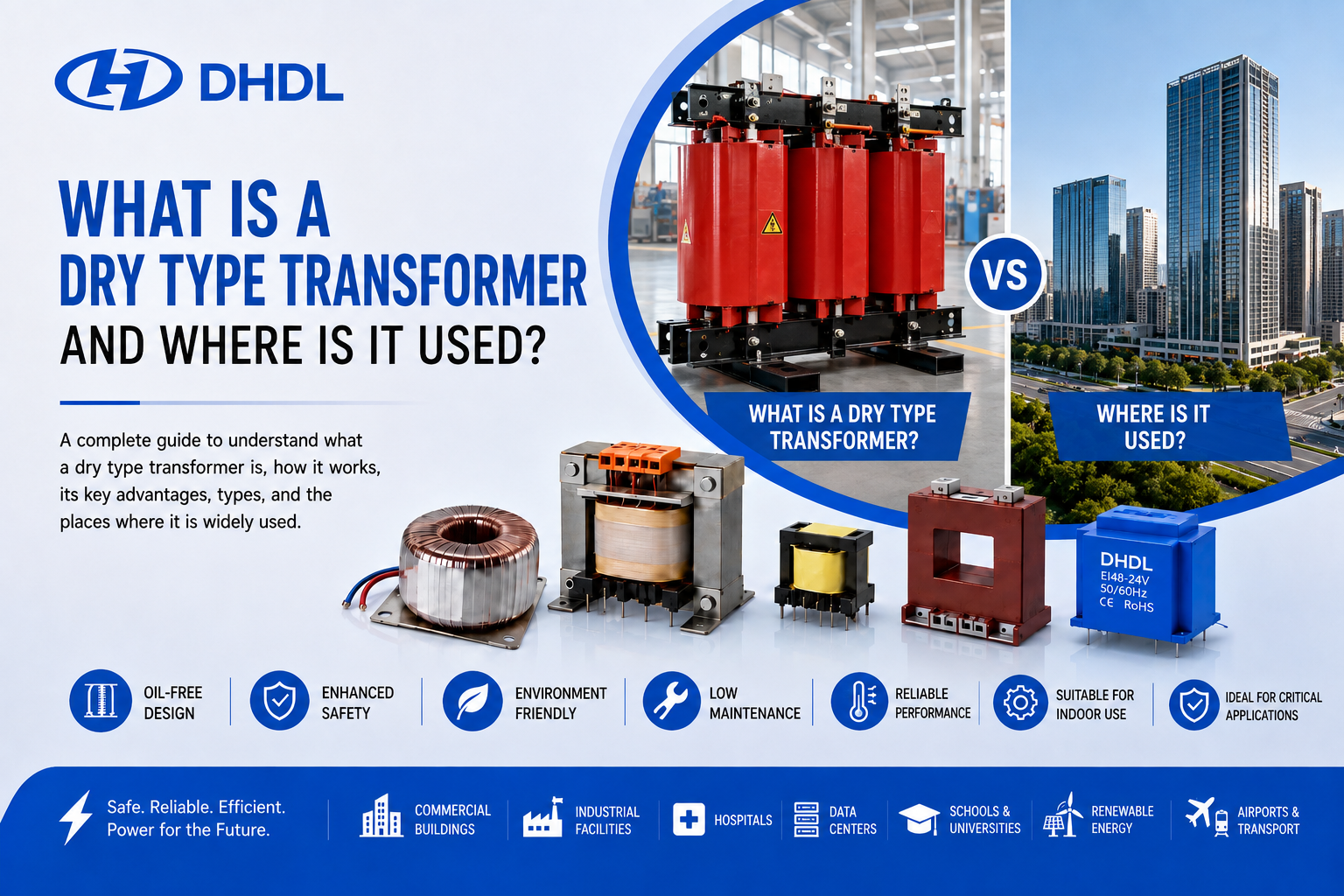
Transformers are essential components of modern electrical power systems. They help increase or decrease voltage levels so that electricity can be transmitted, distributed, and used safely and efficiently. Among the different types of transformers available today, the dry-type transformer has become an important solution for commercial buildings, industrial facilities, infrastructure projects, data centers, hospitals, schools, and other applications where safety and reliable indoor power distribution are important.
Unlike traditional oil-immersed transformers, a dry-type transformer does not use insulating oil as its primary cooling and insulation medium. Instead, it relies on air circulation and solid insulating materials such as epoxy resin or other insulation systems. This oil-free construction reduces the risk associated with oil leakage and makes dry-type transformers particularly attractive for many indoor installations. (Schneider Electric)
But what exactly is a dry-type transformer, how does it work, and where is it used? This article explains everything you need to know.
What Is a Dry-Type Transformer?
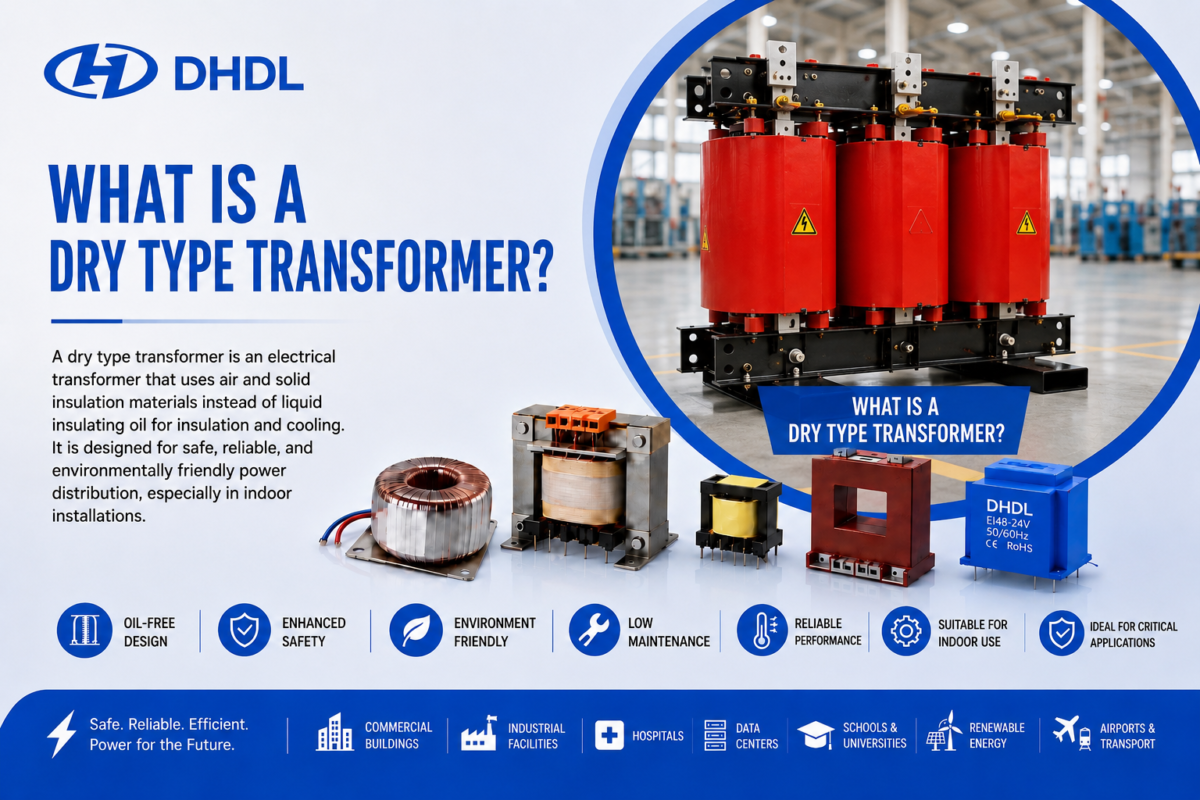
A dry-type transformer is an electrical transformer designed to transfer electrical energy between circuits without immersing its windings in liquid insulating oil.
Like other transformers, it operates according to the principle of electromagnetic induction. It contains a magnetic core and primary and secondary windings. When alternating current flows through the primary winding, it creates a changing magnetic field in the core. This magnetic field induces voltage in the secondary winding, allowing the transformer to step voltage up or down according to the required application.
The major difference is the insulation and cooling system. Instead of using transformer oil, dry-type transformers generally use air and solid insulation materials. Some designs use epoxy resin to encapsulate the windings, while others use resin or varnish impregnation systems.
Because there is no insulating oil, dry-type transformers are particularly suitable for locations where fire safety, environmental protection, and indoor installation are major considerations.
How Does a Dry-Type Transformer Work?
The working principle of a dry-type transformer is similar to that of other transformers.
The process can be simplified into four stages:
1. Electrical Energy Enters the Primary Winding
The incoming alternating voltage is connected to the primary winding. Current flowing through this winding produces a changing magnetic field.
2. The Magnetic Core Transfers the Magnetic Flux
The transformer core provides a low-reluctance path for the magnetic flux generated by the primary winding.
3. Voltage Is Induced in the Secondary Winding
The changing magnetic flux passes through the secondary winding and induces an electromotive force according to electromagnetic induction.
4. The Transformer Supplies the Required Voltage
Depending on the winding ratio, the transformer can step the voltage up or down to the required level.
During operation, heat generated by electrical losses must be removed. In dry-type transformers, cooling is achieved through air circulation and the transformer’s construction rather than an oil-filled cooling system.
Main Types of Dry-Type Transformers
There are several dry-type transformer designs, but two common categories are Cast Resin Transformers and Vacuum Pressure Impregnated (VPI) Transformers.
1. Cast Resin Dry-Type Transformer
In a cast resin transformer, the windings are encapsulated in epoxy resin. This provides strong mechanical support and helps protect the windings against moisture and certain environmental contaminants.
Cast resin transformers are particularly useful in indoor environments where reliability, moisture resistance, and fire safety are important.
2. Vacuum Pressure Impregnated Transformer
VPI transformers use a vacuum-pressure process to impregnate the windings with insulating resin or varnish. The process improves insulation integrity and provides protection suitable for various commercial and industrial environments.
Both cast resin and VPI transformers are widely used, although the best choice depends on the voltage rating, environmental conditions, load requirements, installation location, and applicable standards. (Schneider Electric)
Advantages of Dry-Type Transformers
Dry-type transformers offer several benefits that make them suitable for modern power distribution systems.
1. Improved Fire Safety
One of the biggest advantages is the absence of mineral oil. Because there is no oil-filled tank, the risks associated with oil leakage and flammable insulating liquids are reduced.
This makes dry-type transformers attractive for indoor installations and buildings where fire safety is a major concern. (Schneider Electric)
2. Low Maintenance Requirements
Dry-type transformers do not require routine oil testing, oil filtration, or oil replacement. Maintenance typically focuses on inspecting the transformer, keeping ventilation areas clean, checking connections, and monitoring operating conditions.
This can simplify maintenance planning and reduce some long-term maintenance requirements.
3. Environmentally Friendly Design
Because dry-type transformers do not contain insulating oil, they eliminate the possibility of transformer-oil leakage from the transformer itself. This can be particularly valuable in environmentally sensitive areas and indoor facilities.
4. Suitable for Indoor Installation
Dry-type transformers are commonly installed inside buildings because their oil-free construction reduces the concerns associated with oil-filled equipment. They are therefore used in facilities such as hospitals, commercial buildings, schools, and data centers. (Schneider Electric)
5. Flexible Installation
Dry-type transformers can be installed close to electrical loads. Locating transformers closer to the point of consumption can help reduce the length of low-voltage cabling and associated installation costs. (ABB Library)
6. Reliable Operation
Modern dry-type transformers use advanced insulation systems and robust construction to provide reliable performance when properly selected, installed, ventilated, and maintained.
Where Are Dry-Type Transformers Used?
Dry-type transformers are used in a wide variety of commercial, industrial, institutional, and infrastructure applications.
Commercial Buildings
Office complexes, shopping malls, hotels, and other commercial buildings often require indoor transformers for power distribution. A dry-type transformer can provide voltage transformation without introducing an oil-filled transformer into the building environment.
Hospitals
Hospitals require reliable electrical power for lighting, medical equipment, HVAC systems, elevators, and critical infrastructure. Dry-type transformers can be used where indoor installation and fire safety are important considerations.
Schools and Universities
Educational institutions use transformers to distribute electricity to classrooms, laboratories, administrative buildings, lighting systems, and other facilities.
Data Centers
Data centers require dependable electrical infrastructure to support servers, cooling equipment, UPS systems, networking equipment, and other critical loads. Dry-type transformers can be integrated into data-center power distribution systems where fire safety and reliable indoor operation are priorities.
Industrial Facilities
Factories and manufacturing plants use transformers to provide appropriate voltage levels for production equipment, motors, automation systems, lighting, and other industrial loads.
Airports and Transportation Facilities
Airports, railway stations, metro systems, and tunnels can use dry-type transformers because these environments may place strong emphasis on fire safety, reliability, and indoor installation.
Renewable Energy Projects
Dry-type transformers can also be used in renewable energy applications, including solar and wind power systems, depending on the system design and electrical requirements. Their oil-free construction can be advantageous where environmental considerations are important.
Mining and Other Specialized Facilities
Specially designed dry-type transformers can be used in demanding environments such as mining, marine, and industrial facilities. However, transformer selection must account for dust, humidity, temperature, vibration, ventilation, and other site conditions.
Dry-Type Transformer vs Oil-Immersed Transformer
The main difference between these two transformer technologies is the insulation and cooling medium.
A dry-type transformer uses air and solid insulation systems, while an oil-immersed transformer uses insulating liquid for insulation and heat transfer.
Dry-type transformers are generally attractive for indoor, fire-sensitive, and environmentally sensitive installations. Oil-immersed transformers, on the other hand, remain widely used for outdoor distribution, substations, and applications where high power capacity and efficient heat dissipation are priorities.
For example, Dinghong’s 6–38.5kV Oil-Immersed Distribution Transformer is designed for utility grids, industrial facilities, renewable energy projects, and outdoor substations. (Dinghongtransformer)
The correct choice should therefore be based on the project’s voltage, capacity, installation environment, fire-safety requirements, cooling conditions, budget, and applicable technical standards.
Factors to Consider When Choosing a Dry-Type Transformer
Before purchasing a dry-type transformer, several technical factors should be considered.
Voltage Rating
Determine the incoming high voltage and required low-voltage output. The transformer’s voltage rating must match the electrical system.
Rated Capacity
Transformer capacity is normally specified in kVA or MVA. The transformer should have enough capacity to handle the expected load without unnecessary oversizing.
Installation Environment
Consider whether the transformer will be installed indoors, in a dusty environment, in a humid location, or in an area with high ambient temperatures.
Cooling and Ventilation
Although dry-type transformers do not use oil, heat still needs to be removed effectively. Adequate ventilation is essential for reliable operation.
Insulation System
The insulation technology should be selected according to the required voltage level, environmental conditions, and performance requirements.
Efficiency and Losses
Pay attention to no-load losses and load losses. A transformer with optimized losses can contribute to lower energy consumption over its operating life.
Applicable Standards
The transformer should comply with the relevant technical and safety standards for the intended market and project.
Why Choose a Dry-Type Transformer?
A dry-type transformer can be an excellent choice when a project requires safe, reliable, low-maintenance, oil-free power transformation.
Its advantages are especially valuable in buildings and facilities where an oil-filled transformer may create additional fire-safety, environmental, or installation requirements. Manufacturers such as Dinghong identify dry-type transformers as suitable for buildings, factories, schools, stations, commercial centers, and indoor load centers. (Dinghongtransformer)
For projects that require different transformer technologies, you can also explore Dinghong’s transformer product range and compare suitable power-distribution solutions.
Conclusion
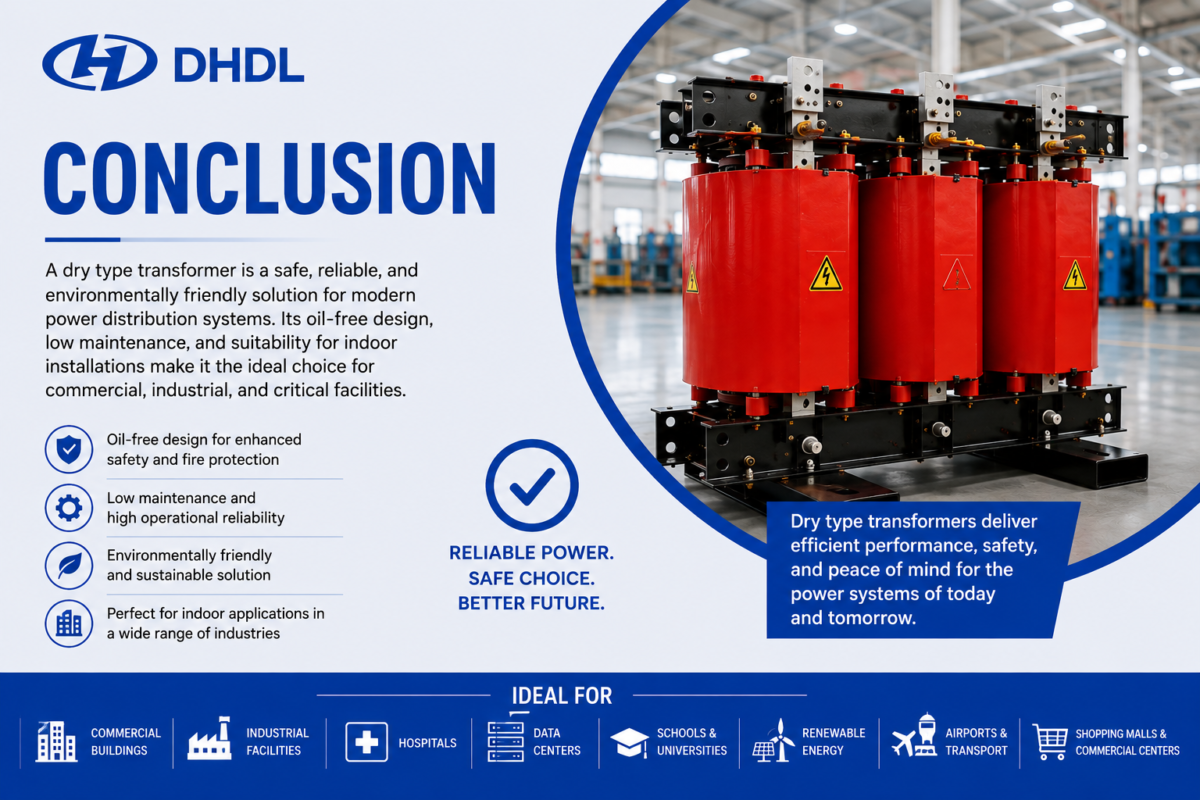
A dry-type transformer is an electrical transformer that transfers electrical energy without using insulating oil around its windings. Instead, it relies on air cooling and solid insulation systems such as epoxy resin or other insulating materials.
Its oil-free design provides several advantages, including reduced fire risk, simplified maintenance, environmental benefits, and suitability for indoor installations. These characteristics make dry-type transformers useful in commercial buildings, hospitals, schools, factories, data centers, airports, transportation facilities, renewable energy projects, and other applications.
However, choosing the right transformer requires more than simply selecting a dry-type model. Voltage, capacity, load profile, environmental conditions, ventilation, efficiency, insulation system, installation location, and applicable standards should all be evaluated before purchase.
When properly specified and installed, a dry-type transformer can provide dependable voltage transformation and long-term power distribution performance.
Choose DHDL for Your Transformer Solutions
DHDL is a professional transformer manufacturer specializing indry-type transformers, oil-immersed transformers, power transformers, distribution transformers, and complete power distribution solutions.
We support customized transformer designs based on project voltage, capacity, frequency, installation environment, and international standards.
Whether for industrial facilities, renewable energy projects, data centers, utilities, or infrastructure applications, DHDL delivers reliable, efficient, and customized power solutions worldwide.
Contact DHDL today for professional transformer selection support and a customized quotation.