
Transformer Oil Testing Checklist: What to Check Before Commissioning and During Operation

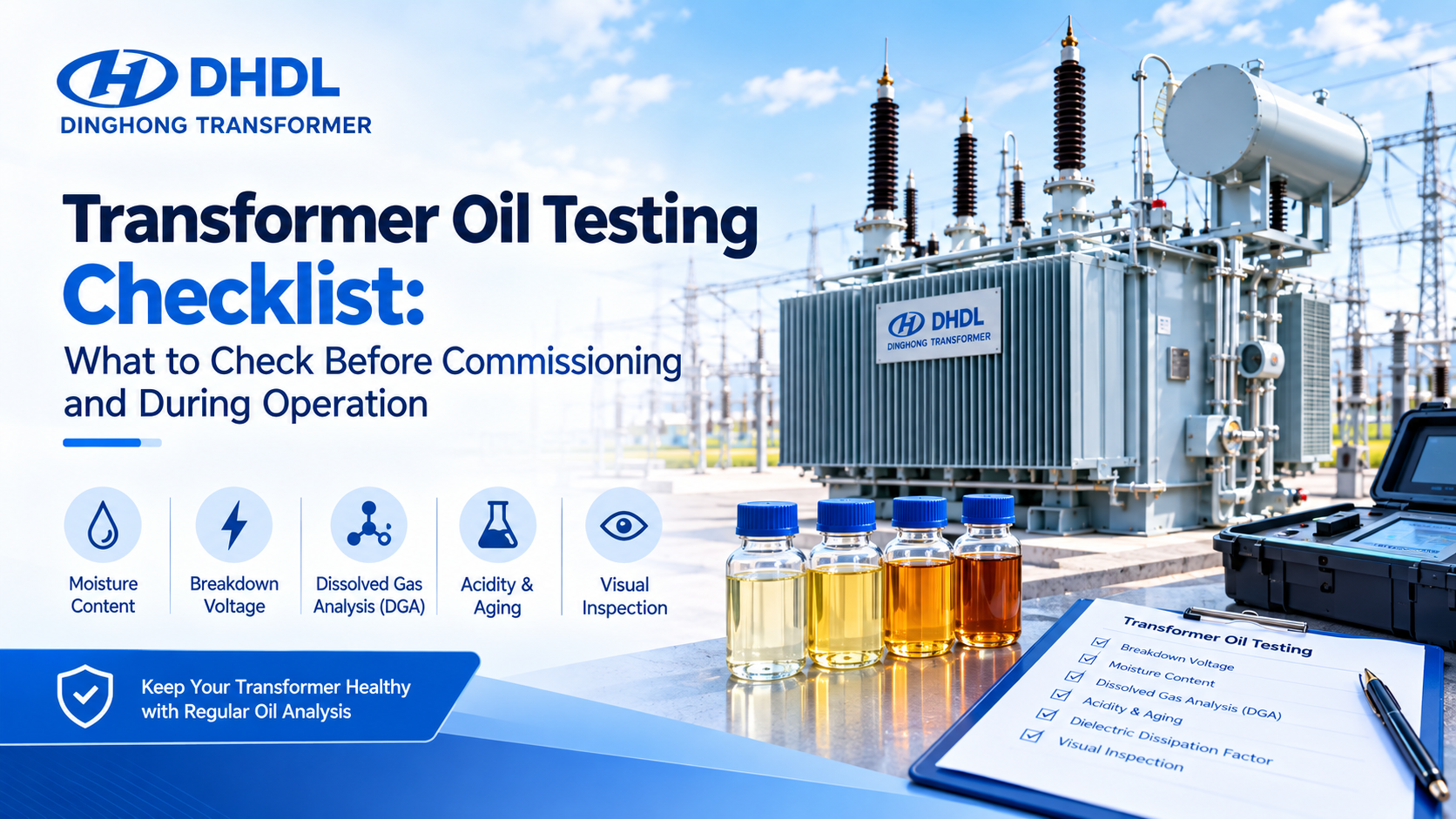
Transformer Oil is essential to the performance of an oil-immersed transformer.
It provides electrical insulation and helps transfer heat away from the transformer core and windings.
However, transformer oil can deteriorate because of moisture, contamination, oxidation, overheating, and electrical stress.
Regular transformer oil testing helps engineers monitor oil condition, establish a baseline, and identify potential problems before they develop into serious equipment failures.This guide explains what should be checked before commissioning and during transformer operation.
Why Is Transformer Oil Testing Important?
The condition of transformer oil can provide valuable information about the condition of the transformer’s insulation system and internal components.
Regular oil testing can help:
- Establish a baseline before commissioning
- Detect moisture and contamination
- Monitor oil aging and oxidation
- Identify possible thermal or electrical problems
- Track changes in transformer condition
- Support preventive maintenance
- Reduce the risk of unexpected downtime
For this reason, oil testing should be part of a broader transformer maintenance and condition-monitoring program.
Transformer Oil Testing Before Commissioning
Before a new oil-immersed transformer is energized, its oil condition should be checked according to the manufacturer’s recommendations, applicable standards, and project requirements.
Pre-Commissioning Transformer Oil Checklist
| Test or Check | What It Evaluates |
| Appearance | Contamination, particles, cloudiness, or abnormal color |
| Breakdown voltage | Dielectric strength of the insulating oil |
| Moisture content | Water contamination and insulation condition |
| Acidity | Oil aging and oxidation |
| Dissipation factor | Dielectric losses and oil condition |
| Interfacial tension | Oil degradation and contamination |
| DGA, where required | Gases associated with thermal or electrical activity |
| Oil level | Correct operating oil level |
| Leakage inspection | Tank, valves, seals, radiators, and oil-containing components |
The results should be recorded as a baseline.
Future test results can then be compared with the initial condition to identify changes over time.
What Should Be Checked During Transformer Operation?
Transformer oil should continue to be monitored after commissioning. The appropriate testing frequency depends on the transformer’s voltage, capacity, age, loading, operating environment, criticality, and maintenance program.
1. Breakdown Voltage
Breakdown voltage testing evaluates the ability of transformer oil to withstand electrical stress.A reduction may be associated with moisture, particles, or contamination.
A significant change from previous results should be investigated.
2. Moisture Content
Moisture can reduce the dielectric strength of transformer oil and affect the solid insulation inside the transformer.Water may enter through damaged seals, breathing-system problems, condensation, or poor storage and maintenance conditions.
3. Dissolved Gas Analysis (DGA)
DGA is an important diagnostic method for oil-filled transformers.
Thermal and electrical faults can generate gases that dissolve in transformer oil.
Analyzing the type and concentration of these gases can provide clues about possible abnormal conditions.DGA results should be interpreted alongside historical data and other transformer test results.
4. Acidity and Oil Aging
Transformer oil can become more acidic as it ages and oxidizes.
Monitoring acidity can help engineers evaluate oil deterioration and determine whether further investigation or maintenance is required.
5. Dielectric Dissipation Factor
The dielectric dissipation factor, commonly known as tan delta, provides information about dielectric losses and the condition of insulating oil.
Changes may indicate moisture, contamination, or deterioration and should be evaluated together with other test results.
6. Visual Inspection
A visual inspection is a simple first step.
Unusual color, cloudiness, sediment, or visible particles may indicate that further laboratory testing is necessary.Visual appearance alone, however, should not be used to diagnose transformer condition.
When Should Transformer Oil Be Tested?
There is no single testing interval suitable for every transformer.
A maintenance program should consider the equipment’s operating conditions and manufacturer’s recommendations.
| Situation | Recommended |
| Before commissioning | Establish baseline oil condition |
| After abnormal loading | Consider additional testing |
| After an electrical fault | Test oil and investigate transformer condition |
| After overheating | Consider additional diagnostic testing |
| After maintenance | Confirm oil condition before energization |
| Sudden change in results | Investigate promptly |
| Routine operation | Perform periodic oil analysis |
For critical transformers, more frequent monitoring may be appropriate.
Why Trend Analysis Matters
A transformer may have acceptable oil-test results today but show deterioration later.Recording test results over time allows engineers to identify trends in moisture, acidity, dissolved gases, and dielectric properties.
For every test, record the transformer identification, test date, operating condition, sample information, results, previous results, and any recommended follow-up actions.
This creates a useful history of transformer condition and supports more informed maintenance decisions.
Transformer Oil Testing and Preventive Maintenance
Oil analysis should not be considered a replacement for complete transformer maintenance.
Engineers should also monitor:
- Oil and winding temperature
- Oil level
- Bushings
- Breathers
- Conservator system
- Cooling equipment
- Tank and gasket condition
- Protection devices
- Transformer loading
Combining oil analysis with electrical testing and physical inspections provides a more complete view of transformer health.
FAQ
How often should transformer oil be tested?
The appropriate frequency depends on the transformer’s design, age, voltage, loading, environment, and criticality.
Baseline testing should be performed before commissioning, followed by periodic testing according to the maintenance program.
What is the most important transformer oil test?
There is no single test that provides a complete diagnosis.
Breakdown voltage, moisture, DGA, acidity, and dielectric dissipation factor each provide different information and should be evaluated together.
What can transformer oil testing detect?
Depending on the test, oil analysis can identify moisture, contamination, aging, oxidation, and gases associated with possible thermal or electrical problems.
Should transformer oil be tested before commissioning?
Yes. Establishing baseline oil condition before energization provides a reference for future monitoring. Testing requirements should follow the applicable standards, project specifications, and manufacturer’s recommendations.
Can transformer oil testing prevent transformer failure?
Testing cannot guarantee that a transformer will never fail. However, regular oil condition monitoring can help identify developing problems earlier and support preventive maintenance.
Need an oil immersed transformer for Your Project?
Choosing the right transformer starts with the correct technical specifications, insulation system, cooling arrangement, oil system, and operating requirements.
DinghongTransformer provides customized oil-immersed transformers, power transformers, distribution transformers, and high-voltage transformer solutions for different power applications.Tell our engineering team your required voltage, capacity, application, quantity, cooling requirements, applicable standard, and project location.
Contact DinghongTransformer today for expert transformer selection and a project-specific quotation.