
Transformer Noise: Causes, Standards, and Reduction Methods

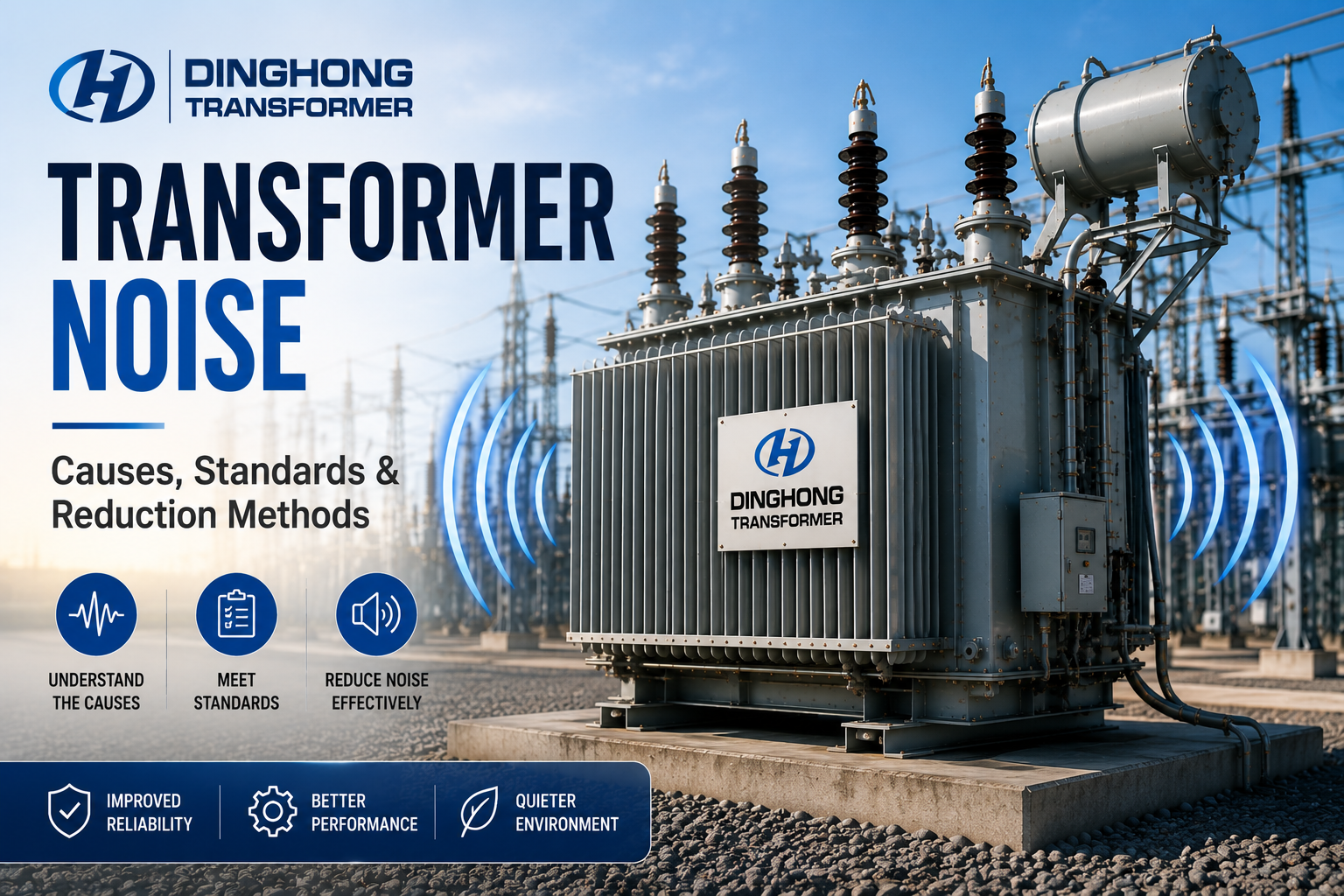
Transformers are essential for electrical power distribution, but they can produce a noticeable humming or buzzing sound during operation.
For industrial facilities and utility substations, transformer noise may be more than a minor inconvenience.
Excessive sound can affect workers, nearby communities, commercial buildings, and residential areas.
Understanding transformer noise, its causes, applicable standards, and noise reduction methods can help engineers and project managers select the right equipment and prevent noise-related problems after installation.
This guide explains why transformers make noise, what factors influence transformer sound levels, and how manufacturers can reduce operating noise.
Why Do Transformers Make Noise?
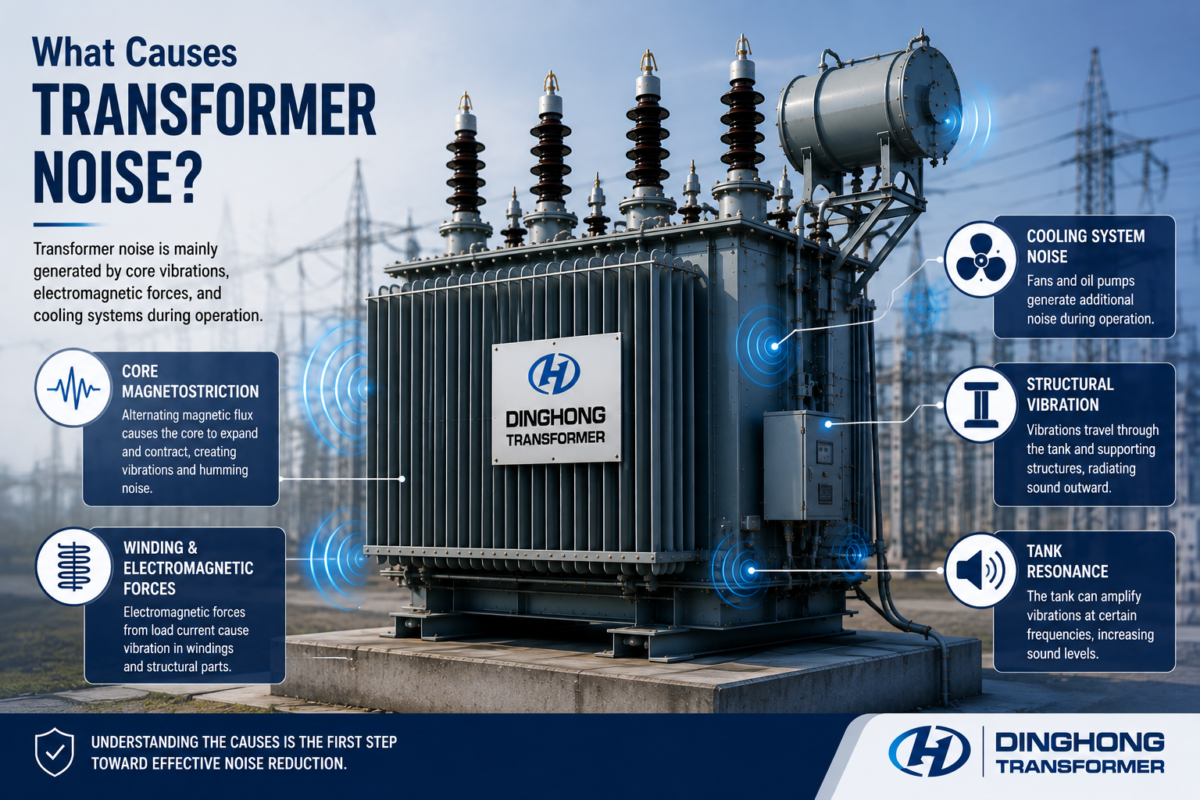
The characteristic humming sound produced by a transformer primarily comes from the magnetic core.
When alternating current passes through the transformer windings, the magnetic flux in the core continuously changes direction.
This causes microscopic changes in the dimensions of the magnetic core material, a phenomenon known as magnetostriction.
These small dimensional changes create mechanical vibrations.
The vibrations can travel through the transformer structure and radiate into the surrounding air as audible sound.
Transformer noise can also come from other sources, particularly when cooling equipment and electrical loads are involved.
Common sources include:
- Core magnetostriction
- Winding and electromagnetic forces
- Cooling fans
- Oil pumps
- Structural vibration
- Transformer tank resonance
- Loose components or mounting structures
Main Types of Transformer Noise
Core Noise
Core noise is usually the primary source of the continuous humming associated with transformers.It is strongly influenced by the magnetic flux density, core material, manufacturing quality, and operating voltage.
Poorly designed or assembled cores can produce greater vibration and higher sound levels.
Load Noise
When a transformer supplies a load, electromagnetic forces act on the windings and other structural components.
These forces can create additional vibration.Load-related noise can become more noticeable as transformer loading increases.
Cooling System Noise
Transformers equipped with fans and pumps can generate additional sound.
For example, ONAF (Oil Natural Air Forced) transformers use fans to improve heat dissipation.
While effective cooling is important, the fans themselves can become a significant source of audible noise.
How Is Transformer Noise Measured?
Transformer sound is commonly measured as sound pressure level in decibels (dB) under specified test conditions.
The measurement location, transformer operating condition, background noise, and test environment can all influence the measured result.
For this reason, comparing transformer noise figures requires checking that the measurements were obtained under comparable conditions.
For project specifications, buyers should clearly state their required noise limits and applicable testing requirements before manufacturing begins.
Transformer Noise Standards
International standards provide methods for determining transformer sound levels.
One of the key standards is IEC 60076-10, which specifies methods for determining the sound levels of power transformers, reactors, and related equipment.In North American projects, applicable IEEE transformer standards, including relevant requirements within the IEEE C57 series, may also be specified depending on the transformer type and project requirements.
Local environmental regulations may additionally establish limits for industrial or utility noise, particularly when transformers are installed close to residential or commercial properties.
For this reason, transformer buyers should consider both the applicable transformer testing standard and the noise requirements imposed by the installation location.
What Factors Affect Transformer Noise?
Several factors determine how loud a transformer will be.
Transformer Capacity
Larger transformers can generate greater mechanical and electromagnetic forces, although transformer size alone does not determine the final sound level.
Core Design
Core material, joint construction, flux density, and manufacturing precision all influence core vibration.
Operating Voltage
Higher magnetic flux levels can increase magnetostriction and therefore contribute to greater core noise.
Loading
Load current creates electromagnetic forces within the windings. Higher loading can increase load-related noise.
Cooling Equipment
Fans and pumps can significantly increase the overall sound level of forced-cooled transformers.
Installation Environment
A transformer installed inside a building, close to walls, or on a rigid structure may appear louder because sound and vibration can reflect through surrounding surfaces.
How Can Transformer Noise Be Reduced?
Noise reduction should ideally begin during transformer design rather than after installation.
1. Optimize Core Design
Manufacturers can reduce core vibration by using high-quality electrical steel, optimized core construction, appropriate flux density, and precise manufacturing techniques.
2. Improve Core Clamping
Proper mechanical clamping helps prevent excessive movement of core components and reduces structural vibration.
3. Reduce Structural Resonance
Transformer tanks, frames, and other components can be designed to minimize vibration and prevent resonance.
4. Select Low-Noise Cooling Equipment
For forced-air transformers, selecting properly designed low-noise fans can reduce the contribution of the cooling system to overall sound levels.
5. Use Vibration Isolation
Installing appropriate vibration isolation between the transformer and its foundation can reduce the transmission of mechanical vibration into buildings and surrounding structures.
6. Install Acoustic Barriers
Where additional noise reduction is necessary, acoustic enclosures or sound barriers can be installed around the transformer while maintaining adequate ventilation and safe operating clearances.
Where Is Low-Noise Transformer Design Important?
Low-noise transformers are particularly valuable in areas where electrical equipment is located close to people or noise-sensitive facilities.
Applications include:
- Urban substations
- Commercial buildings
- Hospitals
- Data centers
- Residential developments
- Industrial facilities
- Renewable energy installations
- Underground or indoor substations
For these projects, noise requirements should be considered during the initial transformer specification rather than after installation.
Choosing a Low-Noise Transformer Manufacturer
Reducing transformer noise requires a combination of appropriate design, quality materials, manufacturing precision, and testing.
Dinghong Transformer manufactures power transformers, distribution transformers, oil immersed transformer , dry-type transformers, and customized transformer solutions for commercial, industrial, utility, and renewable energy applications.
For projects with specific acoustic requirements, transformer specifications can be developed around the operating environment, transformer capacity, cooling method, installation conditions, and applicable standards.
Working with an experienced transformer manufacturer can help project owners address noise requirements early and select a transformer that balances electrical performance, efficiency, reliability, cooling, and acoustic performance.
Conclusion
Transformer noise is a normal part of electrical transformer operation, but excessive noise should not be ignored.
Core magnetostriction is typically the main source of continuous transformer humming, while load-related forces, cooling fans, pumps, and structural vibration can contribute additional sound.Standards such as IEC 60076-10 provide established methods for measuring transformer sound levels, while project specifications and local regulations may impose additional requirements.
By addressing noise during the design and procurement stages, buyers can reduce the risk of acoustic problems after installation.
Optimized core construction, effective mechanical design, low-noise cooling equipment, vibration isolation, and acoustic barriers can all contribute to quieter transformer operation.
For projects where transformer noise is an important consideration, DinghongTransformer can provide customized transformer solutions designed around the project’s electrical, environmental, and operational requirements.