
How OEM & ODM Transformer Manufacturing Works: A Complete Guide

When companies need transformers for specialized electrical projects, standard off-the-shelf equipment may not always meet their exact requirements. Differences in voltage ratings, capacity, cooling systems, installation environments, dimensions, protection requirements, and applicable standards can make customization necessary.This is where OEM and ODM transformer manufacturing becomes valuable.
This is where OEM and ODM transformer manufacturing becomes valuable.
OEM and ODM manufacturing allow businesses, utilities, EPC contractors, equipment distributors, and project developers to work with experienced transformer manufacturers to develop products that meet specific technical and commercial requirements.In this guide, we’ll explain how OEM and ODM transformer manufacturing works, the difference between the two models, the typical production process, and what buyers should consider when choosing a transformer manufacturing partner.
What Is OEM Transformer Manufacturing?
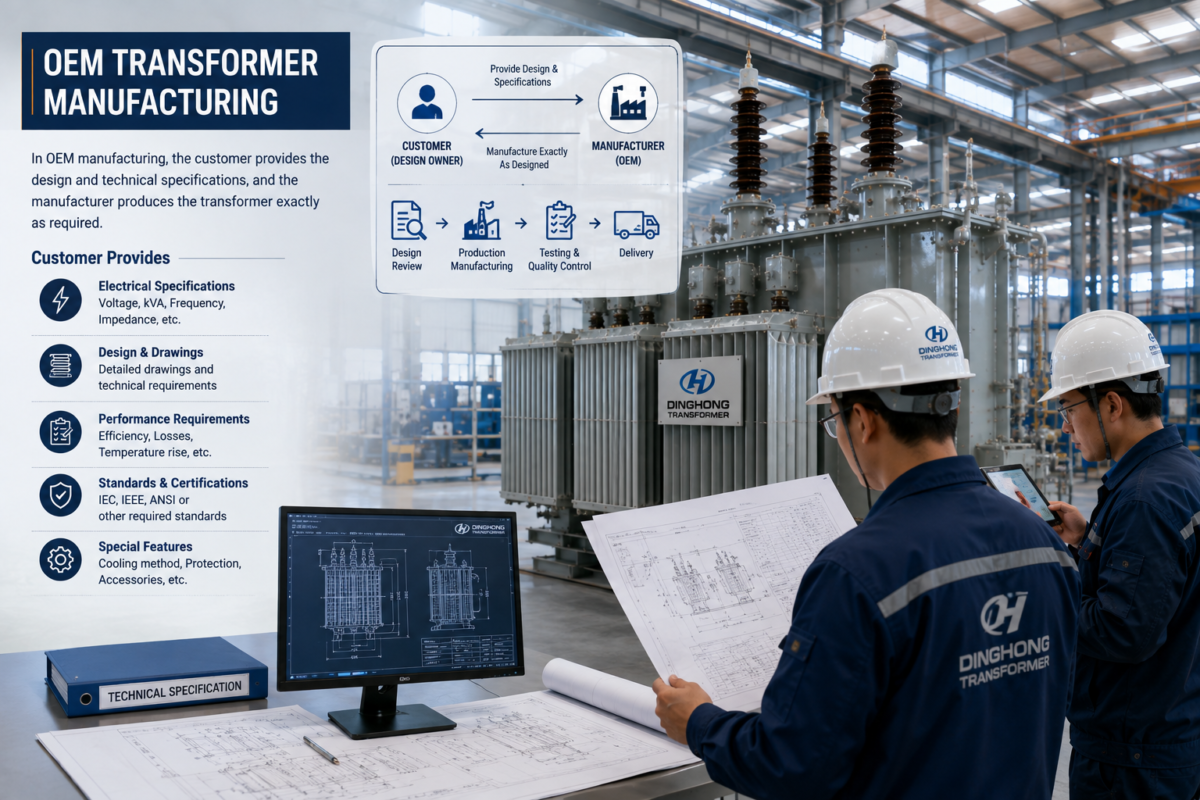
OEM stands for Original Equipment Manufacturer.
In an OEM arrangement, the buyer typically provides the product specifications, technical requirements, drawings, or design parameters, while the transformer manufacturer uses its manufacturing capabilities to produce the equipment according to those requirements.
For example, an EPC contractor may require a distribution transformer with a specific:
- Voltage ratio
- kVA/MVA rating
- Frequency
- Impedance
- Winding configuration
- Cooling method
- Enclosure
- Protection system
- Installation arrangement
The manufacturer then produces the transformer according to the agreed specifications.
OEM manufacturing is particularly useful for companies that already have established product designs or detailed engineering requirements but need an experienced manufacturer to handle production.
What Is ODM Transformer Manufacturing?
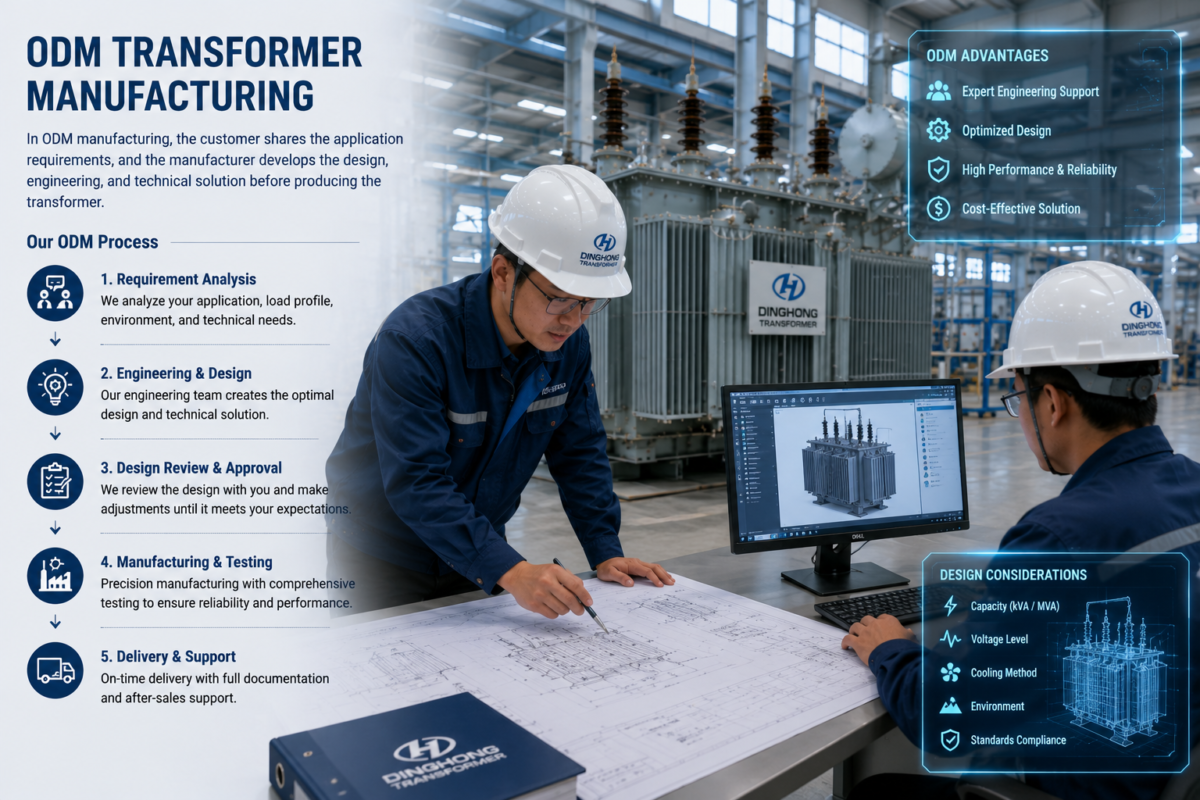
ODM stands for Original Design Manufacturer.Unlike OEM manufacturing, an ODM manufacturer can take a buyer’s application requirements and develop the transformer design itself.
For example, a customer may know that they need a transformer for a solar farm or industrial facility but may not have a complete transformer design.
The manufacturer can help determine:
- Appropriate transformer capacity
- Primary and secondary voltage
- Winding configuration
- Insulation requirements
- Cooling method
- Core and winding design
- Protection requirements
- Applicable standards
The manufacturer then develops and produces the customized transformer.
OEM vs. ODM Transformer Manufacturing
| Feature | OEM | ODM |
| Product Design | Usually Provided by buyer | Developed by manufacturer |
| Engineering support | Based on customer specification | Manufacturer led |
| Customization | High | High |
| Ideal for | Establised Designs | Customers needing technical development |
| Manufacturing Responsibility | Manufacturer | Manufacturer |
| Technical Consultation | Available | Usually more extensive |
Both approaches can provide customized transformer solutions, but the right model depends on the buyer’s technical expertise and project requirements.
How Does OEM & ODM Transformer Manufacturing Work?
Although the exact process varies between manufacturers, a typical customized transformer project follows several important stages.
1. Project Requirements and Consultation
The process begins when the buyer provides project information.
This may include:
- Transformer type
- Required capacity
- Input and output voltage
- Frequency
- Installation location
- Ambient temperature
- Altitude
- Cooling requirements
- Applicable standards
- Quantity required
- Delivery requirements
For complex projects, customers may also provide electrical drawings, specifications, or tender documents.
The manufacturer reviews these requirements to determine the appropriate technical approach.
2. Engineering and Design
For ODM projects, the manufacturer’s engineering team develops the transformer design based on the customer’s requirements.
For OEM projects, engineers review the buyer’s design and ensure it can be manufactured efficiently while meeting the required specifications.
Important design considerations include the magnetic core, windings, insulation system, cooling arrangement, enclosure, terminals, and protection components.
The goal is to produce a transformer that meets the required electrical performance while maintaining reliability and efficiency.
3. Design Confirmation
Before manufacturing begins, the technical specifications are reviewed and confirmed by both parties.
This stage is important because transformer specifications can affect:
- Performance
- Dimensions
- Weight
- CostI
- nstallation requirements
- Delivery schedule
For customized projects, buyers should carefully review technical drawings and specifications before approving production.
4. Material Procurement
Once the design is approved, the manufacturer sources the required materials and components.
Depending on the transformer design, these may include:
- Electrical steel
- Copper or aluminum conductors
- Insulation materials
- Transformer oil
- Bushings
- Radiators
- Enclosures
- Tap changers
- Protection components
Material quality has a direct impact on transformer performance and service life, making supplier selection and incoming material inspection important parts of the manufacturing process.
5. Transformer Manufacturing
The manufacturing stage involves multiple precision processes.
For an oil-immersed transformer, production may include core assembly, winding, insulation installation, tank fabrication, assembly, vacuum treatment, oil filling, and final finishing.
For dry-type transformers, manufacturing focuses heavily on winding insulation, casting or resin systems where applicable, assembly, and cooling arrangements.
Throughout production, quality control inspections help ensure the transformer remains within the approved technical specifications.
6. Factory Testing
Testing is one of the most important stages of transformer manufacturing.
Depending on the product and applicable standards, manufacturers may perform tests such as:
- Transformer turns ratio testing
- Winding resistance testing
- Insulation testing
- No-load loss testing
- Load loss testing
- Impedance testing
- Dielectric tests
- Temperature-related tests where applicable
Factory Acceptance Testing (FAT) may also be conducted for larger or project-specific transformers.
Testing helps identify potential manufacturing problems before the equipment reaches the customer’s site.
Why Choose OEM & ODM Transformer Manufacturing?
Customized manufacturing offers several advantages compared with purchasing a standard transformer.
Application-Specific Design
The transformer can be designed around the project’s actual electrical and environmental requirements.
Better Integration
Customized dimensions, terminals, voltage configurations, and accessories can make integration into an existing electrical system easier.
Branding Opportunities
For certain OEM arrangements, businesses can develop products that align with their own product portfolio and market requirements.
Engineering Support
ODM customers can benefit from the manufacturer’s engineering expertise when they don’t have a complete transformer design.
Scalability
OEM and ODM manufacturing can support projects ranging from individual customized transformers to larger production requirements.
Choosing an OEM & ODM Transformer Manufacturer
Not every transformer manufacturer offers the same level of customization or engineering support.
Before selecting a supplier, evaluate:
- Manufacturing capabilities
- Engineering expertise
- Quality management systems
- Testing facilities
- Production capacity
- Experience with international projects
- Customization capabilities
- Communication and technical support
- Delivery capability
- After-sales service
A manufacturer should be able to clearly explain how it will translate your project requirements into a safe, reliable, and manufacturable transformer.
OEM & ODM Transformer Manufacturing at Dinghong Transformer
Dinghong Transformer provides customized transformer manufacturing solutions for customers with different electrical, industrial, utility, and renewable energy requirements.
Our manufacturing capabilities cover products such as oil-immersed transformers, dry-type transformers, power transformers, distribution transformers, and related power distribution equipment.
For OEM projects, Dinghong Transformer can manufacture equipment according to customer specifications and technical requirements.
For ODM projects, our engineering team can help customers develop suitable transformer solutions based on application conditions, electrical requirements, installation environments, and applicable standards.
From initial technical consultation and design through material selection, manufacturing, testing, and delivery, the goal is to provide customers with reliable transformer solutions tailored to their projects.
Conclusion
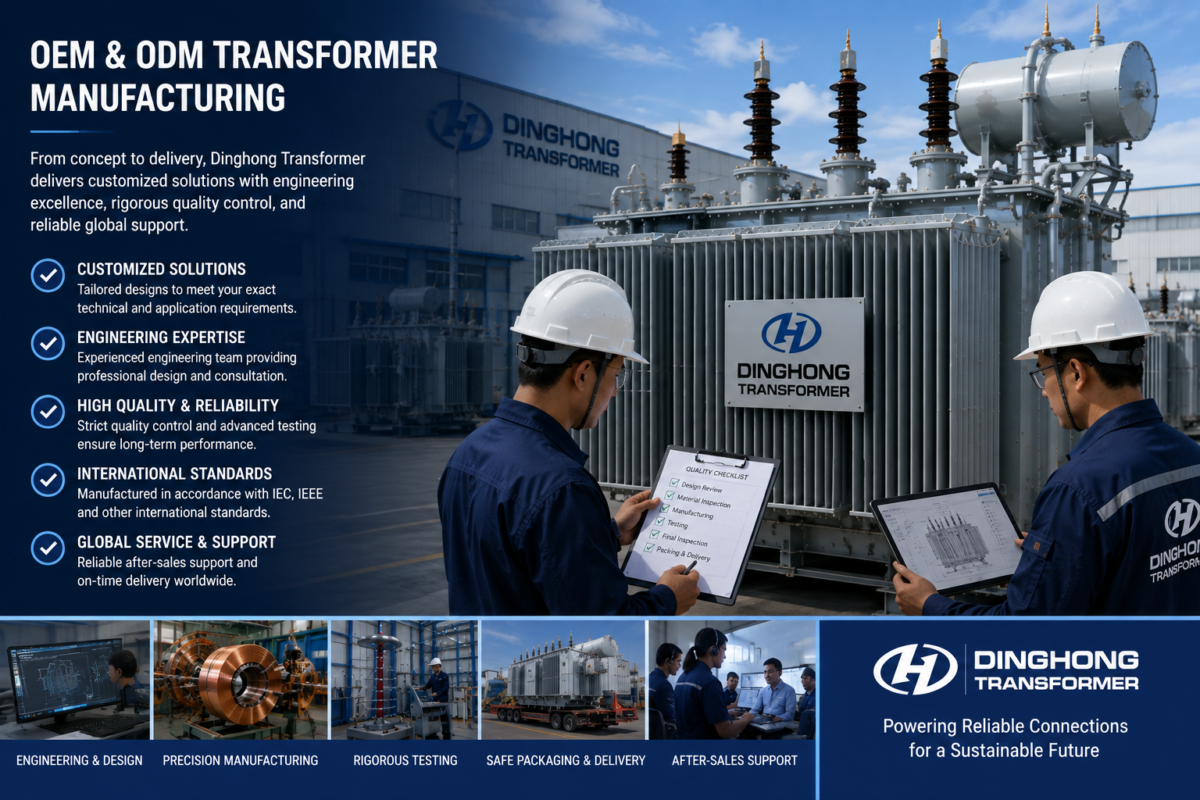
OEM and ODM transformer manufacturing provide businesses with flexible alternatives to standard transformer purchasing. OEM manufacturing is particularly suitable when a customer already has a defined design or technical specification, while ODM manufacturing provides greater engineering support for customers who need assistance developing the product.
A successful customized transformer project depends on more than manufacturing capacity.
Engineering expertise, quality materials, rigorous testing, clear communication, and reliable after-sales support are equally important.
By working with an experienced manufacturer such as Dinghong Transformer, businesses can develop customized transformer solutions designed around their specific electrical requirements, operating environment, and long-term project objectives.