
Common Mistakes When Purchasing a Distribution Transformer | Dinghong Transformer

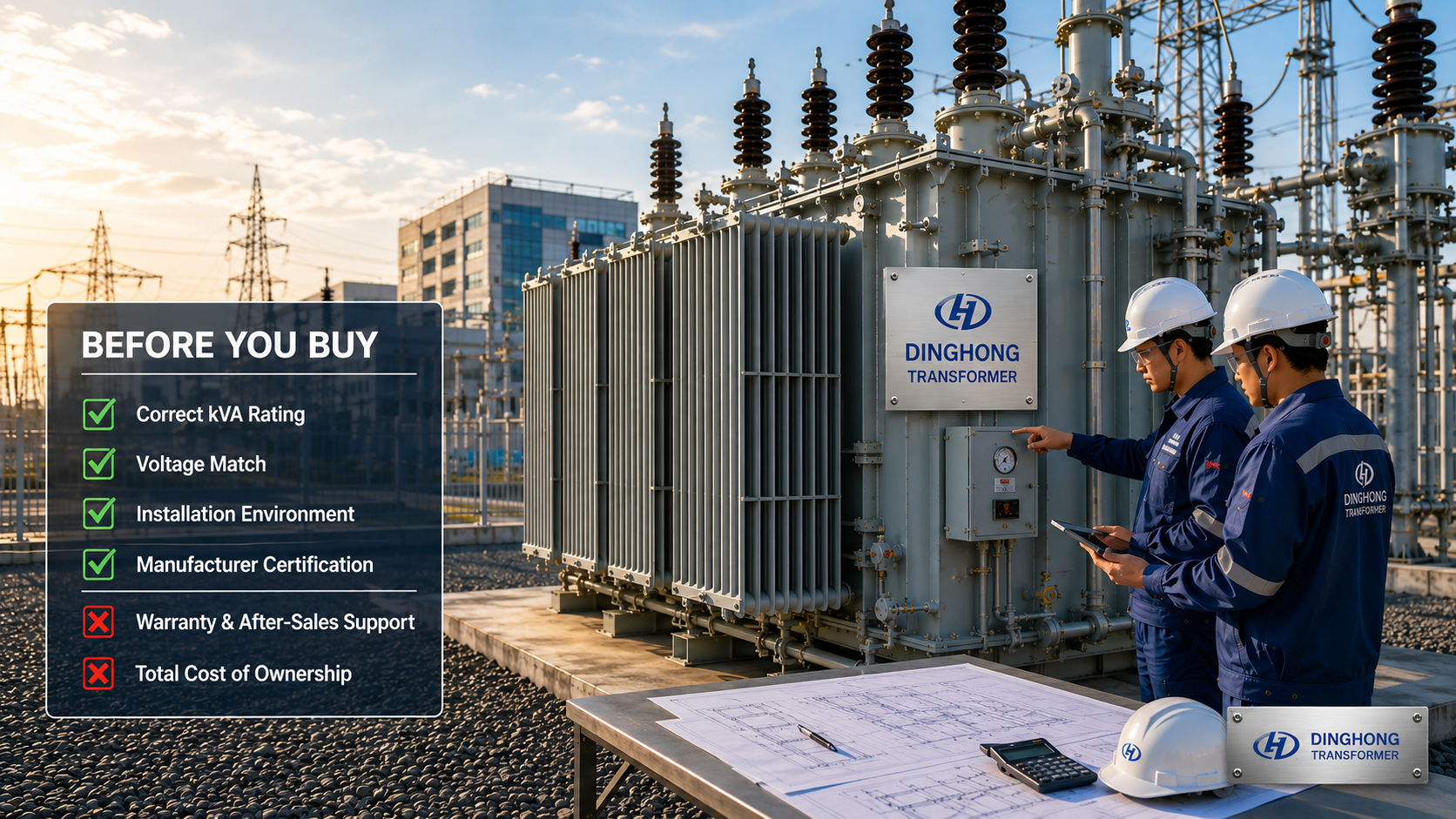
Avoid costly mistakes when purchasing a distribution transformer. Learn what to consider before buying and how Dinghong Transformer helps you choose the right solution.
Common Mistakes When Purchasing a Distribution Transformer
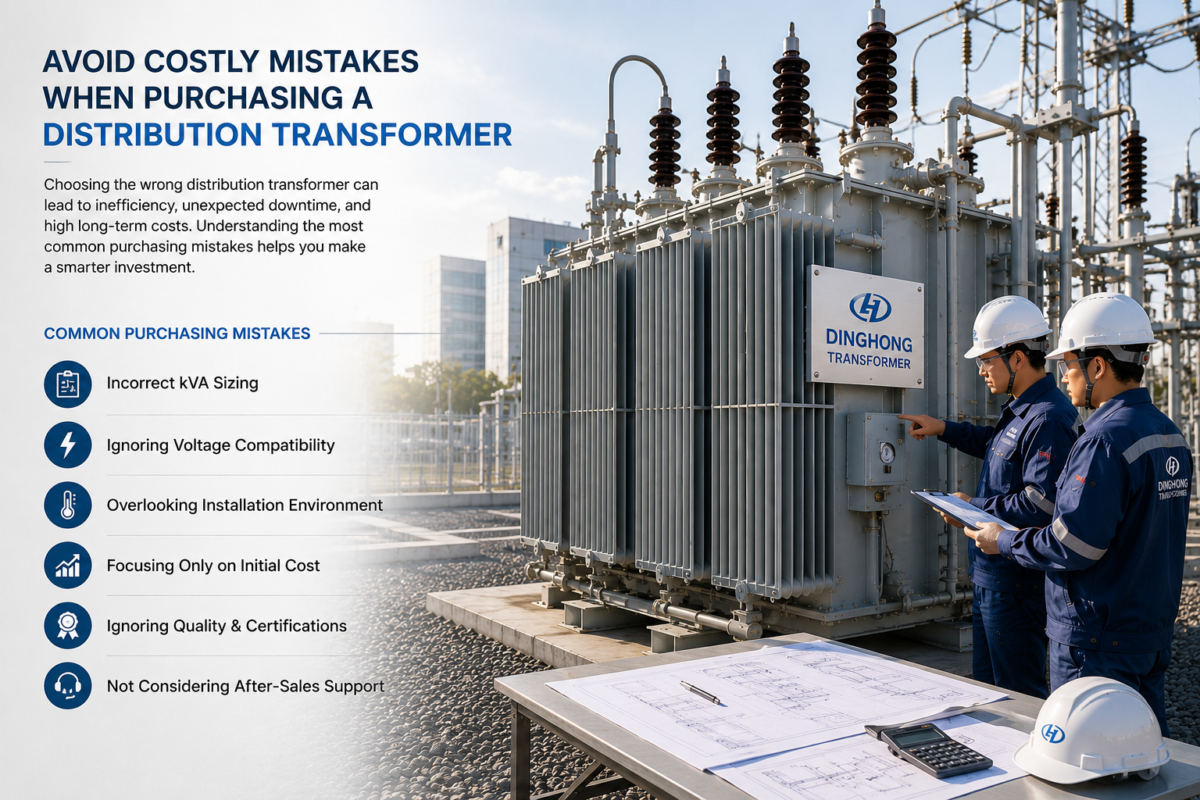
Purchasing a distribution transformer is a significant investment for commercial, industrial, and utility projects.
The right transformer ensures reliable power distribution, energy efficiency, and long-term operational stability.
However, many buyers focus solely on price and overlook critical technical factors, leading to higher maintenance costs, reduced performance, and premature equipment failure.
Whether you’re a project engineer, procurement manager, or facility owner, understanding the most common purchasing mistakes can help you make a more informed decision. In this guide, we’ll explore these pitfalls and explain how to choose a distribution transformer that delivers reliable performance for years to come.
1. Choosing a Transformer Based Only on Price
One of the biggest mistakes buyers make is selecting the cheapest transformer available. While a lower purchase price may seem attractive, it can result in higher operating costs over the transformer’s lifespan.
A low-quality transformer may have:
- Higher energy losses
- Poor insulation systems
- Reduced efficiency
- Shorter service life
- Increased maintenance requirements
Instead of focusing solely on upfront cost, evaluate the transformer’s total cost of ownership, including energy efficiency, maintenance, and expected lifespan.
2. Selecting the Wrong Transformer Capacity
An incorrectly sized transformer can cause serious operational problems.
An undersized transformer may:
- Overheat during peak demand
- Experience voltage drops
- Reduce equipment performance
- Have a shorter operating life
An oversized transformer, on the other hand, increases initial investment costs and may operate less efficiently under light loads.
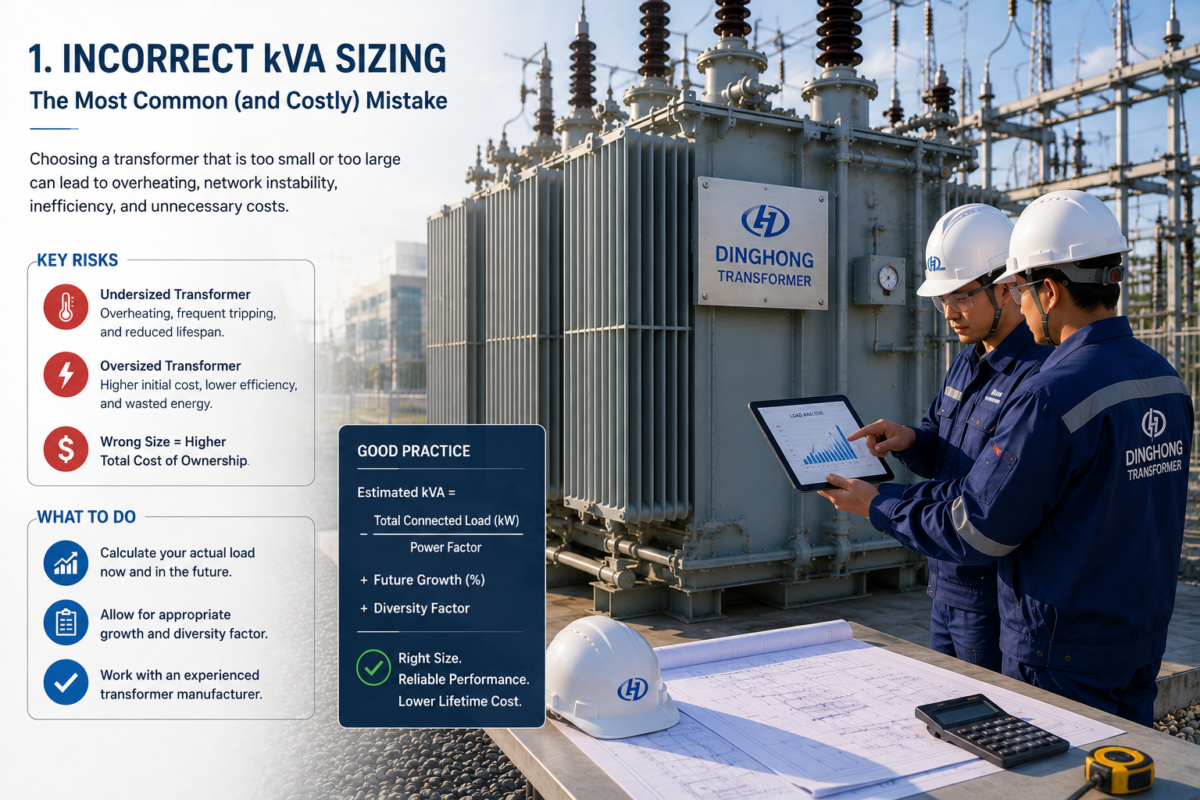
Proper load calculations and future expansion plans should always be considered before selecting the transformer’s kVA rating.
3. Ignoring Future Load Growth
Many businesses expand their operations over time by adding production lines, machinery, or new facilities.
Purchasing a transformer that only meets today’s electrical demand may require an expensive replacement sooner than expected.
When planning a new installation, consider:
- Future equipment additions
- Facility expansion
- Increased production capacity
- EV charging infrastructure
- Renewable energy integration
Allowing extra capacity helps ensure your transformer remains suitable as your business grows.
4. Overlooking Environmental Conditions
Every installation environment presents unique challenges.
Factors such as:
- High ambient temperatures
- High humidity
- Coastal environments
- Dust and pollution
- High-altitude installations
can significantly affect transformer performance.
Selecting a transformer designed specifically for its operating environment improves reliability and reduces maintenance costs.
5. Ignoring Energy Efficiency
Energy losses occur every hour a transformer is operating.
Although highly efficient transformers may cost slightly more initially, they often deliver significant savings over their service life.
Look for transformers designed with:
- Low no-load losses
- Reduced load losses
- High-quality core materials
- Optimized winding designs
Higher efficiency not only reduces electricity costs but also supports sustainability goals.
6. Failing to Verify Compliance with International Standards
A reliable transformer should comply with recognized international standards to ensure quality, safety, and performance.
Before purchasing, verify that the manufacturer follows standards such as:
- IEC standards
- IEEE standards (where applicable)
- ISO quality management systems
Compliance provides confidence that the transformer has been designed and tested according to industry best practices.
7. Choosing the Wrong Cooling Method
Different applications require different cooling methods.
For example:
- Oil-immersed transformers are ideal for outdoor and high-capacity installations.
- Dry-type transformers are commonly used indoors where fire safety and reduced maintenance are priorities.
Selecting the wrong cooling system can affect performance, operating costs, and maintenance requirements.
8. Not Reviewing Factory Testing
Factory testing is essential for confirming that a transformer performs as specified before shipment.
Ask whether the transformer undergoes tests such as:
- Insulation resistance testing
- Ratio testing
- Load loss testing
- No-load loss testing
- Temperature rise testing
- Routine quality inspections
A manufacturer with comprehensive testing procedures provides greater confidence in product reliability.
9. Overlooking After-Sales Support
A transformer is a long-term asset.
Technical support should continue long after installation.Choose a manufacturer that offers:
- Engineering consultation
- Technical documentation
- Installation guidance
- Maintenance recommendations
- Responsive customer support
Reliable after-sales service minimizes downtime and helps maximize the transformer’s service life.
Partner with Dinghong Transformer
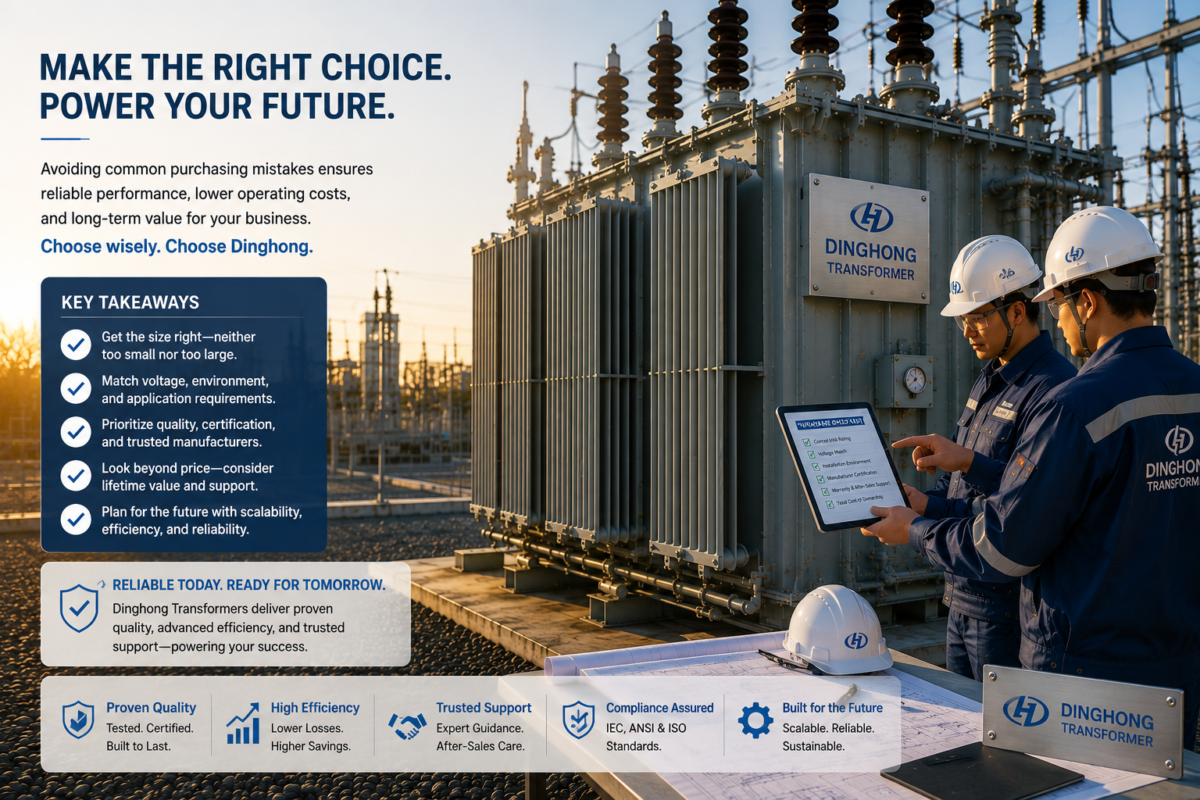
Choosing the right distribution transformer requires more than comparing specifications and prices. It requires a manufacturing partner with the experience, engineering expertise, and quality standards to deliver dependable power solutions.
At Dinghong Transformer, we manufacture high-quality distribution transformers, power transformers, oil-immersed transformers, dry-type transformers, compact substations, and switchgear for commercial, industrial, utility, and renewable energy applications. Every transformer is designed using premium materials and undergoes rigorous quality testing to ensure reliable performance, high efficiency, and compliance with international standards.
Our engineering team works closely with customers to recommend transformer solutions based on electrical load, installation environment, voltage requirements, and future expansion plans. Whether you require a standard product or a customized solution, Dinghong Transformer is committed to providing dependable products that deliver long-term value and operational reliability.
Conclusion
Purchasing a distribution transformer is a decision that affects the reliability and efficiency of your entire electrical system.
By avoiding common mistakes—such as focusing only on price, selecting the wrong capacity, overlooking environmental conditions, or ignoring quality standards—you can protect your investment and reduce long-term operating costs.
Working with a trusted manufacturer ensures that your transformer is designed to meet your project’s unique requirements while providing dependable performance for years to come.
Dinghong Transformer combines engineering expertise, strict quality control, and customer-focused support to help businesses around the world build safer, more efficient, and more reliable power distribution systems.