How to Select the Right Transformer for a Solar Farm | Dinghong Transformer

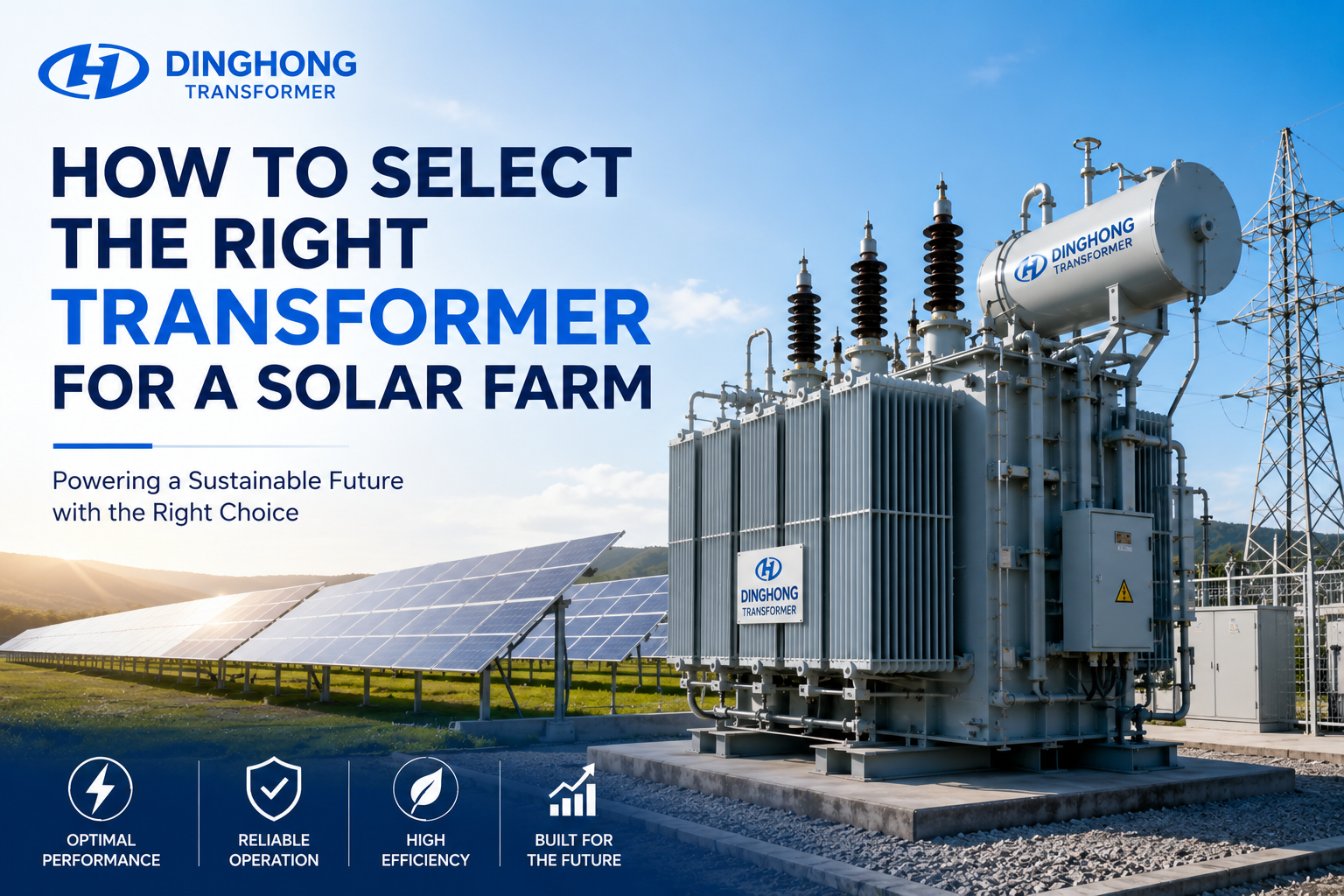
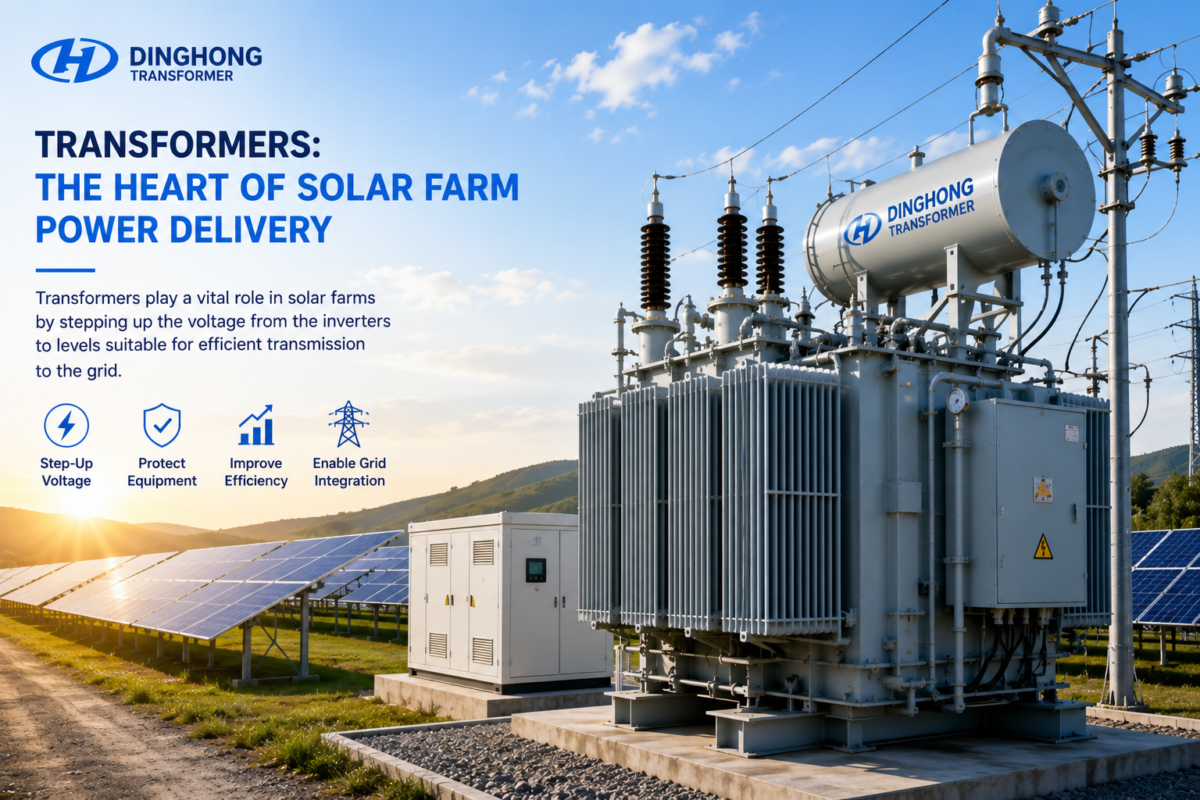
Learn how to choose the right transformer for a solar farm. Discover key selection factors, transformer types, voltage requirements, efficiency, and why Dinghong Transformer is a trusted partner for renewable energy projects.
How to Select the Right Transformer for a Solar Farm
The rapid growth of renewable energy has made solar farms one of the fastest-expanding sources of electricity generation worldwide.
Governments, utilities, and private investors continue to develop utility-scale photovoltaic (PV) projects to meet rising electricity demand while reducing carbon emissions. However, every successful solar farm depends on more than just solar panels.
Behind the scenes, transformers play a vital role in converting generated power into usable electricity that can be safely transmitted across the grid.Selecting the right transformer is one of the most important decisions during solar farm design.
An incorrectly sized or poorly specified transformer can reduce system efficiency, increase maintenance costs, create reliability issues, and limit future expansion.
This guide explains the key factors to consider when selecting a transformer for a solar farm and how working with an experienced manufacturer such as Dinghong Transformer can improve the long-term performance and reliability of renewable energy projects.
Why Transformers Are Essential in Solar Farms
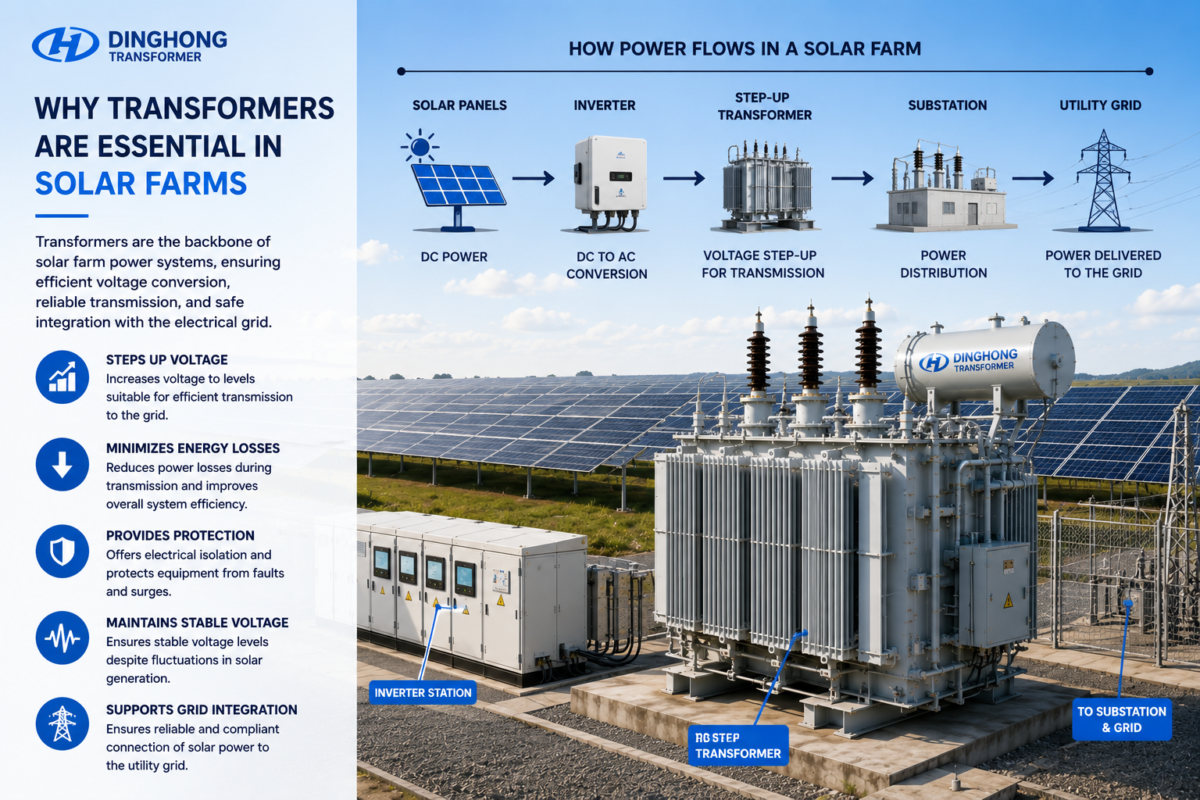
Solar panels generate direct current (DC) electricity, but utility grids operate using alternating current (AC). After the DC electricity is converted into AC by inverters, transformers increase the voltage to levels suitable for efficient transmission.
A transformer in a solar farm performs several critical functions:
- Steps up voltage for transmission to the electrical grid
- Minimizes energy losses during power transmission
- Provides electrical isolation and equipment protection
- Maintains stable voltage under changing solar output
- Supports reliable grid integration
Without properly designed transformers, electricity generated by solar panels cannot be efficiently delivered to homes, businesses, and industrial facilities.
Understand Your Solar Farm’s Power Requirements
The first step in transformer selection is understanding the overall electrical capacity of the solar project.
Important factors include:
- Total installed solar capacity (MW)
- Number of inverter stations
- Output voltage of inverters
- Utility grid connection voltage
- Expected future expansion
- Local utility regulations
For example, a 100 MW solar farm has significantly different transformer requirements than a 5 MW commercial solar installation.
Proper load calculations help engineers determine the appropriate transformer rating while allowing room for future capacity growth.
Oversizing a transformer unnecessarily increases project costs, while undersizing may result in overheating, reduced efficiency, and shortened equipment life.
Choose the Appropriate Transformer Type
Solar farms typically use different transformer types depending on the project size and system design.
Pad-Mounted Transformers
Pad-mounted transformers are commonly used in distributed solar projects where safety, compact installation, and accessibility are priorities.
Benefits include:
- Compact footprint
- Tamper-resistant enclosure
- Lower maintenance requirements
- Suitable for commercial solar installations
Power Transformers
Large utility-scale solar farms often require high-capacity power transformers installed at substations.
These transformers handle high-voltage transmission and provide reliable power delivery to national or regional grids.
Oil-Immersed Transformers
Oil-immersed transformers remain the preferred choice for many outdoor solar applications because they provide:
- Excellent cooling performance
- High efficiency
- Long service life
- Reliable operation under continuous loading
Match Voltage Ratings Correctly
Voltage compatibility is critical for efficient system operation.
Transformer specifications must match:
- Inverter output voltage
- Collection system voltage
- Grid interconnection voltage
- Utility requirements
Common voltage configurations include:
- 400 V to 11 kV
- 690 V to 33 kV
- Medium voltage to 110 kV or higher
Selecting the wrong voltage ratio can reduce efficiency and complicate grid integration.
Prioritize High Energy Efficiency
Although transformer losses may seem relatively small, they accumulate over decades of operation.
A high-efficiency transformer can significantly reduce lifetime operating costs by lowering:
- No-load losses
- Load losses
- Cooling energy requirements
Since solar farms typically operate for 25 years or more, investing in energy-efficient transformers often delivers substantial long-term financial benefits.
Low-loss transformer designs also help developers meet sustainability goals while improving project profitability.
Consider Environmental Conditions
Solar farms are frequently located in challenging environments.
Depending on the project location, transformers may need to operate in:
- Desert heat
- Coastal environments
- High humidity
- Heavy rainfall
- Dusty conditions
- High-altitude regions
Environmental conditions directly influence cooling performance, insulation requirements, enclosure protection, and maintenance schedules.
Choosing transformers specifically designed for local operating conditions improves reliability and extends equipment lifespan.
Plan for Future Expansion
Many renewable energy projects expand after the initial installation.
Developers may later add:
- Additional solar arrays
- Battery energy storage systems (BESS)
- EV charging infrastructure
- New inverter stations
Selecting transformers with additional capacity can reduce future upgrade costs while minimizing operational disruptions.
Planning for expansion during the design stage is usually far more cost-effective than replacing transformers later.
Ensure Compliance with International Standards
Quality transformers should comply with recognized international standards, including:
- IEC standards
- ANSI standards (where applicable)
- ISO-certified manufacturing processes
- Utility-specific technical requirements
Compliance ensures safety, reliability, easier project approvals, and long-term operational performance.
Working with manufacturers that maintain rigorous quality assurance procedures also reduces project risks.
Look Beyond the Purchase Price
Instead,
- Manufacturing quality
- Efficiency ratings
- Expected service
- lifeWarranty coverage
- Availability of technical support
- Maintenance requirements
- Spare parts availability
- Manufacturer experience in renewable energy projects
A slightly higher-quality transformer often delivers lower total ownership costs throughout its operating life.
Why Choose Dinghong Transformer for Solar Projects?
Renewable energy projects require dependable electrical equipment designed for continuous operation under demanding conditions.
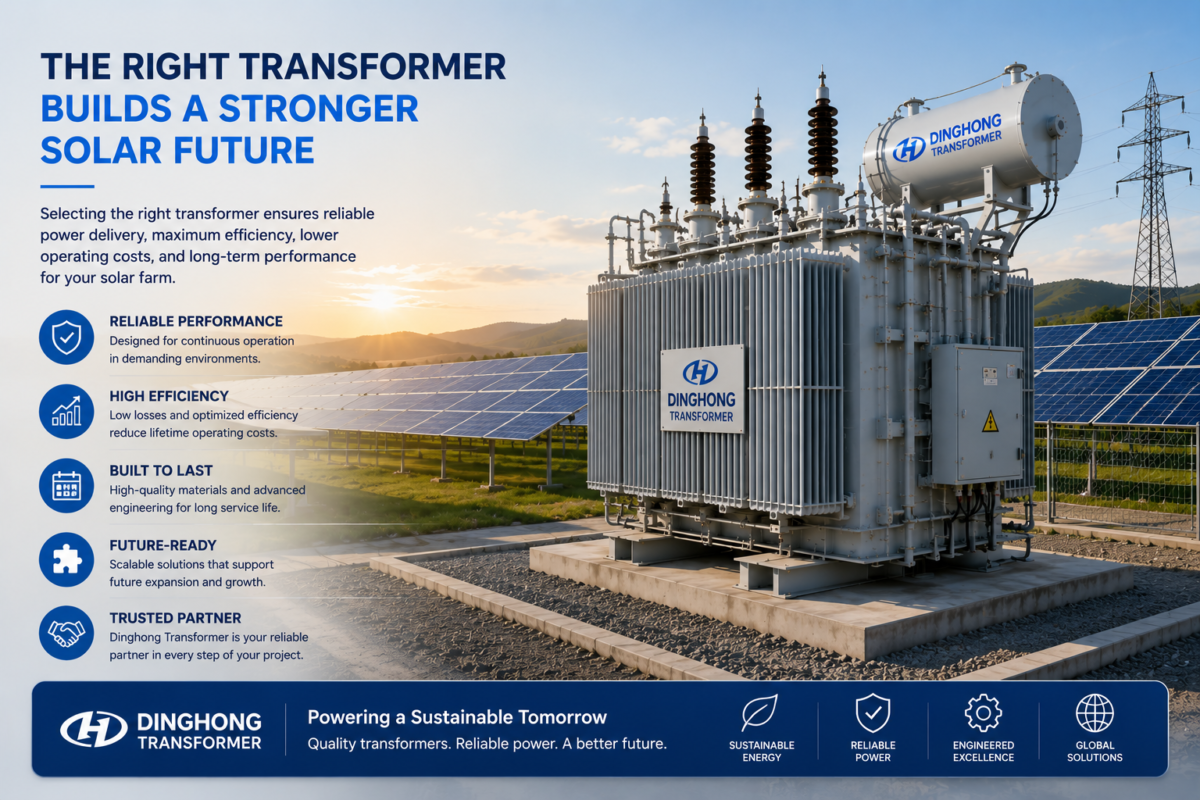
Dinghong Transformer manufactures high-quality distribution transformers, power transformers, pad-mounted transformers, and customized electrical solutions for utility-scale solar farms, commercial renewable energy projects, substations, and industrial power systems.
Every transformer is produced using advanced manufacturing technology, strict quality control procedures, and internationally recognized standards to ensure reliable performance, high efficiency, and long service life.
Whether you’re developing a small commercial PV installation or a multi-megawatt solar farm, Dinghong Transformer works closely with EPC contractors, utilities, and project developers to deliver transformer solutions tailored to specific voltage requirements, environmental conditions, and future expansion plans.
Common Mistakes to Avoid
When selecting a transformer for a solar farm, avoid these common mistakes:
- Choosing the lowest-cost transformer without considering lifecycle costs
- Ignoring future expansion requirements
- Selecting incorrect voltage ratings
- Underestimating environmental conditions
- Overlooking energy efficiency
- Failing to verify compliance with international standards
- Working with inexperienced manufacturers
Avoiding these issues helps maximize system reliability and long-term return on investment.
Conclusion
Selecting the right transformer is essential for building a reliable, efficient, and future-ready solar farm. The ideal transformer should not only meet current power requirements but also support future expansion, comply with international standards, and operate efficiently under local environmental conditions.
By carefully evaluating transformer type, voltage ratings, efficiency, cooling performance, and manufacturer expertise, developers can significantly improve the long-term success of their renewable energy projects.
With extensive manufacturing experience and a commitment to quality, DinghongTransformer provides dependable transformer solutions for solar farms and renewable energy infrastructure worldwide.
Partnering with a trusted manufacturer ensures your project benefits from reliable power delivery, lower operating costs, and sustainable performance for decades to come.