
What Is Transformer Inrush Current? Causes and Protection Methods

When a transformer is energized, it experiences a brief but significant surge of current before settling into normal operation.
This phenomenon, known as transformer inrush current, is a normal part of transformer operation, but it can sometimes be mistaken for a fault due to its high magnitude.For power utilities, industrial plants, renewable energy projects, and commercial facilities, understanding transformer inrush current is essential for ensuring reliable operation and avoiding unnecessary equipment trips.
As a trusted transformer manufacturer, Dinghong Transformer designs high-quality power transformers that are engineered to withstand normal energization conditions while delivering safe, efficient, and dependable performance.In this article, we’ll explain what transformer inrush current is, why it occurs, its effects on electrical systems, and the most effective protection methods used in modern transformer installations.
What Is Transformer Inrush Current?
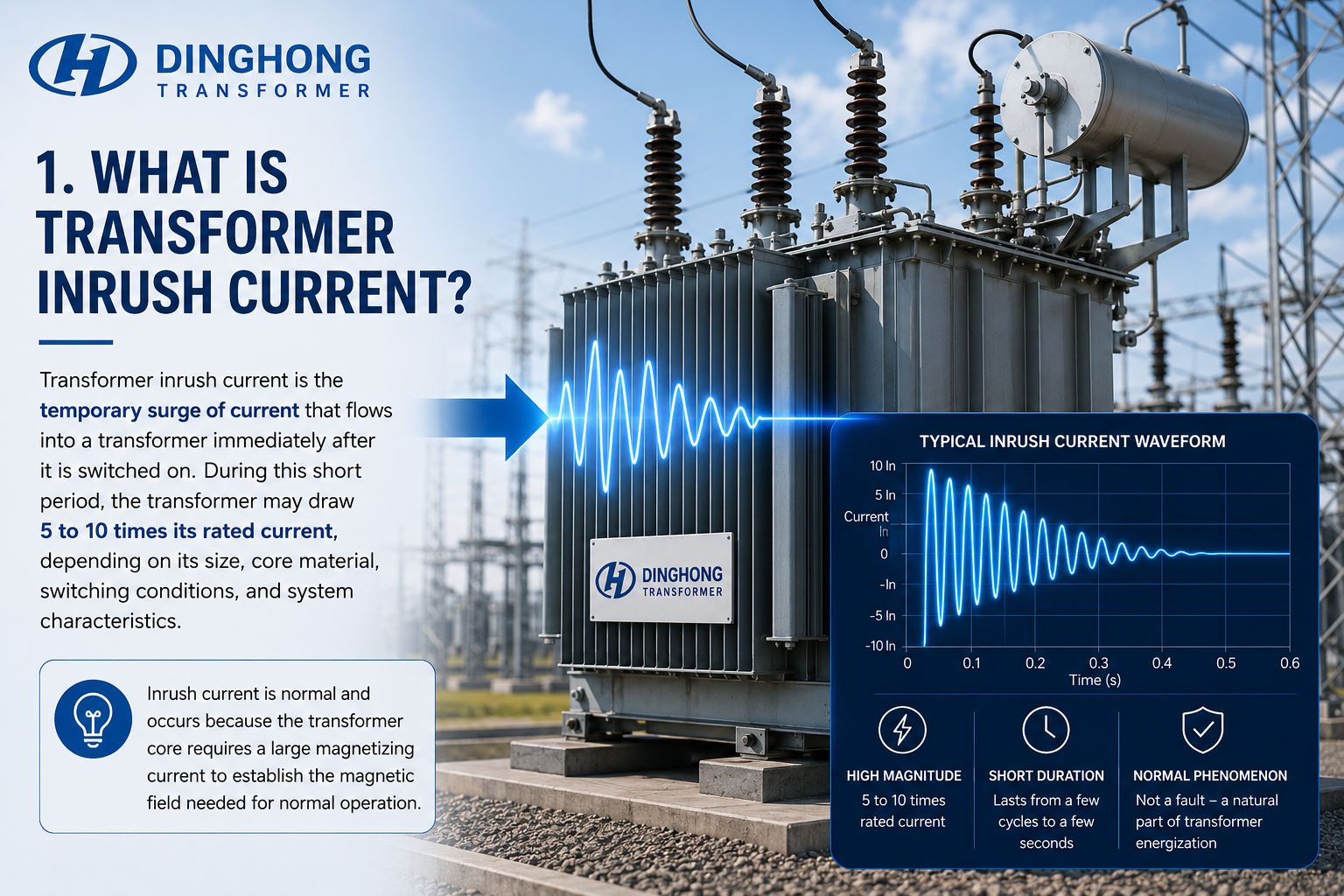
Transformer inrush current is the temporary surge of current that flows into a transformer immediately after it is switched on.
During this short period, the transformer may draw 5 to 10 times its rated current, depending on its size, core material, switching conditions, and system characteristics.Unlike a short circuit or internal fault, inrush current is completely normal. It occurs because the transformer core requires a large amount of magnetizing current to establish the magnetic field needed for normal operation.
Although this current lasts only a fraction of a second to a few seconds, it can affect protective devices and nearby electrical equipment if the system is not properly designed.
Why Does Transformer Inrush Current Occur?
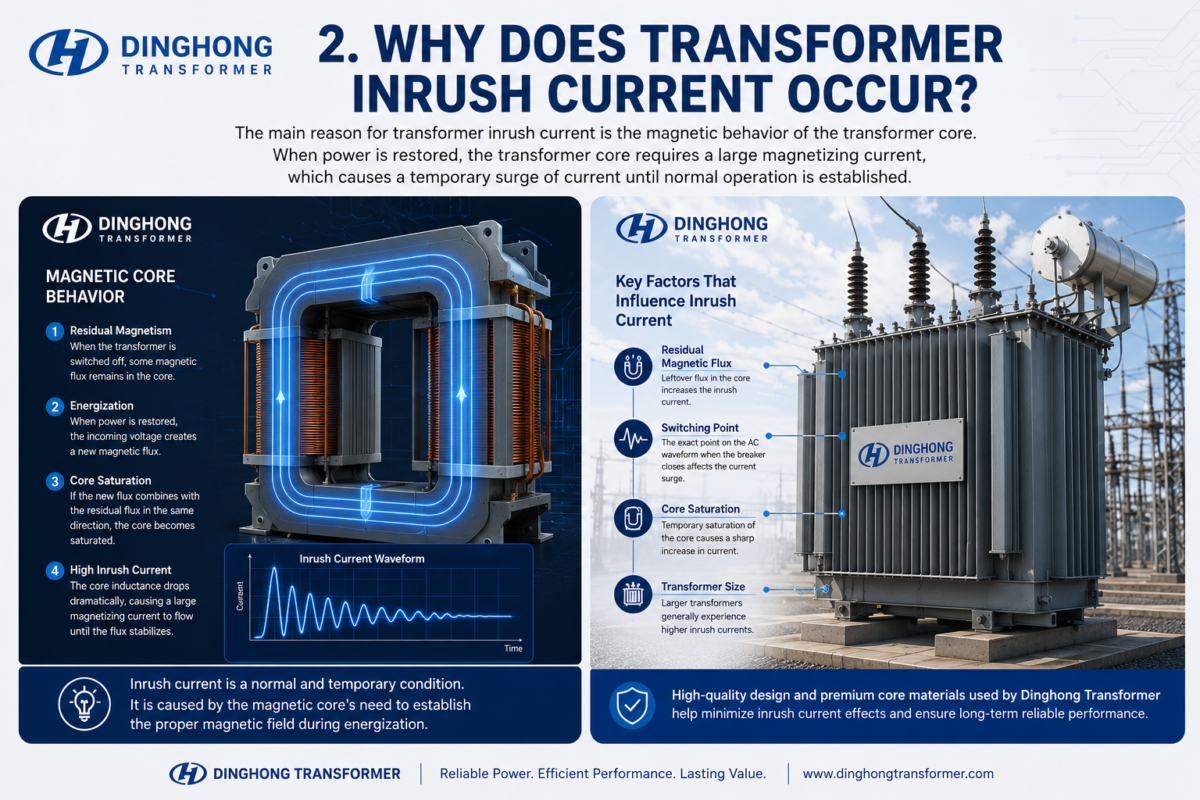
The main reason for transformer inrush current is the magnetic behavior of the transformer’s core.
When a transformer is de-energized, a small amount of magnetic flux often remains trapped in the core.
This is called residual magnetism. When power is restored, the incoming voltage creates a new magnetic flux. If the new and residual flux combine in the same direction, the core can temporarily become saturated.
During saturation, the transformer’s magnetic resistance decreases significantly, allowing a much larger current to flow until the magnetic field stabilizes.This is why every transformer—whether it’s a distribution transformer, power transformer, or dry-type transformer—experiences some level of inrush current during energization.
Factors That Affect Transformer Inrush Current
Several factors determine how large the inrush current will be.
1. Residual Magnetic Flux
Residual magnetism left inside the transformer core after shutdown is one of the biggest contributors to inrush current. Higher residual flux generally results in a larger current surge when the transformer is energized again.
2. Switching Point on the AC Waveform
The exact moment a circuit breaker closes has a major influence on inrush current. Energizing the transformer at certain points of the AC voltage cycle can produce much higher current peaks than at others.
3. Core Saturation
Transformer cores are designed to operate below saturation during normal service. However, during energization, temporary saturation can occur, causing the transformer to draw excessive magnetizing current.
4. Transformer Size and Design
Large power transformers typically experience higher inrush currents than smaller distribution transformers because of their larger magnetic cores and lower winding resistance.
At Dinghong Transformer, every transformer is manufactured with premium core materials and precision engineering to deliver stable electrical performance and long-term reliability under normal operating conditions.
Protection Methods for Transformer Inrush Current
Harmonic Restraint Differential Protection
This is the most common protection method used in modern substations.
Transformer inrush current contains a large amount of second harmonic current. Differential protection relays detect this characteristic and temporarily block tripping, recognizing that the transformer is simply being energized rather than experiencing an internal fault.
Controlled Switching
Controlled switching devices close the circuit breaker at the optimal point on the AC waveform. This significantly reduces magnetic core saturation and lowers peak inrush current.
Proper Relay Coordination. Correct relay settings are essential for reliable transformer protection. Engineers carefully coordinate overcurrent and differential relays so they tolerate normal inrush current while responding immediately to genuine electrical faults.
Sequential Phase Energization
For large power transformers, energizing each phase in sequence can reduce the overall magnitude of inrush current and minimize voltage disturbances throughout the power system.
How Dinghong Transformer Ensures Reliable Performance
Choosing a high-quality transformer is just as important as selecting the right protection system.
At Dinghong Transformer, every transformer is manufactured using advanced production technology, high-grade silicon steel cores, and strict quality control procedures. Our oil-immersed transformers, dry-type transformers, and customized power transformer solutions are designed to deliver reliable performance, excellent efficiency, and long service life across industrial, commercial, utility, and renewable energy applications.
By combining quality manufacturing with proper protection settings, customers can reduce nuisance trips, improve system reliability, and maximize the lifespan of their electrical equipment.
Conclusion
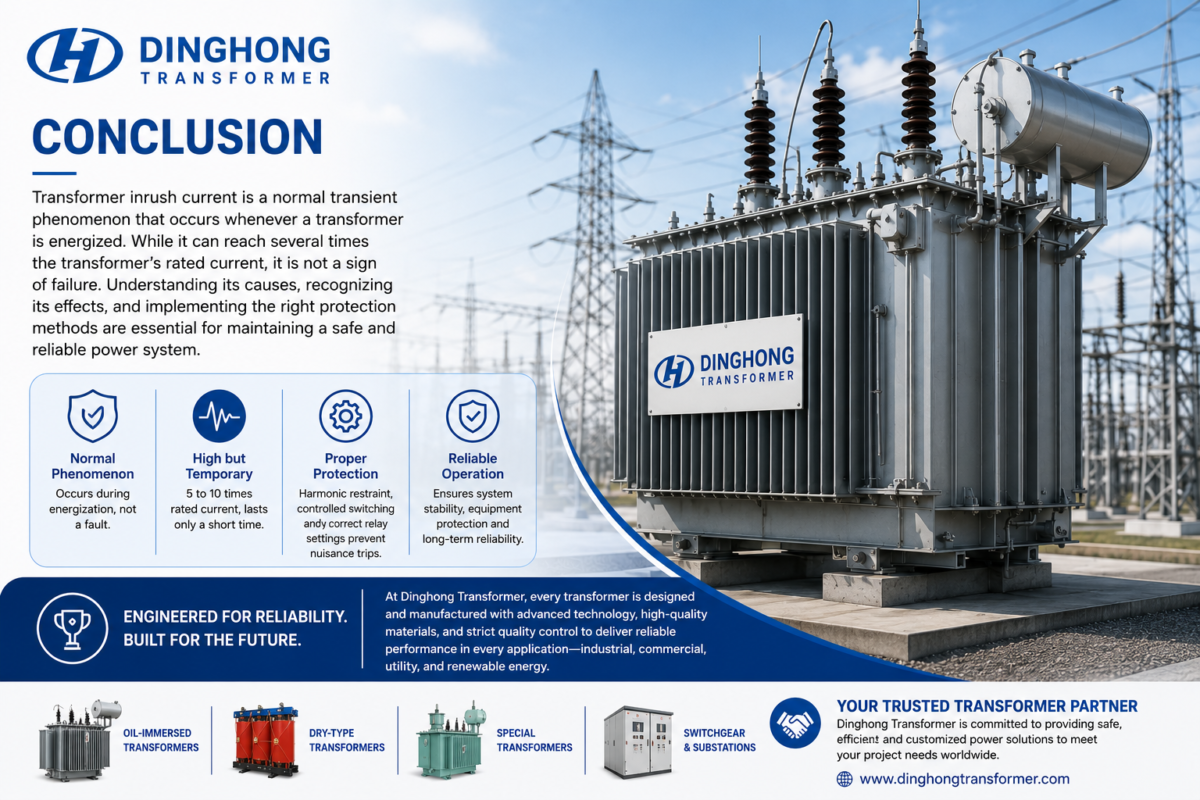
Transformer inrush current is a normal transient phenomenon that occurs whenever a transformer is energized. While it can reach several times the transformer’s rated current, it is not a sign of failure. Understanding its causes, recognizing its effects, and implementing the right protection methods are essential for maintaining a safe and reliable power system.Whether you’re designing a new electrical installation or upgrading an existing one, selecting high-quality equipment from a trusted manufacturer makes a significant difference. Dinghong Transformer provides reliable oil-immersed transformers, dry-type transformers, power transformers, and customized electrical solutions engineered for long-term performance, safety, and efficiency across a wide range of applications.If you’re looking for dependable transformer solutions backed by advanced manufacturing and strict quality standards, Dinghong Transformer is ready to support your next power distribution project.
Choose DHDL for Your Transformer Solutions
DHDL is a professional transformer manufacturer specializing in dry-type transformers, oil-immersed transformers, power transformers, distribution transformers, and complete power distribution solutions.
We support customized transformer designs based on project voltage, capacity, frequency, installation environment, and international standards.
Whether for industrial facilities, renewable energy projects, data centers, utilities, or infrastructure applications, DHDL delivers reliable, efficient, and customized power solutions worldwide.
Contact DHDL today for professional transformer selection support and a customized quotation.