
How to Maintain an Electrical Transformer for Longer Service Life.

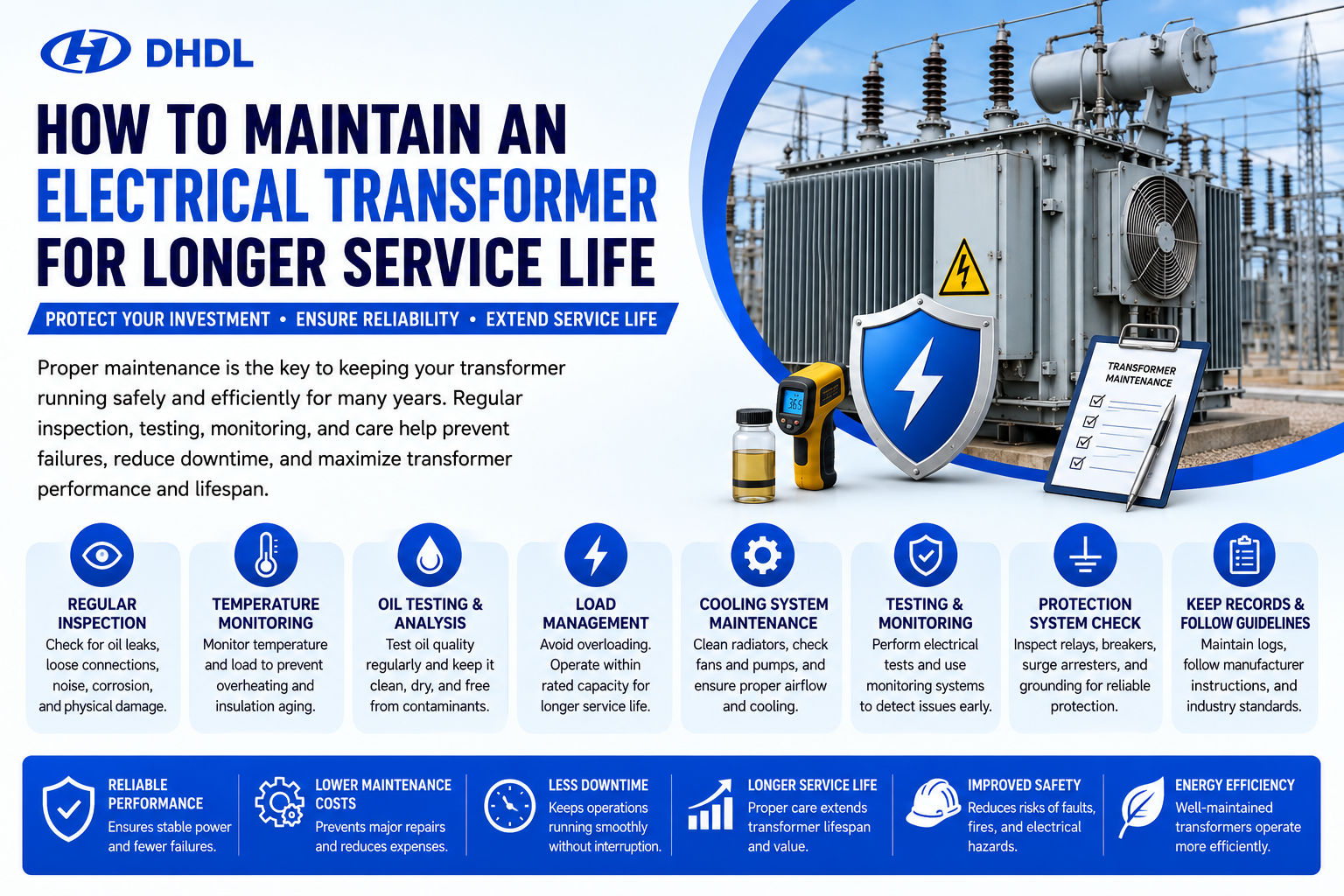
Electrical transformers are essential components of modern power systems. They help transfer electrical energy between different voltage levels and are widely used in power generation, transmission, distribution, industrial facilities, commercial buildings, renewable energy projects, and other electrical applications.
Although transformers are designed to provide reliable service for many years, poor maintenance can significantly reduce their performance and service life. Problems such as overheating, insulation deterioration, moisture contamination, oil degradation, overloading, loose connections, and cooling-system failure can eventually result in costly repairs or complete transformer failure.
Proper transformer maintenance is therefore essential for protecting electrical equipment, reducing unexpected downtime, improving energy efficiency, and extending the useful life of a transformer.
This guide explains how to maintain an electrical transformer effectively and the key practices that can help keep transformer equipment operating safely and reliably.
Why Is Transformer Maintenance Important?
A transformer is a long-term investment. Whether you are operating a distribution transformer, power transformer, dry type transformer, or oil immersed transformer, regular maintenance can help identify potential problems before they become serious.
A good maintenance program can provide several benefits, including:
- Longer transformer service life
- Improved electrical reliability
- Reduced risk of unexpected failure
- Better transformer efficiency
- Lower repair and replacement costs
- Improved safety
- Reduced unplanned downtime
- Better operating performance
The International Electrotechnical Commission’s IEC 60076-1 standard covers general requirements for single-phase and three-phase power transformers and includes considerations such as testing, transport, liquid preservation systems, safety, and condition-monitoring facilities.
1. Perform Regular Visual Inspections
One of the simplest ways to maintain an electrical transformer is through regular visual inspection.
A visual inspection can help identify obvious problems before they develop into major failures. Maintenance personnel should look for:
- Oil leakage
- Damaged bushings
- Corrosion
- Cracked insulation
- Loose components
- Abnormal noise or vibration
- Damaged cables
- Overheating signs
- Blocked ventilation
- Abnormal oil levels
- Damaged cooling equipment
The inspection frequency should depend on the transformer’s type, operating conditions, environment, age, and manufacturer’s recommendations.
Small problems should not be ignored. For example, a minor oil leak can eventually lead to insufficient oil levels, which can negatively affect both insulation and cooling.
2. Monitor Transformer Temperature
Temperature is one of the most important indicators of transformer condition.
Transformers naturally produce heat because of core and winding losses. However, excessive temperature can accelerate insulation aging and reduce equipment life.
Overheating may be caused by:
- Transformer overloading
- Poor ventilation
- High ambient temperature
- Cooling-system failure
- Low oil level
- Internal faults
- Blocked radiators or ventilation paths
Regular temperature monitoring allows operators to identify abnormal conditions early.
For large or critical installations, a transformer monitoring system can continuously track temperature, load, and other operating parameters. An online transformer monitoring system can provide additional information that supports condition-based and predictive maintenance.
3. Avoid Transformer Overloading
Operating a transformer above its rated capacity for extended periods can significantly increase stress on its windings and insulation.
Higher electrical current produces greater winding losses and heat. If the transformer remains overloaded, the resulting temperature increase can accelerate insulation deterioration.
Proper load management is therefore essential.
Before selecting a transformer, engineers should evaluate current demand, peak demand, expected load growth, and the operating profile of the electrical system.
For example, a power distribution transformer should be selected based on realistic load requirements rather than choosing equipment solely on the basis of the largest available capacity.
4. Check Transformer Oil Regularly
For an oil immersed transformer, transformer oil plays two important roles: electrical insulation and heat transfer.
Over time, transformer oil can deteriorate because of heat, moisture, oxidation, contamination, and aging.
Regular transformer oil testing can help determine whether the insulating oil remains suitable for service.
Depending on the maintenance program, testing may evaluate properties such as moisture content, dielectric strength, acidity, and other indicators of oil condition.
Transformer oil analysis can also provide valuable information about the internal condition of oil-filled equipment.
Where oil quality has deteriorated, appropriate oil treatment or a transformer oil purification system may be considered, depending on the condition of the equipment and the manufacturer’s recommendations.
5. Prevent Moisture Contamination
Moisture can seriously affect transformer insulation. Water contamination can reduce dielectric strength and accelerate insulation deterioration.
For oil-filled transformers, maintenance teams should inspect seals, gaskets, breathers, conservator systems, and other areas that could allow moisture to enter the equipment.
Transformers installed outdoors should also be protected against rainwater, flooding, condensation, and other environmental conditions.
Keeping the transformer properly sealed and maintaining its moisture-control systems can significantly reduce the risk of insulation-related problems.
6. Inspect Bushings and Connections
Bushings provide an insulated path for electrical conductors to pass through the transformer tank. Because they are exposed to electrical and environmental stresses, they should be inspected regularly.
Maintenance teams should look for:
- Cracks
- Contamination
- Oil leakage
- Signs of overheating
- Discoloration
- Physical damage
Electrical connections should also be checked for looseness and corrosion. Loose connections can increase electrical resistance and generate localized heat.
Any maintenance work should be performed by qualified personnel using appropriate procedures and safety controls.
7. Maintain the Cooling System
An effective cooling system is essential for reliable transformer operation.
Depending on the design, a transformer may use natural cooling, fans, pumps, radiators, or other cooling arrangements.
Cooling components should be inspected regularly to ensure they are operating correctly.
For transformers equipped with fans, maintenance personnel should check for:
- Fan motor problems
- Damaged blades
- Excessive vibration
- Dust accumulation
- Electrical faults
- Blocked airflow
For oil-cooled equipment, radiators and oil circulation systems should also be checked.
A cooling-system failure can cause transformer temperature to rise rapidly, so abnormal cooling performance should be investigated immediately.
8. Carry Out Transformer Testing
Regular transformer testing is an important part of preventive maintenance.
Depending on the transformer type, age, application, and maintenance strategy, tests may include:
- Insulation resistance testing
- Winding resistance testing
- Transformer turns-ratio testing
- Oil testing
- Electrical diagnostic tests
- Temperature monitoring
- Protective-device testing
Testing can help identify deterioration that may not be visible during a normal inspection.
The appropriate testing schedule should be determined according to manufacturer recommendations, applicable standards, transformer operating conditions, and the criticality of the installation.
9. Monitor Insulation Condition
Transformer insulation is one of the most important components affecting service life.
Insulation can deteriorate because of heat, moisture, electrical stress, contamination, mechanical damage, and aging.
Maintaining appropriate operating temperatures and preventing moisture contamination can help slow insulation deterioration.
For oil-filled transformers, the condition of the oil-paper insulation system should be considered alongside oil quality and operating temperature.
10. Protect the Transformer From Electrical Surges
Electrical surges caused by lightning, switching operations, or faults can damage transformer windings and insulation.
Proper protection systems can reduce the risk of serious damage.
Depending on the installation, protection may include:
- Surge arresters
- Circuit breakers
- Protective relays
- Proper grounding
- Overcurrent protection
- Differential protection
The transformer and its protection system should be inspected and tested according to the applicable maintenance requirements.
IEC’s power-transformer standards include dedicated requirements for protective devices and accessories used with liquid-immersed transformers.
11. Keep the Transformer Clean and Dry
Dust, dirt, moisture, and other contaminants can negatively affect transformer performance.
For indoor installations, ventilation openings should be kept clean and unobstructed. For dry type transformers, maintaining adequate airflow around the equipment is particularly important because cooling depends heavily on the surrounding air and the transformer’s ventilation arrangement.
Outdoor transformers should be kept free from excessive vegetation, debris, standing water, and other environmental hazards.
12. Maintain Proper Records
Good maintenance is easier when equipment history is properly documented.
Maintenance records should include:
- Inspection dates
- Transformer testing results
- Oil analysis results
- Repairs performed
- Load history
- Temperature readings
- Fault records
- Replacement components
- Abnormal operating conditions
These records allow maintenance teams to identify trends and compare current performance with previous results.
For example, gradually increasing operating temperatures or changes in oil test results may indicate developing problems.
13. Use Condition Monitoring for Critical Transformers
For critical electrical installations, traditional periodic inspections may not be sufficient on their own.
Modern condition-monitoring systems can provide continuous information about transformer performance.
A transformer monitoring system can help operators observe important parameters and identify abnormal trends. This can support predictive maintenance by allowing maintenance teams to investigate developing problems before they result in equipment failure.
This approach can be particularly valuable for large power transformers, utility equipment, industrial transformers, and transformers supporting critical infrastructure.
14. Follow the Manufacturer’s Maintenance Recommendations
Every transformer is designed differently. Maintenance requirements can vary depending on transformer capacity, insulation system, cooling method, voltage level, installation environment, and operating conditions.
For this reason, the manufacturer’s maintenance instructions should always be considered when developing a maintenance program.
A transformer manufacturer can also provide information about recommended inspection intervals, operating limits, testing procedures, replacement components, and other equipment-specific requirements.
The IEC’s TC 14 work covers power transformers used in power generation, transmission, distribution, and industrial applications, including associated cooling systems, fittings, and accessories.
Recommended Transformer Maintenance Checklist
A practical maintenance program can include the following:
Daily or routine monitoring
- Check unusual noise or vibration
- Monitor temperature
- Check for visible oil leakage
- Observe load conditions
Periodic inspections
- Inspect bushings
- Check electrical connections
- Inspect cooling systems
- Check oil levels where applicable
- Inspect seals and gaskets
- Check for corrosion and physical damage
Scheduled testing
- Perform transformer testing
- Conduct transformer oil testing where applicable
- Analyze insulation condition
- Test protective equipment
- Review monitoring data
Long-term maintenance
- Analyze equipment trends
- Plan component replacement
- Review loading conditions
- Evaluate transformer efficiency
- Consider refurbishment or replacement when necessary
Conclusion
Maintaining an electrical transformer properly is one of the best ways to extend its service life and protect a power system from unexpected failures.
Regular inspection, temperature monitoring, proper load management, transformer oil analysis, electrical testing, cooling-system maintenance, insulation monitoring, surge protection, and accurate maintenance records all contribute to reliable transformer operation.
Whether you operate a distribution transformer, oil immersed transformer, dry type transformer, industrial transformer, or power transformer, preventive maintenance should be treated as a long-term investment rather than an unnecessary expense.
A proactive approach can help identify developing problems early, reduce repair costs, improve electrical safety, minimize downtime, and maximize the useful life of valuable transformer equipment.
Choose DHDL for Your Transformer Solution
DHDL is a professional transformer and power distribution equipment manufacturer serving utility, industrial, commercial and renewable-energy projects.
Our transformer solutions can be customized according to project capacity, voltage combination, frequency, winding material, installation environment and IEC or ANSI/IEEE requirements.
Whether you need a 75kVA three-phase transformer or a complete transformer and switchgear solution, providing complete electrical specifications at the RFQ stage helps our engineering team confirm a more accurate configuration.
Need a 75kVA transformer quotation? Send us your primary voltage, secondary voltage, frequency, application, standard, quantity and destination country.
💬WeChat/WhatsApp:+8613355383777
📩 Email:service@dinghongtransformer.com
🌐web:https://dinghongtransformer.com/