
What Is a Grounding Transformer and When Is It Needed?

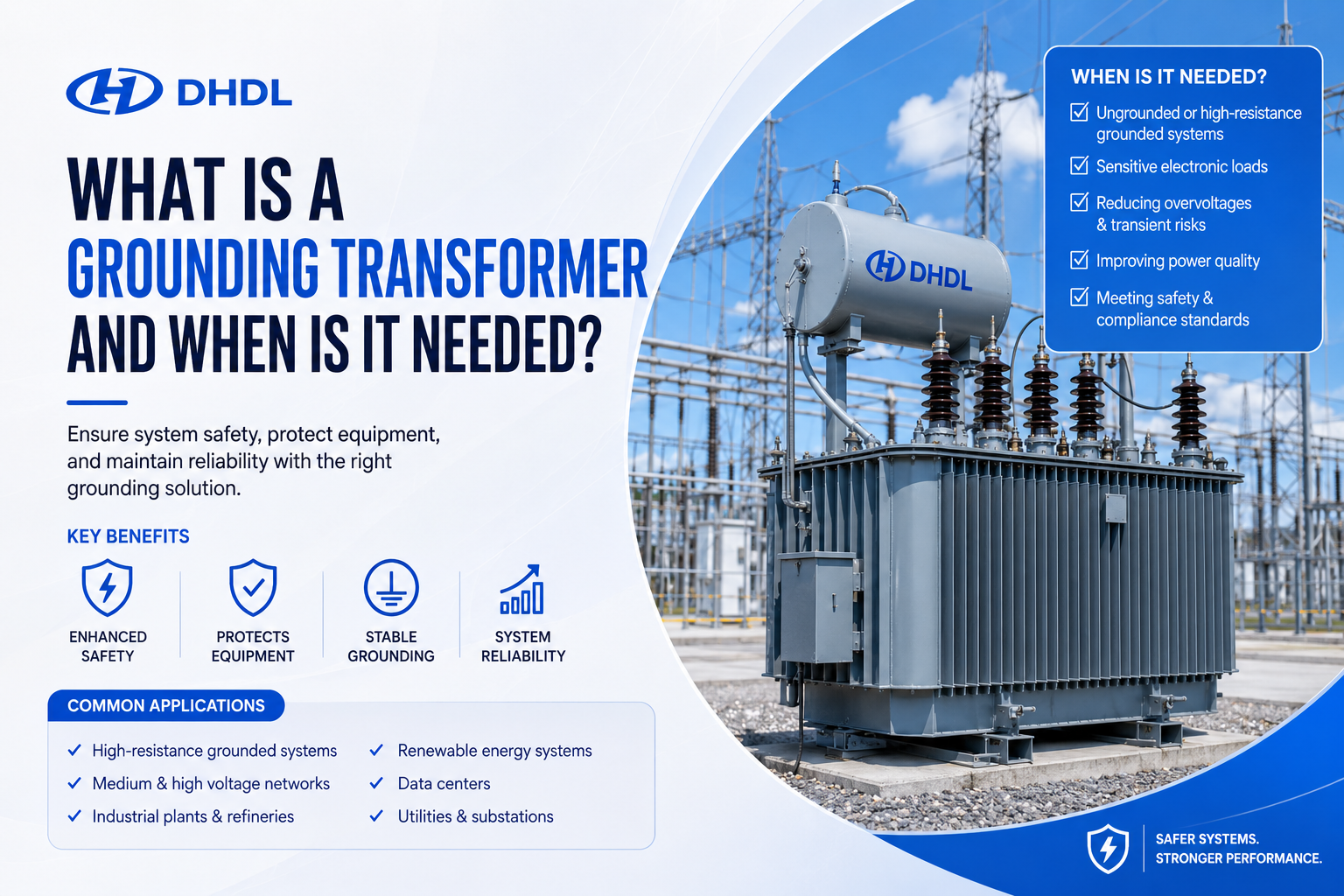
A reliable electrical power system requires more than transformers that simply step voltage up or down.
Grounding transformers, also called earthing transformers, play an important role in systems where a neutral point is needed to provide a controlled path for fault current.
Grounding transformers are particularly useful in medium-voltage and high-voltage power distribution networks, renewable energy systems, industrial facilities, and substations where the electrical system may otherwise have no accessible neutral connection.
But what exactly is a grounding transformer, how does it work, and when should you use one?
This guide explains the purpose, types, applications, and key considerations when selecting a grounding transformer for an electrical power system.
What Is a Grounding Transformer?
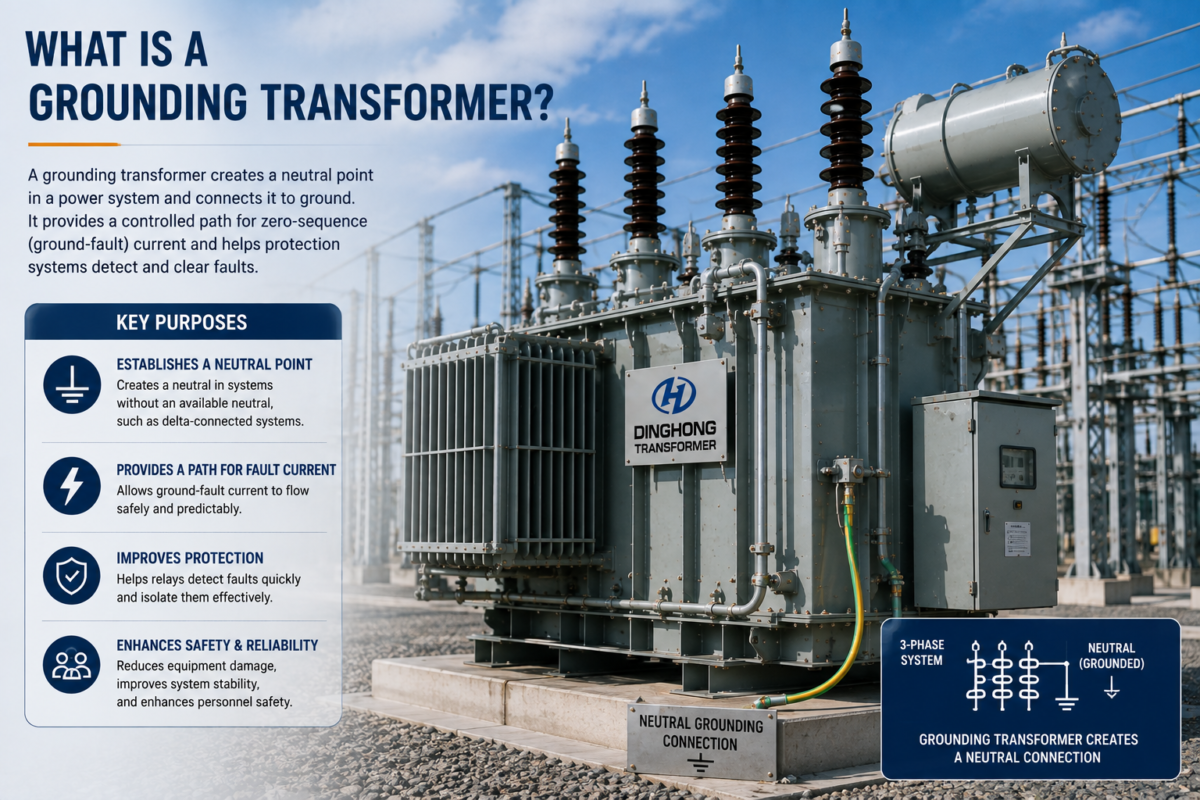
A grounding transformer is a specialized transformer used to establish a neutral point in an electrical system and provide a connection between the system and ground.
In many three-phase systems, particularly delta-connected systems, there may be no neutral point available for grounding. A grounding transformer creates an artificial neutral, allowing the system to be grounded in a controlled manner.Its primary purpose is not normally to supply loads.
Instead, it provides a defined path for zero-sequence current during an earth fault and helps electrical protection equipment detect and isolate faults.
Grounding transformers are therefore an important component of power system grounding and electrical protection.
Why Is System Grounding Important?
Grounding provides a controlled path for fault current when a conductor accidentally comes into contact with ground.
Without an appropriate grounding arrangement, an electrical fault can create dangerous voltage conditions and make protection systems less effective.
A properly grounded system can help:
- Control fault voltages
- Provide a path for ground-fault current
- Improve protective relay operation
- Reduce electrical equipment damage
- Improve personnel safety
- Stabilize system voltages during faults
The grounding method must be carefully designed because excessive fault current can also damage transformers, cables, switchgear, and other electrical equipment.
How Does a Grounding Transformer Work?
A grounding transformer is connected to the three-phase electrical system and creates a neutral point that can be connected to earth.
When the system is operating normally, the grounding transformer may carry little or no current depending on the system configuration.
During a ground fault, however, the transformer provides a path for zero-sequence current to flow through the grounding system.
This allows protective devices to detect the fault and initiate the appropriate response.
A neutral grounding resistor (NGR) or other grounding impedance can also be connected between the grounding transformer neutral and earth.
This limits the magnitude of ground-fault current to a predetermined level.
The result is a grounding system that balances fault protection with the need to limit equipment damage.
Common Types of Grounding Transformers
Two configurations are commonly associated with grounding transformer applications.
Zig-Zag Grounding Transformer
The zig-zag grounding transformer is specifically designed to provide a neutral point without requiring a conventional secondary winding.
Its winding arrangement creates the appropriate magnetic paths for zero-sequence currents while presenting relatively high impedance to normal three-phase currents.
Zig-zag transformers are widely used where a neutral grounding point is required on an otherwise ungrounded or delta-connected system.
Wye-Delta Grounding Transformer
A wye-delta configuration can also be used to establish a system neutral.
The wye-connected side provides the neutral grounding point, while the delta winding provides the necessary magnetic path.
This configuration may be selected when a grounding transformer needs to provide additional flexibility or when the system design requires a secondary winding.
The appropriate configuration depends on system voltage, fault-current requirements, available space, protection philosophy, and whether an auxiliary power supply is required.
When Is a Grounding Transformer Needed?
A grounding transformer may be required when a power system does not have a suitable neutral point for grounding.
Common applications include:
1. Delta-Connected Systems
Delta-connected systems do not naturally provide an accessible neutral.
A grounding transformer can create an artificial neutral for connecting the system to earth.
2. Renewable Energy Projects
Solar farms and wind power installations may use transformers and electrical networks with configurations that require a dedicated grounding solution.
A grounding transformer can help establish the required grounding point and support protection against earth faults.
3. Industrial Power Systems
Manufacturing plants, processing facilities, mines, and other industrial sites often have medium-voltage distribution networks where controlled grounding is essential.
4. Electrical Substations
Grounding transformers can be installed in substations to provide a neutral grounding point and improve ground-fault protection.
5. Systems Requiring Controlled Fault Current
Where ground-fault current must be limited to a specific level, a grounding transformer can be combined with a neutral grounding resistor or reactor.
Grounding Transformer vs. Power Transformer
A grounding transformer should not be confused with a conventional power or distribution transformer.
A power transformer primarily transfers electrical energy between voltage levels, such as stepping voltage from 132 kV to 33 kV.
A distribution transformer reduces voltage to levels suitable for commercial, industrial, or residential loads.
A grounding transformer, on the other hand, is primarily designed to establish a neutral grounding point and provide a controlled path for zero-sequence fault current.
In some designs, a grounding transformer may also include an auxiliary secondary winding, but its primary function remains system grounding.
Key Factors When Selecting a Grounding Transformer
Choosing the correct grounding transformer requires careful consideration of the electrical system.Important factors include:
- System voltage
- Frequency
- Ground-fault current
- Grounding method
- Required neutral current
- Short-circuit duration
- Insulation level
- Cooling method
- Installation environment
- Applicable electrical standards
The grounding transformer must be properly rated for the expected fault conditions. Engineers should also consider whether a neutral grounding resistor or reactor will be required.
Choosing a Grounding Transformer Manufacturer
Because grounding transformers are closely connected to electrical protection systems, product quality and engineering accuracy are critical.
Dinghong Transformer provides transformer solutions for industrial, commercial, utility, and renewable energy applications.
The company’s transformer manufacturing capabilities include power transformers, distribution transformers, oil-immersed transformers, dry type transformer, and customized transformer solutions.
For projects requiring specialized transformer configurations, Dinghong Transformer can work with customers to understand system voltage, grounding requirements, operating conditions, and project specifications before developing an appropriate solution.
Working with an experienced transformer manufacturer can help ensure that the grounding transformer is correctly designed, manufactured, tested, and integrated into the wider electrical system.
Conclusion
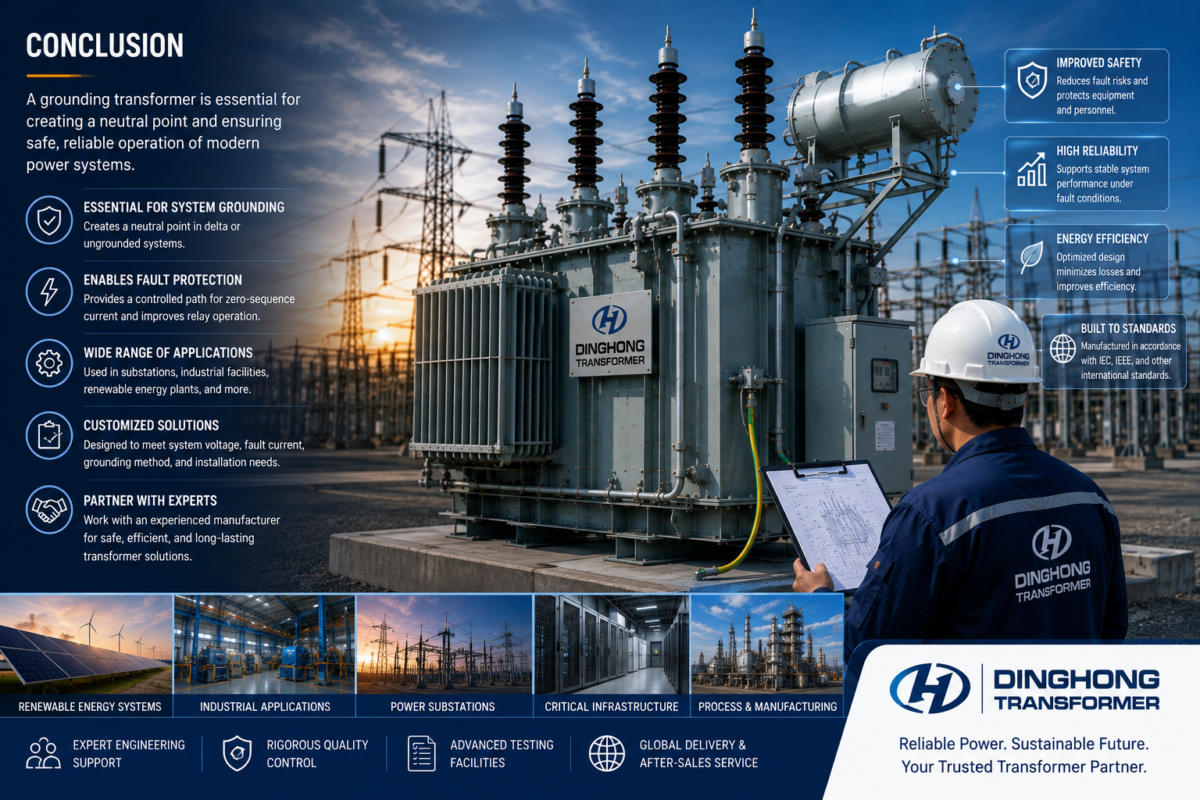
A grounding transformer is an important component of many modern electrical power systems. Its primary purpose is to create a neutral grounding point and provide a controlled path for zero-sequence current during ground faults.
Grounding transformers are particularly valuable in delta-connected systems, industrial facilities, renewable energy projects, and electrical substations where a conventional neutral connection may not be available.Selecting the right grounding transformer requires more than choosing a voltage rating.
Fault-current requirements, grounding methods, system configuration, insulation levels, and operating conditions must all be evaluated.
By working with an experienced manufacturer such as Dinghong Transformer , project developers, engineers, and procurement teams can obtain grounding transformer solutions designed around their specific electrical requirements and long-term reliability goals.
Choose DHDL for Your Transformer Solution
DHDL is a professional transformer and power distribution equipment manufacturer serving utility, industrial, commercial and renewable-energy projects.
Our transformer solutions can be customized according to project capacity, voltage combination, frequency, winding material, installation environment and IEC or ANSI/IEEE requirements.
Whether you need a 75kVA three-phase transformer or a complete transformer and switchgear solution, providing complete electrical specifications at the RFQ stage helps our engineering team confirm a more accurate configuration.
Need a 75kVA transformer quotation? Send us your primary voltage, secondary voltage, frequency, application, standard, quantity and destination country.
💬WeChat/WhatsApp:+8613355383777
📩 Email:service@dinghongtransformer.com
🌐web:https://dinghongtransformer.com/