
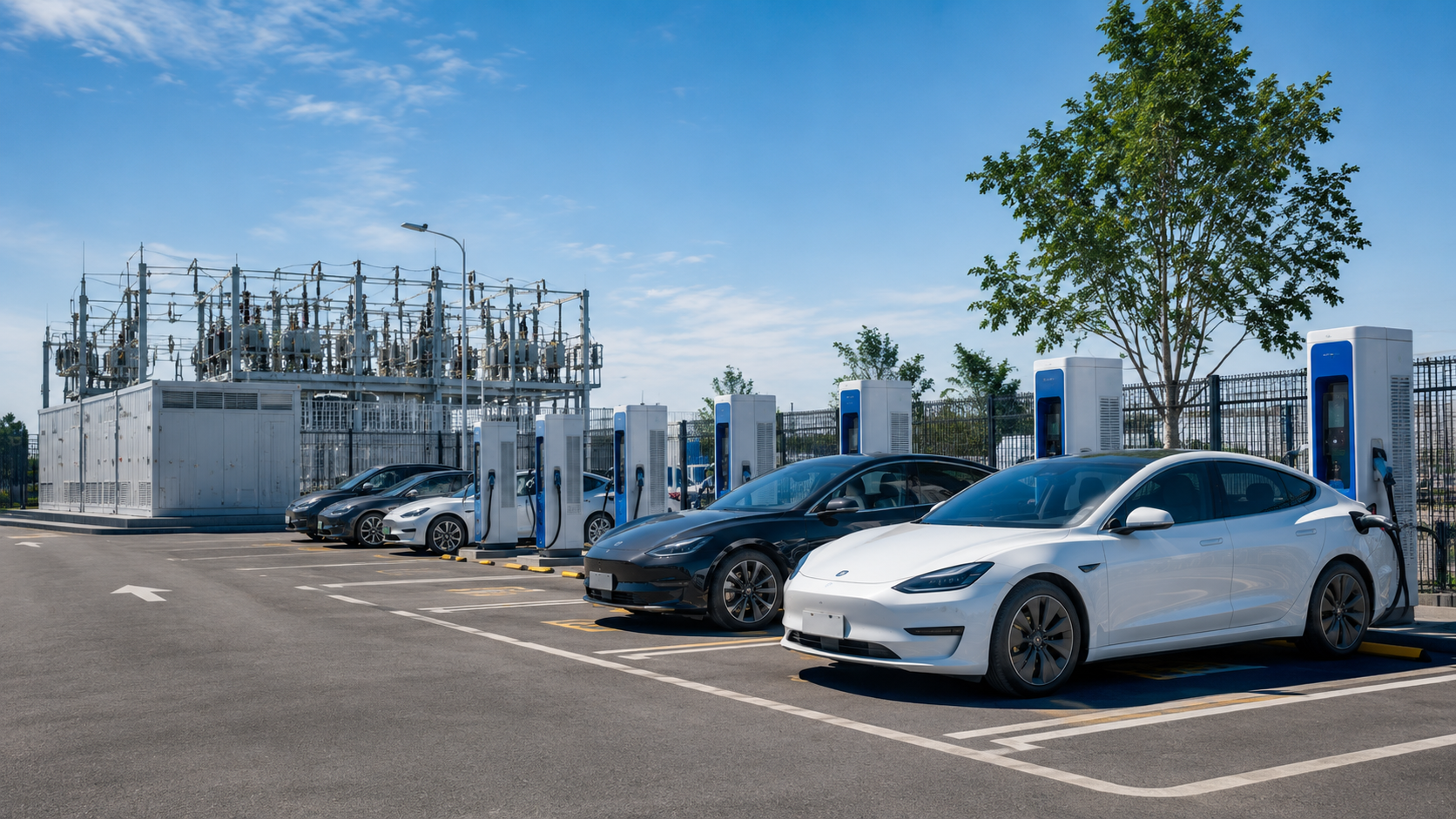
EV Charging Station Power Solutions
DHDL provides transformer, substation and power distribution solutions for EV charging stations, fleet charging hubs and high-power charging infrastructure, supporting reliable grid connection, voltage transformation and scalable charging capacity.
Reliable Power Infrastructure for High-Power EV Charging
Large EV charging stations can introduce substantial and rapidly changing electrical loads. From utility connection and voltage transformation to charger-side distribution, the power system must support high charging capacity, simultaneous demand and future station expansion.
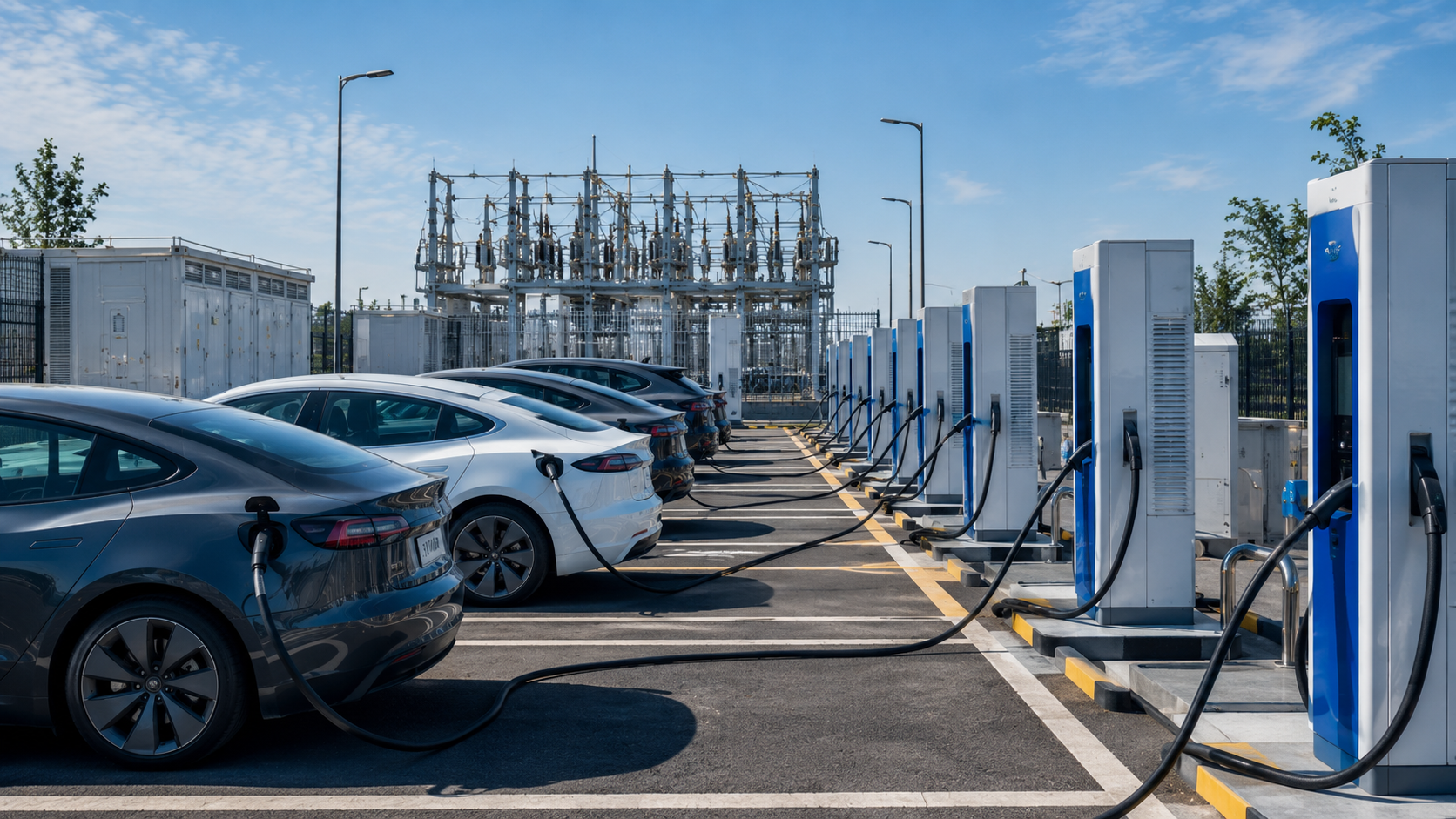
High-Power Charging Loads
DC fast chargers and high-power charging systems can create substantial continuous electrical demand, particularly when multiple vehicles charge at the same time.
Grid Capacity & Voltage Transformation
Large charging stations may require dedicated transformer and distribution infrastructure to convert utility voltage and deliver sufficient power capacity to the charging equipment.
Peak Demand & Simultaneous Charging
Charging demand can rise quickly when multiple vehicles connect at the same time. Transformers, switchgear and distribution equipment must be configured around expected peak station loads.
Future Charging Capacity
Charging sites often expand by adding new chargers or increasing charger power ratings. Electrical infrastructure should support phased development and future capacity upgrades.
How EV Charging Station Power Systems Work
High-power EV charging stations receive electricity from the utility grid and distribute it through several stages of voltage transformation, switching and protection before power reaches individual charging equipment and electric vehicles.
Utility Grid
Electrical power enters the charging site from the local utility transmission or distribution network.
Grid Connection & Substation
The incoming supply is received through the station’s electrical infrastructure, providing switching, protection and connection to the site power system.
Main Transformer
Transformers convert utility voltage to the level required by the charging station’s medium- or low-voltage distribution network.
MV / LV Switchgear
Switchgear provides power distribution, circuit protection and isolation between the transformer and downstream charging loads.
LV Power Distribution
Low-voltage distribution routes electrical power toward individual charging zones, charger groups and supporting station equipment.
Charging Equipment
Charging equipment converts and delivers electrical power to vehicles according to the charger type and rated charging capacity.
Electric Vehicles
Final power is delivered to passenger vehicles, commercial fleets and other electric mobility applications across the charging site.
Future Capacity Expansion
Additional charger groups or higher charger ratings can increase station demand, making transformer and distribution capacity important considerations for future expansion.
Power Transformation and Distribution for EV Charging Infrastructure
DHDL supports the electrical infrastructure between utility grid connection and charger-side power distribution. Transformer, switchgear and substation configurations can be matched to station capacity, charger power ratings, simultaneous charging demand and future expansion requirements.
Grid Connection & Main Transformation
Incoming utility power is received through the charging station electrical system and transformed to the voltage level required by the site’s distribution network.
Charging Station Power Distribution
Switchgear and distribution equipment divide incoming power between charger groups, charging zones and supporting station electrical loads.
Charger-Side Voltage Supply
Transformer and low-voltage distribution configurations deliver the required supply voltage and capacity to DC fast chargers, high-power chargers and other station equipment.
Scalable Charging Infrastructure
Electrical infrastructure can be configured around current charging demand while allowing capacity for additional chargers, higher power ratings and future station expansion.
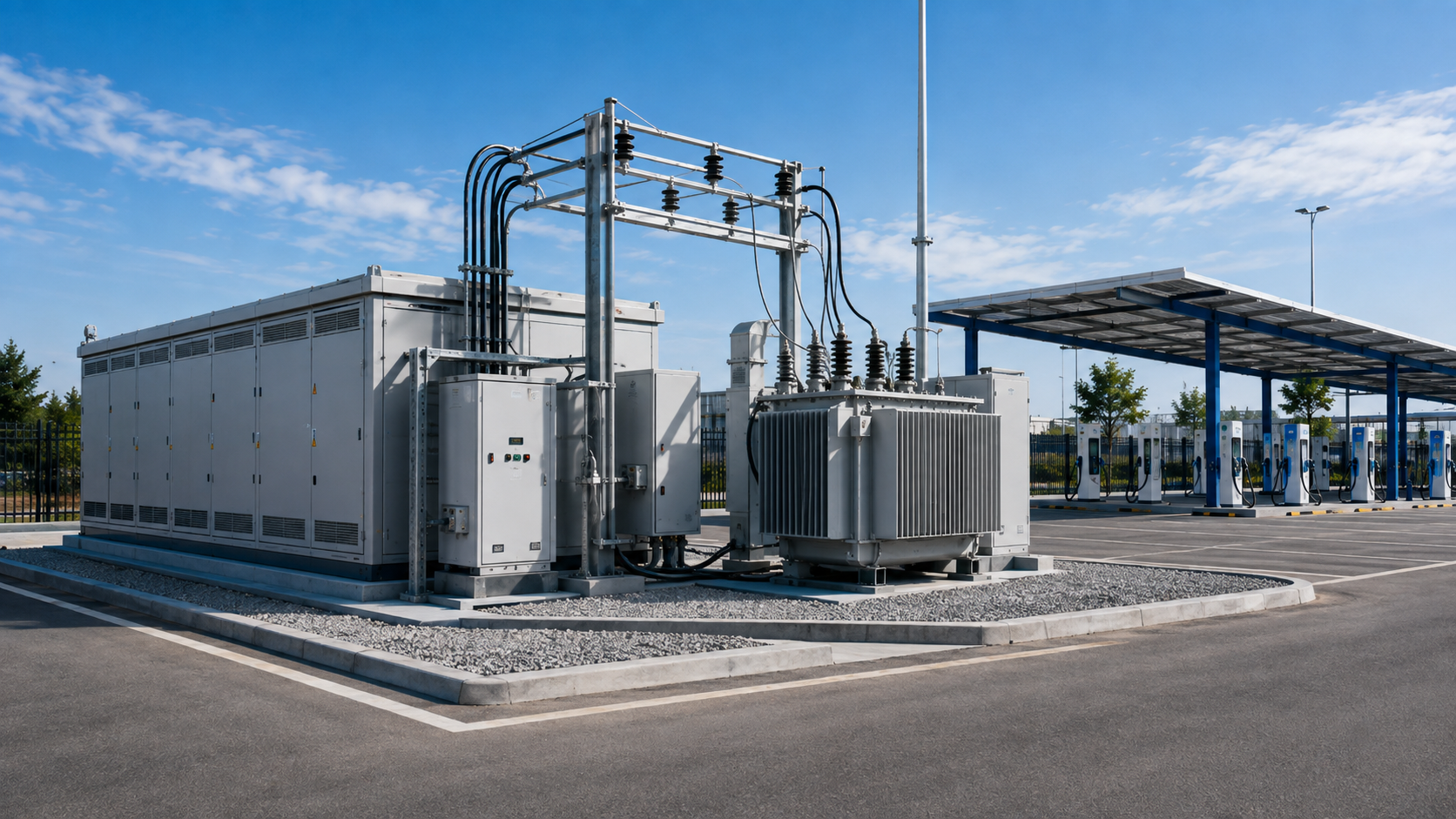
Transformer, Switchgear and Distribution Integration
DHDL supports coordinated power transformation and distribution equipment configurations for commercial and high-power EV charging projects.
Share your utility voltage, charger quantity, charger power rating and expected simultaneous load with DHDL to discuss a suitable equipment configuration.
Power Infrastructure for EV Charging Stations
From utility grid connection and transformer capacity to charger-side distribution, reliable electrical infrastructure supports high-power charging, simultaneous demand and future station expansion.
EV Charging Stations
Reliable power infrastructure for public charging stations, commercial charging hubs and fleet charging facilities.
High-Power Charging Loads
Transformer and distribution capacity support fast chargers, high-power charging equipment and simultaneous vehicle demand.
Substation & Power Distribution
Transformers, switchgear and distribution equipment connect utility power to charging zones across the station.
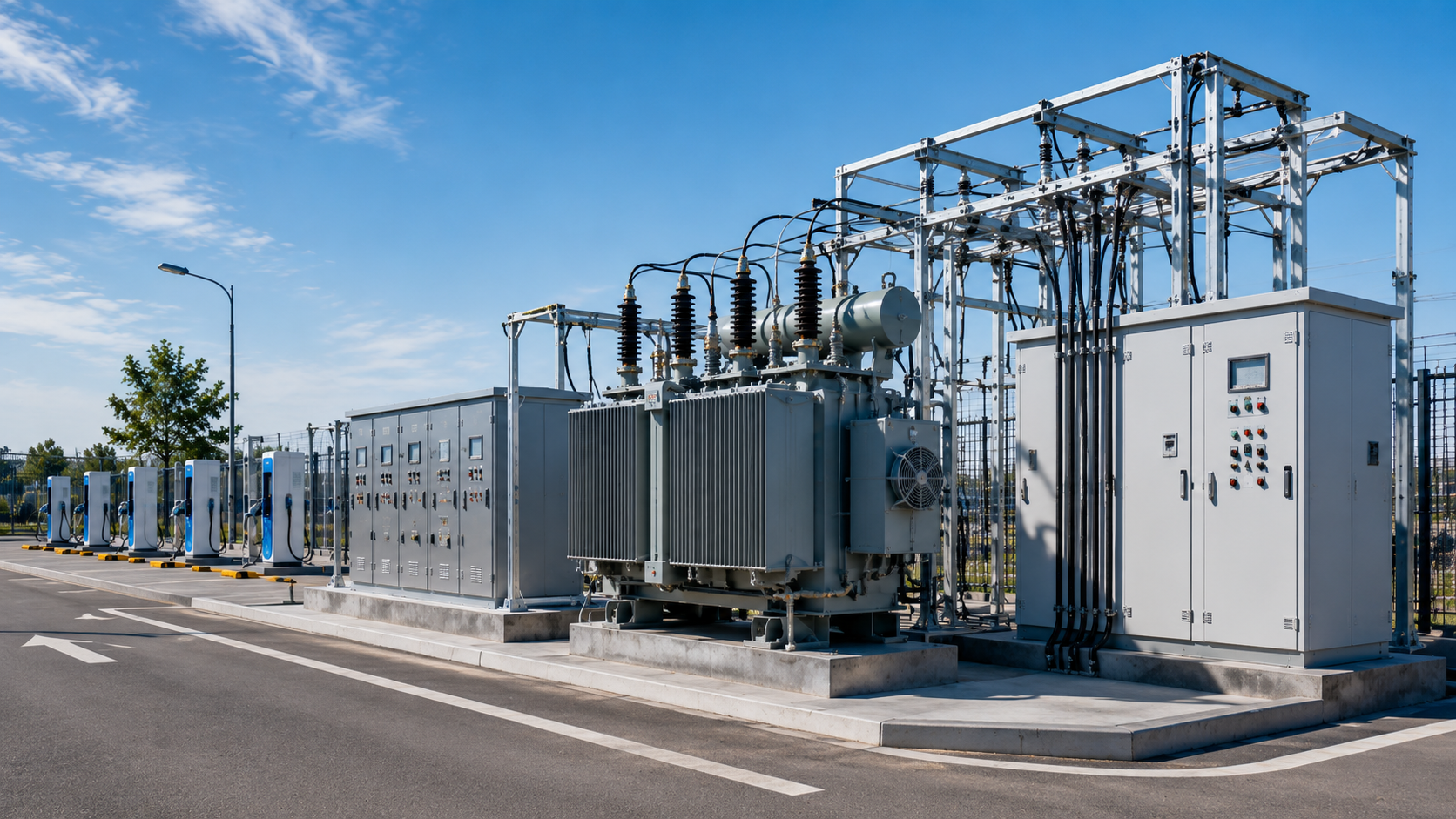
Transformer & Distribution Equipment
Power equipment can be configured around utility voltage, charger quantity, charger ratings and expected station capacity.