
Common Causes of Transformer Failure and How to Prevent Them.

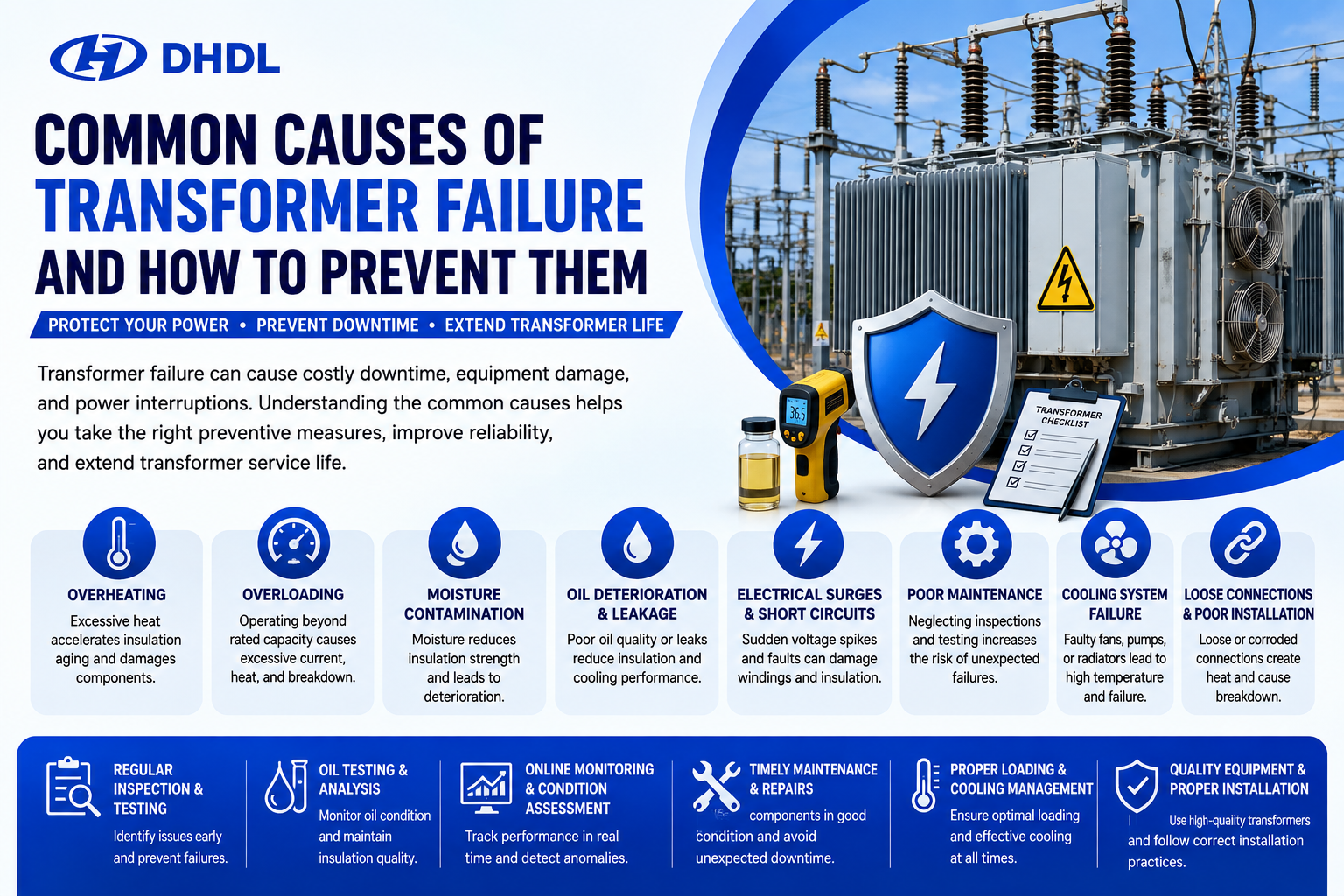
Transformers are essential components of modern electrical power systems. They are used in power generation, transmission, distribution, industrial facilities, renewable energy projects, commercial buildings, and many other applications. A transformer can operate reliably for decades when it is properly designed, installed, monitored, and maintained. However, transformer failure can result in costly equipment damage, unexpected downtime, power interruptions, and expensive repairs or replacement.
Understanding the common causes of transformer failure is therefore essential for utilities, facility managers, electrical engineers, and businesses that depend on reliable power. Many transformer failures are associated with overheating, insulation deterioration, electrical faults, poor maintenance, oil problems, overloading, moisture, and external environmental conditions.
In this guide, we examine the major causes of transformer failure and practical ways to prevent them.
What Causes a Transformer to Fail?
A transformer failure rarely happens without warning. In many cases, equipment develops problems gradually before experiencing a major breakdown. Regular inspection and condition monitoring can help identify these warning signs early.
The most common causes include:
- Overheating
- Transformer overloading
- Insulation failure
- Moisture contamination
- Transformer oil deterioration
- Electrical surges and short circuits
- Poor maintenance
- Loose or damaged connections
- Cooling system failure
- Environmental and installation problems
Let’s examine each of these causes in detail.
1. Transformer Overheating
Overheating is one of the most common causes of transformer damage. Transformers naturally produce heat during operation because of core and winding losses. However, excessive temperatures can accelerate insulation aging and damage internal components.
Several factors can cause overheating, including excessive loading, poor ventilation, high ambient temperatures, blocked cooling systems, and inadequate cooling equipment.
How to Prevent Transformer Overheating
Operators should ensure that transformers operate within their recommended temperature and loading limits. Cooling systems should be inspected regularly, and ventilation around the transformer should remain unobstructed.
For oil-filled equipment, the condition and level of transformer oil should also be monitored because the oil provides both insulation and cooling.
2. Transformer Overloading
A transformer is designed to operate within a specified power rating. When the connected load exceeds the transformer’s rated capacity for extended periods, the current flowing through its windings increases.
Higher current produces greater winding losses and heat. Continuous overloading can therefore shorten insulation life and increase the risk of transformer failure.
Proper load management is one of the simplest ways to prevent this problem. Engineers should assess current demand and expected future load growth before selecting a transformer.
For example, when specifying a power distribution transformer, the expected load profile should be considered rather than selecting equipment based only on the present demand.
3. Insulation Failure
Transformer insulation separates electrically active components and prevents unwanted current paths. If insulation becomes damaged, aged, contaminated, or exposed to excessive heat, electrical breakdown can occur.
Insulation deterioration may result from:
- Excessive operating temperature
- Moisture
- Electrical stress
- Aging
- Mechanical damage
- Contaminated transformer oil
- Partial discharge
Insulation failure can be particularly serious because it may lead to internal arcing, winding damage, or complete transformer breakdown.
How to Prevent Insulation Failure
Regular inspection and appropriate electrical testing can help identify insulation problems before they become severe. For oil-immersed transformers, oil condition should also be monitored because the insulating liquid plays an important role in the overall insulation system.
4. Moisture Contamination
Moisture is another major enemy of transformer insulation. Water can enter a transformer through damaged seals, poor storage, condensation, leaks, or inadequate maintenance.
Moisture can reduce the dielectric strength of insulating materials and accelerate insulation deterioration. In oil-filled transformers, moisture contamination can also negatively affect the performance of the transformer oil.
How to Prevent Moisture Problems
Transformers should be properly sealed and protected from water ingress. Breathers, seals, gaskets, and conservator systems should be inspected where applicable.
Regular transformer oil sampling can also help determine whether moisture or other contaminants are present.
5. Transformer Oil Deterioration
Oil-immersed transformers depend on insulating oil for electrical insulation and heat transfer. Over time, the oil can deteriorate because of oxidation, moisture, contamination, overheating, and aging.
Poor-quality or degraded oil may reduce insulation performance and cooling effectiveness.
Regular transformer oil testing and transformer oil analysis can help assess oil condition and identify potential problems.
Where necessary, transformer oil processing may be carried out to improve the condition of the insulating oil, depending on the nature and severity of the contamination.
A useful reference for transformer professionals is the IEC’s transformer standards. IEC 60076-1 covers general requirements for single-phase and three-phase power transformers, while other parts of the IEC 60076 series address specific transformer equipment and applications.
6. Electrical Surges and Short Circuits
Transformers can be exposed to electrical disturbances such as lightning, switching surges, system faults, and short circuits. These events can create significant electrical and mechanical stresses inside the transformer.
A severe short circuit can cause forces on transformer windings that may result in mechanical deformation or damage.
How to Prevent Surge-Related Damage
Appropriate protection equipment should be installed and maintained. Depending on the system, this may include surge arresters, circuit breakers, protective relays, grounding systems, and other protection devices.
Transformer protection should be designed according to the characteristics of the electrical network and the transformer itself.
7. Poor Maintenance
Even a high-quality transformer can fail prematurely when maintenance is neglected.
Regular maintenance allows operators to identify issues such as oil leakage, abnormal temperature, damaged bushings, loose connections, corrosion, unusual noise, and other warning signs.
A proper preventive maintenance program should include visual inspections, electrical testing, thermal checks, oil assessment where applicable, and inspection of protection and cooling systems.
8. Transformer Oil Leakage
Transformer oil leakage can occur because of damaged seals, aging gaskets, corrosion, mechanical damage, or excessive pressure.
Oil leakage should never be ignored. A reduction in oil level can affect the transformer’s cooling and insulation performance.
Operators should inspect the tank, valves, bushings, radiators, gaskets, and other areas where leakage may occur.
When a leak is discovered, the underlying cause should be identified and repaired rather than simply adding more oil without addressing the source.
9. Cooling System Failure
Transformers depend on effective heat dissipation. Depending on their design, cooling may involve natural air circulation, fans, radiators, pumps, or transformer oil circulation.
A failure of fans, pumps, radiators, or other cooling components can cause transformer temperature to rise.
Regular inspection and testing of cooling equipment can help prevent overheating. For large installations, a transformer monitoring system can provide useful information about temperature, loading, and other operating conditions.
An online transformer monitoring system can also support continuous condition monitoring, allowing operators to identify abnormal operating trends earlier.
10. Loose or Damaged Connections
Electrical connections inside and outside a transformer must remain secure. Loose connections can increase resistance, generate localized heat, and potentially cause arcing.
Over time, vibration, thermal cycling, corrosion, or improper installation can contribute to connection problems.
During maintenance, technicians should inspect relevant connections and follow appropriate manufacturer procedures and torque requirements.
11. Poor Installation and Environmental Conditions
Transformer performance can also be affected by the installation environment.
Factors such as excessive dust, humidity, flooding, corrosive chemicals, inadequate ventilation, extreme temperatures, and physical impact can increase the risk of failure.
The installation location should therefore be evaluated before selecting a transformer.
For example, a dry type transformer may be appropriate for certain indoor applications where liquid-filled equipment is less suitable, while an oil-immersed design may be selected for other applications based on electrical, cooling, environmental, and maintenance requirements.
The Importance of Transformer Monitoring
Modern transformer monitoring technologies can significantly improve failure prevention.
A transformer monitoring system can track parameters such as:
- Transformer temperature
- Oil temperature
- Load current
- Voltage
- Oil level
- Cooling system condition
- Other relevant operating conditions
Monitoring trends over time can help maintenance teams detect abnormal behavior before it develops into a major failure.
For critical installations, condition-based and predictive maintenance strategies can be more effective than waiting for equipment to fail.
How Regular Testing Helps Prevent Transformer Failure
Transformer testing is another important part of preventive maintenance. Depending on the transformer type and application, testing may include winding resistance testing, insulation resistance testing, turns-ratio testing, oil testing, and other diagnostic procedures.
For oil-filled equipment, transformer oil analysis can provide valuable information about the condition of the insulating system and help identify potential problems.
The specific tests and intervals should be determined according to the manufacturer’s recommendations, applicable standards, transformer design, operating environment, and maintenance program.
Choosing the Right Transformer
Failure prevention starts before installation. Selecting the correct transformer for the application can significantly reduce operational problems.
Factors to consider include:
- Required voltage
- Transformer capacity
- Load profile
- Installation environment
- Cooling method
- Insulation requirements
- Expected future load
- Protection requirements
- Maintenance requirements
- Applicable standards
Depending on the application, users may require a 3 phase transformer, utility distribution transformer, power transformer in substation, pad mounted transformer, or specialized transformer.
Correct sizing is particularly important because an undersized transformer may experience excessive loading, while an unnecessarily oversized transformer may not operate efficiently under typical load conditions.
Conclusion
Transformer failure can be expensive and disruptive, but many failures can be prevented through proper design, installation, monitoring, testing, and maintenance.
The most common causes of transformer failure include overheating, overloading, insulation deterioration, moisture, transformer oil problems, electrical surges, poor maintenance, loose connections, cooling system failure, and environmental conditions.
A proactive maintenance strategy can help identify potential problems before they develop into major failures. Regular transformer oil testing, electrical testing, inspections, and transformer monitoring systems can provide valuable information about equipment condition.
Ultimately, transformer reliability depends on more than the quality of the equipment itself. Proper selection, installation, protection, operation, and maintenance all contribute to long-term performance.
By understanding the common causes of transformer failure and taking preventive measures, utilities, industries, and commercial facilities can reduce unexpected downtime, protect electrical equipment, improve safety, and extend transformer service life.