Transformer Cooling Methods Explained: ONAN, ONAF, OFAF & OFWF | Dinghong Transformer

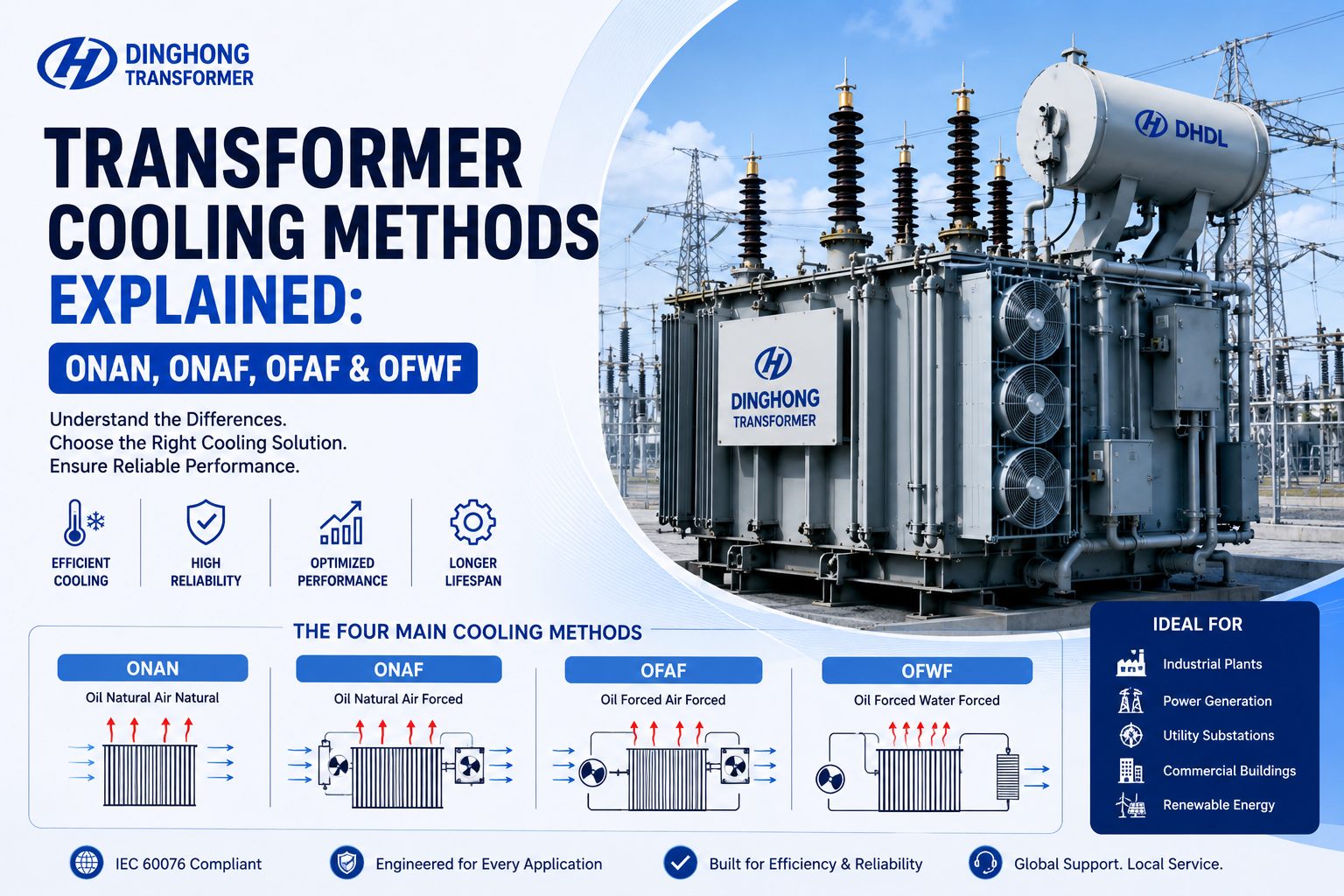
Learn the differences between ONAN, ONAF, OFAF, and OFWF transformer cooling methods. Discover how to choose the right cooling system for industrial, utility, and commercial applications.
Transformer Cooling Methods Explained: ONAN, ONAF, OFAF & OFWF
Selecting the right transformer is about more than choosing the correct kVA rating or voltage class. One of the most overlooked yet critical design considerations is the transformer cooling method.
A well-designed cooling system helps control operating temperature, improve efficiency, extend equipment lifespan, and reduce maintenance costs.
Whether you’re operating a manufacturing plant in Nigeria, upgrading a utility substation in Ukraine, expanding industrial infrastructure in Ethiopia, developing a factory in Vietnam, or supporting commercial projects in Thailand or Uzbekistan, understanding transformer cooling methods will help you select equipment that performs reliably in your operating environment.
This guide explains the four most common transformer cooling methods—ONAN, ONAF, OFAF, and OFWF—their applications, advantages, and how to choose the right solution for your project.
Why Transformer Cooling Matters
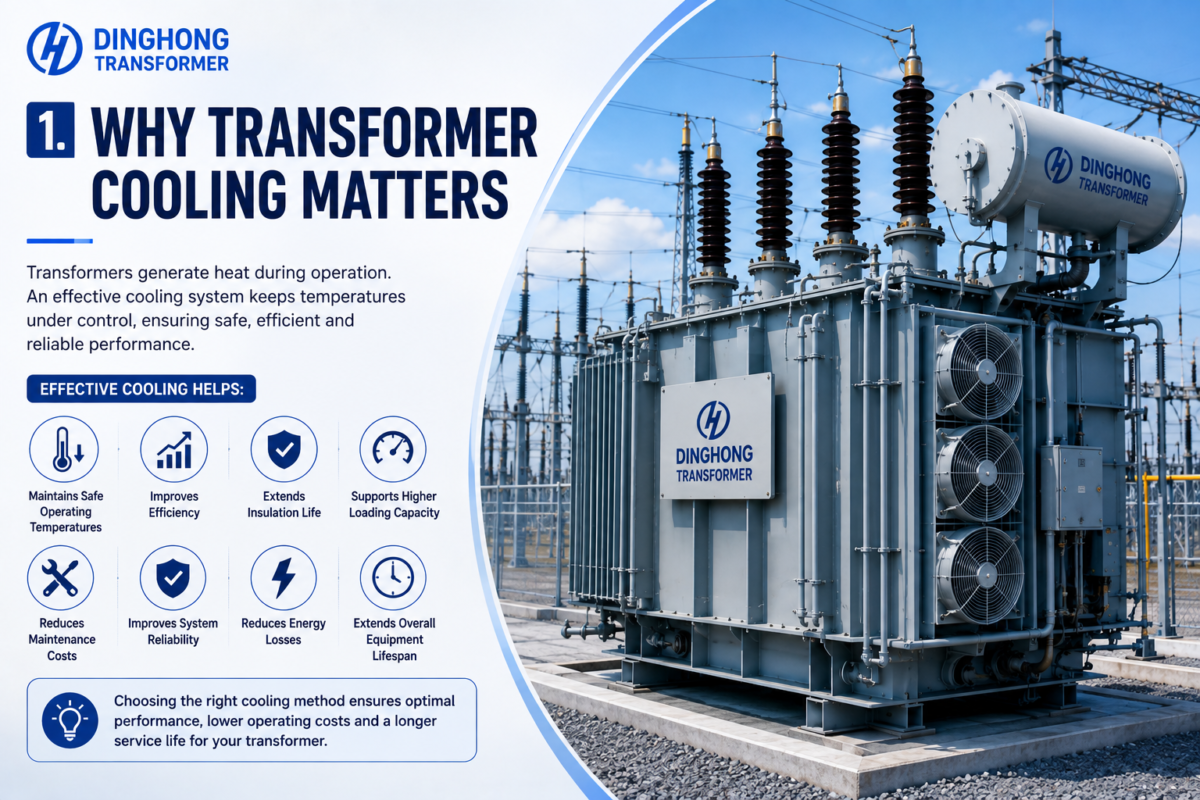
Every transformer generates heat while converting electrical energy. If that heat is not effectively dissipated, insulation begins to deteriorate, efficiency decreases, and the transformer’s service life is significantly reduced.
An effective cooling system provides several benefits:
- Maintains safe operating temperatures
- Improves transformer efficiency
- Reduces insulation aging
- Supports higher loading capacity
- Extends equipment lifespan
- Improves overall system reliability
For industrial facilities operating continuously, selecting the correct cooling method can lower operating costs and improve long-term performance.
Understanding Transformer Cooling Codes
Transformer cooling methods follow internationally recognized IEC naming conventions.
Each letter represents the cooling medium or circulation method:
- O = Oil
- N = Natural circulation
- F = Forced circulation
- A = Air
- W = Water
These combinations describe how heat moves from the transformer windings to the surrounding environment.
ONAN (Oil Natural Air Natural)
ONAN is the most common cooling method used in oil-immersed distribution transformers.
In this design:
- Transformer oil circulates naturally as it heats and cools.
- Heat transfers through the transformer tank and radiators.
- Ambient air naturally cools the transformer without fans or pumps.
Advantages
- Simple design
- Low maintenance
- Quiet operation
- High reliability
- Lower operating costs
Typical Applications
- Commercial buildings
- Residential distribution
- Manufacturing facilities
- Utility distribution networks
- Small industrial plants
For many distribution transformer installations, ONAN provides an excellent balance between efficiency, reliability, and cost.
ONAF (Oil Natural Air Forced)
ONAF improves cooling performance by adding electrically powered cooling fans.The transformer oil still circulates naturally, but external fans force air across the radiator surfaces, removing heat much faster.
Advantages
- Higher cooling capacity
- Increased transformer loading
- Better temperature control
- Suitable for peak-demand periods
- Extends transformer life under heavy loads
Typical Applications
- Medium-sized manufacturing plants
- Mining operations
- Industrial parks
- Hospitals
- Data centers
- Commercial complexes
Many industrial customers choose ONAF when future expansion is expected.
OFAF (Oil Forced Air Forced)
For larger transformers with higher power ratings, OFAF provides significantly greater cooling efficiency.
In an OFAF system:
- Oil is circulated using pumps.
- Cooling fans force air across heat exchangers.
- Heat is removed much faster than in ONAN or ONAF systems.
Advantages
- Excellent cooling efficiency
- Handles heavy continuous loads
- Improved temperature stability
- Increased transformer capacity
- Better performance during demanding industrial operations
Typical Applications
- Large factories
- Steel plants
- Cement plants
- Heavy manufacturing
- Renewable energy projects
- Utility substations
OFAF systems are commonly found in industrial power transformers operating under high electrical loads.
OFWF (Oil Forced Water Forced)
OFWF represents one of the most efficient transformer cooling methods available.Instead of cooling oil with air, heat is transferred to water through specially designed heat exchangers.
Oil is circulated using pumps while water continuously removes heat from the cooling system.
Advantages
- Extremely high cooling efficiency
- Compact installation
- Excellent temperature control
- Ideal for enclosed installations
- Supports very high transformer ratings
Typical Applications
- Power generation facilities
- Large utility substations
- Offshore platforms
- Petrochemical plants
- Hydroelectric stations
- High-capacity industrial installations
Because water removes heat more efficiently than air, OFWF systems are often selected for mission-critical applications.
How to Choose the Right Cooling Method
Choosing the best cooling system depends on several factors.
Consider:
- Transformer capacity
- Voltage class
- Installation environment
- Ambient temperature
- Available installation space
- Load profile
- Future expansion plans
- Maintenance capabilities
- Project budget
An experienced transformer manufacturer can evaluate these factors and recommend the most suitable cooling solution.
Common Cooling Selection Mistakes
Many procurement teams make avoidable mistakes, including:
- Selecting cooling systems based only on purchase price
- Ignoring future load growth
- Underestimating ambient temperatures
- Choosing oversized or undersized cooling systems
- Failing to consider maintenance requirements
- Purchasing from inexperienced suppliers
Working with a reliable transformer supplier helps ensure the cooling system matches both current and future operating conditions.
Why Cooling Method Affects Long-Term Costs
Although advanced cooling systems may have higher initial costs, they often reduce the total cost of ownership.
The right cooling method can provide:
- Lower maintenance expenses
- Reduced energy losses
- Longer insulation life
- Fewer unexpected failures
- Higher operational reliability
- Increased equipment lifespan
For factories operating 24 hours a day, these savings can be significant over the transformer’s lifetime.
Why Choose Dinghong Transformer?
Choosing the correct cooling method is just as important as selecting the right transformer capacity and voltage class.
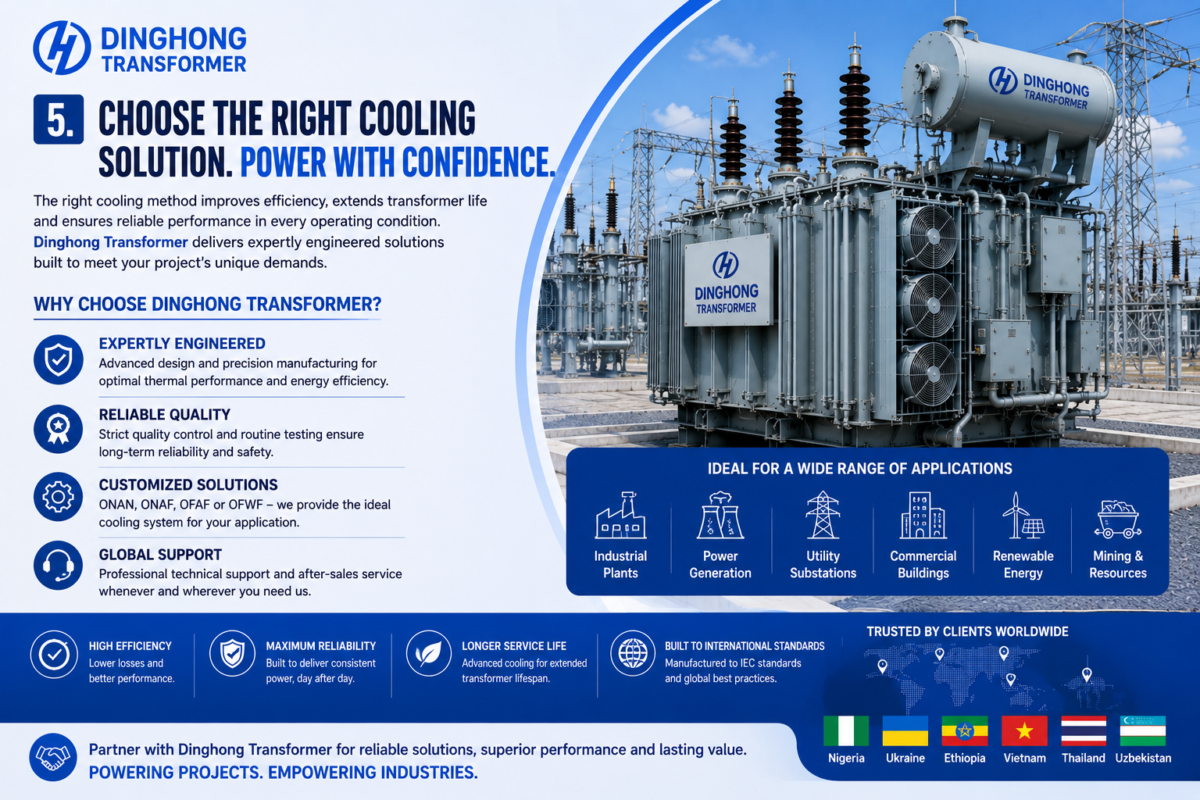
As a trusted transformer manufacturer and distribution transformer supplier, DinghongTransformer designs customized cooling solutions for commercial, industrial, utility, mining, renewable energy, and infrastructure projects worldwide.
Our product range includes:
- Oil-immersed distribution transformers
- Medium-voltage transformers
- Industrial power transformers
- Custom transformer solutions
- IEC-compliant transformer designs
Every transformer undergoes rigorous factory testing to ensure reliable thermal performance, efficiency, and long-term durability.
Whether your project is located in Nigeria, Ukraine, Ethiopia, Vietnam, Thailand, Uzbekistan, or other international markets, Dinghong Transformer provides engineering expertise, customized manufacturing, and dependable after-sales support.
Final Thoughts
Understanding the differences between ONAN, ONAF, OFAF, and OFWF cooling methods helps engineers, consultants, and Procurement manager select the right transformer for their application. The ideal cooling system depends on transformer size, operating environment, electrical load, and future expansion plans.
If you’re looking for a reliable transformer supplier, distribution transformer manufacturer, or industrial transformer manufacturer, Dinghong Transformer offers expertly engineered solutions tailored to your project’s cooling, voltage, and performance requirements.
Contact Dinghong Transformer today to discuss your project and receive a customized transformer recommendation designed for safe, efficient, and reliable operation.