10 Questions Every Procurement Manager Should Ask Before Buying a Transformer

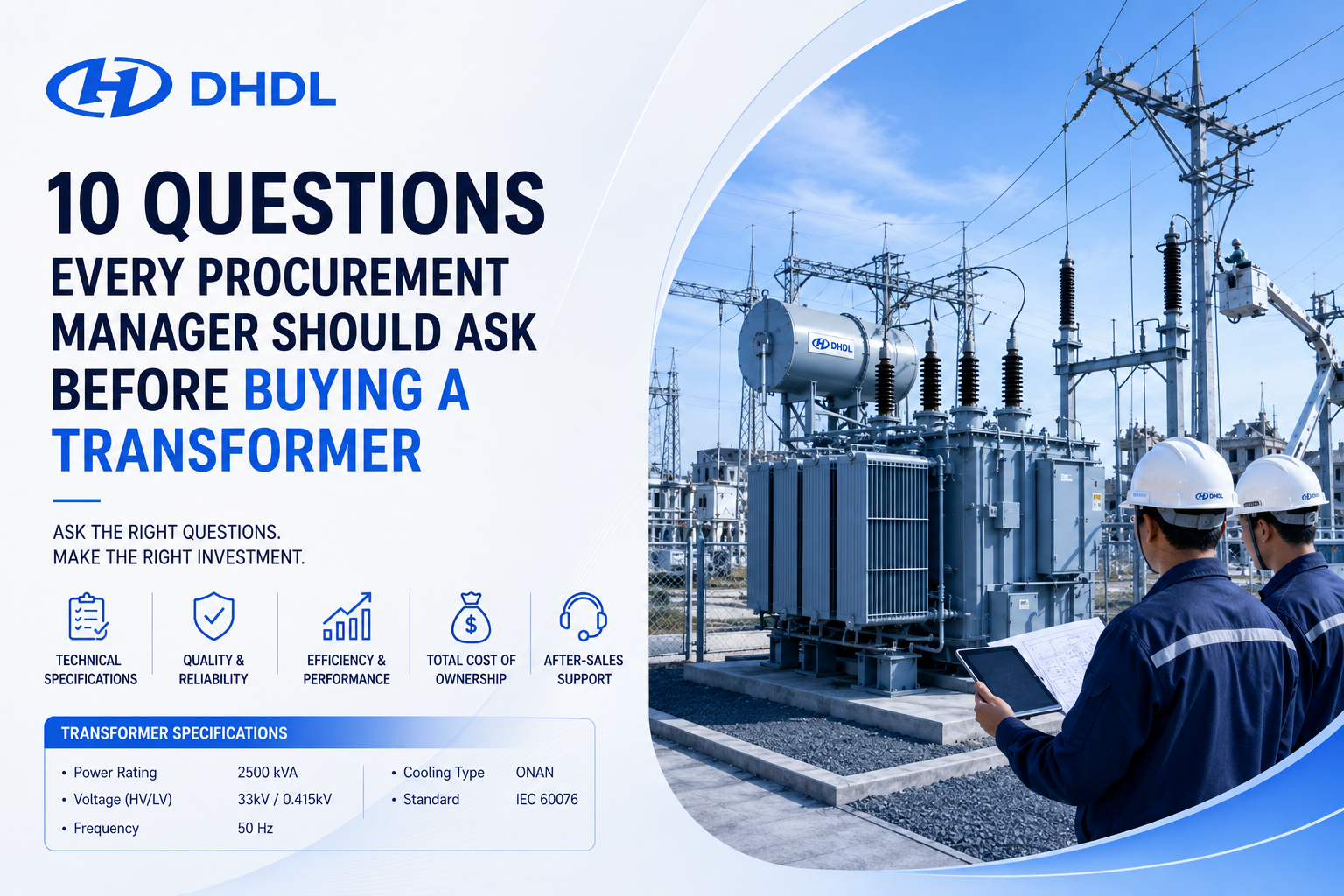
Learn the 10 essential questions every procurement manager should ask before purchasing a distribution transformer. Discover how to choose the right transformer manufacturer and avoid costly mistakes.
10 Questions Every Procurement Manager Should Ask Before Buying a Transformer
Purchasing a transformer is a significant investment that directly affects the reliability, efficiency, and long-term operating costs of an electrical system. Whether you’re sourcing equipment for a commercial building, industrial facility, manufacturing plant, or utility project, selecting the wrong transformer can lead to unexpected downtime, increased maintenance expenses, and costly project delays.
Many procurement teams focus primarily on price. However, experienced engineers know that the best transformer manufacturer delivers far more than competitive pricing. Product quality, engineering support, certifications, testing, and after-sales service all play critical roles in ensuring long-term performance.
If you’re planning to buy a distribution transformer or looking for a reliable transformer supplier, here are ten essential questions every procurement manager should ask before making a purchasing decision.
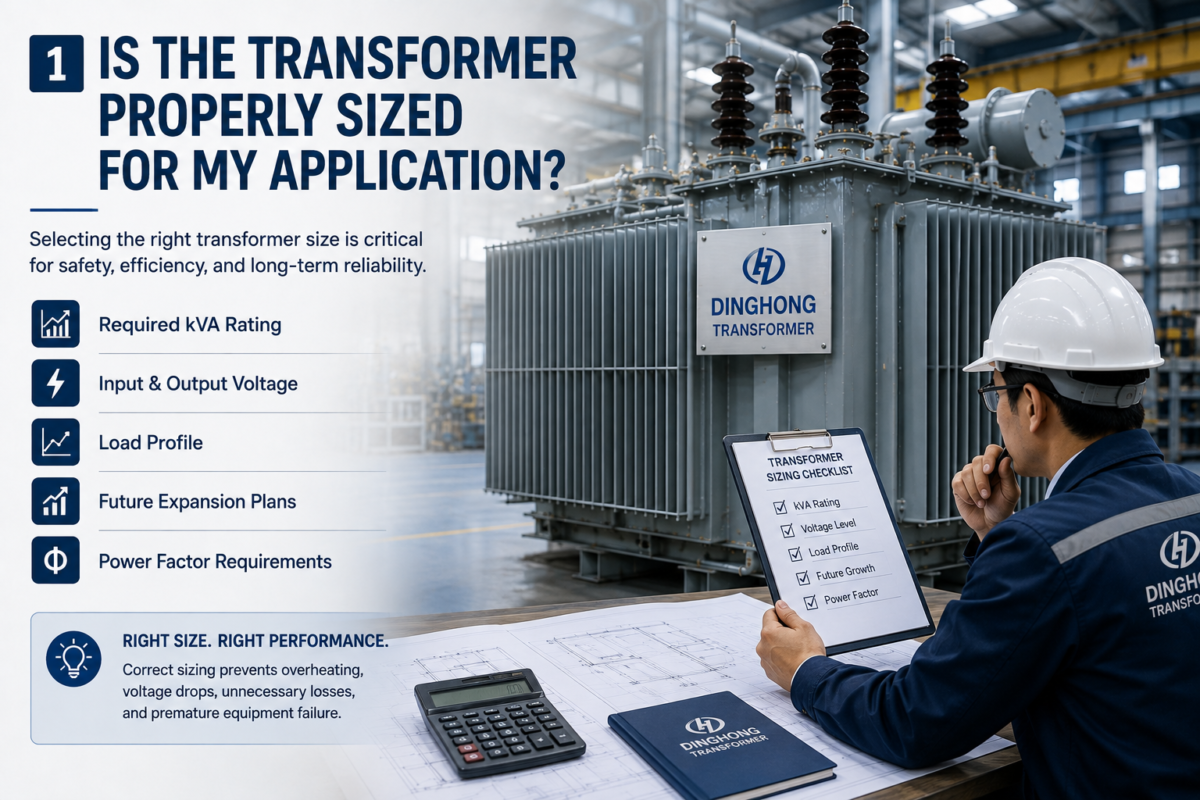
1. Is the Transformer Properly Sized for My Application?
One of the most common purchasing mistakes is selecting the wrong transformer capacity.Choosing a transformer that is too small can cause overheating, voltage drops, and premature equipment failure.
Conversely, an oversized transformer increases installation costs and reduces overall energy efficiency.
Before purchasing, confirm:
- Required kVA rating
- Input and output voltage
- Load profile
- Future expansion plans
- Power factor requirements
A professional distribution transformer manufacturer should review your project requirements before recommending a suitable solution.
2. Does the Transformer Meet International Standards?
Always verify that the transformer complies with internationally recognized standards.
Depending on your project location, the transformer should meet applicable requirements such as:
- IEC Standards
- ANSI Standards
- IEEE Standards
- ISO-certified manufacturing processes
Choosing an IEC-certified transformer provides greater confidence in product safety, quality, and long-term reliability.
3. Is the Manufacturer Experienced in My Industry?
Not every transformer is designed for the same application.
Ask whether the manufacturer has supplied transformers for:
- Manufacturing plants
- Commercial buildings
- Mining operations
- Renewable energy projects
- Utilities
- Data centers
- Hospitals
Working with an experienced custom transformer manufacturer ensures your equipment is engineered specifically for your operating environment.
4. What Testing Is Performed Before Delivery?
Quality testing is one of the strongest indicators of a trustworthy supplier.
Ask whether every transformer undergoes:
Routine testing
Factory Acceptance Testing (FAT)
Insulation resistance testing
Ratio testing
Temperature rise testing
Load loss testing
No-load loss testing
A reputable transformer manufacturer should provide complete test reports before shipment.
5. What Type of Cooling System Is Best?
Transformer cooling affects efficiency and service life.
Depending on your installation, you may require:
ONAN
ONAF
OFAF
Dry-type cooling
Selecting the appropriate cooling method reduces operating temperatures and extends equipment lifespan.
Your supplier should explain which option best suits your application.
6. What Is the Total Cost of Ownership?
The purchase price represents only a portion of the total investment.
Procurement managers should evaluate:
- Initial purchase cost
- Installation expenses
- Energy losses
- Maintenance costs
- Expected service life
- Repair costs
- Operational efficiency
In many cases, a higher-quality transformer from a reliable transformer supplier delivers substantially lower lifecycle costs than a cheaper alternative.
7. Can the Transformer Be Customized?
Every project has unique technical requirements.
Ask whether the manufacturer can provide:
- Custom voltage ratings
- Special impedance values
- Different enclosure designs
- Environmental protection options
- Smart monitoring systems
- Custom dimensions
A flexible OEM transformer manufacturer can tailor the equipment to your exact project specifications.
8. What Warranty and After-Sales Support Are Included?
Technical support becomes especially important after installation.
Before purchasing, ask about:
- Warranty duration
- Spare parts availability
- Technical assistance
- Installation guidance
- Remote troubleshooting
- Maintenance recommendations
Reliable after-sales service minimizes downtime and protects your investment throughout the transformer’s operating life.
9. Can the Manufacturer Meet My Project Timeline?
Delays in transformer delivery can postpone entire construction projects.
Ask about:
- Manufacturing lead time
- Production capacity
- Export experience
- Packaging standards
- Shipping arrangements
- Delivery schedules
An experienced transformer supplier should provide realistic delivery timelines and regular production updates.
10. Why Should I Choose This Manufacturer Over Competitors?
Finally, ask what differentiates the manufacturer.
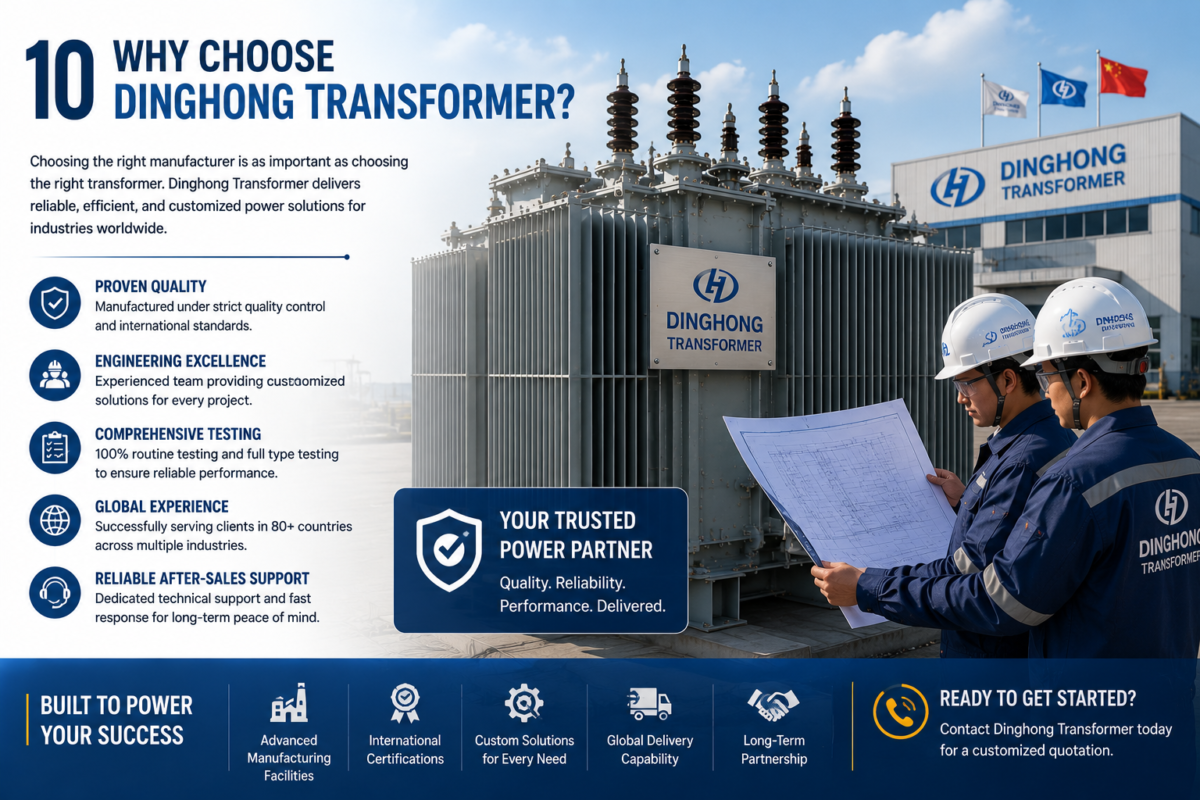
Look for advantages such as:
- Advanced production facilities
- Experienced engineering team
- International certifications
- Strict quality control
- Comprehensive testing procedures
- Competitive pricing
- Global export capabilities
- Proven project experience
- Excellent customer support
These factors often determine whether your transformer performs reliably for decades or becomes a recurring maintenance issue.
Why Procurement Managers Choose Dinghong Transformer
Selecting the right supplier is just as important as selecting the right transformer.
As a trusted distribution transformer manufacturer, Dinghong Transformer delivers customized power solutions for commercial, industrial, utility, and infrastructure projects worldwide.
Every transformer is manufactured using strict quality control processes and undergoes comprehensive factory testing to ensure dependable performance under demanding operating conditions.
Whether you need a commercial transformer, an industrial transformer, or a fully custom transformer solution, DinghongTransformer combines engineering expertise, international manufacturing standards, and responsive after-sales support to help customers achieve long-term operational reliability and lower total ownership costs.