
How Altitude Affects Transformer Performance | Dinghong Transformer

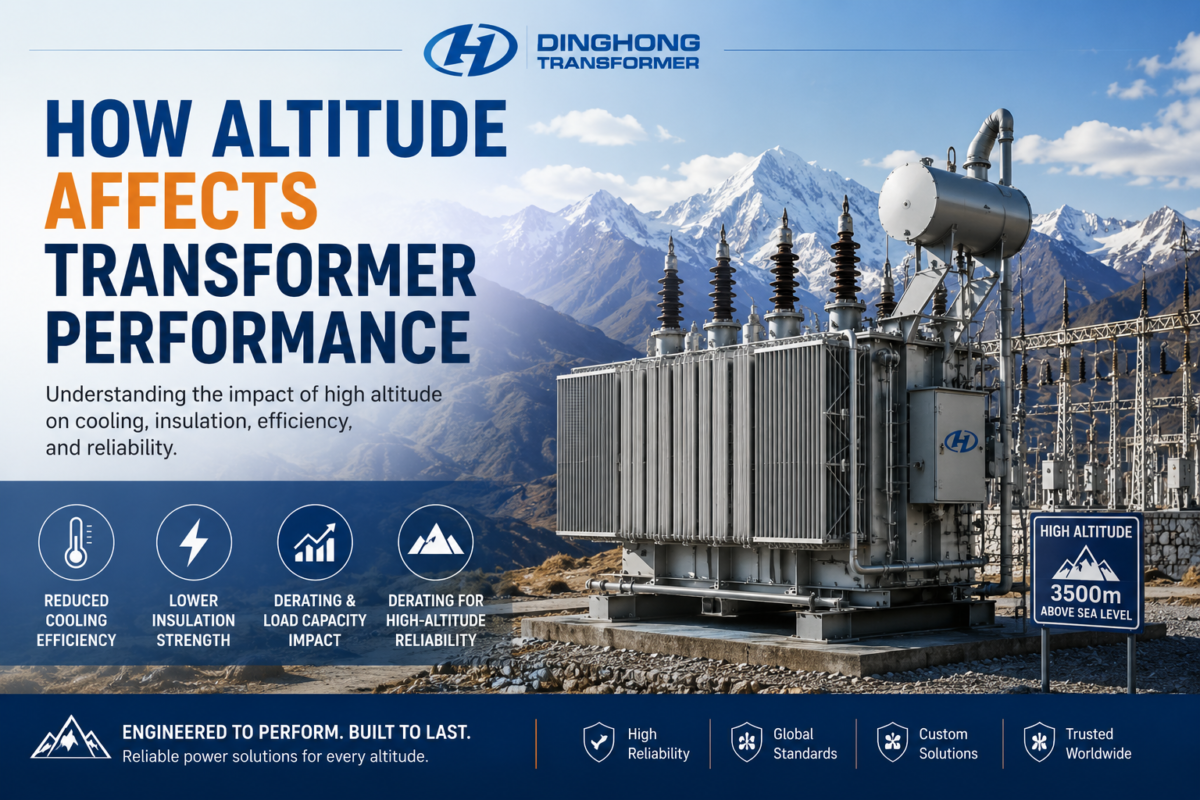
Learn how high altitude impacts transformer cooling, insulation, efficiency, and lifespan. Discover key design considerations for reliable transformer performance in mountainous and elevated regions.
How Altitude Affects Transformer Performance
Transformers are designed to operate efficiently under specific environmental conditions.
While factors such as temperature, humidity, and dust are commonly considered during transformer selection, altitude is another critical factor that is often overlooked.Installing a transformer at a high-altitude location without considering its effects can lead to overheating, reduced insulation performance, lower efficiency, and a shorter service life.
Whether the transformer is used in a mountain substation, mining operation, hydroelectric project, or renewable energy installation, understanding how altitude affects performance is essential for ensuring long-term reliability.
In this guide, we’ll explore how altitude influences transformer operation, the challenges it creates, and the engineering solutions used to maintain safe and efficient performance.
What Is Considered High Altitude?
According to international standards such as IEC and IEEE, standard transformer ratings generally assume installation at elevations up to 1,000 metres (3,300 feet) above sea level.
When transformers operate above this elevation, the surrounding air becomes thinner, reducing its ability to cool equipment effectively. As altitude increases, the atmospheric pressure decreases, creating additional thermal and insulation challenges that engineers must address during transformer design and selection.
Why Altitude Matters
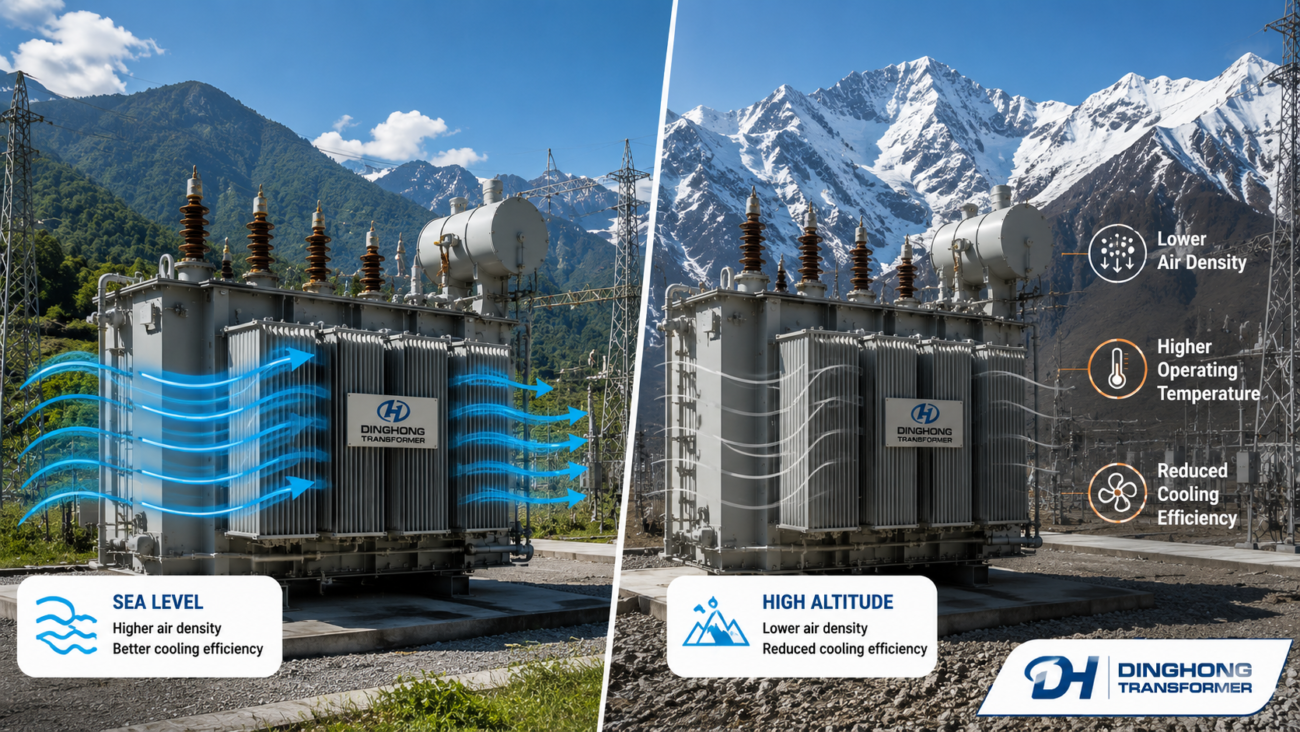
Transformers generate heat whenever they operate. Under normal conditions, the surrounding air helps remove this heat through natural or forced cooling.
At higher elevations:
- Air density decreases.
- Atmospheric pressure becomes lower.
- Heat dissipation becomes less effective.
- Cooling efficiency declines.
As a result, the transformer may operate at higher internal temperatures even when carrying the same electrical load.
If these conditions are ignored, excessive heat can accelerate insulation ageing and reduce the overall lifespan of the transformer.
Reduced Cooling Efficiency
One of the most significant effects of altitude is reduced cooling performance.Oil-immersed and dry-type transformers rely on surrounding air to transfer heat away from their cooling surfaces.
Because high-altitude air contains fewer air molecules, less heat is removed from the transformer.
This can result in:
- Higher operating temperatures
- Reduced load capacity
- Increased thermal stress
- Faster insulation deterioration
For transformers installed in mountainous regions, additional cooling measures or capacity adjustments are often required to maintain safe operating temperatures.
Impact on Insulation Performance
Lower atmospheric pressure also affects electrical insulation.
Air acts as part of a transformer’s insulation system. At higher altitudes, thinner air provides lower dielectric strength, making it easier for electrical discharges to occur between energized components.
Potential issues include:
- Increased risk of partial discharge
- Higher probability of flashover
- Reduced insulation margin
- Greater electrical stress on bushings and terminals
Manufacturers often compensate by increasing insulation clearances or using enhanced insulation materials for transformers intended for high-altitude applications.
Transformer Derating at High Altitudes
In many cases, transformers installed above 1,000 metres require derating.
Derating means reducing the maximum load the transformer can safely carry to prevent overheating.
Without derating, the transformer may exceed its designed operating temperature, leading to:
- Reduced efficiency
- Premature insulation ageing
- Higher maintenance costs
- Shortened equipment lifespan
The exact derating depends on:
- Installation altitude
- Ambient temperature
- Transformer type
- Cooling method
- Applicable industry standards
Consulting the manufacturer during the design stage helps determine the appropriate rating for the installation site.
Design Solutions for High-Altitude Installations
Modern transformer manufacturers incorporate several engineering improvements for installations at elevated locations.
These may include:
Enhanced Cooling Systems
Larger radiators, improved airflow, or forced cooling systems help compensate for reduced air density.
Larger Cooling Surfaces
Additional cooling fins or radiators increase heat dissipation despite thinner air.
Optimized Transformer Ratings
Manufacturers may recommend higher-capacity transformers to offset derating requirements and maintain operational reliability.
These design modifications ensure transformers continue to perform safely in demanding environments.
Applications That Require High-Altitude Transformers
Several industries regularly operate transformers at high elevations, including:
- Hydroelectric power stations
- Solar farms in mountainous regions
- Wind energy projects
- Mining operations
- Utility substations
- Railway electrification systems
- Industrial manufacturing facilities
- Remote infrastructure projects
Each application presents unique environmental challenges that should be considered during transformer selection.
Best Practices When Selecting a Transformer for High Altitudes
Before purchasing a transformer, engineers and project managers should evaluate the installation environment carefully.
Key considerations include:
- Site elevation above sea level
- Maximum ambient temperature
- Load profile
- Cooling requirements
- Local weather conditions
- Industry standards
- Future capacity expansion
Providing accurate site information allows manufacturers to recommend the most suitable transformer configuration for reliable long-term operation.
Why Work with Dinghong Transformer?
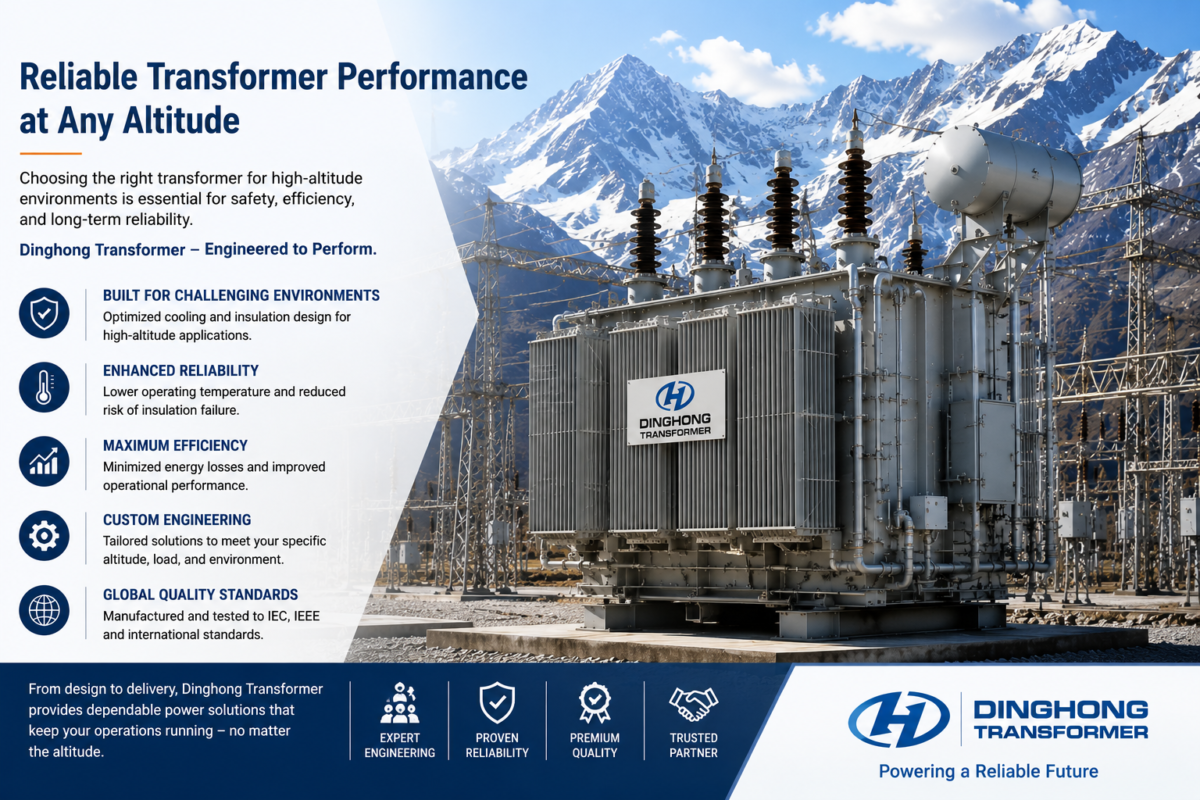
Selecting a transformer for high-altitude applications requires more than simply choosing the correct kVA rating. Cooling performance, insulation design, material selection, and compliance with international standards all play a critical role in ensuring reliable operation.
At Dinghong Transformer, we design and manufacture high-quality oil-immersed transformers, dry-type transformers, distribution transformers, and power transformers for projects in diverse environmental conditions around the world.
Our engineering team evaluates installation altitude, ambient temperature, load requirements, and application-specific challenges to provide customized transformer solutions that deliver reliable performance and long service life.Every transformer undergoes rigorous quality testing to ensure compliance with international standards and dependable operation in commercial, industrial, utility, and renewable energy applications. Whether your project is located at sea level or in a mountainous region, Dinghong Transformer provides dependable solutions tailored to your operational needs.
Conclusion
Altitude has a direct impact on transformer performance by reducing cooling efficiency and affecting insulation strength.
As elevation increases, transformers are exposed to higher operating temperatures and greater electrical stress, making proper design and selection essential.By considering altitude during the planning stage, engineers can avoid overheating, insulation failures, and unnecessary maintenance costs. Working with an experienced manufacturer ensures that every transformer is engineered to perform safely and efficiently under the specific environmental conditions of the installation site.
Whether your project involves renewable energy, mining, utilities, or industrial power distribution, choosing the right transformer for high-altitude conditions is an investment in long-term reliability, efficiency, and operational success.
With Dinghong Transformer as your manufacturing partner, you can be confident that your transformer solution is designed to meet the demands of even the most challenging environments.
Choose DHDL for Your Transformer Solutions
DHDL is a professional transformer manufacturer specializing in dry-type transformers, oil-immersed transformers, power transformers, distribution transformers, and complete power distribution solutions.
We support customized transformer designs based on project voltage, capacity, frequency, installation environment, and international standards.
Whether for industrial facilities, renewable energy projects, data centers, utilities, or infrastructure applications, DHDL delivers reliable, efficient, and customized power solutions worldwide.
Contact DHDL today for professional transformer selection support and a customized quotation.